Artwork
Les réjouissances de Juillet... vues de Ste. Pélagie
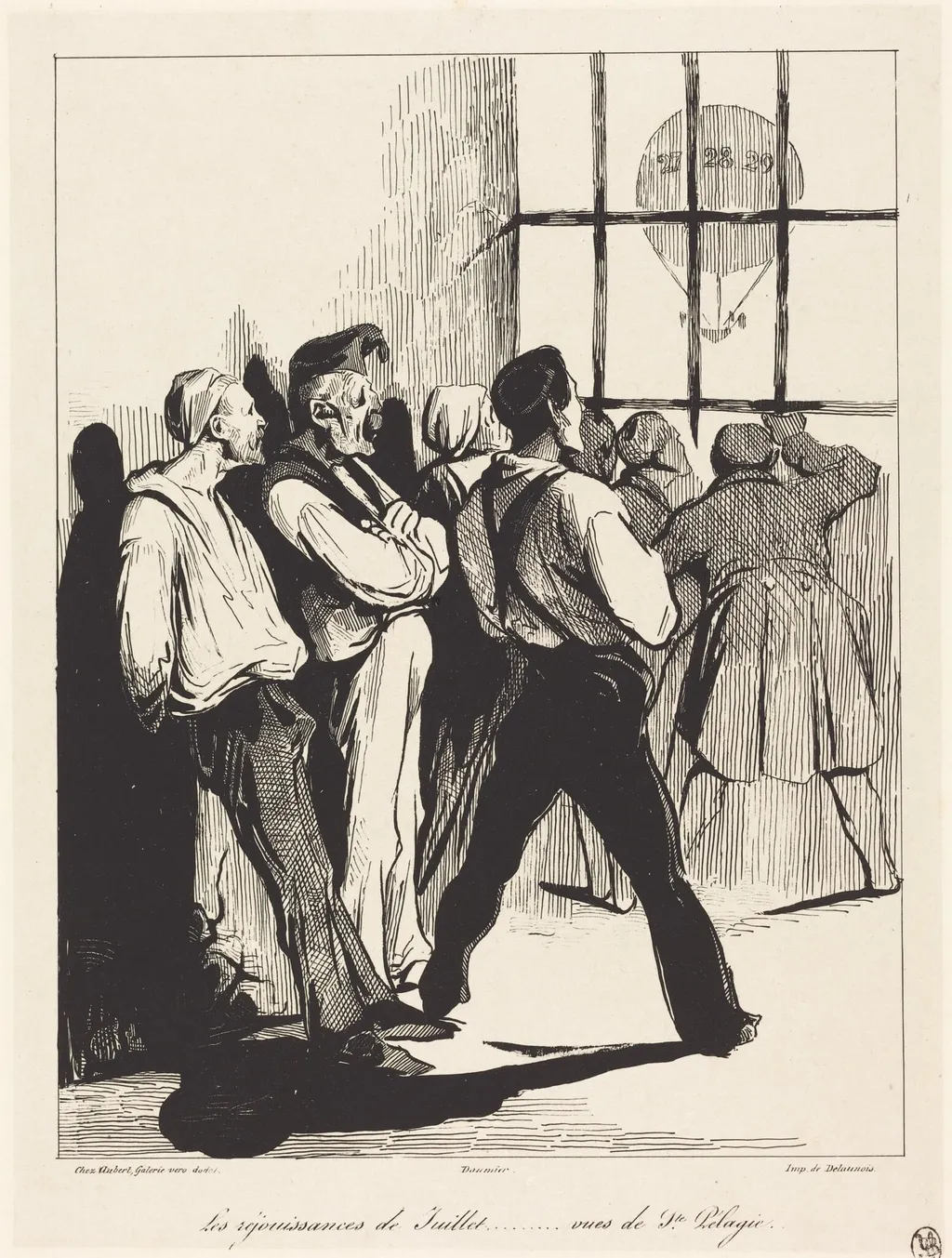
Les réjouissances de Juillet... vues de Ste. Pélagie is an ink print by the Romanticist artist Honoré Daumier. It dates from 1834 and is held in the collection of the National Gallery of Art. Les réjouissances de Juillet.
About this work
Overview
Les réjouissances de Juillet... vues de Ste. Pélagie is a lithograph created by Honoré Daumier in 1834, a time of significant social and political change in France.
Subject & Meaning
The print depicts a crowded, dimly lit interior scene, possibly referencing a July celebration, but the tense atmosphere and blurred faces of the figures suggest a more complex or ambiguous subject matter.
Technique & Style
Daumier employed the lithography technique to achieve a sketch-like quality, using rapid, expressive lines to convey a sense of movement and energy, characteristic of his satirical and caricatural style.
Context
The work reflects Daumier's engagement with the social and political climate of mid-19th-century France, particularly the July Monarchy period following the Revolution of 1830, and aligns with his republican democratic views.
Artist & collection

Artist
Honoré-Victorin Daumier was a French painter, sculptor, and printmaker, whose many works offer commentary on the social and political life in France, from the Revolution of 1830 to the fall of the Second French Empire in 1870.









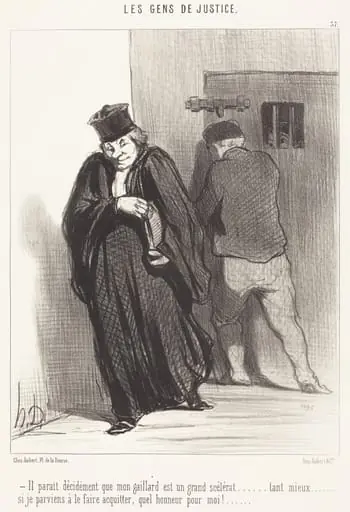 Il parait... que mon gaillard est un grand scélérat...
 Il parait... que mon gaillard est un grand scélérat...
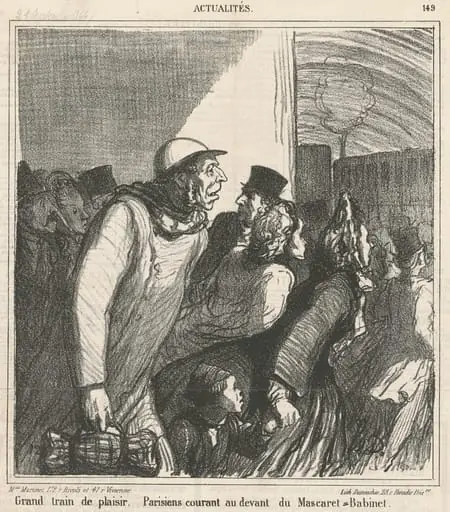 Grand train de plaisir
 Untitled
 Black Cat (Le chat noir)
 Je compte sur vous pour signer
 Il me semble que j'aperçois... un... chien... pas muselé!...
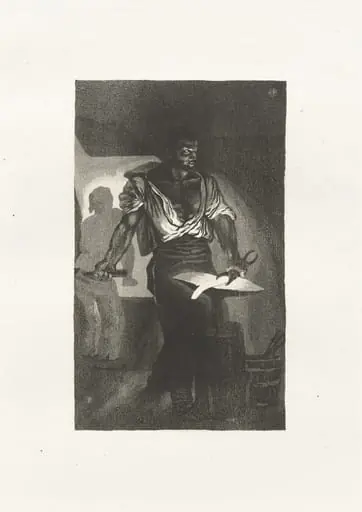 A Blacksmith (Un Forgeron)
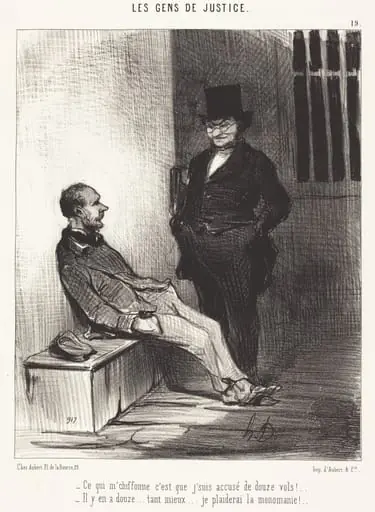 Ce qui m'chiffonne c'est... douze vols!...
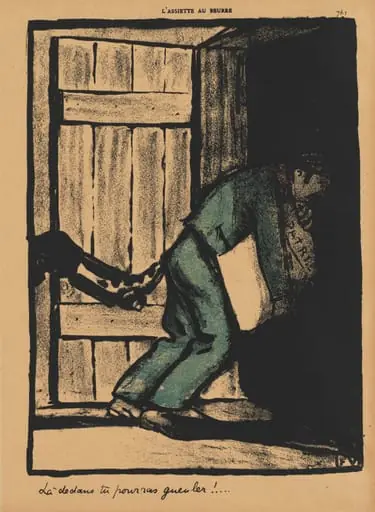 You can bawl...
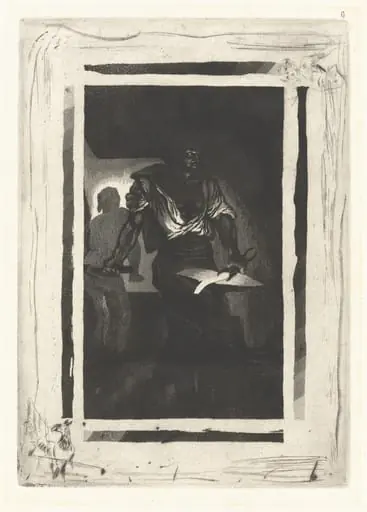 A Blacksmith (Un Forgeron)
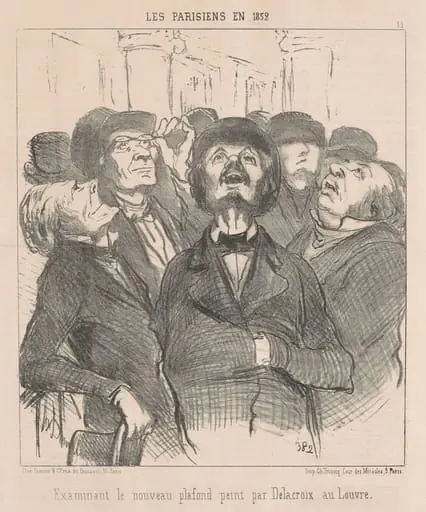 Examinant le nouveau plafond ...