Artwork
Testing His Strength
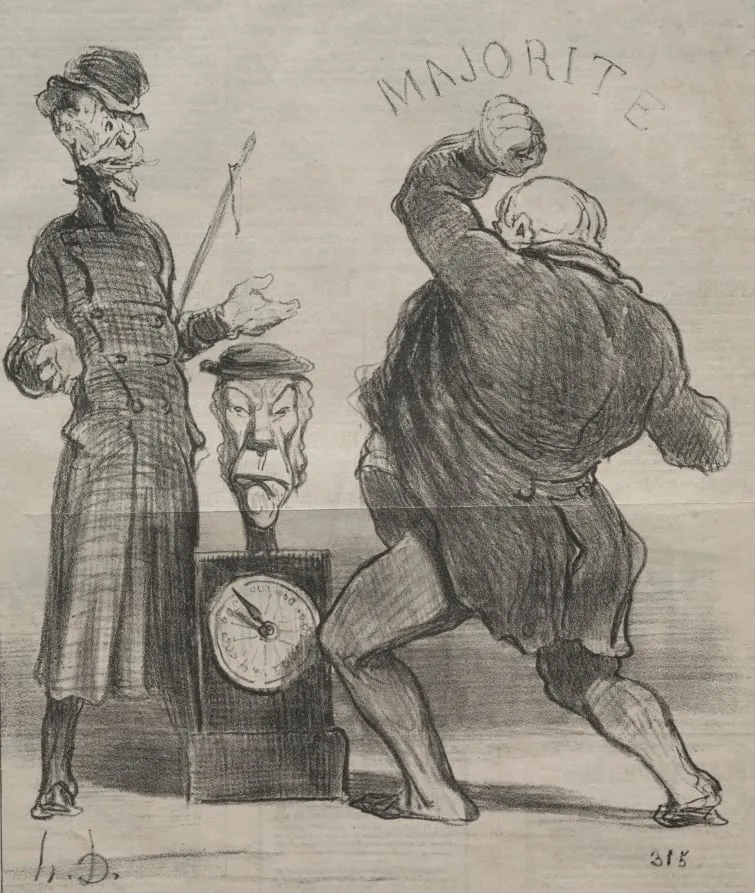
Testing His Strength is a print by the Impressionist artist Honoré Daumier. It dates from 1851 and is held in the collection of the Cleveland Museum of Art.
About this work
You see a man lifting a heavy weight in this painting.
He's struggling to test his strength. The man's face is scrunched up, showing effort.
This painting was published in a series called News of the Day, which featured everyday life scenes.
The artist likely wanted to show ordinary people in everyday situations.
Check out the work of artist Honoré Daumier (French, 1808–1879) for more like this.
Overview
Created by Honoré Daumier, it depicts a working-class man attempting to lift a heavy stone, his physical strain rendered with sharp, expressive lines.
This lithograph, published in Le Charivari on August 8, 1851, is part of the 'News of the Day' series, a collection of satirical prints capturing mundane moments of 19th-century French life. Created by Honoré Daumier, it depicts a working-class man attempting to lift a heavy stone, his physical strain rendered with sharp, expressive lines. The image functions as both observation and gentle social commentary, reflecting the daily struggles of ordinary citizens.
Subject & Meaning
The figure, a laborer in simple attire, strains under an oversized stone, his face contorted with effort. The scene is not heroic but absurd, highlighting the futility or exaggeration of physical displays among the working class. Daumier uses this moment to subtly critique societal ideals of strength and endurance, framing them as performative rather than noble, grounded in the realities of daily toil rather than mythic grandeur.
Technique & Style
Daumier employed lithography to achieve rapid, fluid lines that convey motion and tension. His use of bold contrasts and simplified forms emphasizes the figure’s exertion without ornamental detail. The background is left sparse, directing focus to the man’s body and the weight he bears. The technique mirrors the immediacy of newspaper illustration, aligning with the print’s publication in a daily satirical journal.
History & Provenance
The print originated as plate 183 in the 'News of the Day' series, regularly featured in Le Charivari, a prominent Parisian satirical weekly. Daumier contributed hundreds of such images between the 1830s and 1860s, often under financial pressure and political scrutiny. This particular plate was produced during a period of rising authoritarianism in France, when public satire was both popular and risky.
Context
In mid-19th-century France, the working class was increasingly visible in urban life, yet rarely depicted with dignity in official art. Daumier’s prints countered this by portraying laborers with empathy and humor. Published in a widely circulated journal, these images reached a broad audience, offering a visual counter-narrative to academic traditions and reinforcing the value of everyday experience in public discourse.
Legacy
Daumier’s work in Le Charivari laid foundational ground for modern social realism in print media. His ability to distill complex social observations into single, resonant images influenced later generations of illustrators and cartoonists. Though created for ephemeral publication, these prints are now recognized as vital documents of 19th-century French society, valued for their honesty and unembellished humanity.
Artist & collection

Artist
Honoré-Victorin Daumier was a French painter, sculptor, and printmaker, whose many works offer commentary on the social and political life in France, from the Revolution of 1830 to the fall of the Second French Empire in 1870.









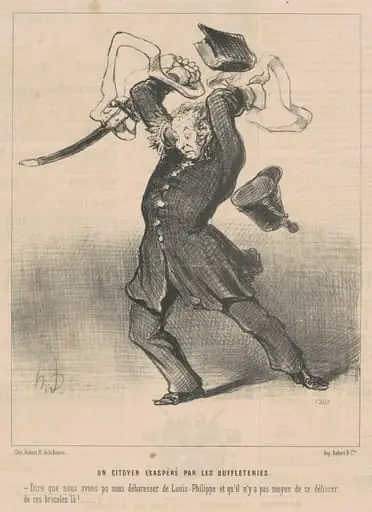 Un citoyen exaspéré par les buffleteries
 Un citoyen exaspéré par les buffleteries
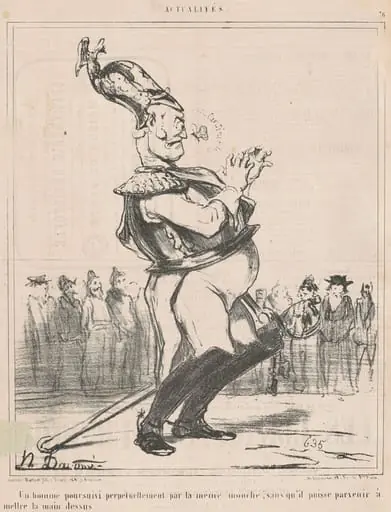 Un homme poursuivi ...
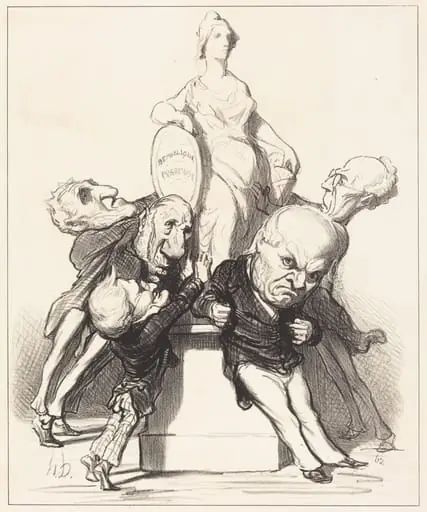 Ils prétendent qu'ils la soutiennent
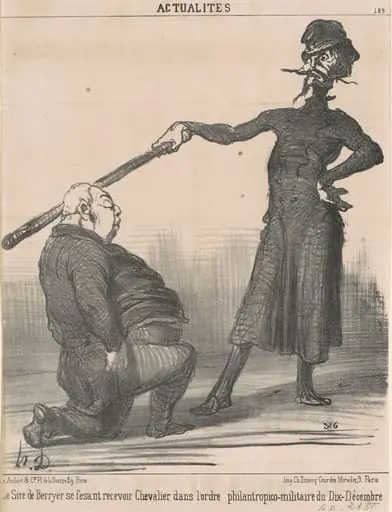 Le sire de Berryer ...Chevalier ...
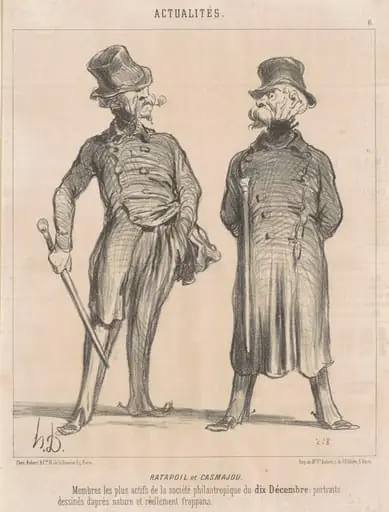 Ratapoil et Casmajou
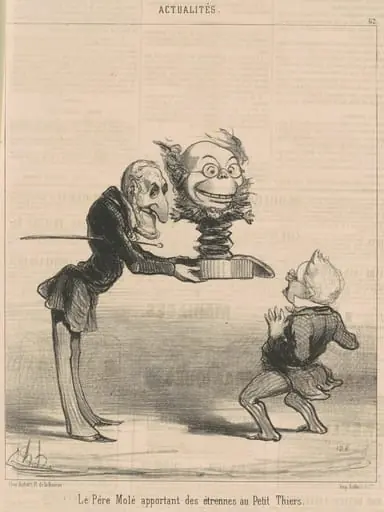 Molé apportant des étrennes au petit thiers
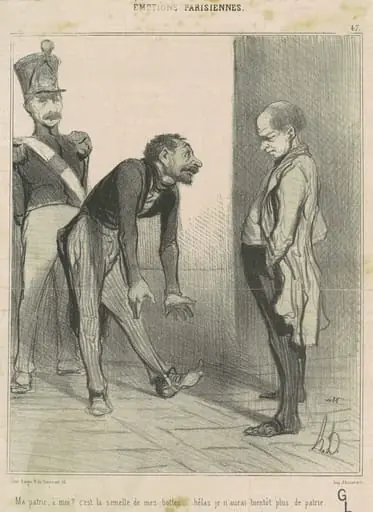 Ma patrie, a moi?...
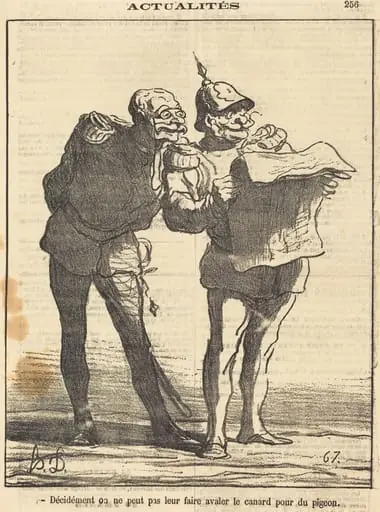 Décidément on ne peut pas...
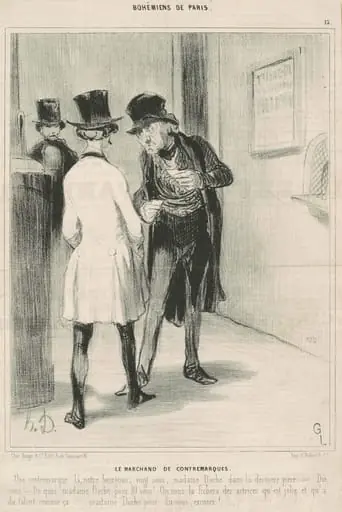 Le marchand de contremarques
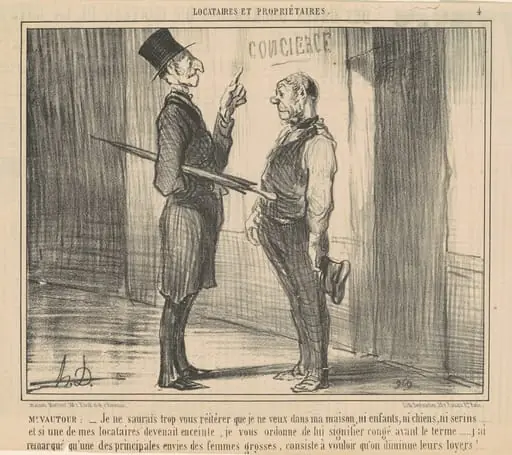 M. Vautour: Je ne saurais trop ...
 What Time is it, Please?