Artwork
Très hauts et très puissans moutards et moutardes légitimes
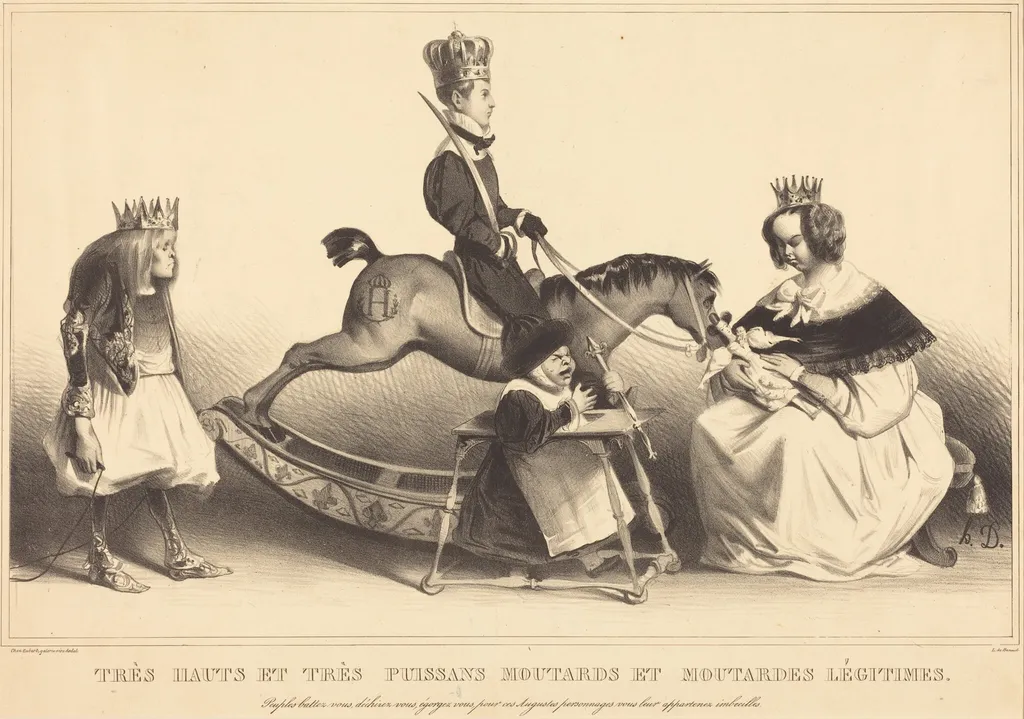
Très hauts et très puissans moutards et moutardes légitimes is an ink print by the Romanticist artist Honoré Daumier. It dates from 1834 and is held in the collection of the National Gallery of Art.
About this work
Overview
Très hauts et très puissans moutards et moutardes légitimes is a lithograph created by Honoré Daumier in 1834. The print is a satirical work that critiques the social hierarchy of the July Monarchy.
Subject & Meaning
The lithograph depicts four figures in a room, with three dressed in royal attire and a fourth, poorly dressed man crawling on the floor. The title, translating to 'Very high and very powerful mustards and mustardesses, legitimate,' is a humorous phrase that mocks the pretensions of those acting like royalty.
Technique & Style
The work is a lithograph, a printmaking technique that allows for mass production of images. Daumier was known for his skill in this medium, using it to create satirical works that commented on French society.
Context
Daumier created this print during his career as a caricaturist, contributing to publications like La Caricature and Le Charivari. His work reflected his republican democratic views and critiqued the monarchy and aristocracy.
Artist & collection

Artist
Honoré-Victorin Daumier was a French painter, sculptor, and printmaker, whose many works offer commentary on the social and political life in France, from the Revolution of 1830 to the fall of the Second French Empire in 1870.









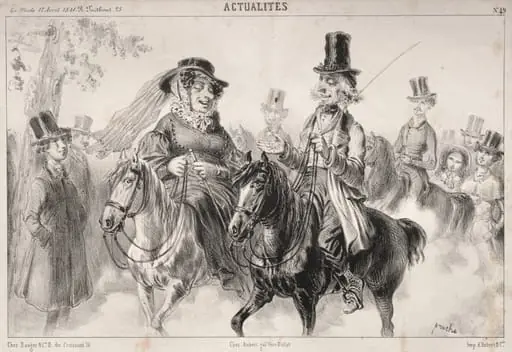 Actualités: Dis donc Madame Miroton il paraitrait que c'est nous qui donnons le ton à Longchamps cette année....
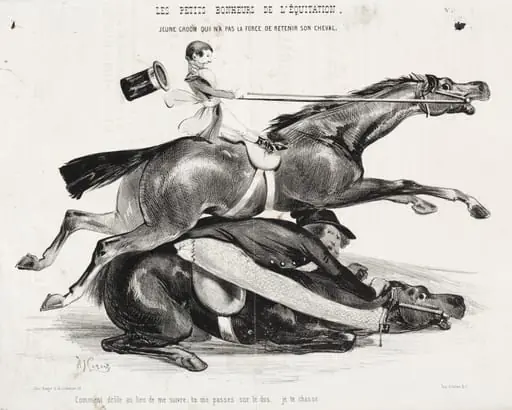 Les petits bonheurs de l'équitation: Jeune Groom qui n'a pas la force de retenir son cheval
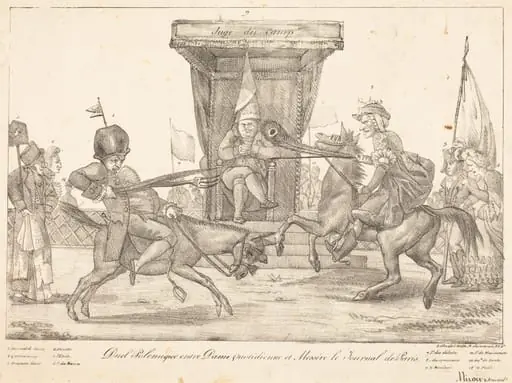 Duel Polemique
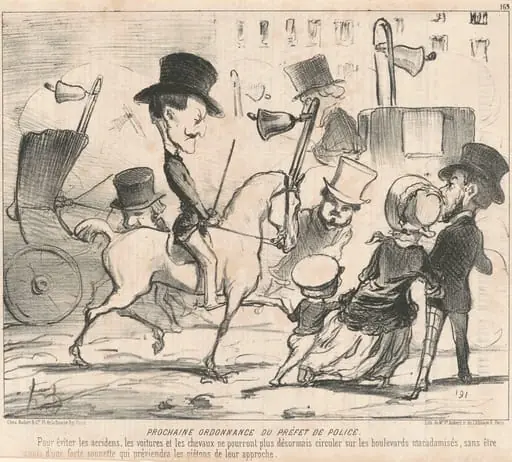 Prochaine ordannace du préfet de police
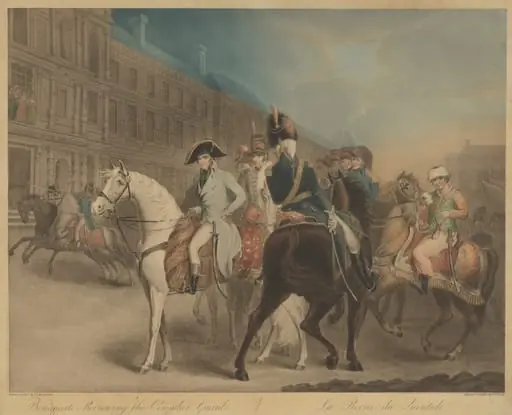 Bonaparte Reviewing the Consular Guard (La Revue du Quintidi)
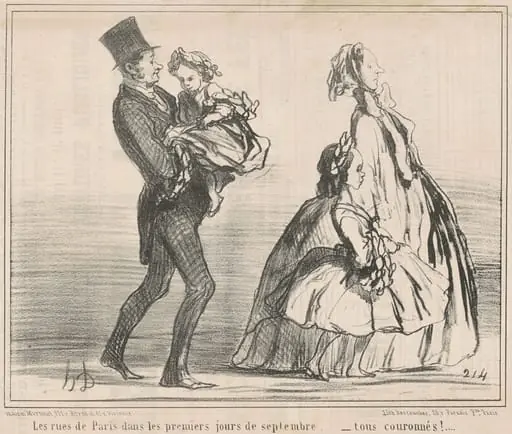 Le rues de Paris dans les premiers jours de Septembre ...
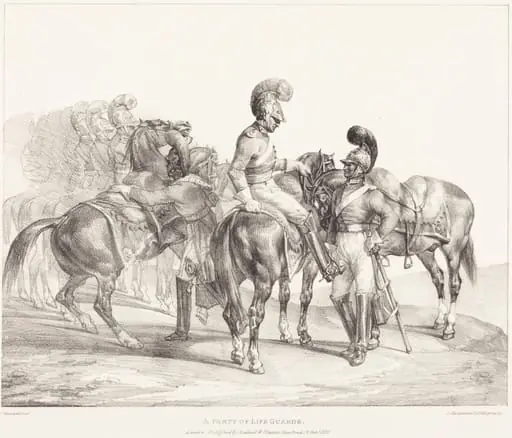 A Party of Life Guards
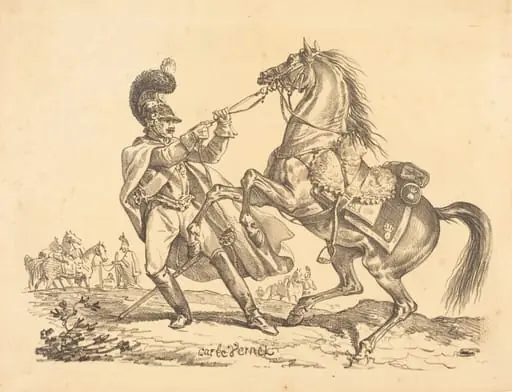 Cuirassier retenant son cheval qui se cabre
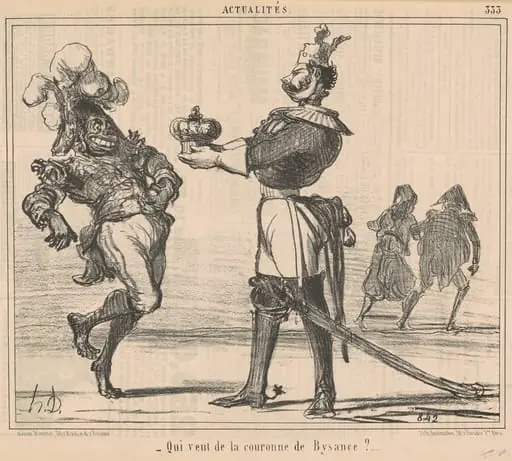 Qui veut de la couronne de Bysance?
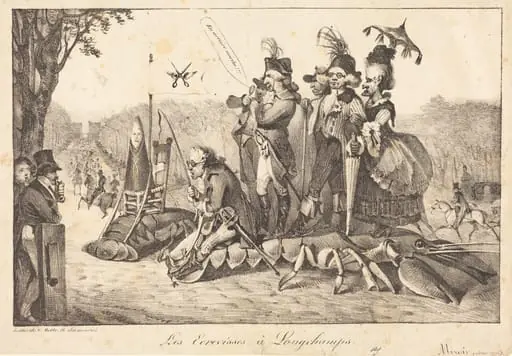 Les Ecrevisses à Longchamps
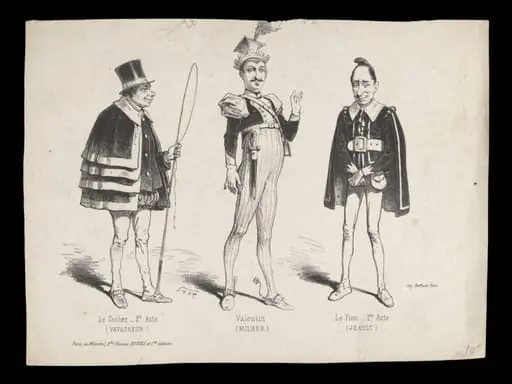 H Beard Print Collection
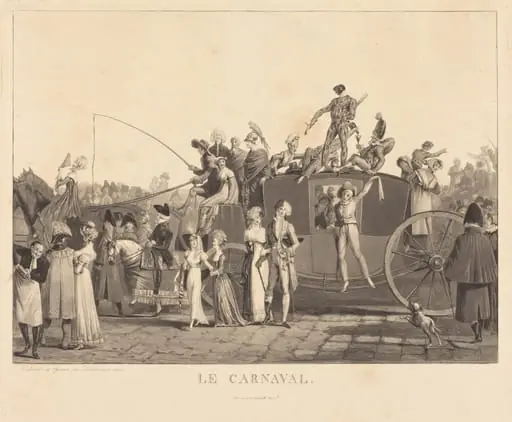 Le Carnaval