Artwork
The Death of Adonis
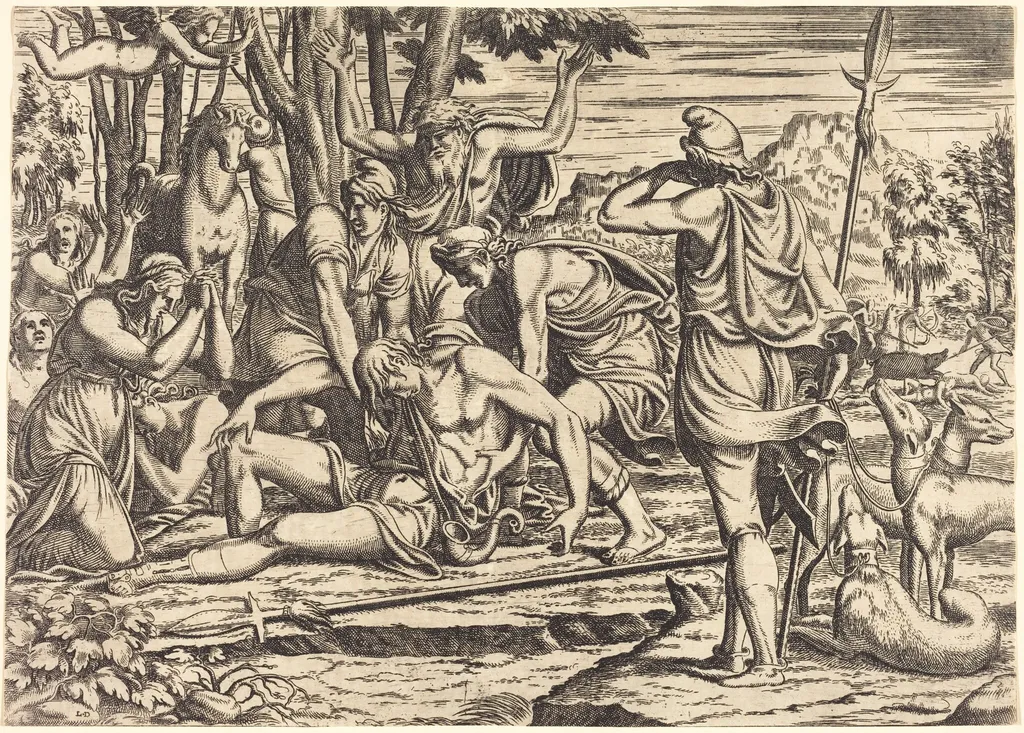
The Death of Adonis is an ink print by the Renaissance artist Léon Davent. It dates from 1538 and is held in the collection of the National Gallery of Art.
About this work
Overview
The print captures a mythological moment with precision and emotional gravity, reflecting the collaborative nature of Fontainebleau’s artistic output.
Created in 1538 by French printmaker Léon Davent, this etching is one of several works produced in connection with the First School of Fontainebleau. Davent translated painted compositions from the royal workshop into printed form, helping disseminate the court’s emerging Mannerist style. The print captures a mythological moment with precision and emotional gravity, reflecting the collaborative nature of Fontainebleau’s artistic output.
Subject & Meaning
The scene illustrates the death of Adonis, the beautiful youth killed by a wild boar, as mourned by Venus and attendants. The composition centers on his lifeless body amid a group of grieving figures and loyal hounds, evoking classical themes of beauty, loss, and divine sorrow. The landscape, though secondary, reinforces the myth’s natural setting and the inevitability of fate, aligning with Renaissance humanist interests in ancient narrative.
Technique & Style
Davent employed etching to achieve fine, fluid lines and nuanced tonal gradations. The intricate cross-hatching and varied line weight model forms with subtle depth, while the dense textures of fabric, fur, and foliage suggest tactile realism. The composition’s dynamic arrangement and expressive figures reflect the Mannerist preference for emotional intensity and stylized movement, adapted from the painted designs of Primaticcio and Penni.
History & Provenance
The print emerged from the royal atelier at Fontainebleau, where artists worked under royal patronage to elevate French art through Italianate influences. Davent’s etchings were likely produced for collectors and courtiers, serving as portable records of the palace’s decorative programs. While no early ownership records are documented, the work’s survival in major print collections attests to its early recognition among connoisseurs.
Context
In mid-16th-century France, printmaking became a vital medium for spreading the Fontainebleau style beyond the palace walls. Davent’s etchings responded to a growing market for refined, mythological imagery and helped establish a French visual language rooted in Italian Mannerism. His work bridged painting and print, contributing to the broader European circulation of courtly aesthetics during the Renaissance.
Legacy
Davent’s etchings, including this one, remain key examples of early French printmaking’s engagement with classical themes and Mannerist form. Though less celebrated than his contemporaries, his technical skill and fidelity to Fontainebleau’s designs influenced later generations of printmakers. The work stands as a quiet but significant document of how royal workshops shaped artistic taste across Europe in the 1500s.
Artist & collection

Artist
Léon Davent (French pronunciation: ) was a French printmaker in the mid 16th century, closely associated with the First School of Fontainebleau.

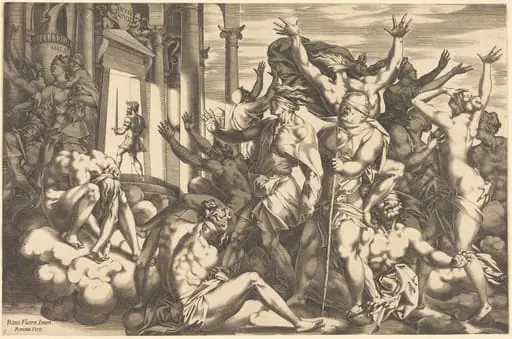 The Conquest of Ignorance
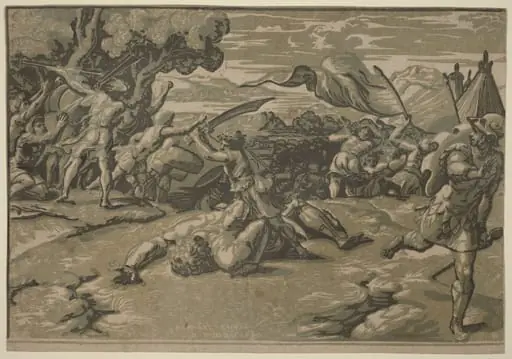 David Slaying Goliath
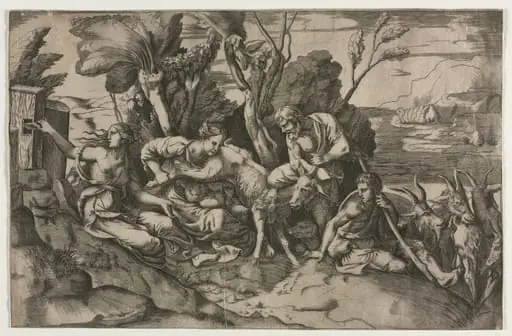 Jupiter Suckled by the Goat Amalthea
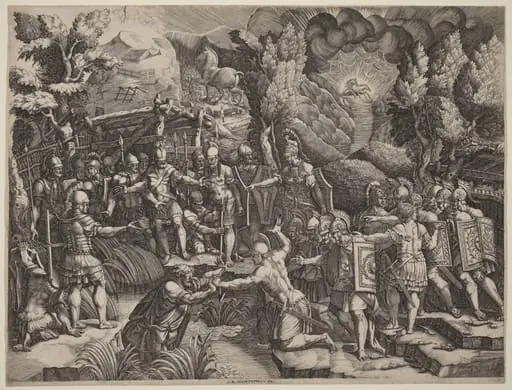 Sinon Deceiving the Trojans
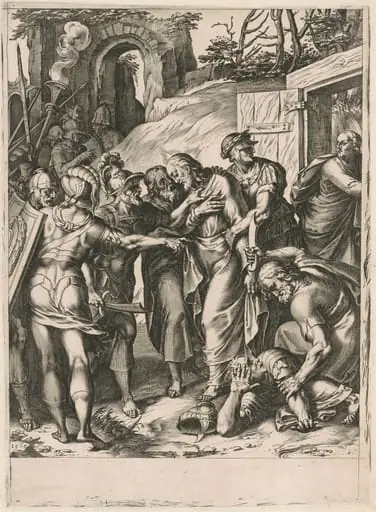 The Betrayal of Christ
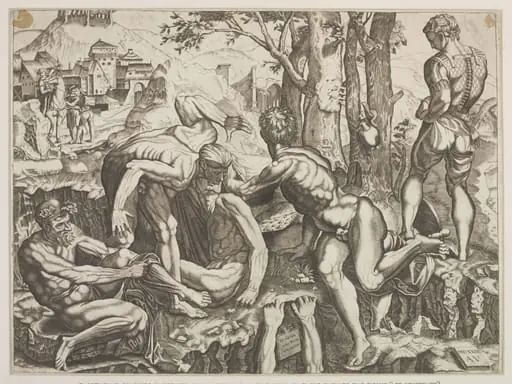 Untitled
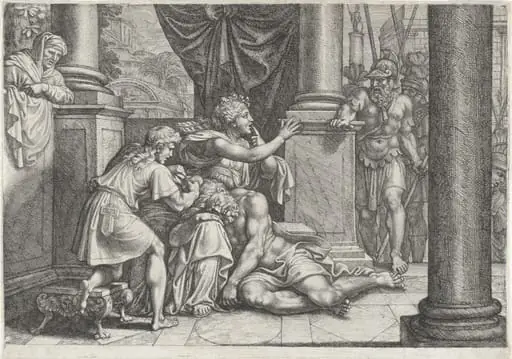 Samson and Delilah
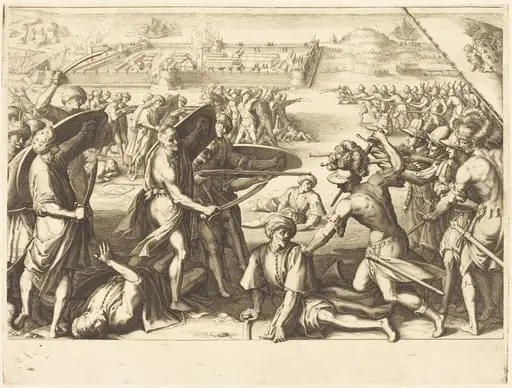 Assault on the Outer Forts of Bone
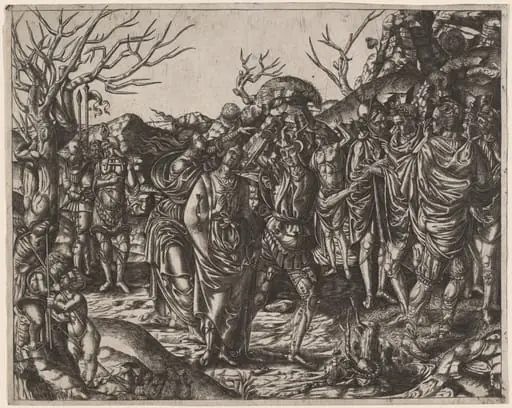 The Death of Virginia
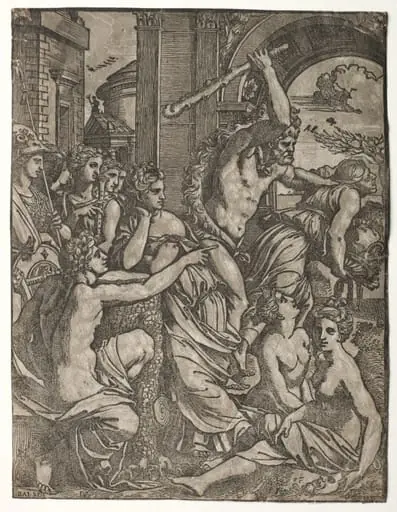 Hercules Driving Envy from the Temple of the Muses
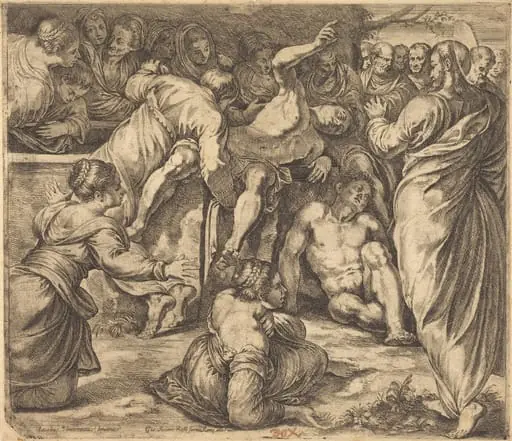 The Raising of Lazarus
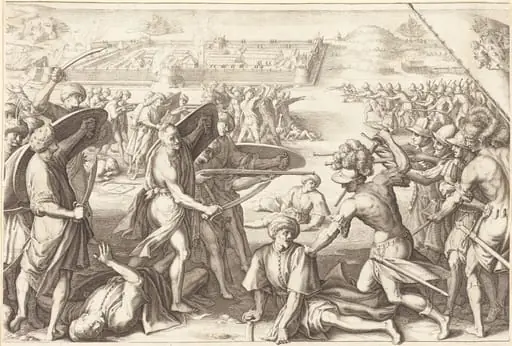 Assault on the Outer Forts of Bone