Artwork
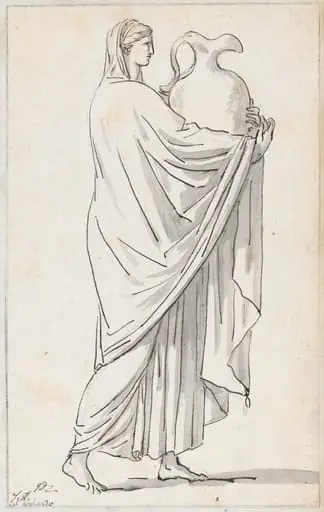
Woman from a Procession, from the Palazzo Mattei
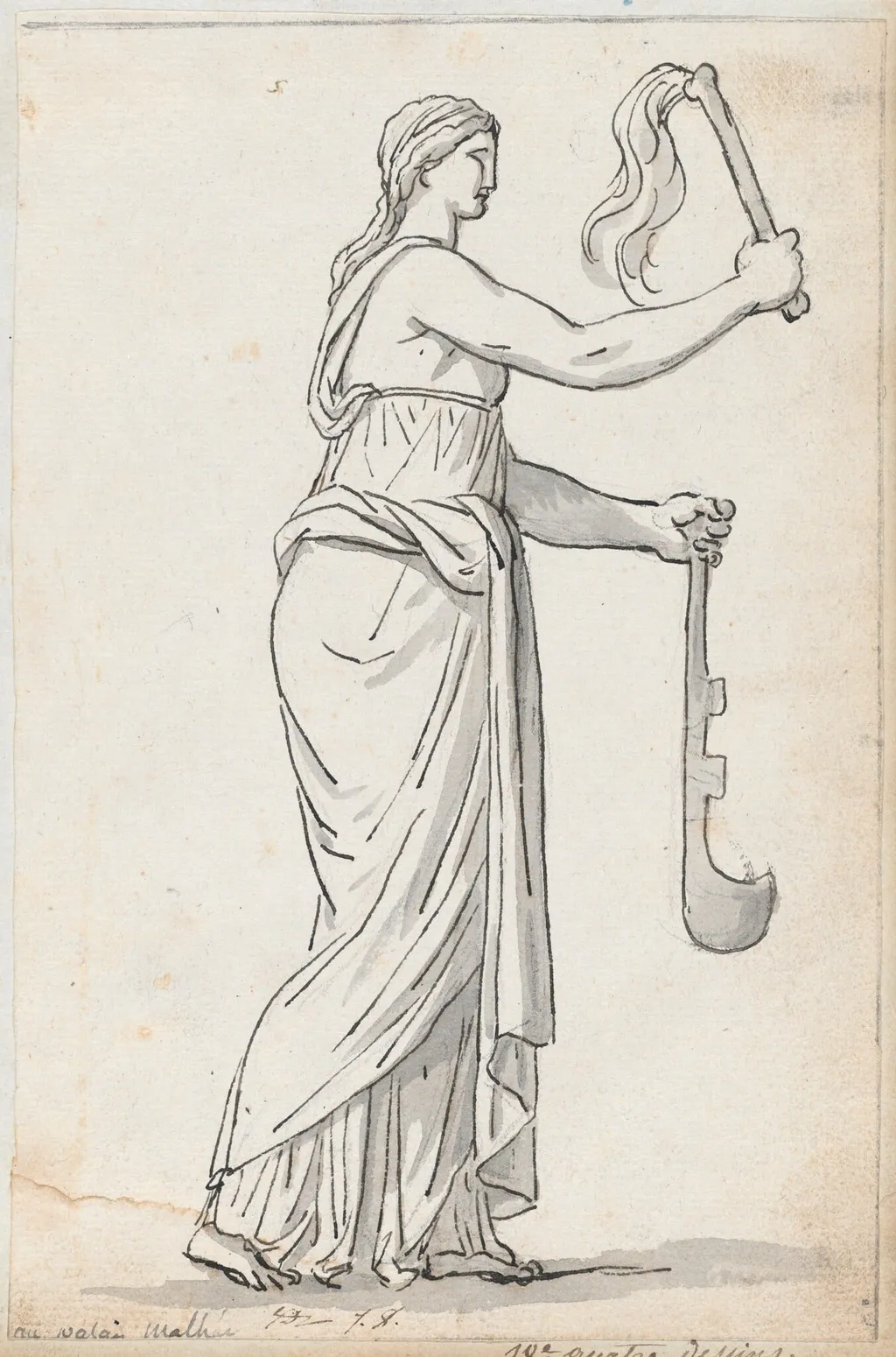
Woman from a Procession, from the Palazzo Mattei is a graphite drawing by the Neoclassicist artist Jacques-Louis David. It dates from 1778 and is held in the collection of the National Gallery of Art.
About this work
Overview
Its restrained palette and precise draftsmanship reflect his early engagement with classical themes before his full transition into Neoclassical painting.
This ink and wash drawing, dated 1778, is attributed to Jacques-Louis David. Executed on beige laid paper, it depicts a solitary female figure from a ceremonial procession. The work is part of a series of studies David made during his time in Rome, capturing figures observed in ancient or revived ritual contexts. Its restrained palette and precise draftsmanship reflect his early engagement with classical themes before his full transition into Neoclassical painting.
Subject & Meaning
The figure is a woman participating in a formal procession, likely inspired by Roman or Hellenistic ceremonial types. She holds a staff in one hand and a folded cloth in the other, suggesting ritual function—perhaps as a priestess or attendant. Her composed posture and calm expression convey solemnity rather than narrative drama. The absence of context or crowd emphasizes her individual dignity, aligning with David’s interest in idealized human presence over theatrical storytelling.
Technique & Style
David employed pen and dark brown ink with subtle gray wash over graphite underdrawing to model form and volume. The flowing lines of the garment suggest movement without excess detail, while the washes define folds and shadow with economy. The figure emerges from the beige paper through controlled tonal gradations, not outline. The hands and face receive the most refined attention, anchoring the composition in quiet realism rather than idealized grandeur.
History & Provenance
The drawing originates from David’s Roman sojourn between 1775 and 1780, during which he studied antiquities and sketched contemporary processions that echoed ancient rites. It was later held in the collection of the Palazzo Mattei in Rome, a known repository of classical artifacts and Renaissance to Neoclassical drawings. Its attribution to David is supported by stylistic parallels in his other Roman studies and archival records of his sketchbooks.
Context
Created during David’s formative years in Italy, this drawing reflects his immersion in classical antiquity and his search for authentic modes of representation. Unlike later revolutionary works, this piece is observational rather than ideological. It belongs to a broader trend among French artists in Rome who sought to revive the moral clarity and formal restraint of ancient art, laying groundwork for the Neoclassical movement that David would later lead.
Legacy
Though not widely exhibited, this drawing exemplifies David’s disciplined approach to figure study and his commitment to drawing as a foundation for historical painting. It influenced later generations of academic artists who valued preparatory work as a path to compositional integrity. Its quiet focus on ritual presence, stripped of ornament, remains a touchstone for understanding the transition from Rococo sensibility to Neoclassical seriousness.
Artist & collection
Artist
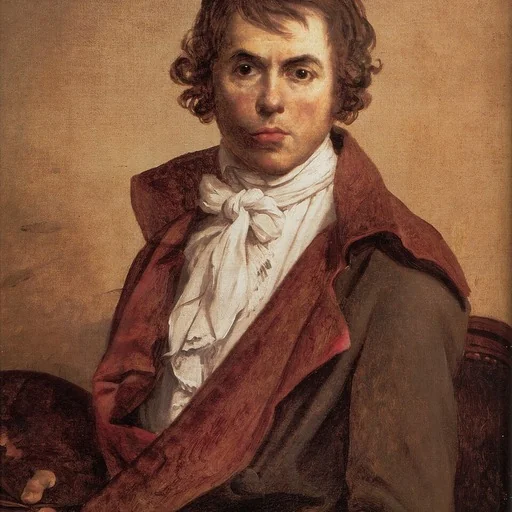
Jacques-Louis David was born in Paris on 30 August 1748 into a bourgeois family; his father died in a duel when the boy was nine, and a maternal uncle guided his education.

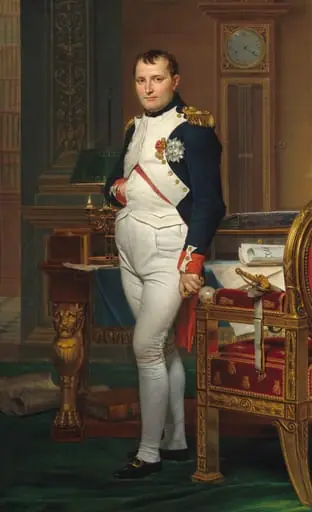 The Emperor Napoleon in His Study at the Tuileries
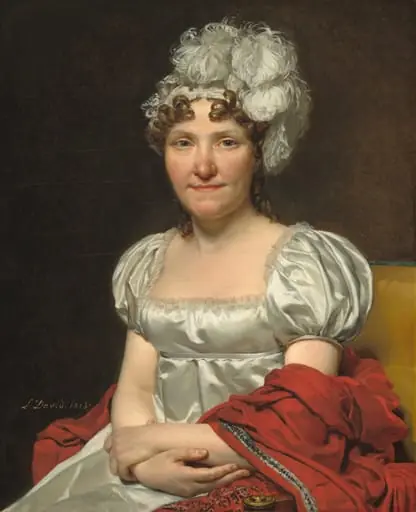 Madame David
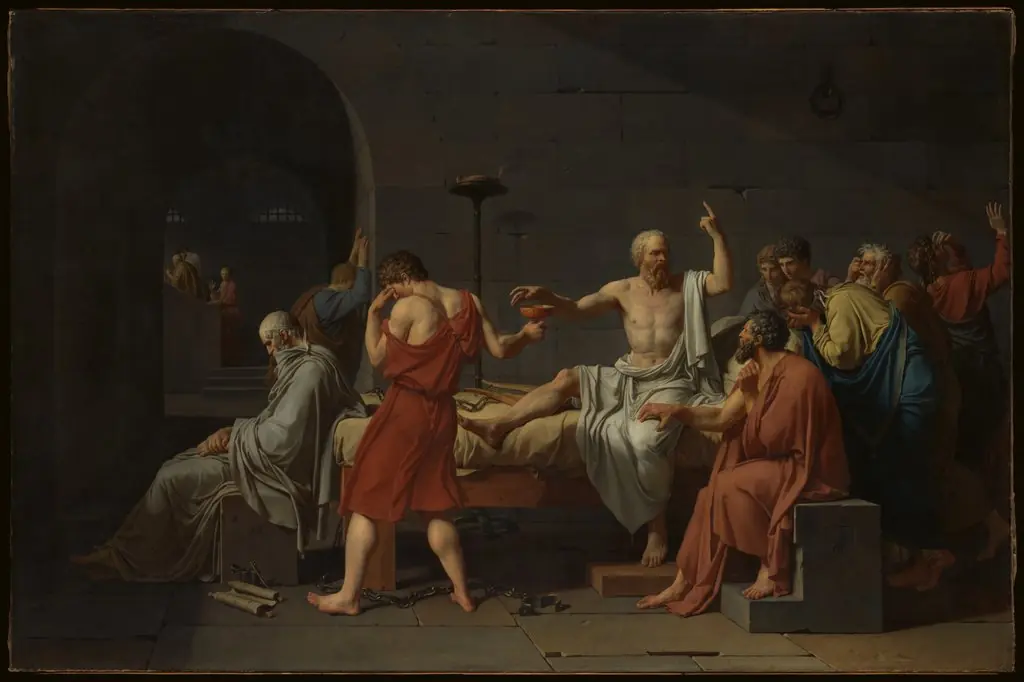 The Death of Socrates
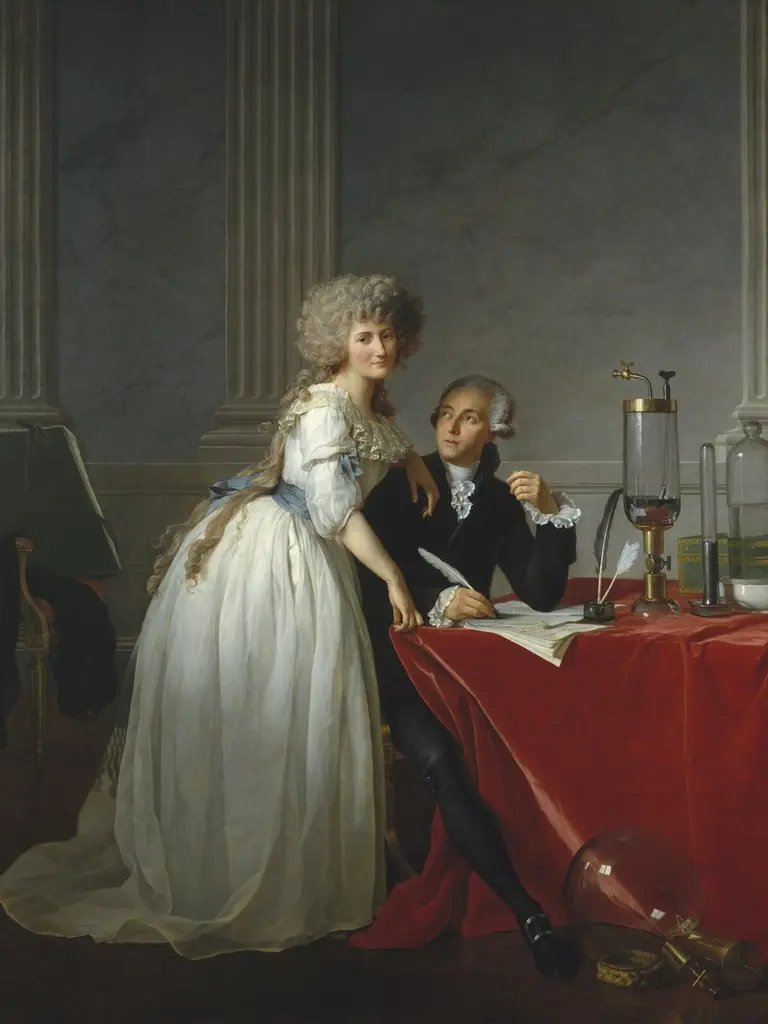 Portrait of Antoine-Laurent Lavoisier and his wife
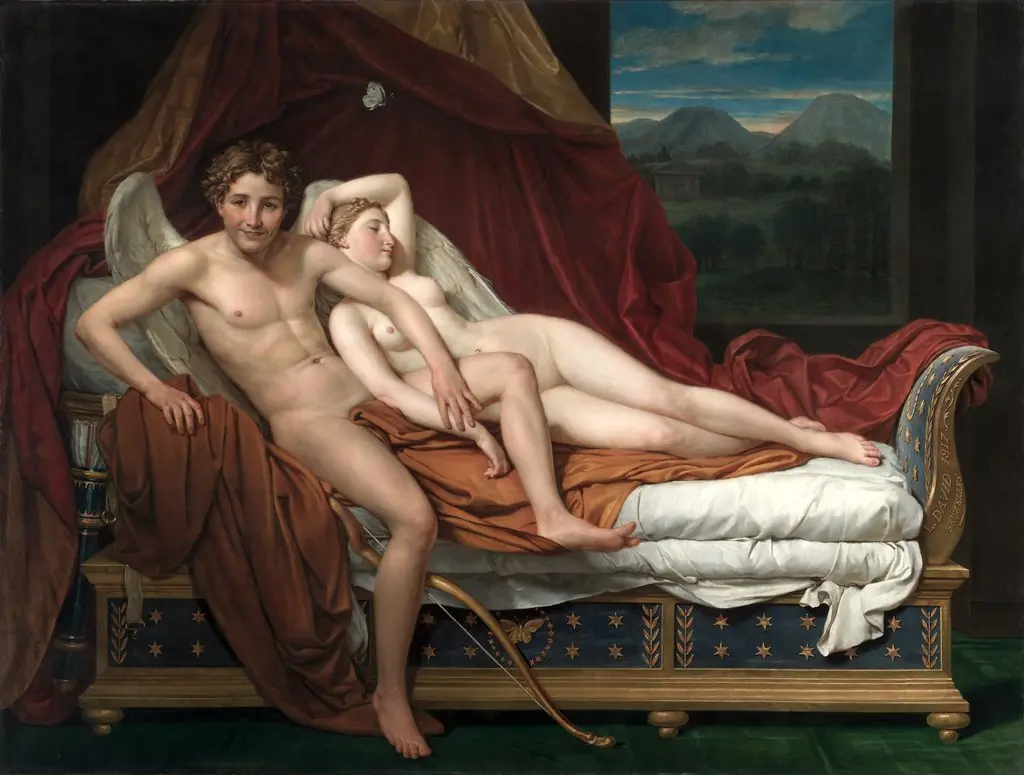 Cupid and Psyche
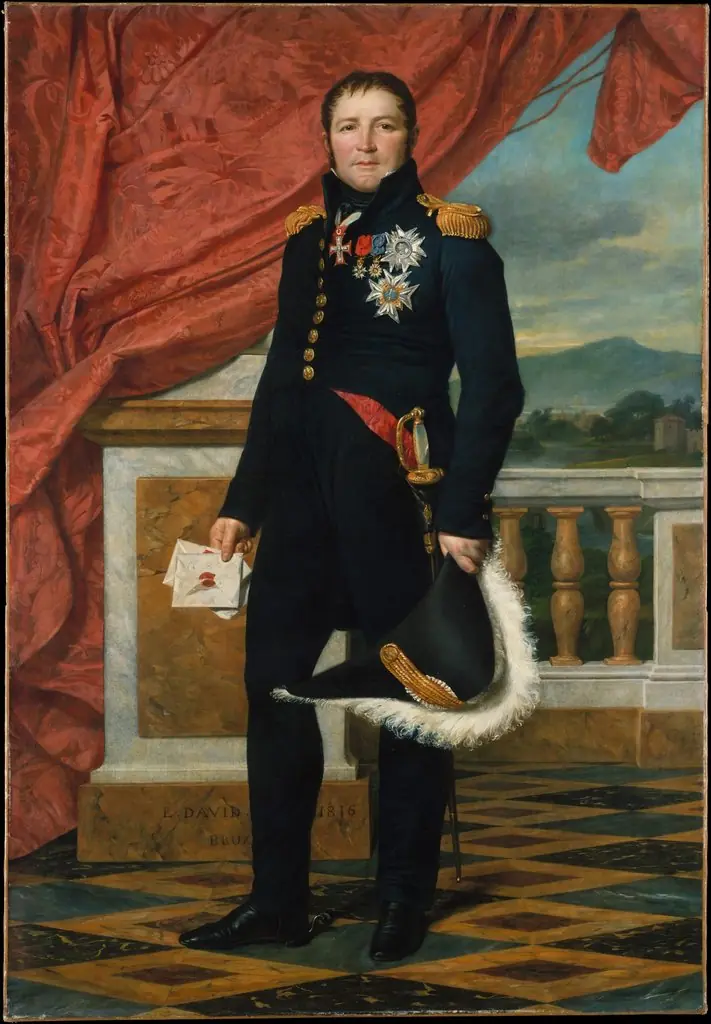 General Étienne-Maurice Gérard (1773–1852), Marshal of France
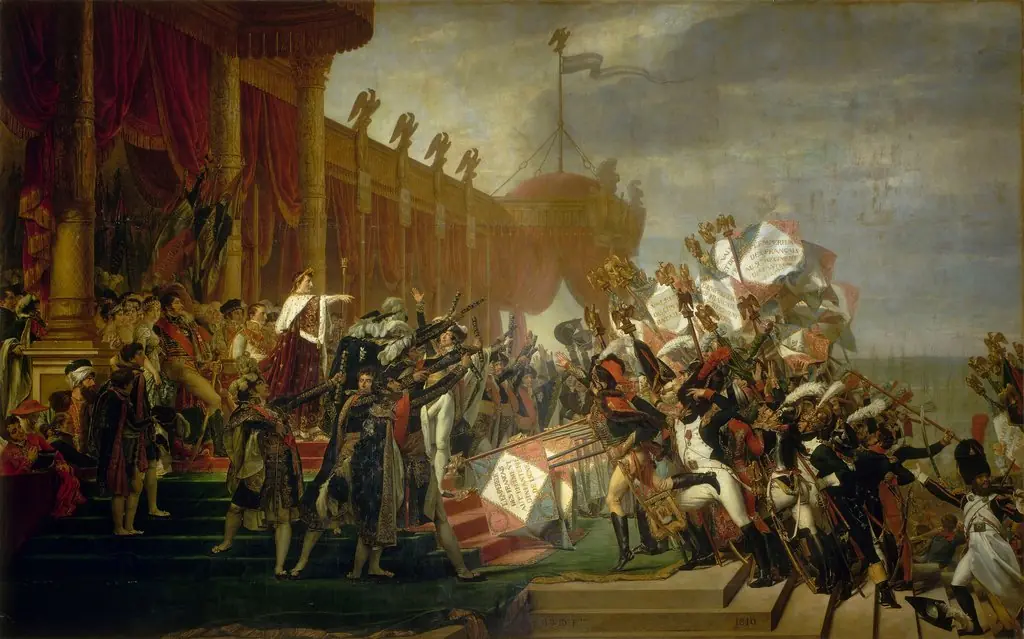 The Distribution of the Eagle Standards
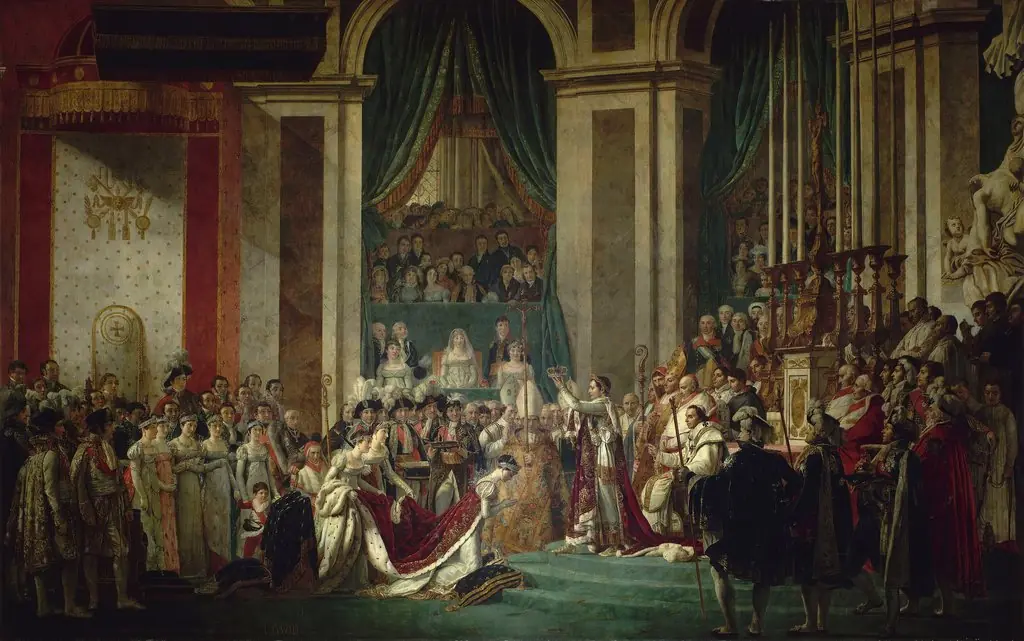 Coronation of Emperor Napoleon I and Coronation of the Empress Josephine
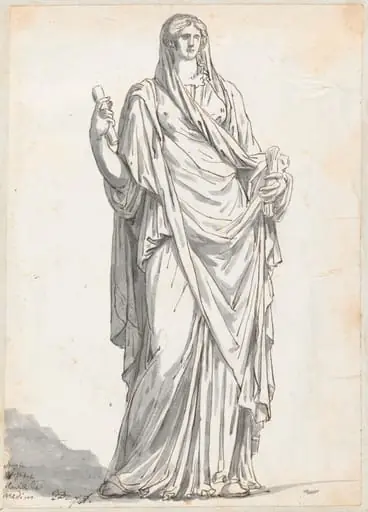 Orante from the Villa Medici
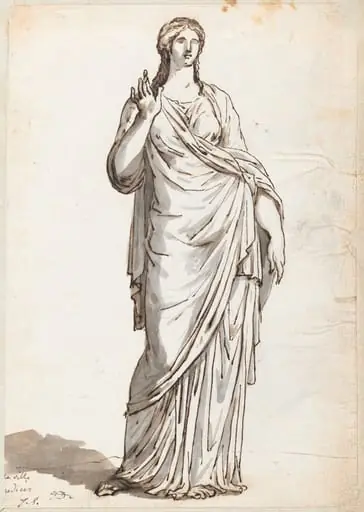 Woman with a Raised Hand, from the Villa Medici
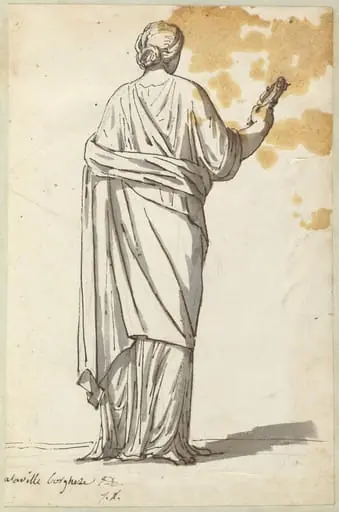 Woman with a Mirror, from the Villa Borghese
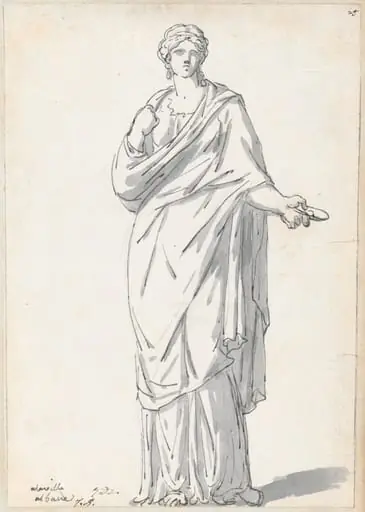 Woman from the Villa Albani
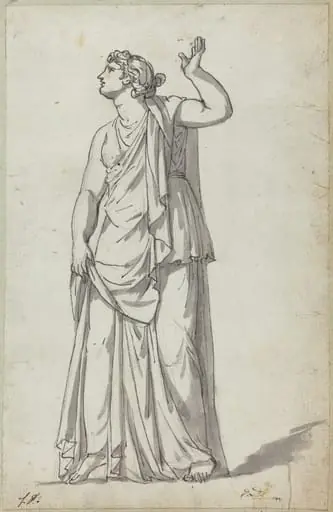 Roman Statue of a Muse (Anchyrrhoe)
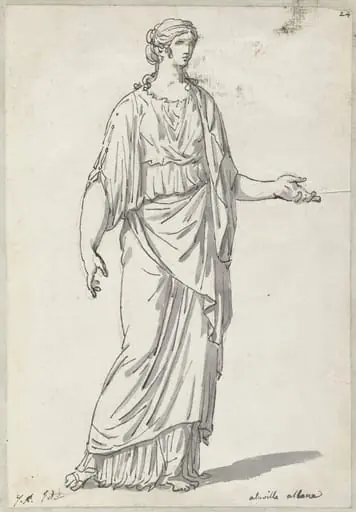 Classical Sculpture of a Woman with an Outstretched Arm
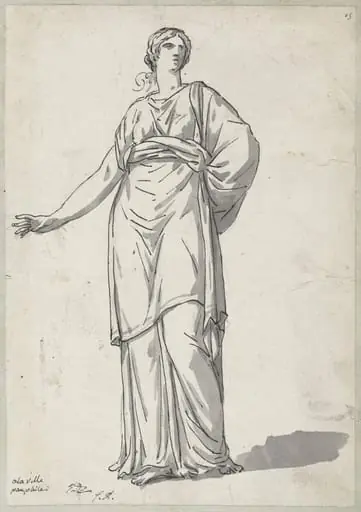 Woman from the Villa Pamphili
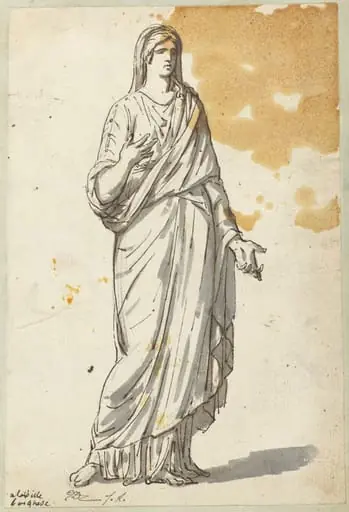 Woman from the Villa Borghese
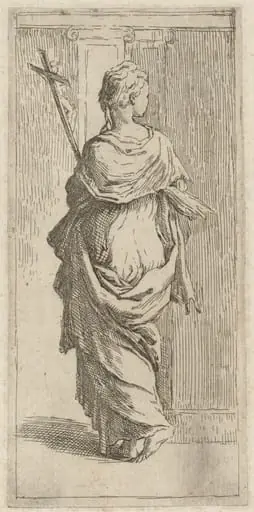 A Girl with a Crucifix
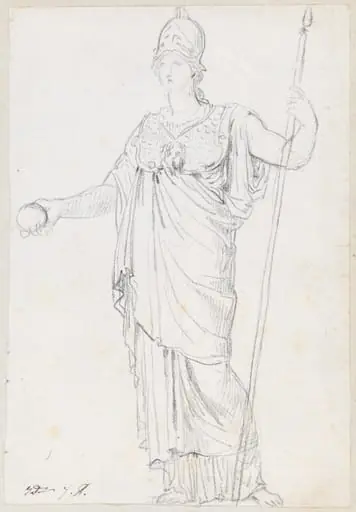 Statue of Minerva
 Woman with a Pitcher, from the Palazzo Mattei
 Woman from the Villa Medici