Artwork
Westminster Palace, Hall and Abbey
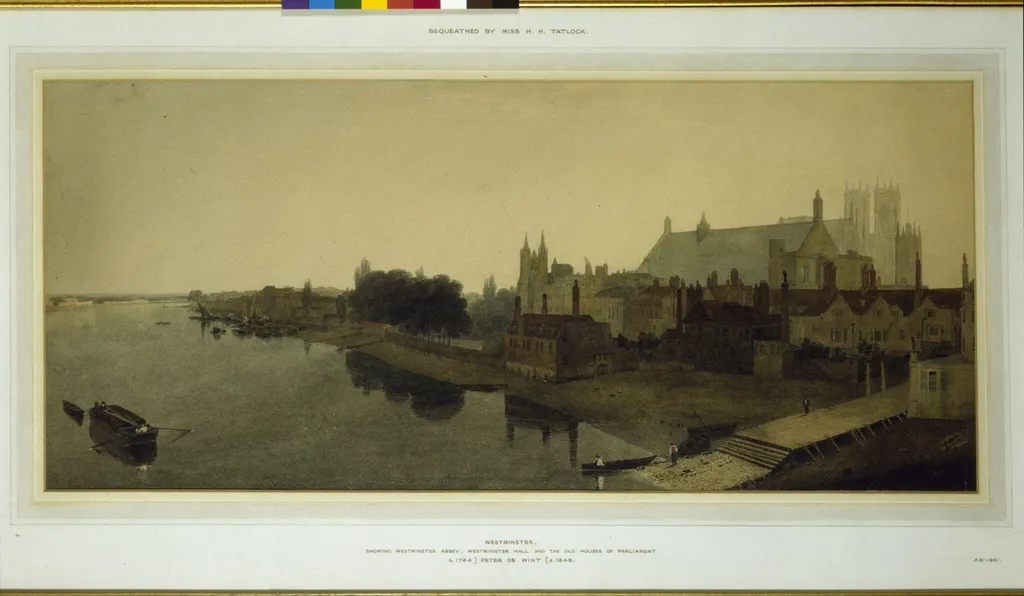
Westminster Palace, Hall and Abbey is a watercolor work on paper by Peter De Wint. It is held in the collection of the Victoria and Albert Museum.
About this work
Overview
Painted in 1850, this watercolour captures the architectural ensemble of Westminster Palace, the Great Hall, and Westminster Abbey along the River Thames.
Painted in 1850, this watercolour captures the architectural ensemble of Westminster Palace, the Great Hall, and Westminster Abbey along the River Thames. Executed in transparent washes, the work reflects Peter De Wint’s mastery of the medium, emphasizing light and atmospheric calm rather than architectural precision. The composition balances built structures with natural elements, creating a quiet, observational tone characteristic of his later work.
Subject & Meaning
The scene presents the royal and ecclesiastical heart of London in peaceful repose. The Thames, dotted with moored boats and lined with strollers, functions as a quiet divider between civic and sacred spaces. No grand events or figures dominate; instead, the focus lies in the enduring presence of the buildings amid daily life, suggesting continuity rather than spectacle.
Technique & Style
De Wint employed thin, layered watercolour washes to suggest soft daylight and subtle reflections on the river. Delicate brushwork defines the facades of the buildings, while the foreground trees are rendered with loose, fluid strokes. The absence of sharp outlines and the muted palette reinforce a sense of stillness, aligning with the Romantic tradition of landscape as contemplative space.
History & Provenance
Though dated to 1850, the work may relate thematically to an earlier 1828 watercolour by De Wint, *Druidical Temple at Tormore, Isle of Arran*, exhibited at the Old Water Colour Society. This connection hints at his recurring interest in architectural ruins and historic sites, though here the subject is a living, functioning complex rather than a relic.
Context
In mid-19th century London, Westminster Palace was undergoing reconstruction after the 1834 fire. De Wint’s depiction, free of construction activity, offers a nostalgic view of the pre-fire skyline. His choice to portray the site in tranquility may reflect a desire to preserve its traditional character amid rapid urban change.
Legacy
De Wint’s watercolours contributed to the legitimacy of the medium in British art, moving beyond topographical records toward poetic interpretation. This work exemplifies his influence on later landscape artists who valued mood and light over detail, helping to shape the evolution of watercolour as a serious artistic form.
Artist & collection



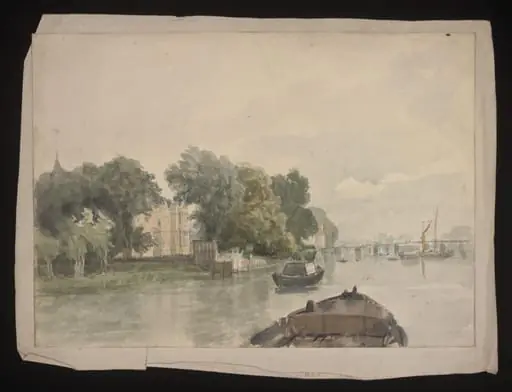 Watercolour drawing by the Grieve family, showing a scene on the River Thames
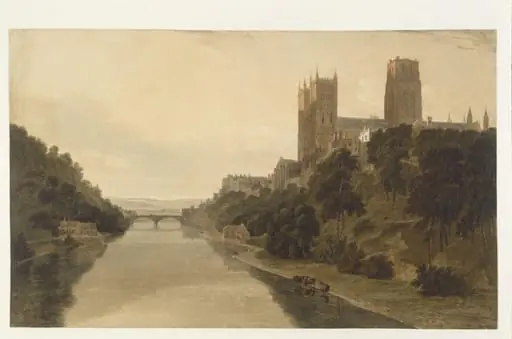 Durham Cathedral
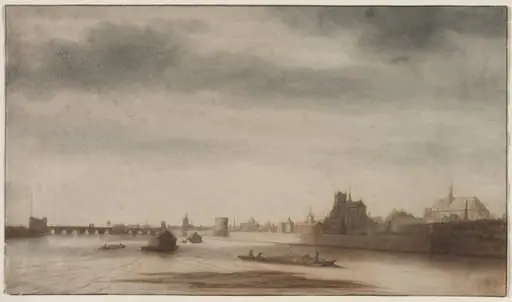 View of Orléans from the Loire
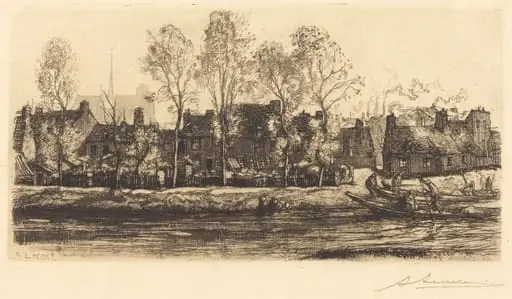 Banks of the Somme at Amiens (Bords de la Somme a Amiens)
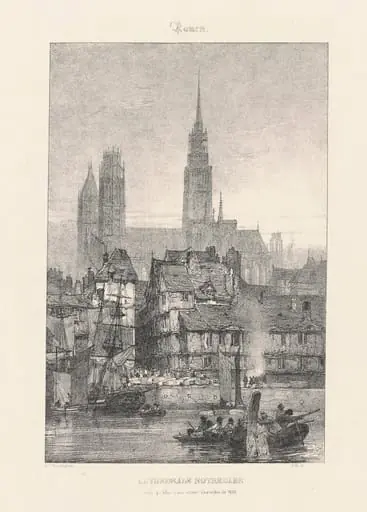 Cathedral Notre-Dame
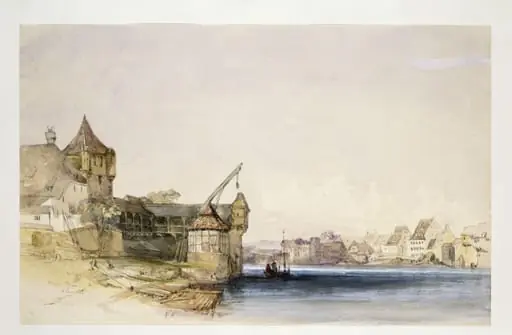 View at Basle
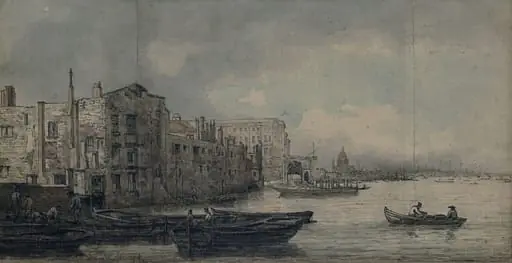 The Thames, showing Somerset House in the course of construction
 Untitled
 Old London Bridge as it appeared in 1745
 St. James' Park with a View of Westminster Abbey
 Basle
Basle Chiswick