Artwork
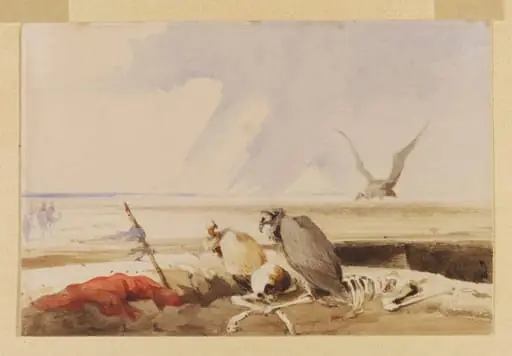
In the Desert
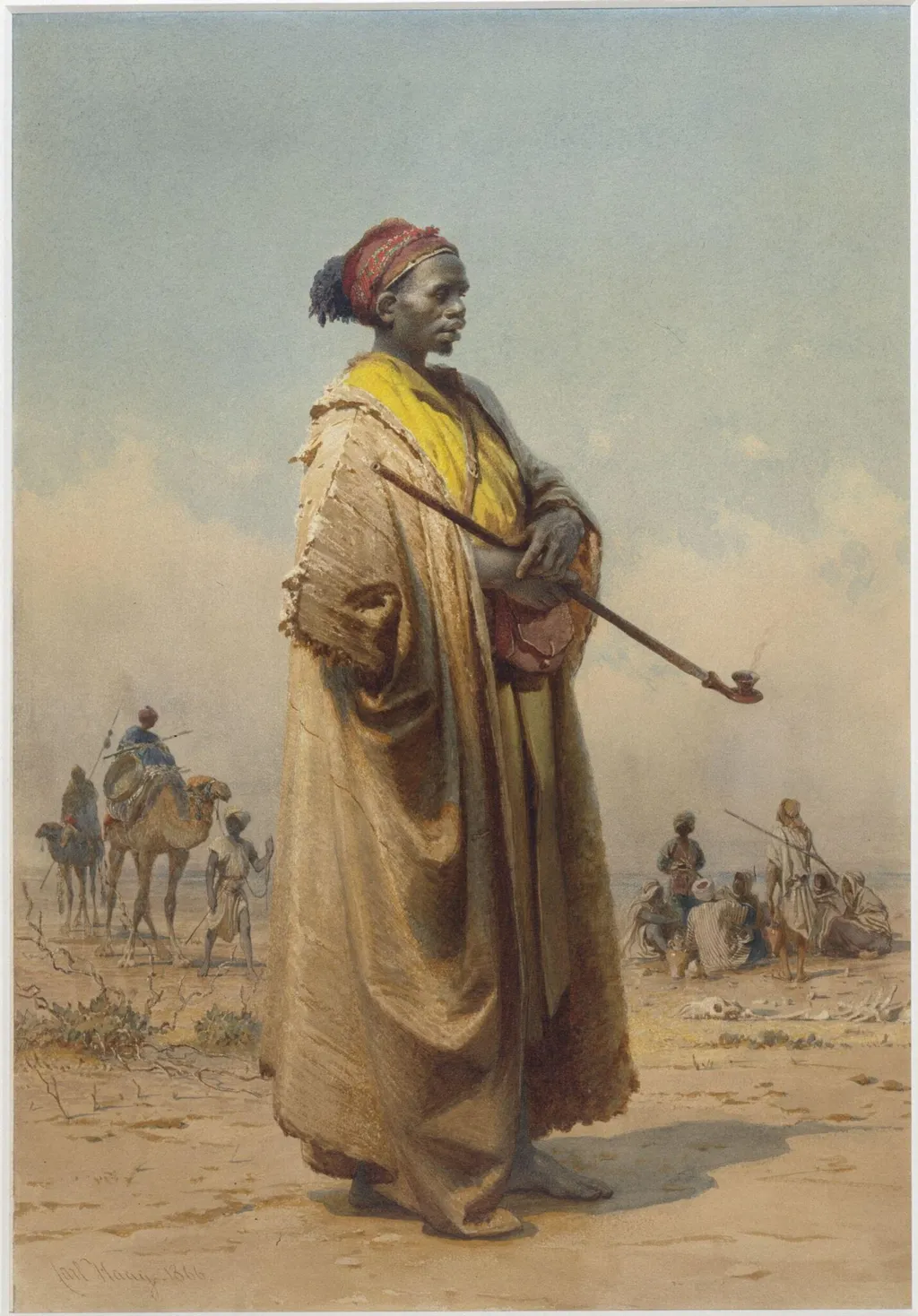
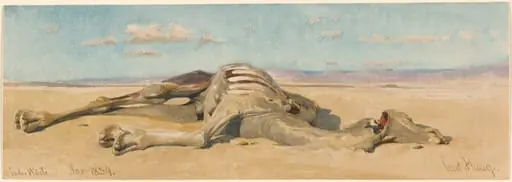
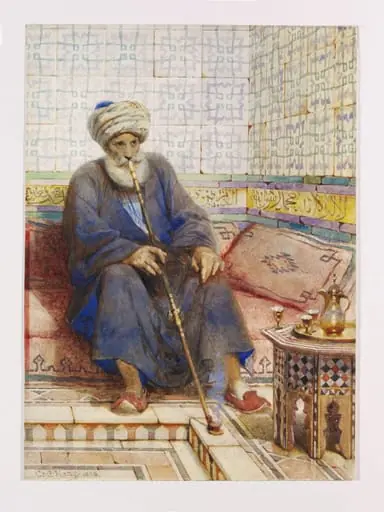
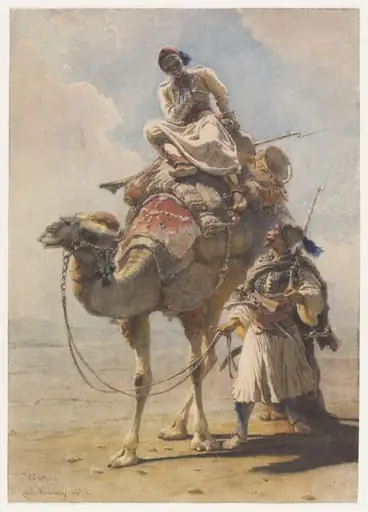
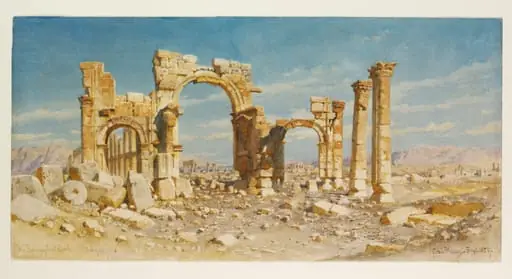
In the Desert is a watercolor work on paper by the Biedermeier artist Carl Haag. It dates from 1866 and is held in the collection of the Victoria and Albert Museum.
About this work
Overview
Executed during Haag’s 19th‑century travels between Cairo and Suez, the work was intended for a British audience interested in exotic locales.
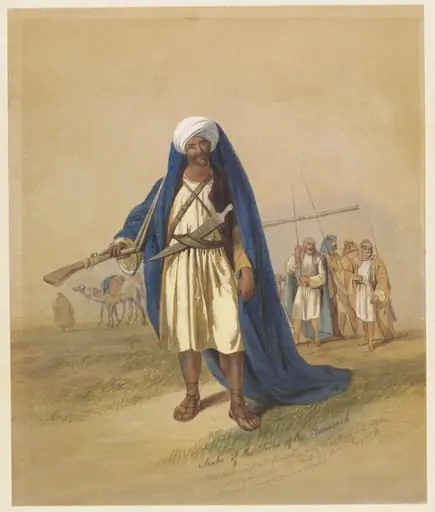
In this watercolour, Carl Haag records a small caravan traversing an Egyptian desert landscape. The composition centers on a cluster of figures dressed in traditional North African attire, accompanied by camels and a modest tent, set against a muted horizon. Executed during Haag’s 19th‑century travels between Cairo and Suez, the work was intended for a British audience interested in exotic locales.
Subject & Meaning
The scene presents a snapshot of everyday desert life, emphasizing the nomadic routine of travel and settlement. By isolating the caravan’s occupants, Haag highlights the cultural distinctiveness of Eastern peoples, offering viewers a romanticized yet informative glimpse into the customs and attire of North African communities.
Technique & Style
Rendered in transparent water‑soluble pigments, the painting employs delicate washes to convey the arid light and expansive sky. Haag’s handling of colour balances muted earth tones with subtle highlights, while his precise line work defines the figures and animals, creating a clear, almost documentary quality typical of 19th‑century travel illustration.
History & Provenance
Created as part of Haag’s series of watercolours produced for the British market, the piece reflects his commercial aim to supply visual material for travel literature and souvenir collections. The artist, a German expatriate who settled in England, documented his journey across the Egyptian desert between Cairo and Suez, and the work later entered museum holdings as an example of Victorian Orientalist imagery.
Context
During the mid‑1800s, European interest in the Near East surged, driven by colonial expansion and archaeological discoveries. Artists like Haag catered to this fascination by providing accessible visual narratives of distant lands. The painting thus functions both as a travel record and as a cultural artifact illustrating how Eastern societies were framed for Western consumption.
Artist & collection
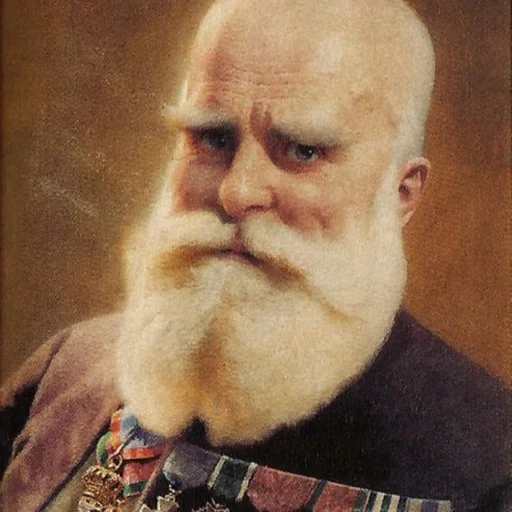
Artist
Carl Haag was a Bavarian-born painter who became a naturalized British subject and was court painter to the duke of Saxe-Coburg and Gotha.