Artwork
Henricus Montagu (Henry Montague, First Earl of Manchester)
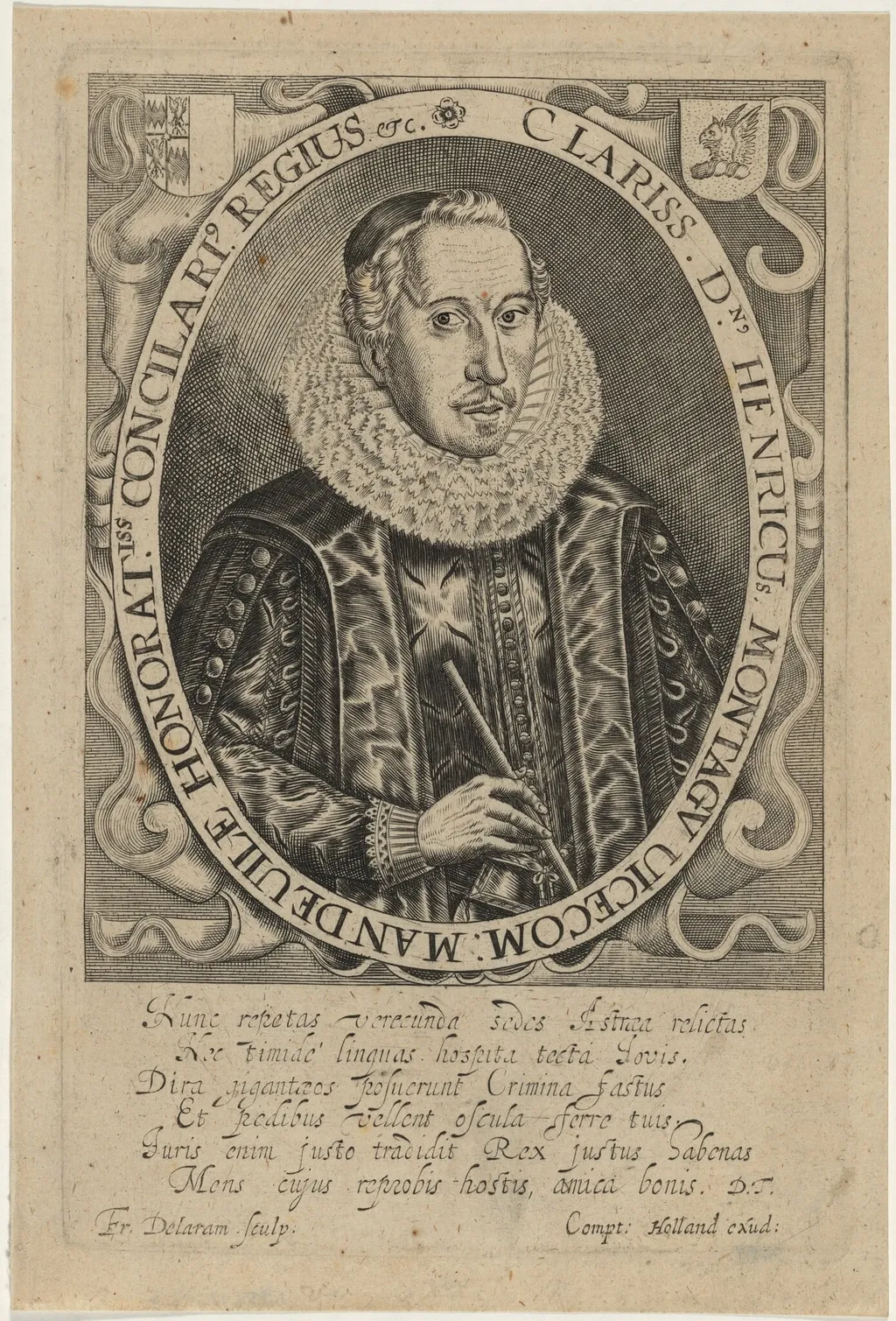
Henricus Montagu (Henry Montague, First Earl of Manchester) is an ink print by the Renaissance artist Francis Delaram. It dates from 1608 and is held in the collection of the National Gallery of Art.
About this work
Overview
Executed in black ink on paper, the print belongs to a tradition of early 17th-century English portraiture that combined likeness with heraldic symbolism.
This 1608 engraving by Francis Delaram presents Henry Montagu, later First Earl of Manchester, in a formal portrait. Executed in black ink on paper, the print belongs to a tradition of early 17th-century English portraiture that combined likeness with heraldic symbolism. Delaram, active in England during the early 1600s, was known for his detailed line work and integration of textual elements, often influenced by Flemish printmaking conventions.
Subject & Meaning
The portrait captures Montagu as a figure of authority, dressed in rich garments including a heavy fur collar and dark robe, suggesting his noble status. His composed expression and steady gaze convey dignity and command. The Latin inscription identifying him as 'Henricus Montagu' reinforces his identity within a scholarly and aristocratic context, aligning the image with the humanist ideals of the period.
Technique & Style
Delaram employed fine, precise lines typical of engraving to render texture in fabric and facial features. Decorative swirls frame the composition, echoing Flemish ornamental traditions, while cherubic figures appear at the margins. The background is minimally detailed, contrasting with the intricate rendering of the figure and attire. The text surrounding the portrait serves both as identification and as a stylistic flourish.
History & Provenance
Created in 1608, the engraving predates Montagu’s elevation to earl in 1626, suggesting it was made during his rise in court circles. Delaram, likely born in Flanders around 1590, worked in England between 1615 and 1627, contributing illustrations to historical texts such as William Camden’s writings. This print likely circulated among elites as a means of visual propaganda or personal commemoration.
Context
In early Jacobean England, engraved portraits served as tools for social and political representation, especially for those without access to painted likenesses. Delaram’s work reflects the influence of continental printmakers, particularly from the Low Countries, whose stylistic elements were adopted by English artists. The blend of realism and ornamentation aligns with broader trends in elite portraiture of the time.
Legacy
Though Delaram’s output was modest and his technical execution uneven—evident in the rudimentary background—the engraving remains a rare surviving example of early 17th-century English portraiture by a native engraver. It contributes to the understanding of how aristocratic identity was visually constructed before the dominance of painted portraiture in the Stuart court.
Artist & collection
Artist
Francis Delaram (born around 1590, fl. 1615–1624 or 1627), was an English engraver. Delaram left a substantial collection of engraved portraits, landscapes and book illustrations (specifically, William Camden's…

 Henricus Percye (Henry Percy, Ninth Earl of Northumberland)
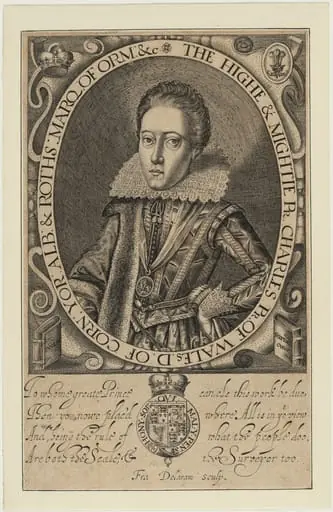 Charles I, as Prince of Wales
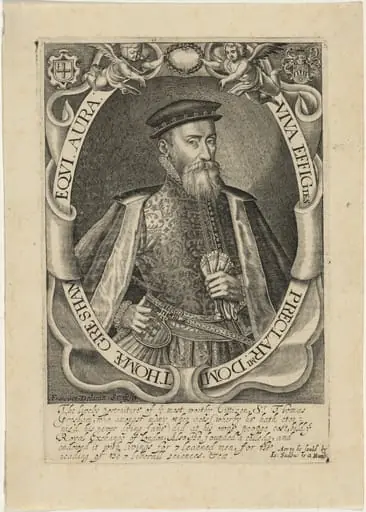 Sir Thomas Grisham
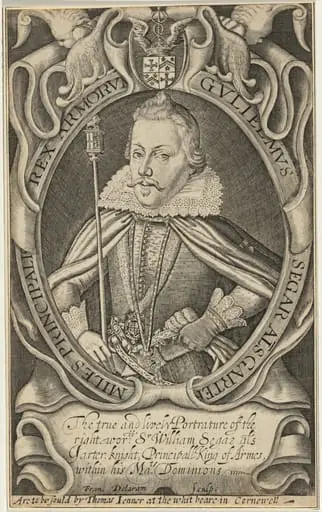 Guliemus Segar (Sir William Segar)
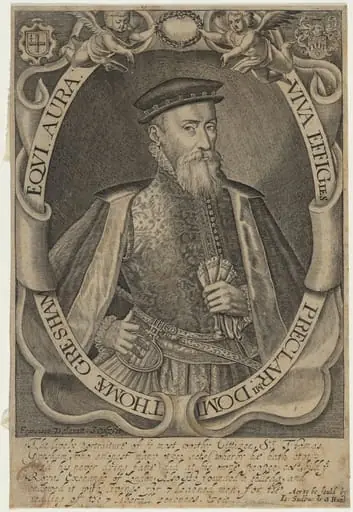 Thomae Gresham Equi. Aura (Sir Thomas Gresham)
 Elizabeth, Queen of Bohemia
 Willmus Burton de Falde (William Burton)
 Henrici VIII Angliae, Franciae et Hiberniam Rex (King Henry VIII)