Artwork
Akbar
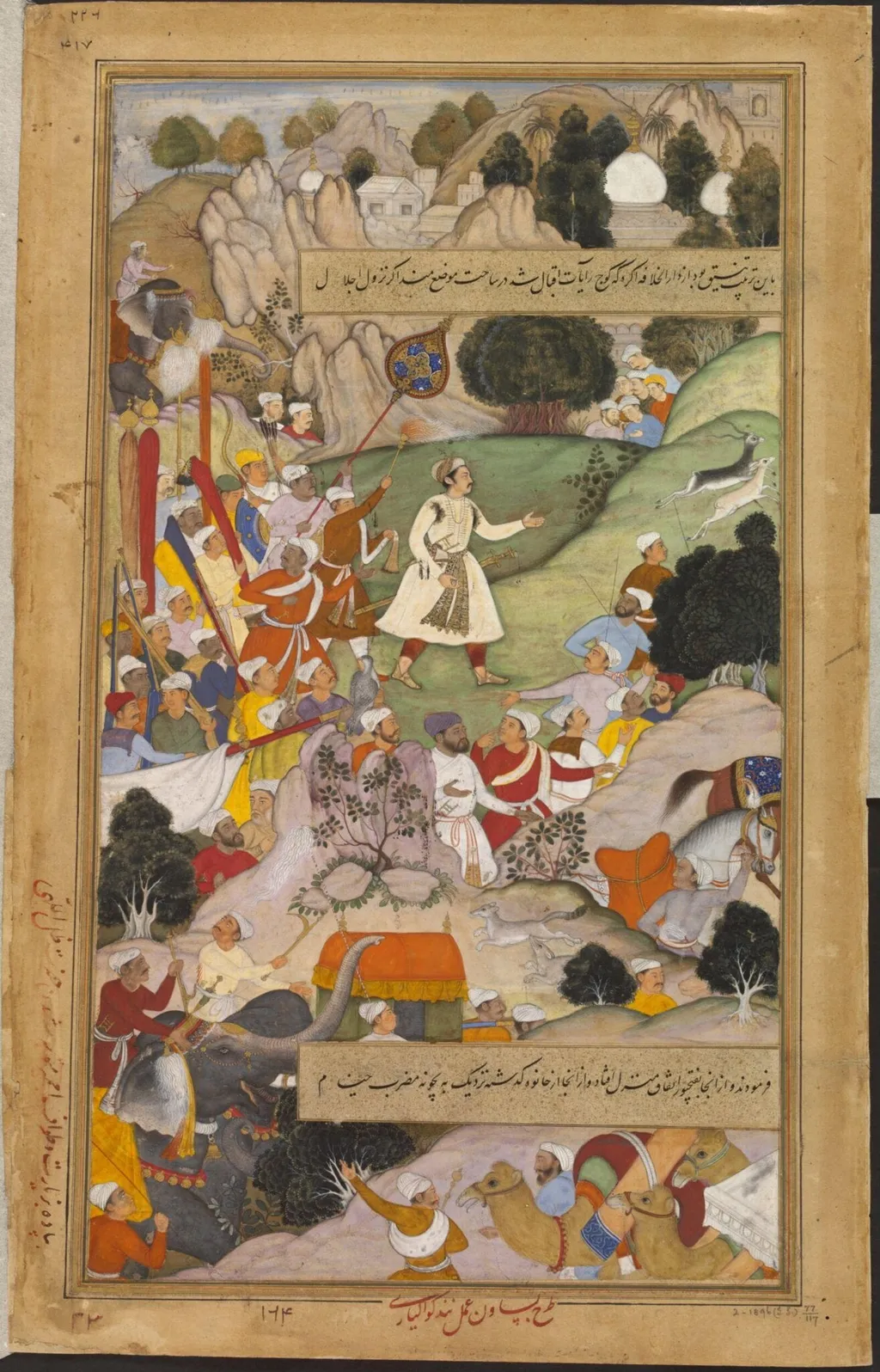
Akbar is a paint painting by the Mughal Painting artist Basawan. It dates from 1592 and is held in the collection of the Victoria and Albert Museum.
About this work
Overview
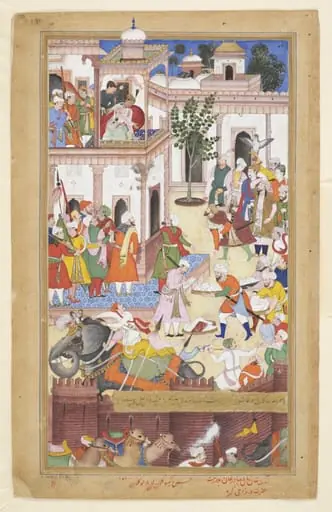
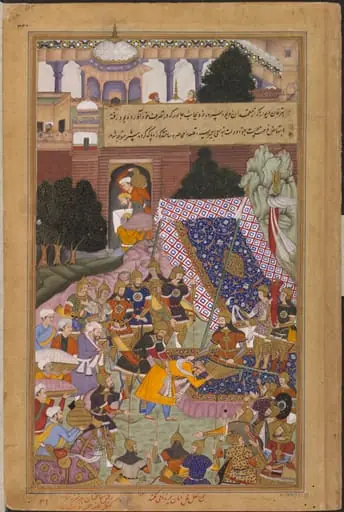
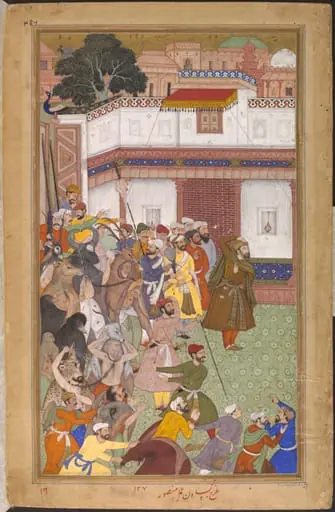
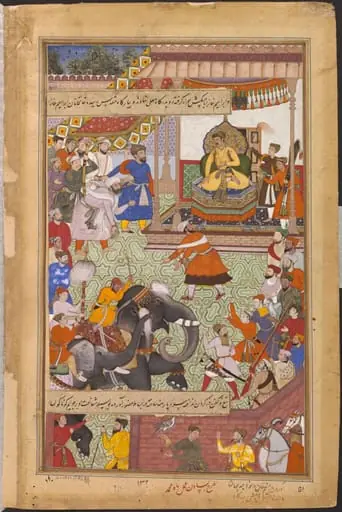
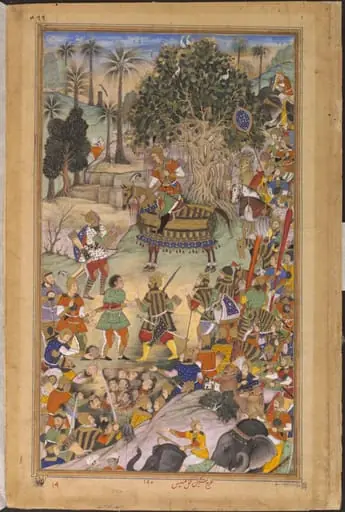
This painting, part of the Akbarnama (Book of Akbar), illustrates a pivotal moment in the life of Mughal Emperor Akbar. It captures his pilgrimage to the Ajmer shrine of Shaikh Mu'in ad-Din Chishti, fulfilling a vow made upon the birth of his son.
Subject & Meaning
The scene depicts Akbar's devout fulfillment of his vow, walking barefoot to the shrine, accompanied by attendants bearing symbols of imperial authority. The image conveys Akbar's religious devotion and his adherence to royal traditions.
Technique & Style
The composition, designed by Basawan and executed by Nand Gwaliari, features meticulous details such as elongated shadows, enhancing the realism of the scene. The use of red cloth for royal emblems and the aftabgir (shade) over Akbar emphasizes imperial dignity.
History & Provenance
Created for the Akbarnama, this painting is documented in Abu’l Fazl's A’in-i Akbari. Akbar's subsequent annual pilgrimages to Ajmer (until 1579) and his architectural commissions there further contextualize the painting's historical significance.
Context
This work reflects the Mughal court's blend of religious piety and imperial display. Akbar's actions, as depicted, align with his efforts to consolidate power through religious and architectural patronage, characteristic of his reign.
Artist & collection
Artist
Basāwan, or Basāvan, was an Indian miniature painter in the Mughal style. He was known by his contemporaries as a skilled colorist and keen observer of human nature, and for his use of portraiture in the illustrations…

 Page from Tales of a Parrot (Tuti-nama): text page
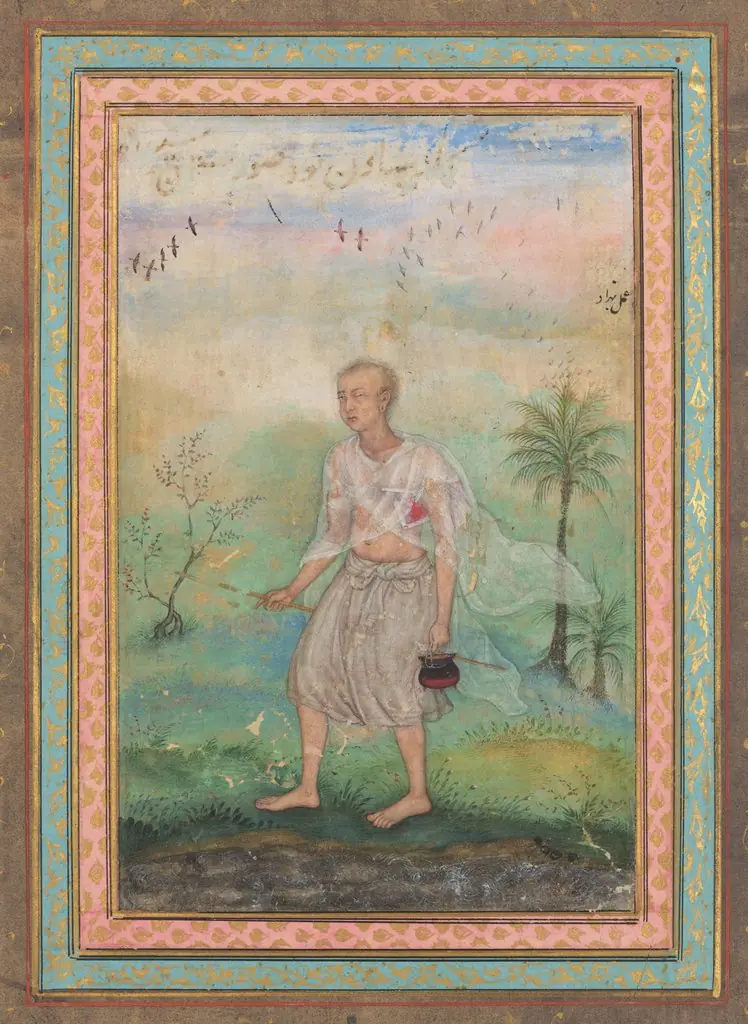 Jain Ascetic Walking Along a Riverbank
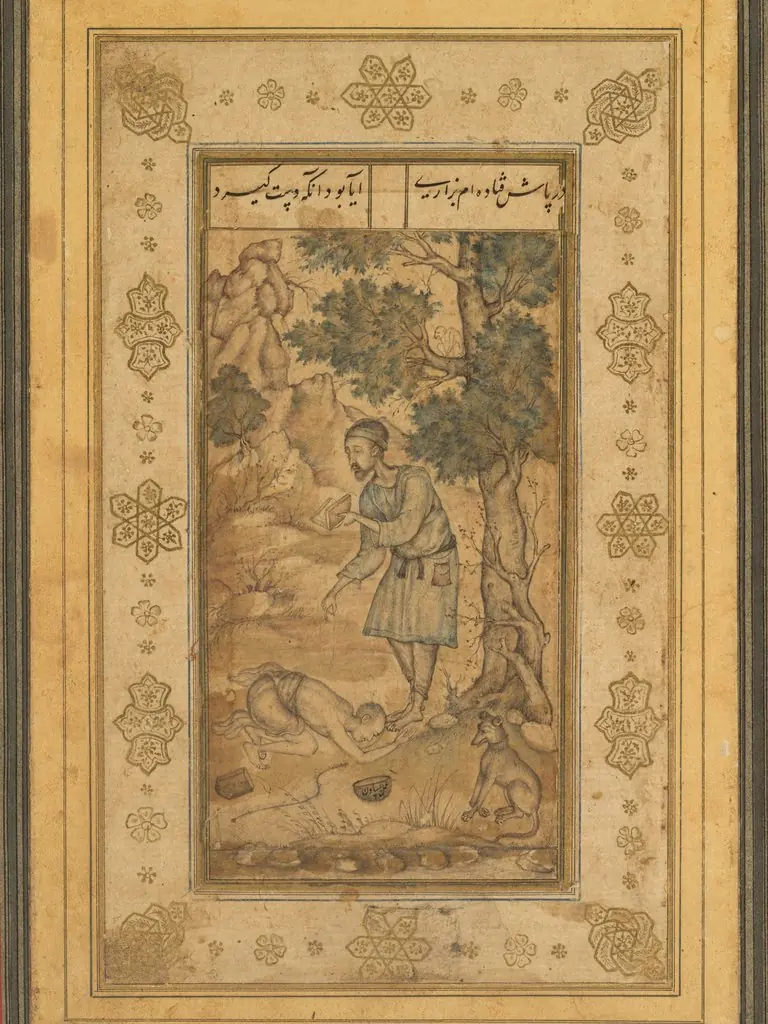 A mendicant bowing before a holy man, from the Prince Salim Album
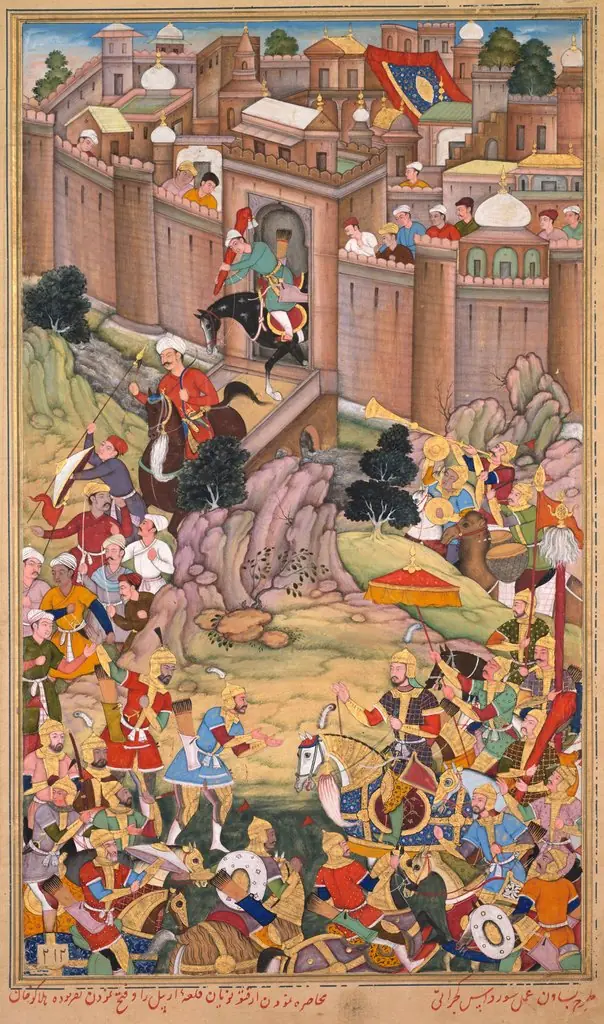 The siege of Arbela in the era of Hulagu Khan, from a Chingiz-nama (Book of Chingiz Khan) of the Jami al-tavarikh (Compendium of Chronicles) of Rashid al-Din (Persian, 1247–1318)
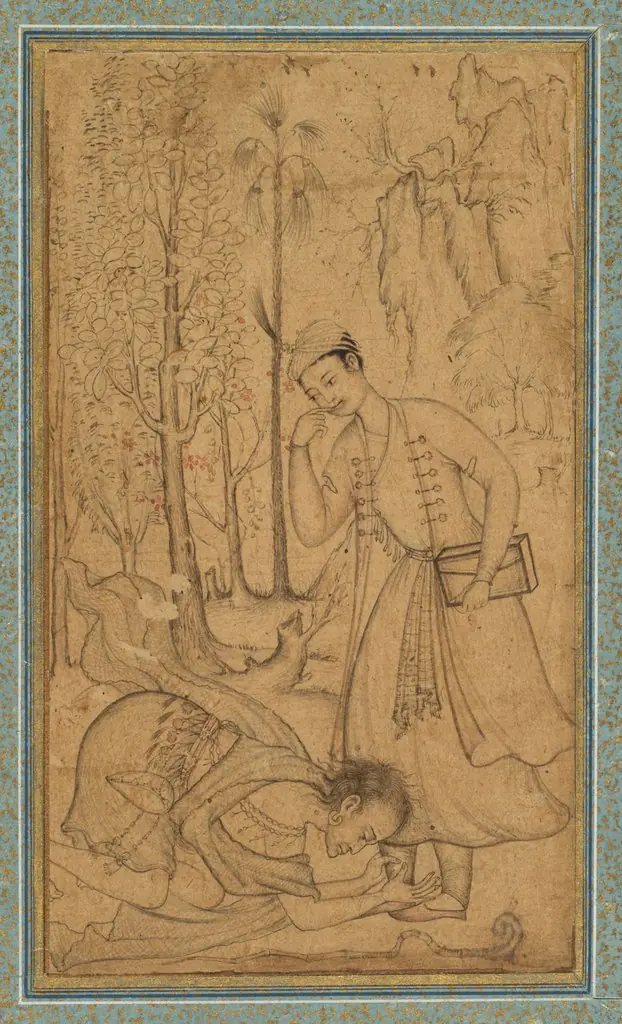 A holy man prostrating himself before a learned prince
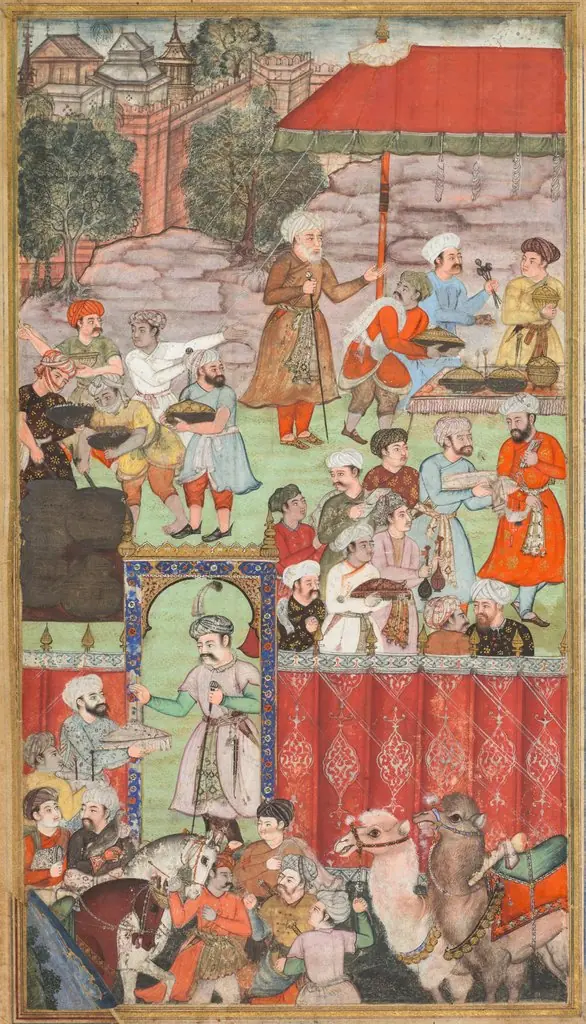 A feast for Babur hosted by his half-brother Jahangir Mirza in Ghazni in May 1505, from a Babur-nama (Memoirs of Babur)
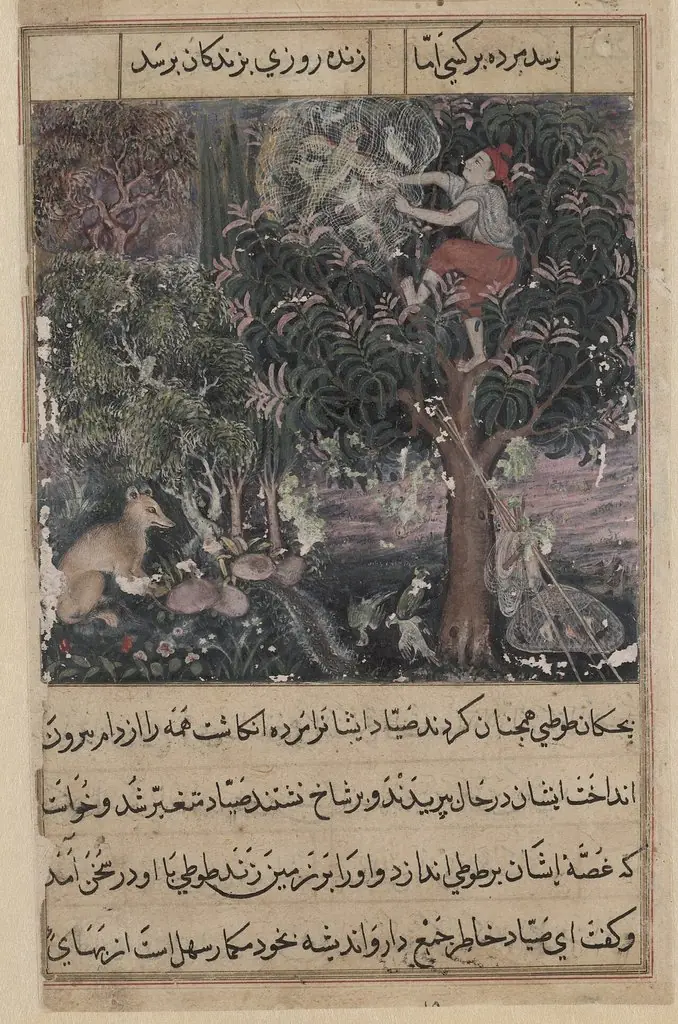 The hunter throws away the baby parrots, who pretend to be dead, and captures the mother, from a Tuti-nama (Tales of a Parrot): Fifth Night
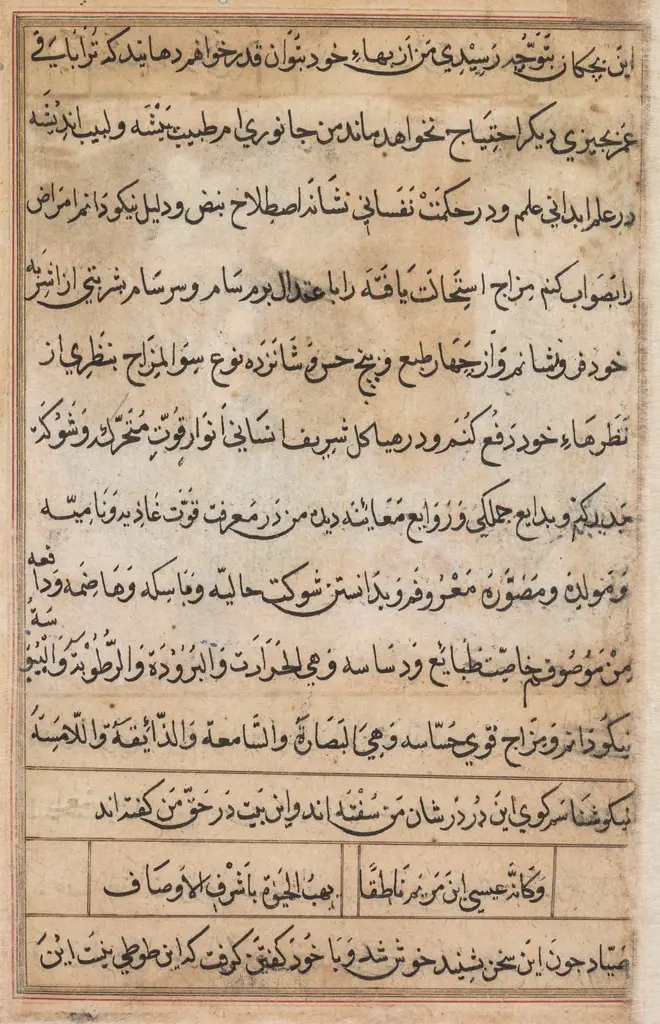 Page from Tales of a Parrot (Tuti-nama): text page