Artwork
Village Road
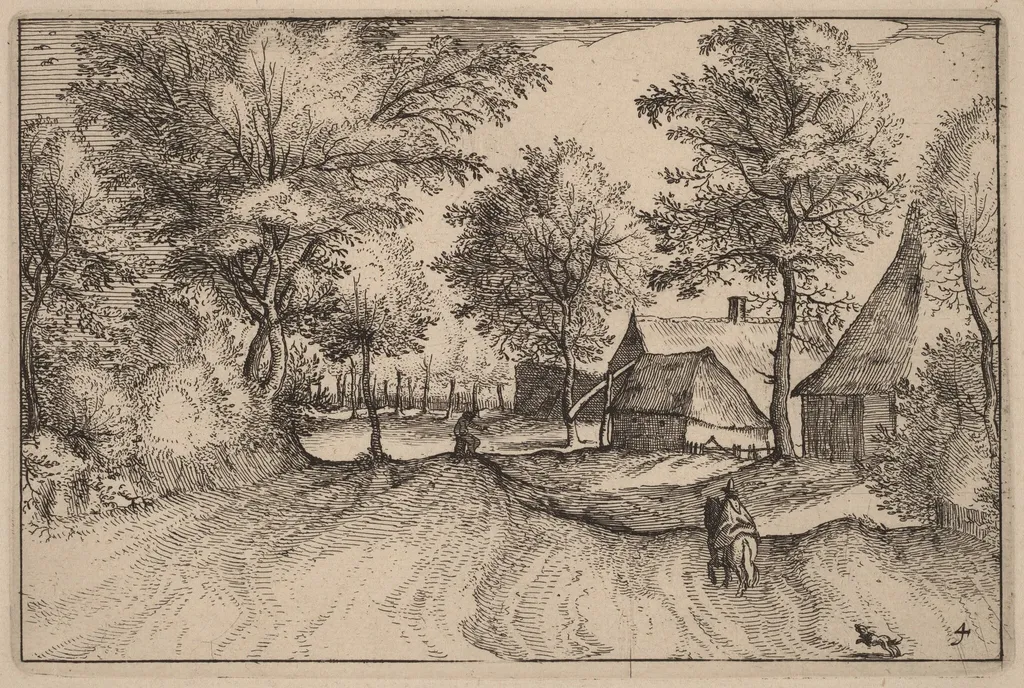
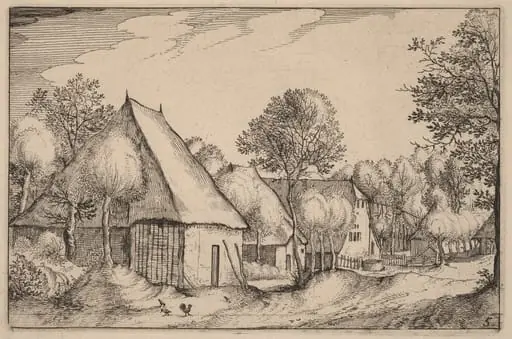
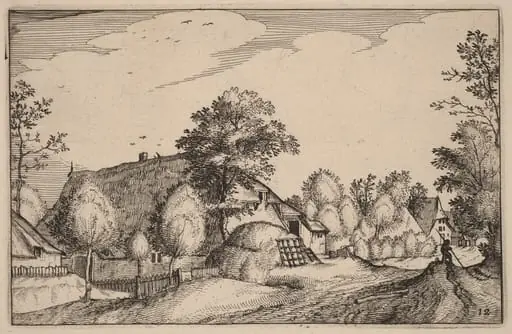
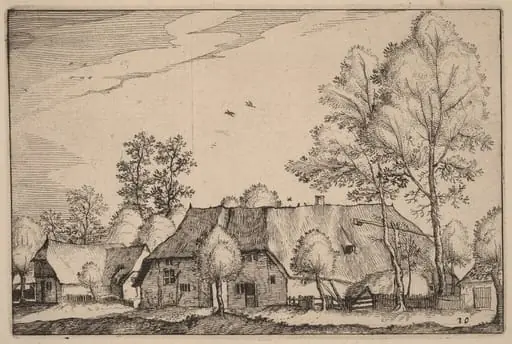
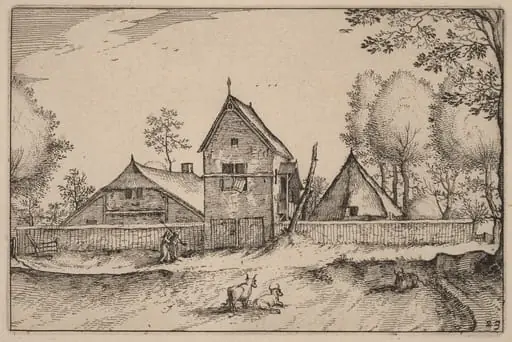
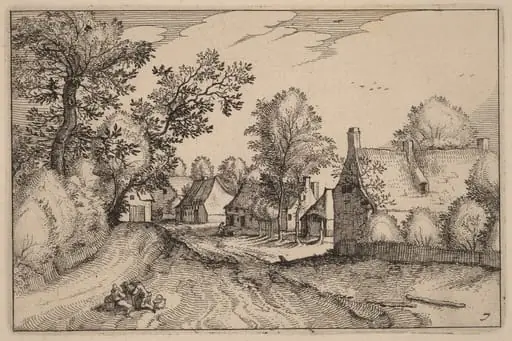
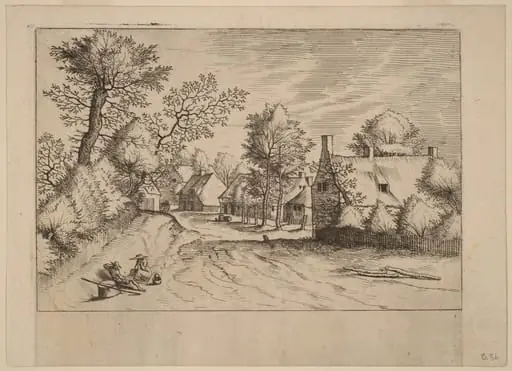
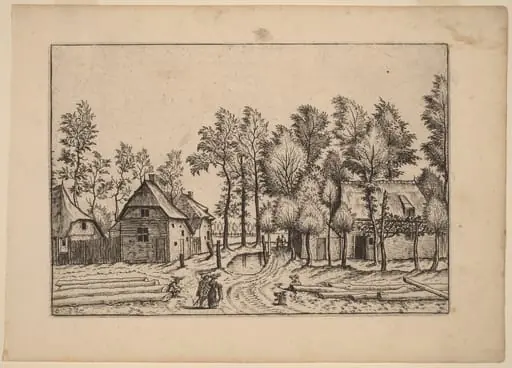
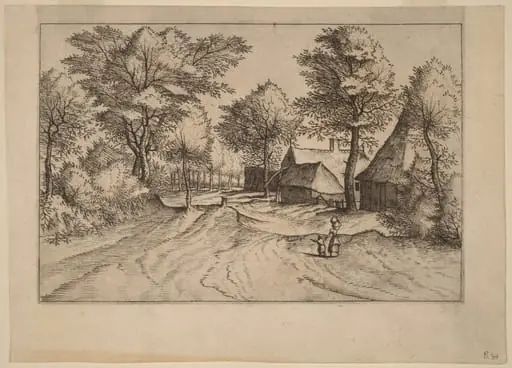
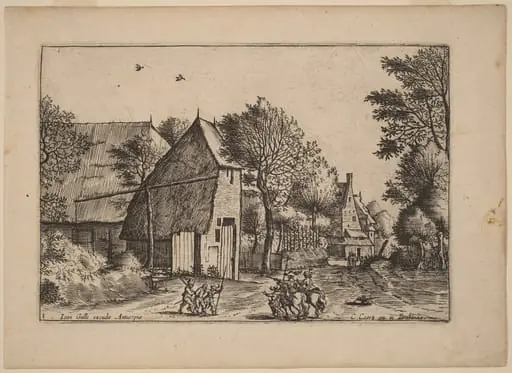
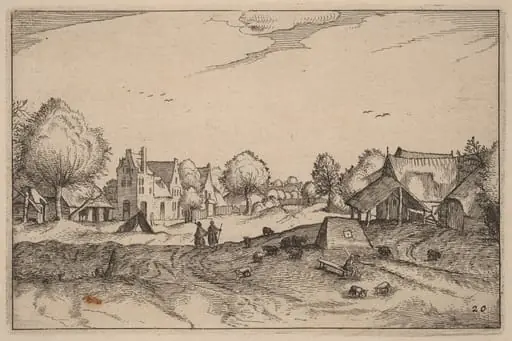
Village Road is an ink print by the Baroque artist Claes Jansz Visscher. It dates from 1612 and is held in the collection of the National Gallery of Art.
About this work
Overview
Village Road is a 1612 etching by Claes Janszoon Visscher, a Dutch Golden Age artist and founder of a prominent Amsterdam mapmaking business. The print captures a serene rural scene, showcasing Visscher's attention to topographical detail.
Subject & Meaning
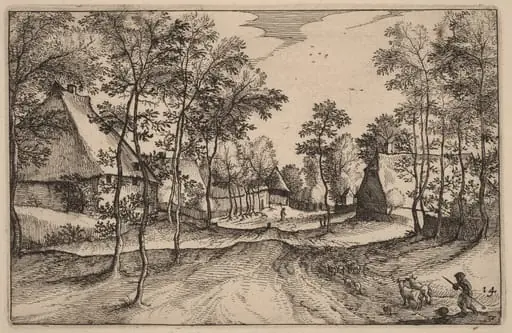
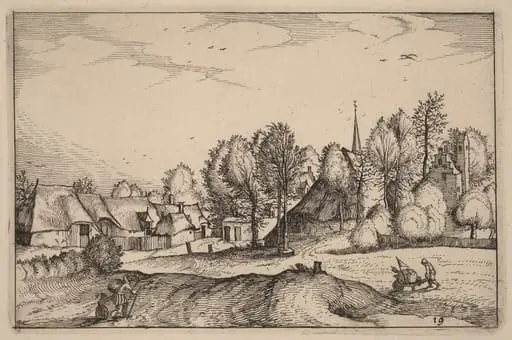
The etching depicts a peaceful village scene with a winding road, thatched-roof houses, trees, and everyday life details (people, animals, calm water). It reflects the Dutch countryside's landscape and architecture of the early 17th century.
Technique & Style
Visscher employed etching techniques, using fine lines to convey texture (tree bark, water) by acid-etching designs onto metal plates. His precise engraving style, honed from mapmaking, dominates the work.
History & Provenance
Created in 1612 by Claes Janszoon Visscher. Originates from Visscher's Amsterdam workshop, reflecting his dual role as artist and mapmaker.
Context
Part of the Dutch Golden Age's artistic output, the piece combines Visscher's cartographic precision with the era's interest in rural landscapes.
Legacy
While specific lasting impacts of *Village Road* are not prominently documented, it contributes to the broader understanding of 17th-century Dutch printmaking and Visscher's contributions to the field.
Artist & collection

Artist
Claes Janszoon Visscher (1587 – 19 June 1652) was a Dutch Golden Age draughtsman, engraver, mapmaker, and publisher.