Artwork
Ecce Homo
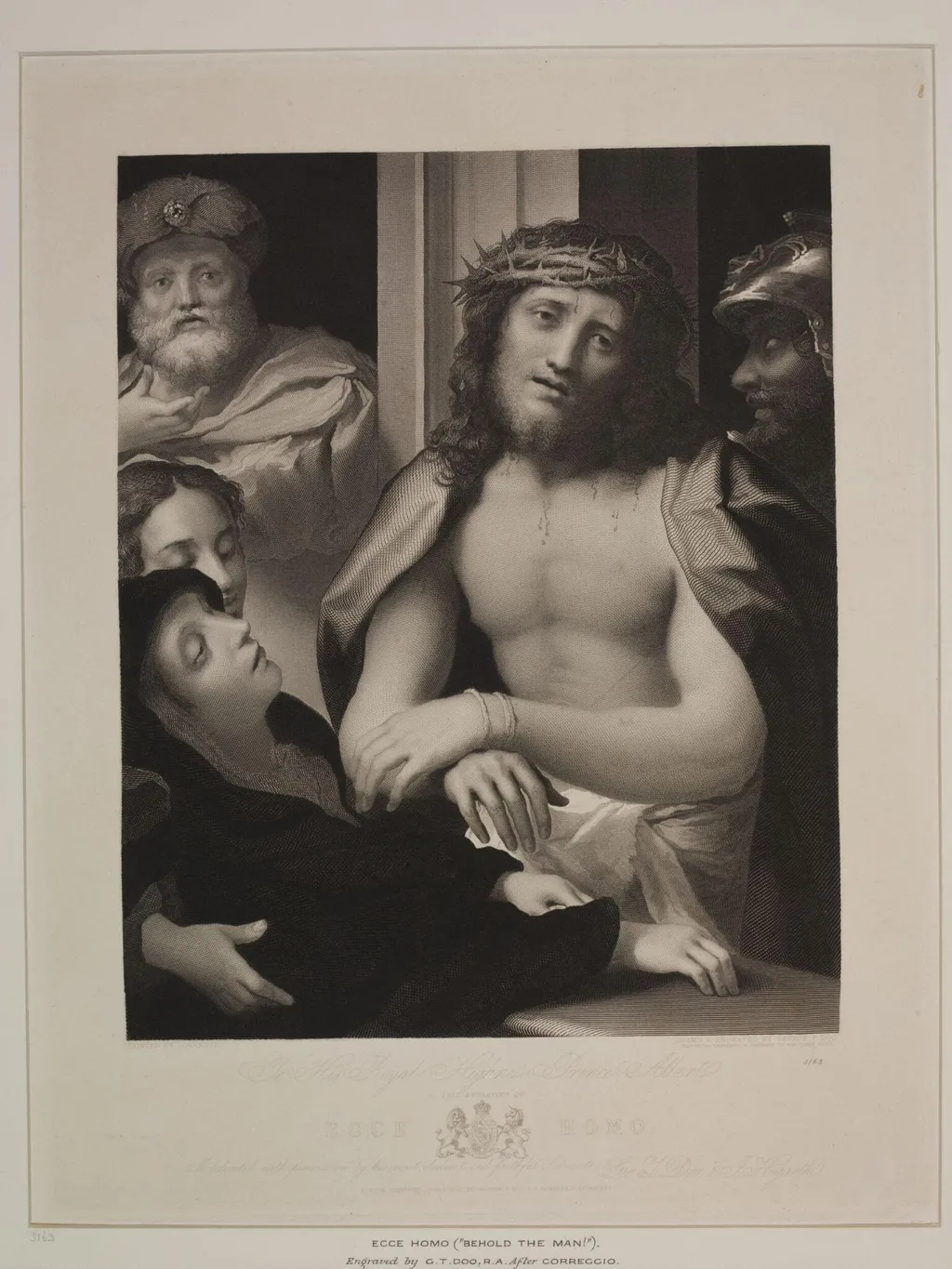
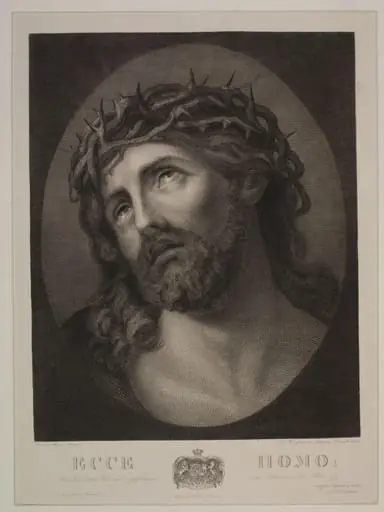
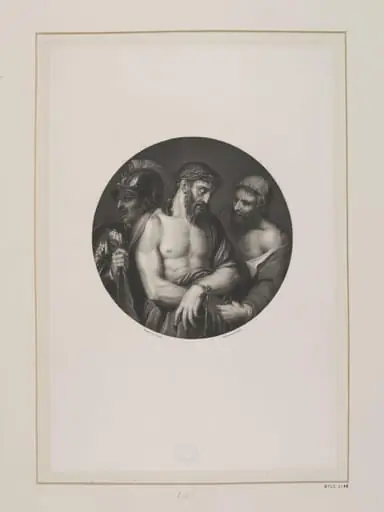
Ecce Homo is a print by George Thomas Doo. It dates from 1850 and is held in the collection of the Victoria and Albert Museum. This print on paper reproduces a composition originally painted by Correggio, now held in the National Gallery.
About this work
Overview
This print on paper reproduces a composition originally painted by Correggio, now held in the National Gallery. Rendered as an open-letter proof, it captures a moment from the Passion of Christ with minimal inscription and no artist attribution. The format suggests it was produced as a working impression, possibly for study or distribution, rather than as a final commercial print.
Subject & Meaning
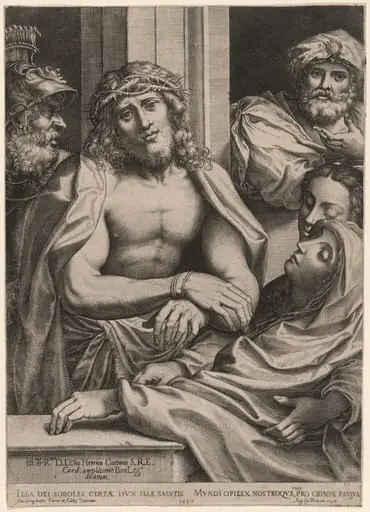
The scene illustrates the moment Pilate presents the scourged Christ to the crowd, uttering 'Ecce Homo'—'Behold the Man.' The central figure, bare-chested and crowned with thorns, hangs limply, bound and exhausted. Surrounding figures respond with grief, horror, and detached observation, emphasizing the tension between suffering and spectatorship in the biblical narrative.
Technique & Style
The print employs chiaroscuro to heighten emotional intensity, with deep shadows and stark highlights modeling the figures with sculptural weight. Lines are controlled yet expressive, conveying texture in skin, fabric, and crown without detail. The composition is tightly framed, focusing attention on the central figure and the psychological dynamics among the onlookers.
History & Provenance
The print derives from Correggio’s early 16th-century painting, likely made during the 17th or 18th century as part of a tradition of reproductive prints. Its open-letter proof status indicates it was an early impression, possibly used to verify the engraving before final printing. No maker’s mark is present, obscuring its exact origin but aligning it with workshop practices of the period.
Context
Reproductive prints like this were common tools for disseminating religious imagery across Europe, especially where access to original paintings was limited.
Reproductive prints like this were common tools for disseminating religious imagery across Europe, especially where access to original paintings was limited. They served devotional, educational, and artistic purposes, allowing artists and patrons to study compositions by masters like Correggio without traveling to the source. This print reflects the enduring influence of High Renaissance imagery in later print culture.
Legacy
Though unsigned and unattributed to a specific engraver, the print preserves the emotional gravity of Correggio’s original. It contributes to a broader archive of visual interpretations of biblical scenes, illustrating how Renaissance compositions continued to inform artistic practice centuries later. Its presence in collections like the V&A underscores its role in the history of printmaking and religious iconography.
Artist & collection