Artwork
The Fall of Babylon
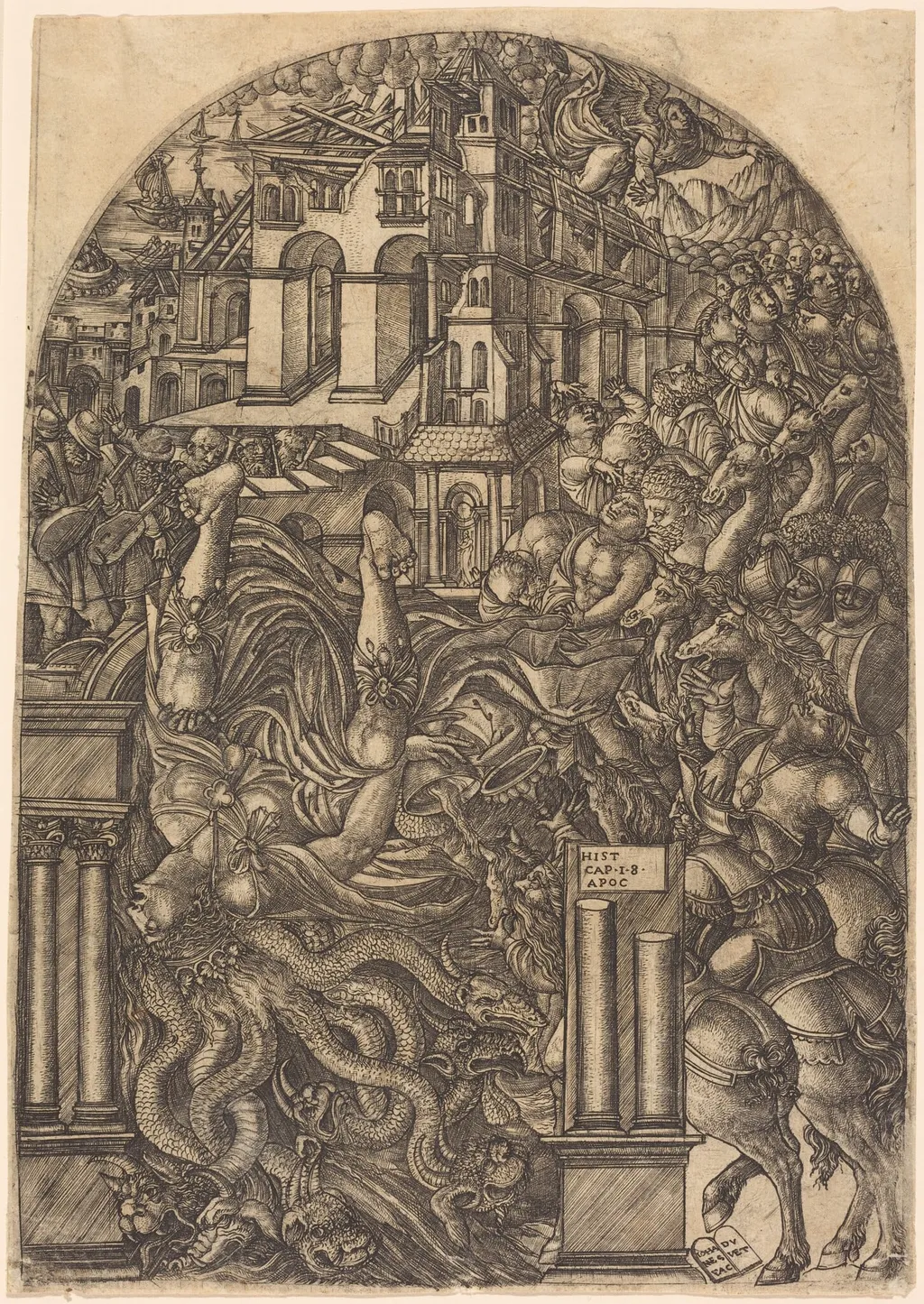
The Fall of Babylon is an ink print by the Renaissance artist Jean Duvet. It dates from 1551 and is held in the collection of the National Gallery of Art.
About this work
Overview
The Fall of Babylon is a 1551 engraving on laid paper by Jean Duvet, a pioneering French Renaissance goldsmith and printmaker. This work exemplifies Duvet's characteristic dense compositions and intense religious subjects.
Subject & Meaning
The engraving depicts the chaotic downfall of Babylon, referencing the Book of Revelation (Chapter 8). A colossal hand disrupts the cityscape, amidst fleeing figures carrying books or scrolls, conveying turmoil and divine judgment.
Technique & Style
Duvet's personal printmaking approach is evident in the engraving's naive yet expressive quality. Intricate details, such as facial expressions and crumbling architecture, showcase his meticulous craftsmanship.
History & Provenance
Created in 1551, this piece is part of Duvet's oeuvre of approximately 73 engravings, marking him as a significant early figure in French printmaking.
Context
Duvet's style, characterized by freedom and immediacy, has drawn comparisons to William Blake's work, though his engraving techniques reflect the technical practices of his 16th-century context.
Artist & collection

Artist
Jean Duvet (1485 – after 1562) was a French Renaissance goldsmith and engraver, now best known for his engravings.

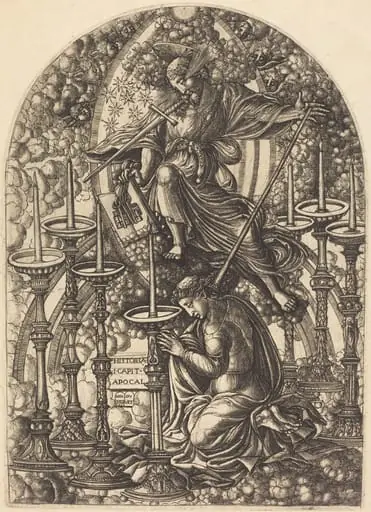
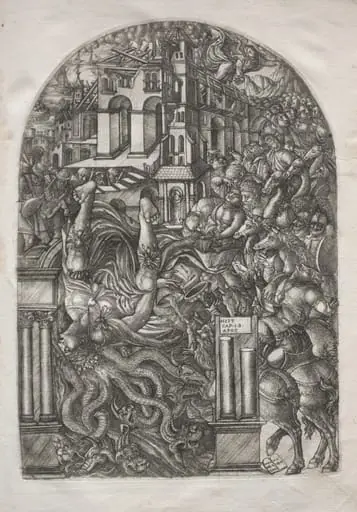 The Apocalypse: The Fall of Babylon
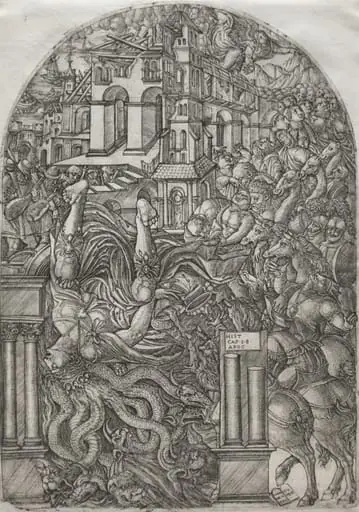 The Fall of Babylon
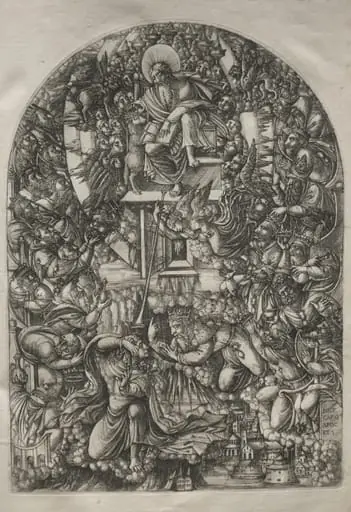 The Apocalypse: St. John Summoned to Heaven
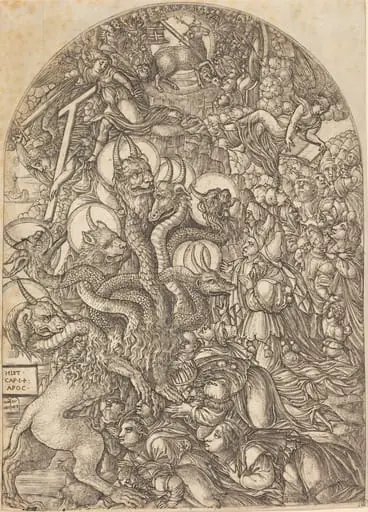
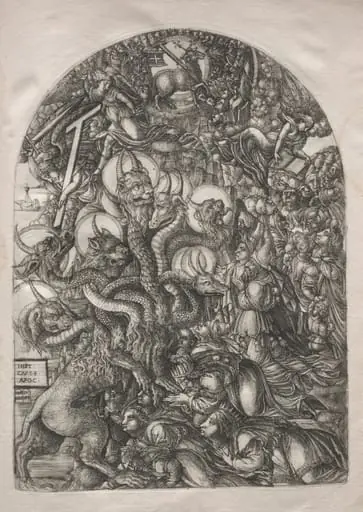 The Apocalypse: The Beast with Seven Heads and Ten Horns
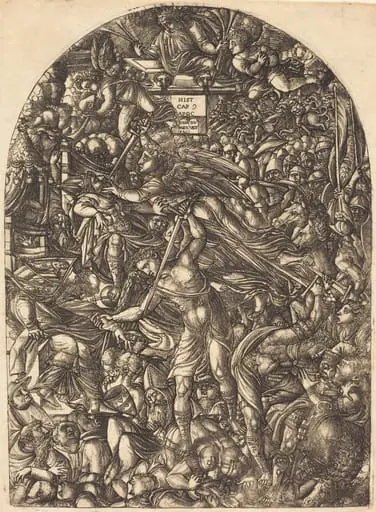 The Angel Sounding the Sixth Trumpet
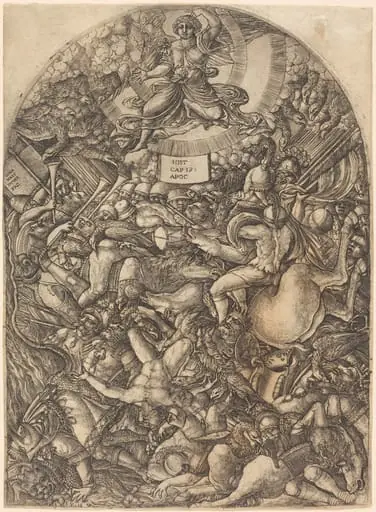 The Angel in the Sun Calling the Birds of Prey
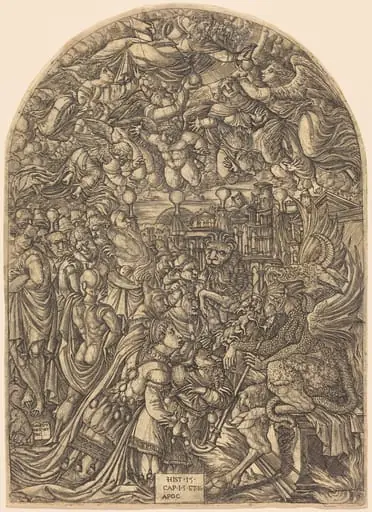 The Dragon and the Beast
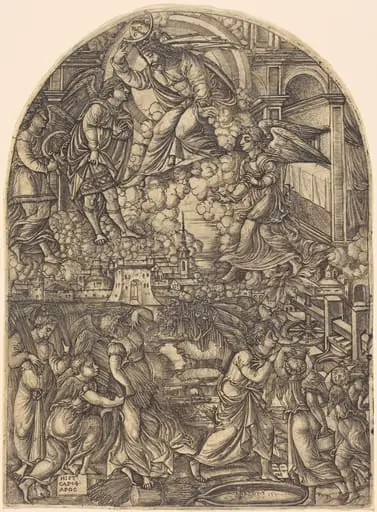
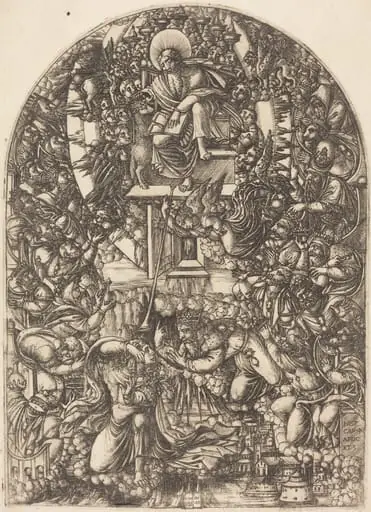 Saint John Summoned to Heaven
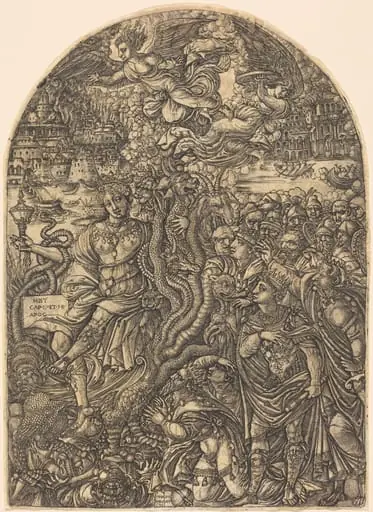 The Babylon Harlot
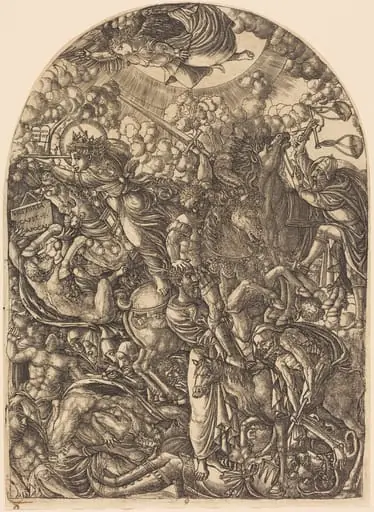 Saint John Sees the Four Horsemen