Artwork
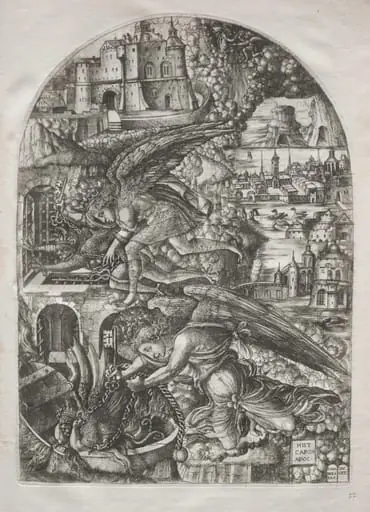
The Apocalypse: The Winepress of the Wrath of God
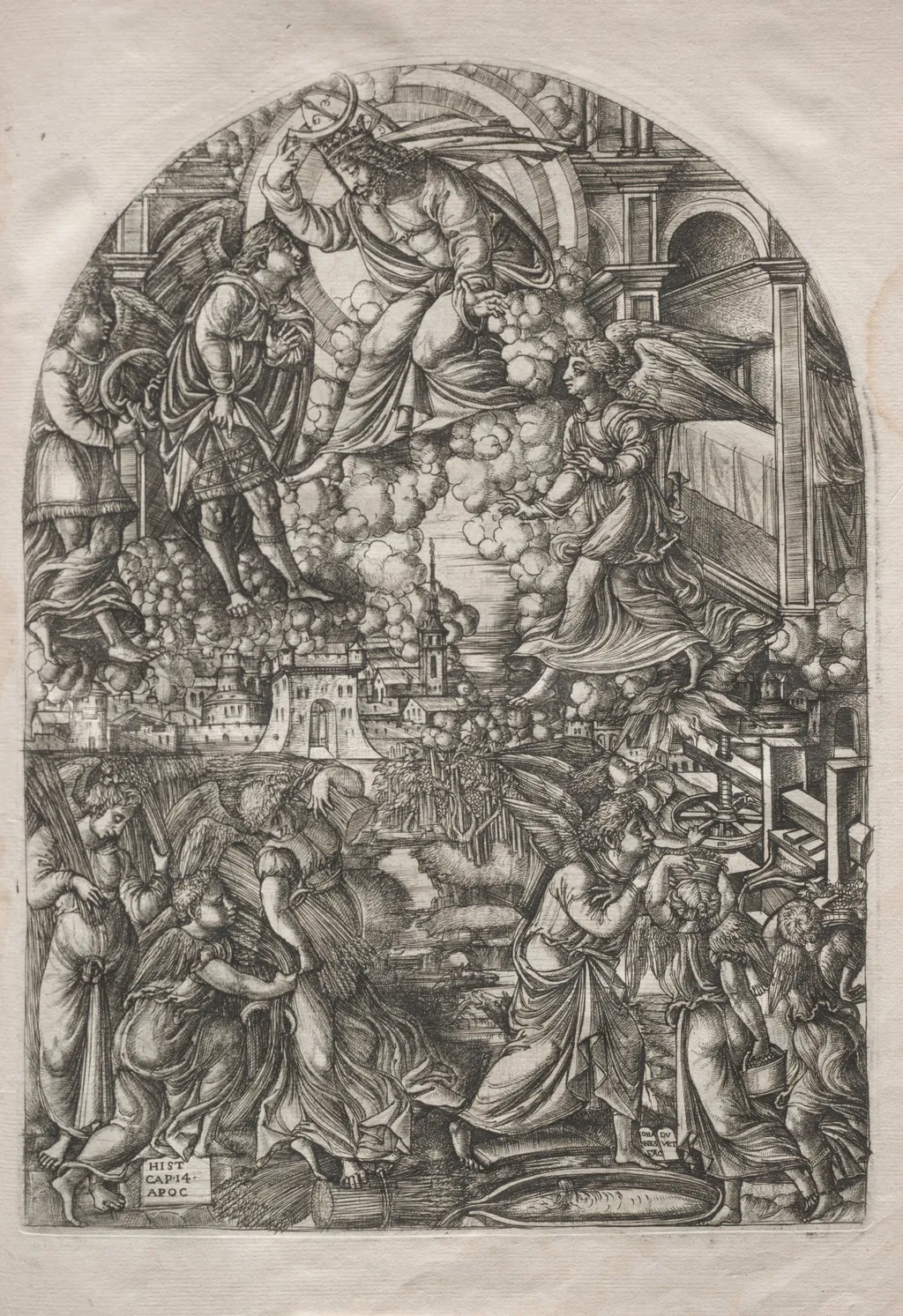
The Apocalypse: The Winepress of the Wrath of God is a print by the Renaissance artist Jean Duvet. It dates from 1551 and is held in the collection of the Cleveland Museum of Art.
About this work
This painting shows a dramatic scene with people and angels.
It's part of a series illustrating the Apocalypse from the Bible. The artist spent years working on these engravings, which is interesting because it shows how dedicated he was to this project.
You can learn more about this style by looking at the work of artist: Jean Duvet (French, 1485–1561)
Overview
This engraving is one of twenty-three plates in a serialized depiction of the Book of Revelation, produced by Jean Duvet over many years.
This engraving is one of twenty-three plates in a serialized depiction of the Book of Revelation, produced by Jean Duvet over many years. The complete set, of which only seven known copies survive, represents a rare and cohesive body of work from early 16th-century France. Duvet, based in Langres, dedicated himself to this ambitious project, crafting intricate scenes that reflect both religious devotion and artistic experimentation.
Subject & Meaning
The scene illustrates the Winepress of the Wrath of God, a vivid metaphor from Revelation 14:19–20, in which divine judgment crushes the wicked like grapes in a press. Blood flows from the treading vat as angels execute God’s wrath, while the damned writhe in torment. The imagery conveys theological dread and moral consequence, aligning with apocalyptic expectations of the time while emphasizing divine justice over human frailty.
Technique & Style
Duvet employed fine-line engraving to build dense, layered compositions with meticulous detail. His figures, though rooted in the volumetric forms of Italian Renaissance models, are rendered with exaggerated musculature and unnatural poses. Space is flattened and cluttered, prioritizing ornamental rhythm over perspectival logic. This deliberate distortion creates a hypnotic, otherworldly atmosphere distinct from contemporary Northern or Italian print traditions.
History & Provenance
The print series was completed around 1550 and circulated in limited, hand-bound volumes. The museum’s copy is among the seven known complete sets, underscoring its rarity. Duvet’s work remained largely confined to regional collectors during his lifetime, and few copies survived the upheavals of the Reformation and later conflicts. Its preservation reflects its value to private patrons who appreciated its devotional intensity and technical complexity.
Context
Working in provincial Langres, Duvet had no direct access to Italian masterpieces but absorbed their influence through imported engravings, particularly those by Marcantonio Raimondi. His synthesis of Italian form with northern detail reflects a broader trend of cross-regional artistic exchange. Yet his style diverged sharply from mainstream trends, resisting clarity and harmony in favor of symbolic density, mirroring the spiritual anxieties of a Europe on the brink of religious conflict.
Legacy
Duvet’s Apocalypse series stands as a singular achievement in French printmaking, notable for its intensity and originality. Though largely overlooked in his own time, later scholars recognized its unique fusion of devotional fervor and formal innovation. His rejection of naturalism in favor of symbolic overload influenced later Mannerist sensibilities and remains a touchstone for understanding the diversity of 16th-century visual expression beyond the Italian mainstream.
Artist & collection

Artist
Jean Duvet (1485 – after 1562) was a French Renaissance goldsmith and engraver, now best known for his engravings.

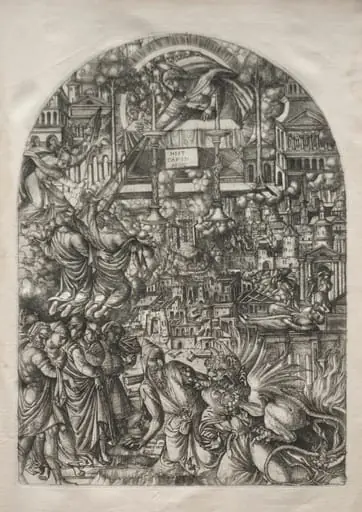 The Apocalypse: The Measurement of the Temple
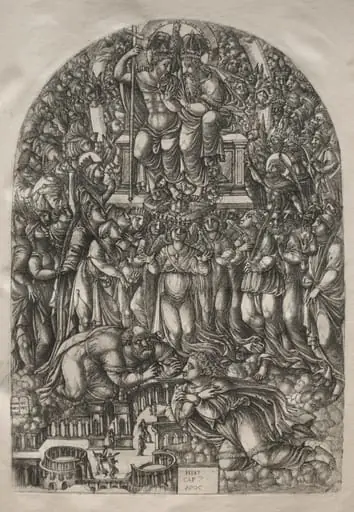 The Apocalypse: An Innumerable Multitude Which Stand before the Throne
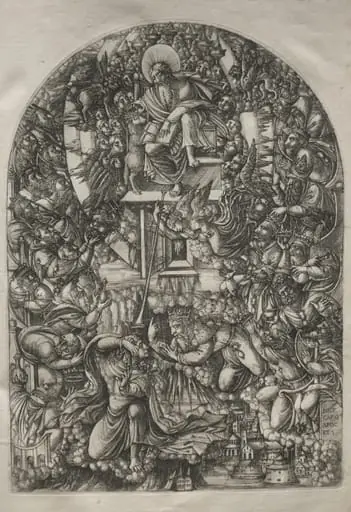 The Apocalypse: St. John Summoned to Heaven
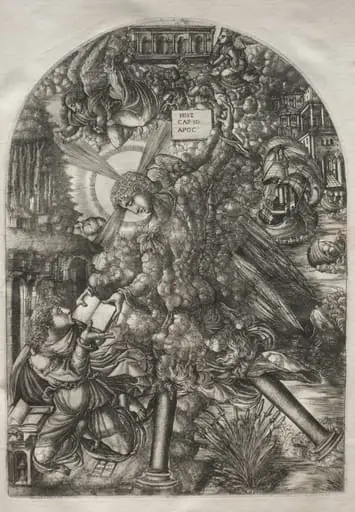 The Apocalypse: The Angel Gives St. John the Book to Eat
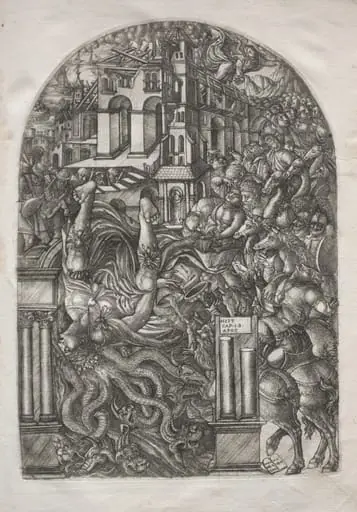 The Apocalypse: The Fall of Babylon
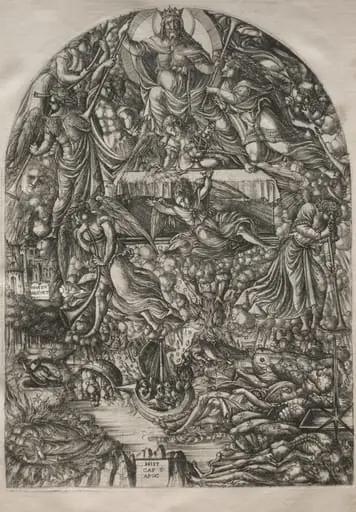 The Apocalypse: The Opening of the Seventh Seal
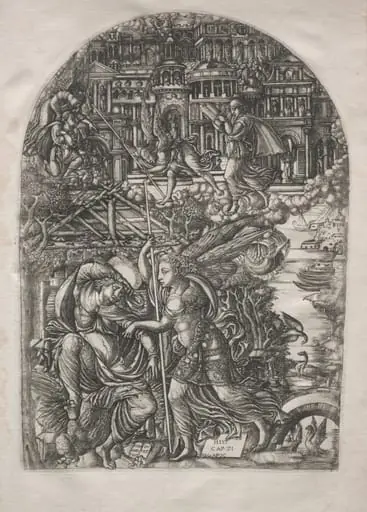 The Apocalypse: The Angel Shows St. John the New Jerusalem
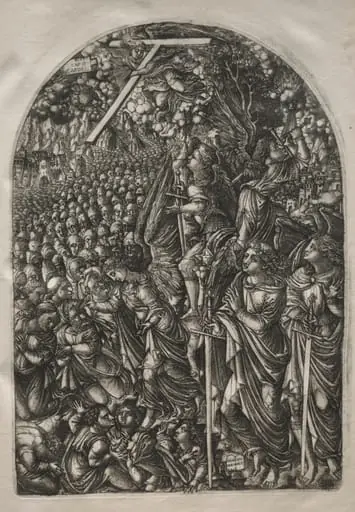 The Apocalypse: Four Angels Holding Back the Winds
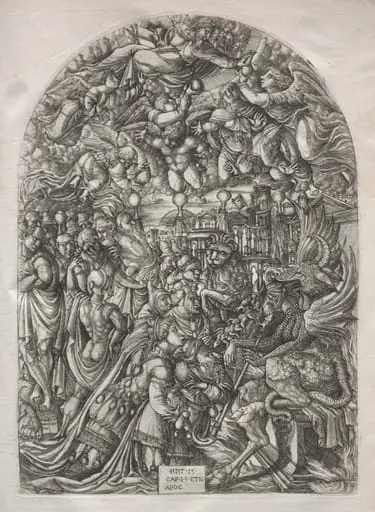 The Apocalypse: The Dragon with Two Horns and the Beast with Seven
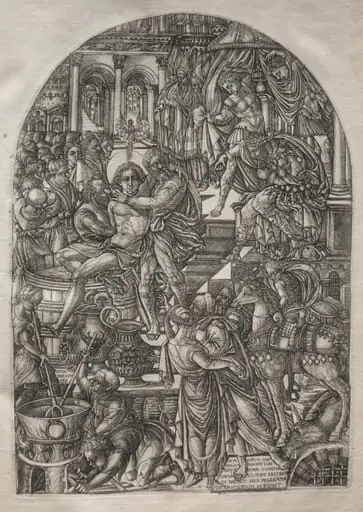 The Apocalypse: The Martyrdom of St. John the Evangelist
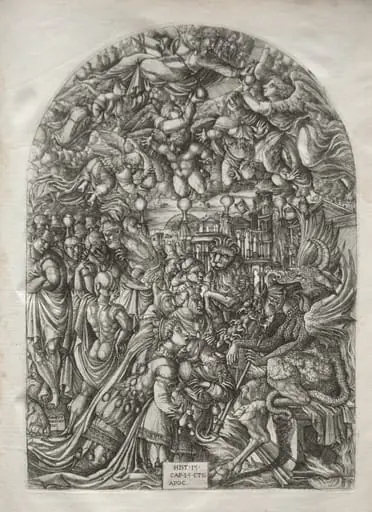 The Apocalypse: The Woman Clothed with the Sun
 The Apocalypse: Satan Bound for a Thousand Years