Artwork
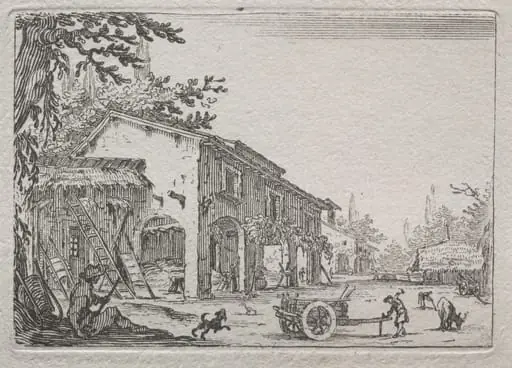
Courtyard of a Farm
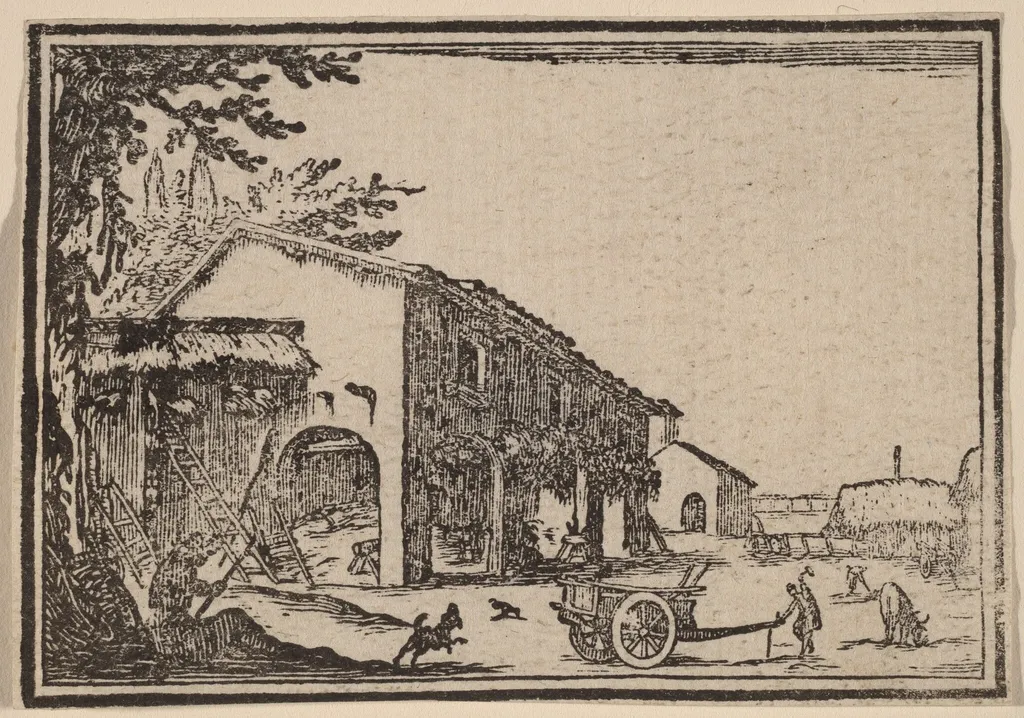
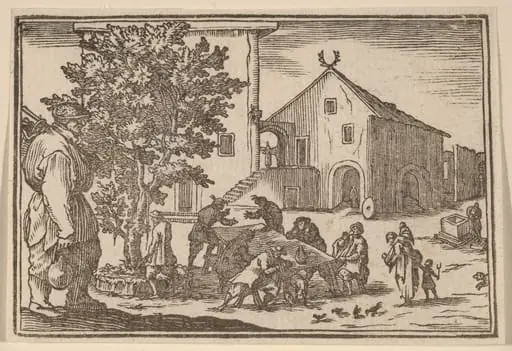
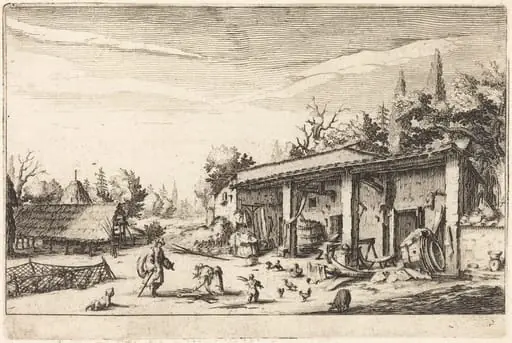
Courtyard of a Farm is an ink print by the Baroque artist Edouard Eckman. It dates from 1621 and is held in the collection of the National Gallery of Art.
About this work
Overview
The composition is dense with incidental detail, suggesting a moment caught rather than staged, typical of early 17th-century Northern European printmaking.
Created in 1621 by Edouard Eckman, this woodcut on laid paper depicts a rural farmyard in quiet activity. Rendered in monochrome, the scene captures everyday life with precision: a covered wagon, tools leaning against a structure, figures near a well, and a dog at rest. The composition is dense with incidental detail, suggesting a moment caught rather than staged, typical of early 17th-century Northern European printmaking.
Subject & Meaning
The scene portrays the functional rhythm of farm life without idealization. Figures engage in routine tasks—fetching water, tending to equipment—while the wagon and tools imply labor and transit. The presence of a dog and the shaded tree suggest domesticity and respite. The image does not glorify but records, offering a quiet testament to the rhythms of agricultural existence in the early modern period.
Technique & Style
Eckman employed the woodcut method, carving lines directly into a wooden block to create a relief surface for ink transfer. Sharp, incised lines define textures—the bark of trees, the grain of timber, the weave of fabric—each stroke deliberate and economical. The absence of tone or shading relies on contrast and line density to suggest depth and materiality, characteristic of the medium’s constraints and strengths.
History & Provenance
The print dates from 1621, a period when woodcuts remained a primary means of disseminating images beyond elite circles. While Eckman’s broader oeuvre is poorly documented, this work survives as an example of regional print production in the Low Countries. Its preservation on laid paper suggests it was likely part of a modestly circulated series or album, valued for its observational clarity rather than artistic fame.
Context
In early 17th-century Europe, woodcuts were widely used for illustrations in books, broadsheets, and private collections. Rural scenes like this one appealed to urban audiences seeking glimpses of the countryside. Unlike religious or mythological subjects, this image reflects a growing interest in secular, everyday life—a trend that would later flourish in Dutch genre painting.
Legacy
Though Eckman is not a major figure in art history, this woodcut endures as a representative example of pre-Baroque Northern printmaking. Its unembellished realism and attention to detail align it with the observational traditions of its time. It contributes to a broader visual record of rural labor, preserved not through grand narratives but through the quiet accuracy of the carved line.
Artist & collection