Artwork
The Promenade
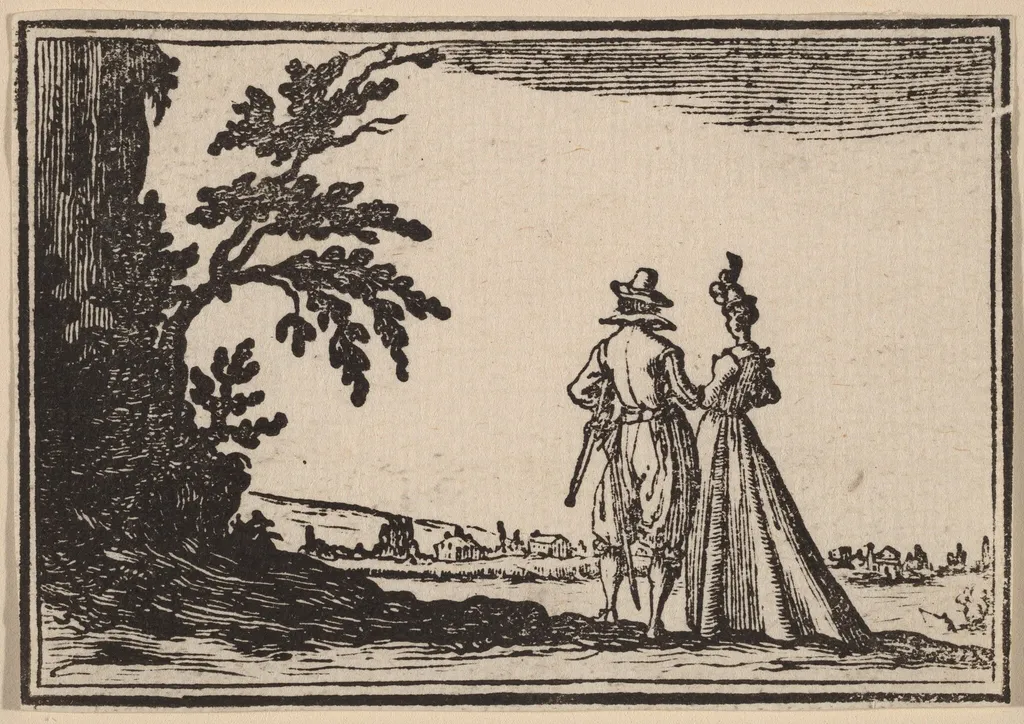
The Promenade is an ink print by the Baroque artist Edouard Eckman. It dates from 1621 and is held in the collection of the National Gallery of Art.
About this work
Overview
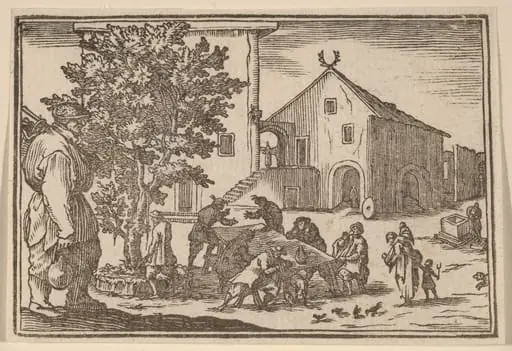
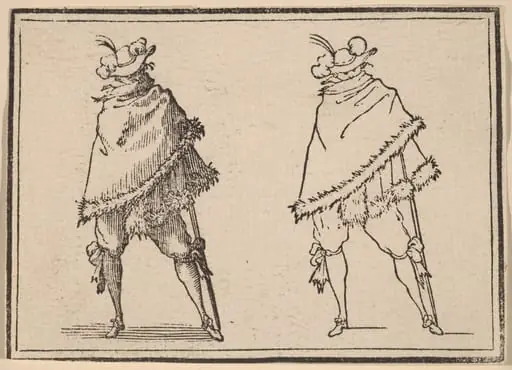
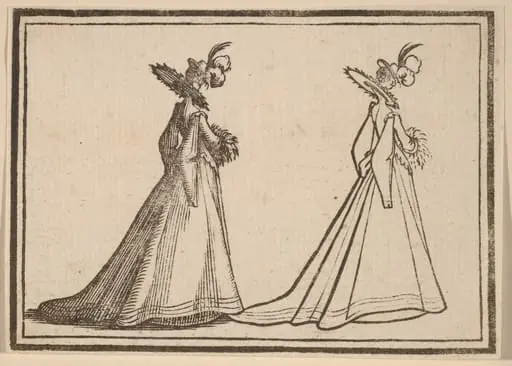
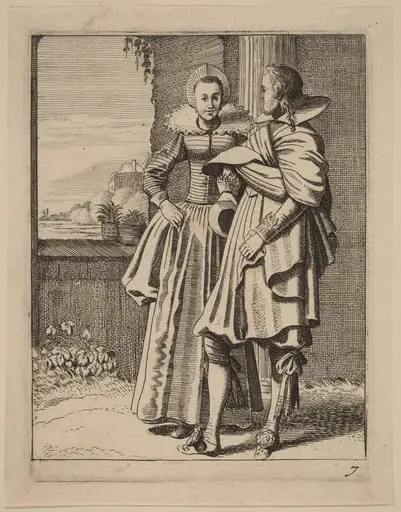
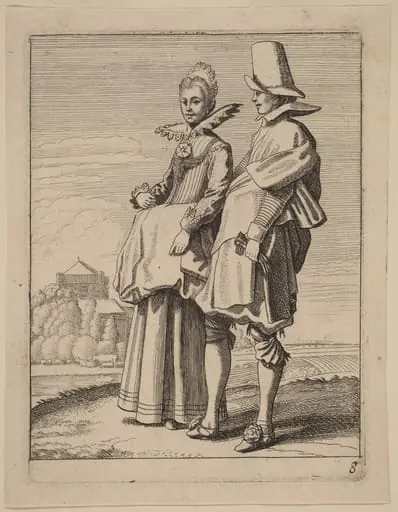
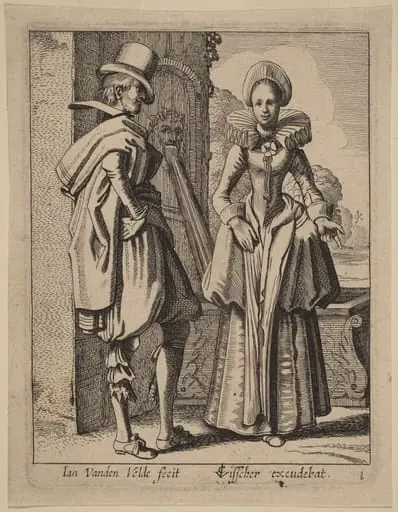
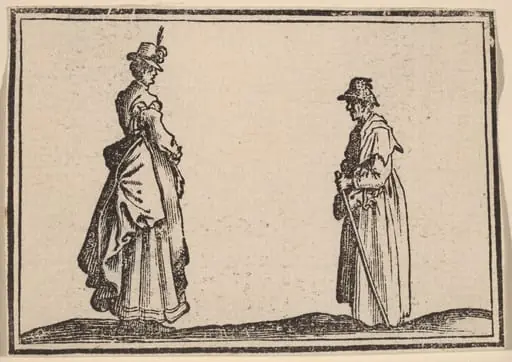
The Promenade, executed in 1621, is a black‑and‑white woodcut on laid paper. The image presents a riverside scene in which a man and a woman walk side by side, their figures set against a simple landscape that includes a solitary tree and a distant village.
Subject & Meaning
The central figures—a man in a wide‑brimmed hat and loose coat, and a woman whose long skirt trails behind her—suggest a leisurely stroll, perhaps a courtly promenade. The tranquil setting, with the riverbank and modest settlement, conveys a calm, everyday moment rather than a narrative episode.
Technique & Style
The work employs the woodcut process, in which the artist incised lines into a wooden block, applied ink, and pressed the block onto laid paper. The resulting lines are bold and slightly uneven, giving the print a textured, tactile quality typical of early‑17th‑century European printmaking.
History & Provenance
Created by Edouard Eckman in the early 1620s, the print reflects the popularity of woodcut as a reproducible medium during that period. No specific ownership record is attached to the piece, and it remains documented primarily through museum catalogues and print collections.
Artist & collection