Artwork
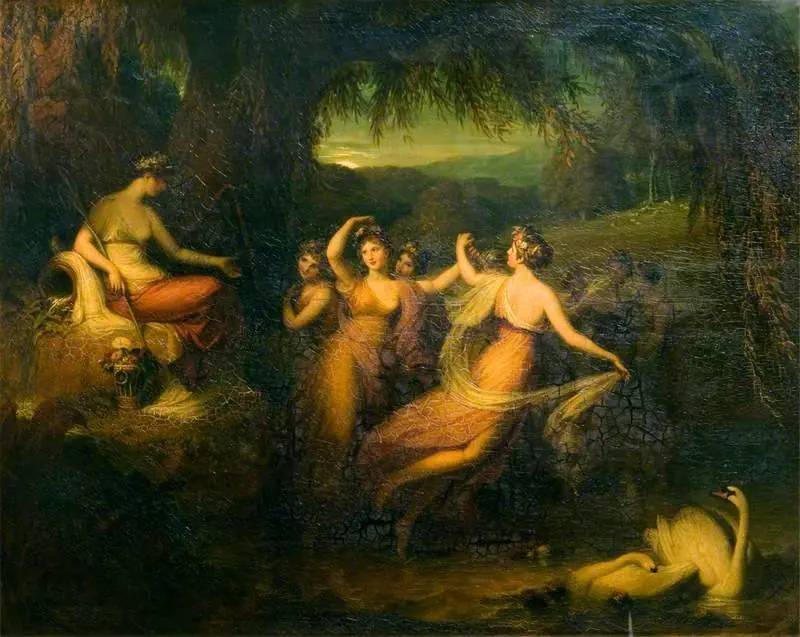
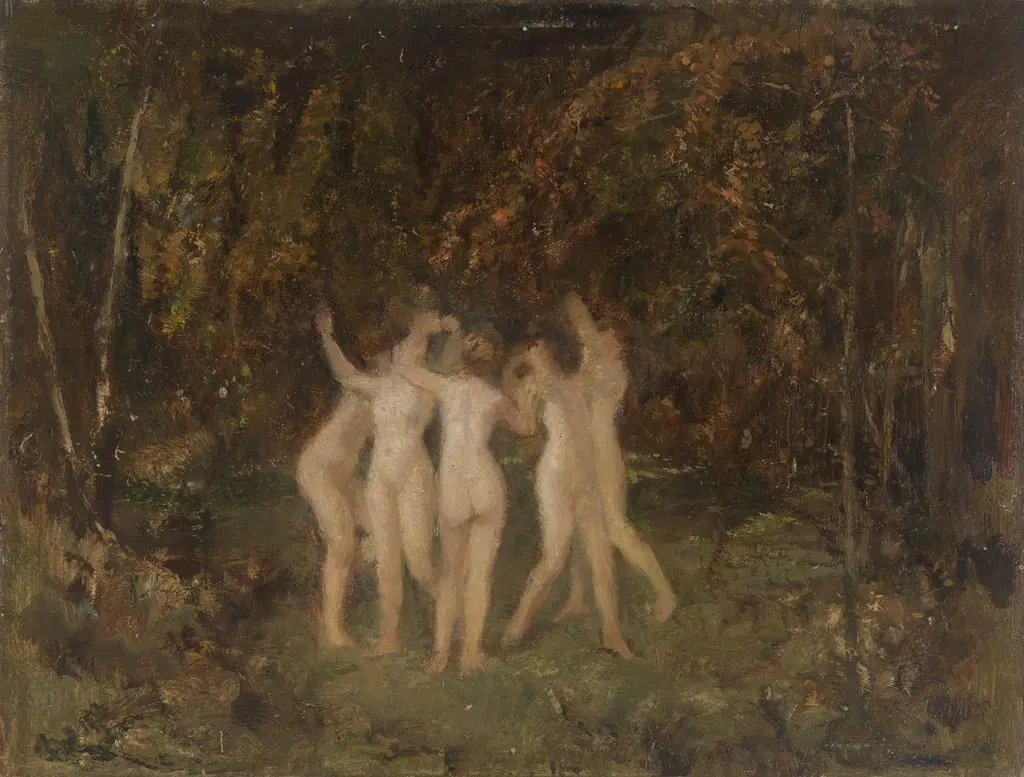
Hesperides, 'Dance around the Golden Tree'
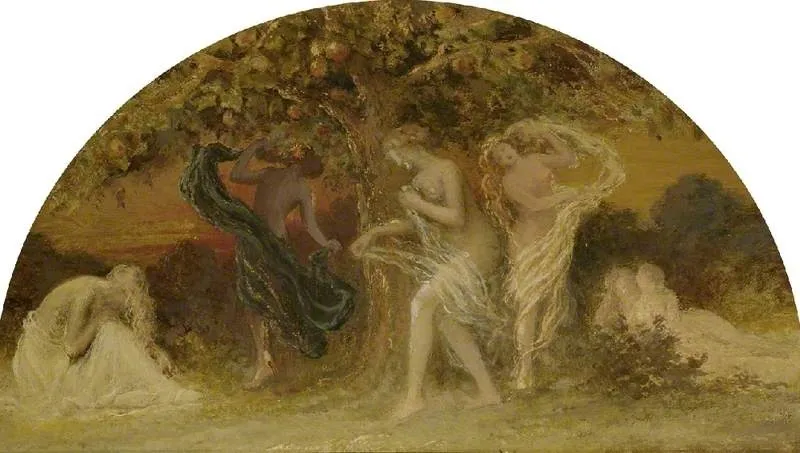
Hesperides, 'Dance around the Golden Tree' is an unspecified painting by Edward Calvert. It dates from 1849 and is held in the collection of the Fitzwilliam Museum.
About this work
Overview
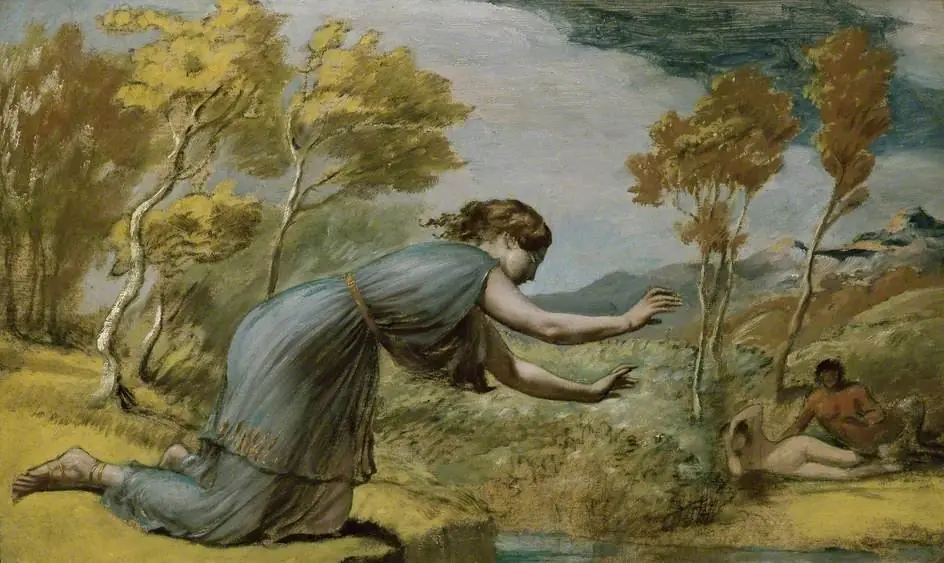
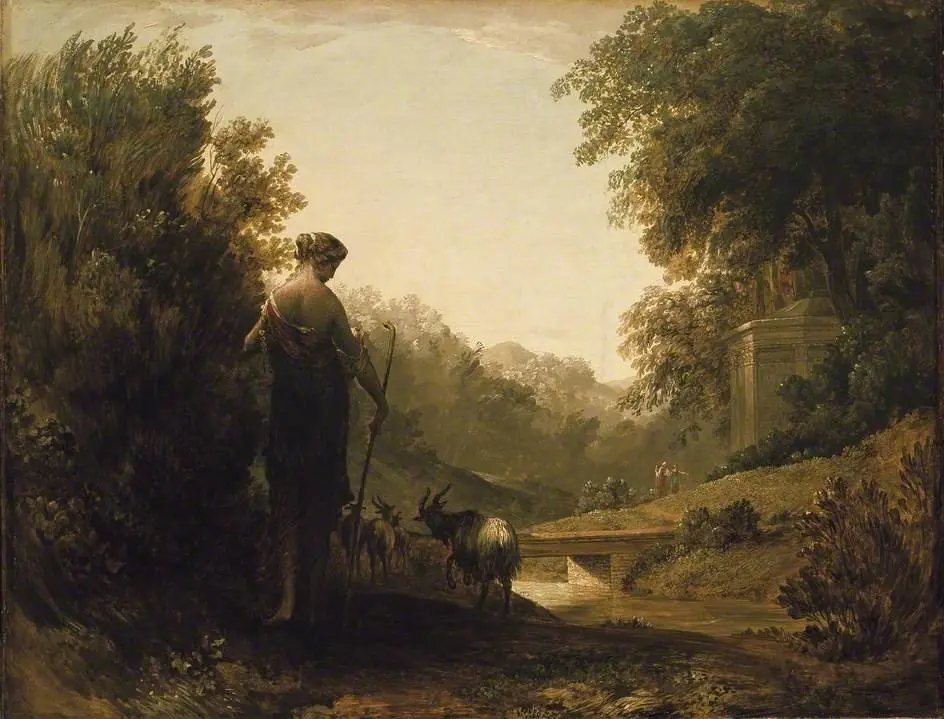
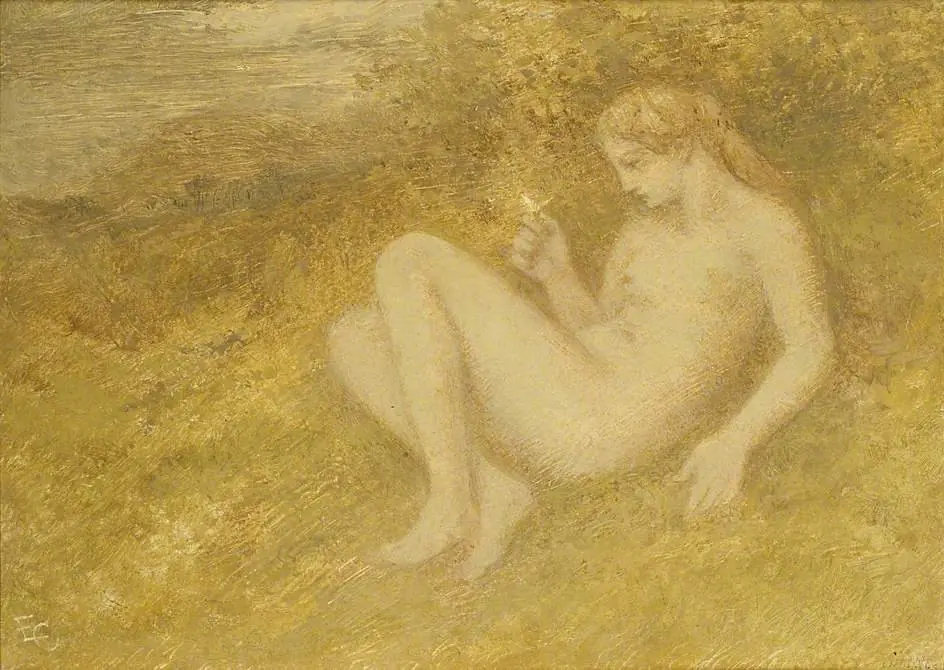
Edward Calvert’s oil painting Hesperides, ‘Dance around the Golden Tree’, executed around 1849, is part of the Fitzwilliam Museum’s collection. The work depicts a group of figures in flowing robes moving in a circle around a fruit‑laden tree, set within a wooded landscape. The composition conveys a festive atmosphere through the rhythmic arrangement of the dancers and the surrounding foliage.
Subject & Meaning
The scene draws on the mythic motif of the Hesperides, the nymphs who tended a golden orchard in classical legend. By showing people celebrating around a tree heavy with fruit, Calvert evokes themes of abundance, communal joy, and the timeless connection between humanity and nature’s bounty. The relaxed postures and open smiles suggest a ritual of gratitude or seasonal festivity.
Technique & Style
Calvert employs a restrained palette of greens, browns and beiges, allowing the forms to emerge from a muted background. Subtle chiaroscuro models the figures and foliage, creating depth and a gentle three‑dimensionality. The loose brushwork of the drapery and the soft transitions of light give the painting an atmospheric quality typical of mid‑nineteenth‑century British landscape traditions.
History & Provenance
Created circa 1849, the painting entered the Fitzwilliam Museum’s holdings through acquisition in the early twentieth century, though exact purchase details remain sparse. Its presence in the museum’s collection reflects Calvert’s reputation among Victorian artists who blended landscape and allegorical subject matter, and it has been displayed in several exhibitions of British Romantic painting.
Context
Calvert worked during a period when British art was increasingly interested in classical mythology and the pastoral ideal. The depiction of a communal dance around a mythic tree aligns with contemporary Romantic fascination with nature as a source of moral and spiritual renewal. The work also mirrors the era’s interest in exotic subjects rendered with a restrained, naturalistic approach.
Artist & collection