Artwork
Picturesque Architecture in Paris, Ghent, Antwerp, Rouen: Laon, France
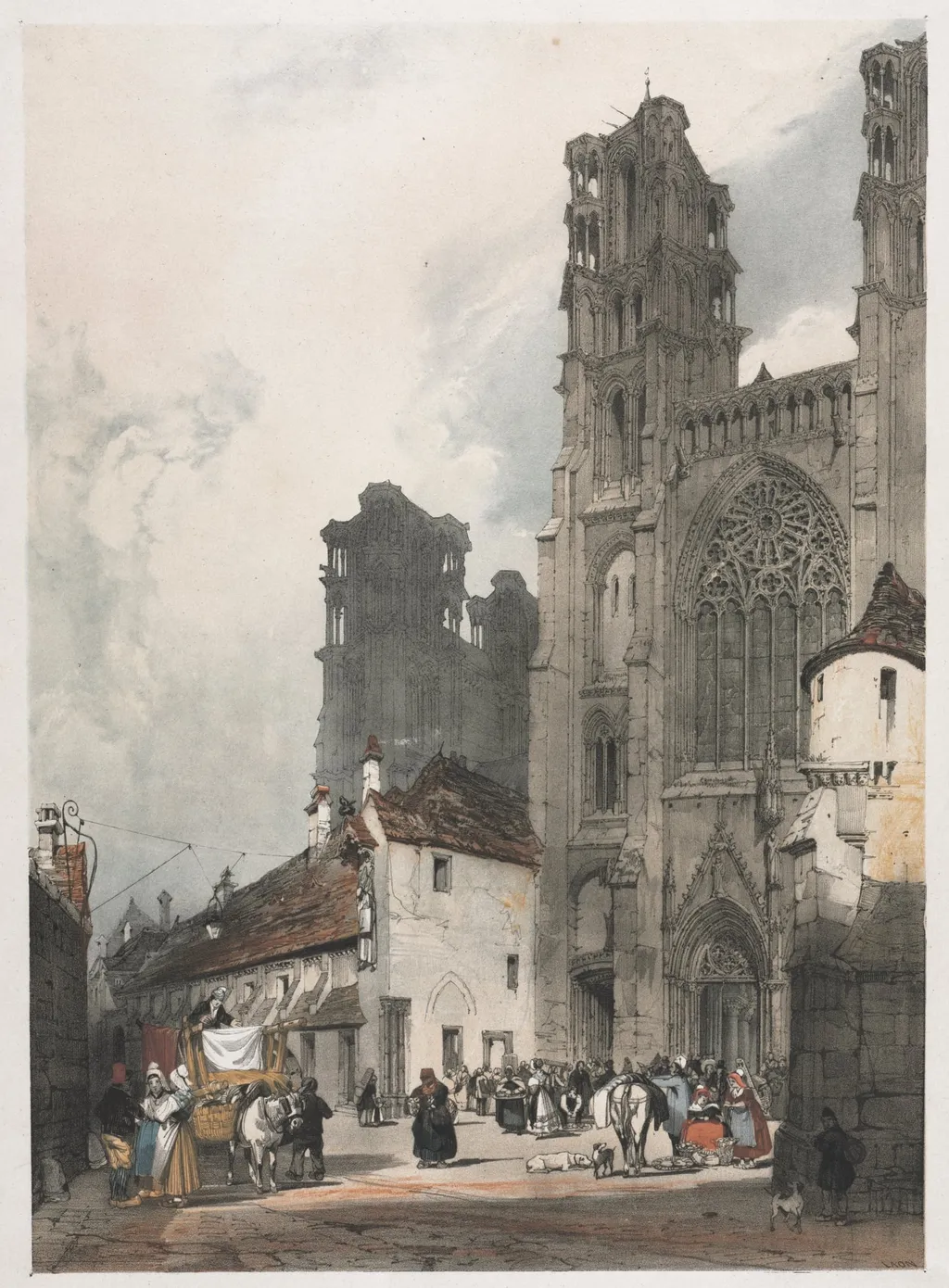
Picturesque Architecture in Paris, Ghent, Antwerp, Rouen: Laon, France is a work on paper by the Romanticist artist Thomas Shotter Boys. It dates from 1839 and is held in the collection of the Cleveland Museum of Art.
About this work
Overview
This work, part of a portfolio titled *Picturesque Architecture in Paris, Ghent, Antwerp, Rouen: Laon, France*, focuses on the cathedral of Laon.
Thomas Shotter Boys, an English artist active in the early 19th century, produced a series of architectural watercolors and lithographs capturing urban landscapes across Western Europe. This work, part of a portfolio titled *Picturesque Architecture in Paris, Ghent, Antwerp, Rouen: Laon, France*, focuses on the cathedral of Laon. It exemplifies his dedication to documenting historic structures with precision and atmospheric sensitivity, blending topographical accuracy with subtle emotional tone.
Subject & Meaning
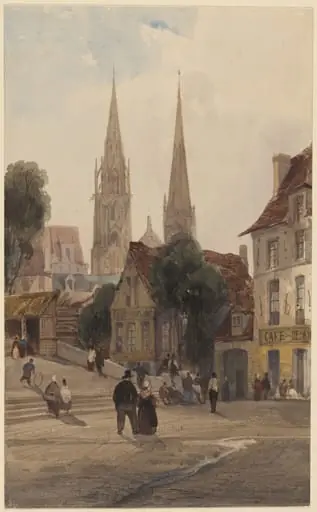
The composition centers on Laon’s Gothic cathedral, its soaring spires and intricate stonework dominating the skyline. Below, a quiet street scene unfolds with pedestrians, carts, and a resting dog, grounding the monumental architecture in everyday life. The contrast between the sacred structure and ordinary activity suggests a meditation on time, continuity, and the coexistence of the divine with the mundane in medieval urban fabric.
Technique & Style
Boys employed watercolor and lithographic techniques to render fine architectural details and nuanced light effects. Delicate washes define the cathedral’s rose window and pointed arches, while shadows and highlights model the stone surfaces with quiet realism. The foreground figures and carts are rendered with loose, suggestive strokes, creating depth without distraction. His approach prioritizes atmospheric clarity over dramatic flourish, aligning with a restrained Romantic sensibility.
History & Provenance
Created in 1839, this work emerged during a period of renewed interest in medieval architecture across Europe. Boys traveled extensively to document historic sites, often publishing his findings in illustrated volumes. The piece entered the collection of The Cleveland Museum of Art, where it remains as part of a broader archive of 19th-century topographical art, reflecting both artistic practice and antiquarian curiosity of the era.
Context
In the 1830s, European cities were undergoing rapid change, prompting artists and scholars to record historic buildings before they vanished. Boys’ work aligned with a broader movement to preserve and study Gothic heritage, particularly in France and the Low Countries. His images served not only as aesthetic records but also as tools for architectural study, appealing to both the public and academic audiences invested in national identity and historical preservation.
Legacy
Boys’ portfolio contributed to the documentation of medieval urban landscapes at a time when such structures were increasingly vulnerable to modernization. His methodical attention to architectural detail influenced later topographical artists and provided valuable visual references for restoration efforts. Though less celebrated than his contemporaries, his work endures as a quiet but significant record of Europe’s architectural heritage in transition.
Artist & collection
Artist
Thomas Shotter Boys (1803–1874) was an English watercolour painter and lithographer, mostly producing cityscapes and images of buildings, although he produced some rural landscapes and marine subjects.

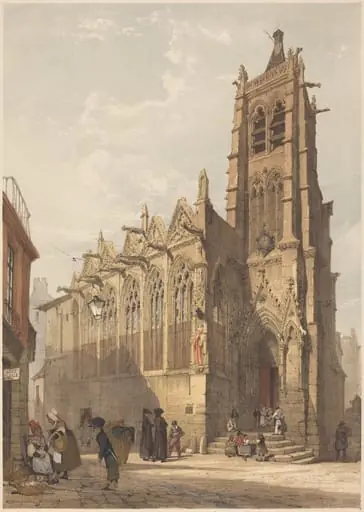
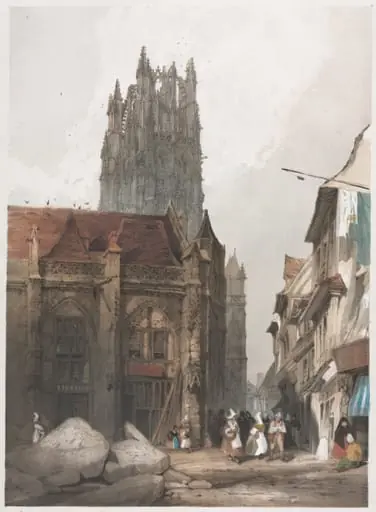 Picturesque Architecture in Paris, Ghent, Antwerp, Rouen: St. Laurent, Rouen, France
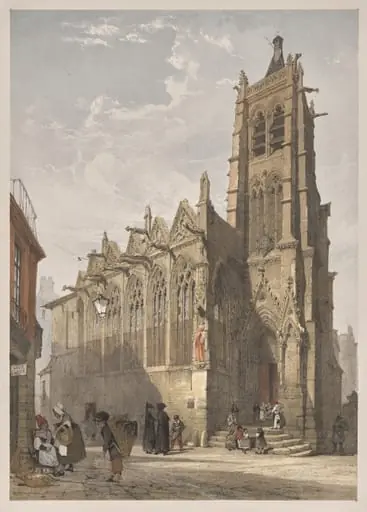 Picturesque Architecture in Paris, Ghent, Antwerp, Rouen: St. Severin, Paris
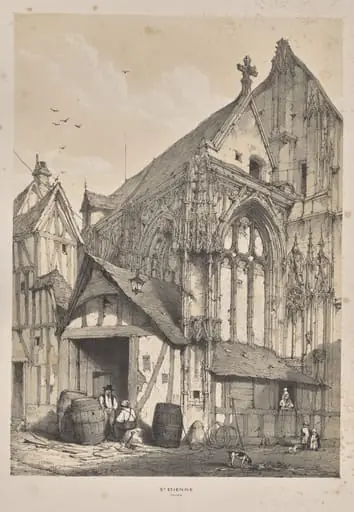 Architecture of the Middle Ages: St. Etienne, Rouen
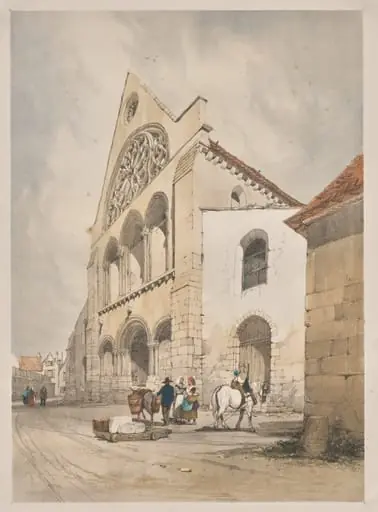 Picturesque Architecture in Paris, Ghent, Antwerp, Rouen: St. Andre, Chartres, France
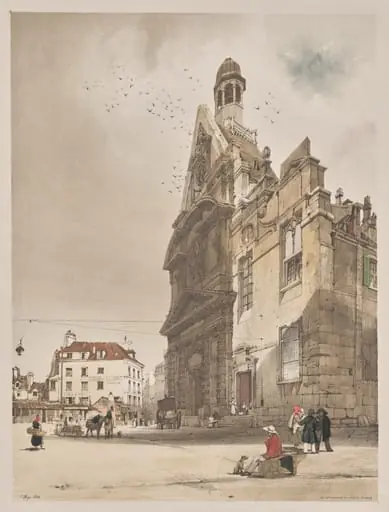 Picturesque Architecture in Paris, Ghent, Antwerp, Rouen: St. Etienne du Mont, Paris
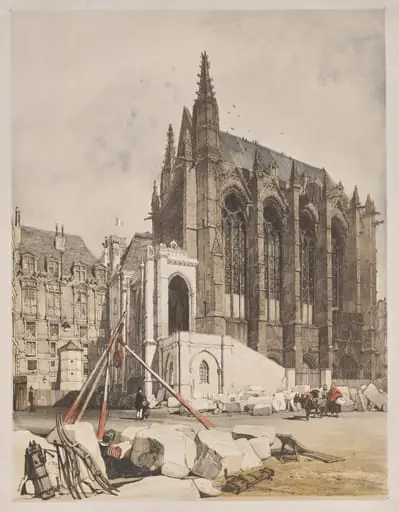 Picturesque Architecture in Paris, Ghent, Antwerp, Rouen: La. Ste Chapelle, Paris
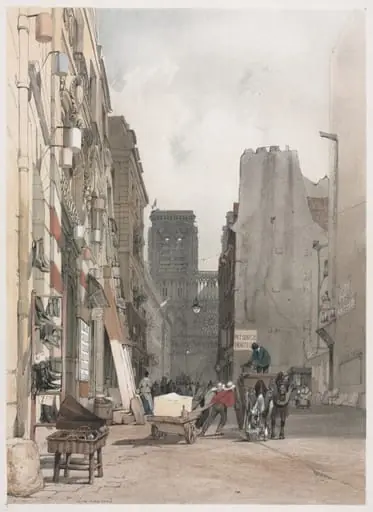 Picturesque Architecture in Paris, Ghent, Antwerp, Rouen: Nôtre Dame, Paris
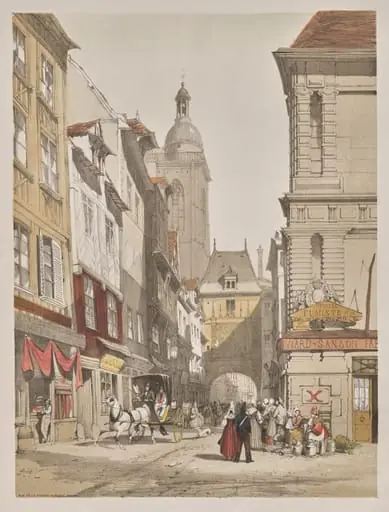 Picturesque Architecture in Paris, Ghent, Antwerp, Rouen: Rue de la Crosse Horlogue, Rouen, France
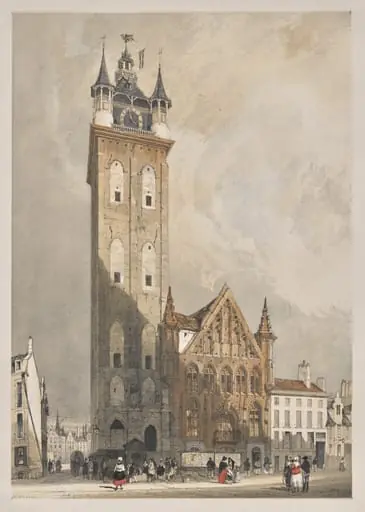 Picturesque Architecture in Paris, Ghent, Antwerp, Rouen: Belfrey, Ghent, Belgium
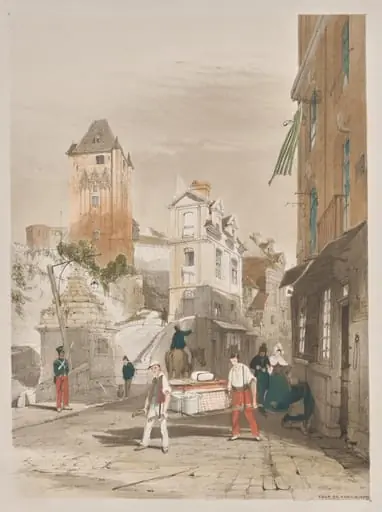 Picturesque Architecture in Paris, Ghent, Antwerp, Rouen: Tour de Remy, Dieppe, France
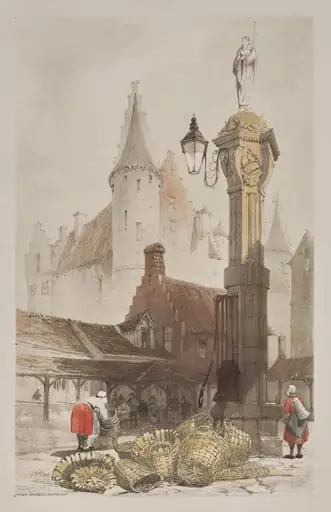 Picturesque Architecture in Paris, Ghent, Antwerp, Rouen: Fish Market, Antwerp, Belgium