Artwork
Portfolio VI, Plate 193: Travaux--Piegan
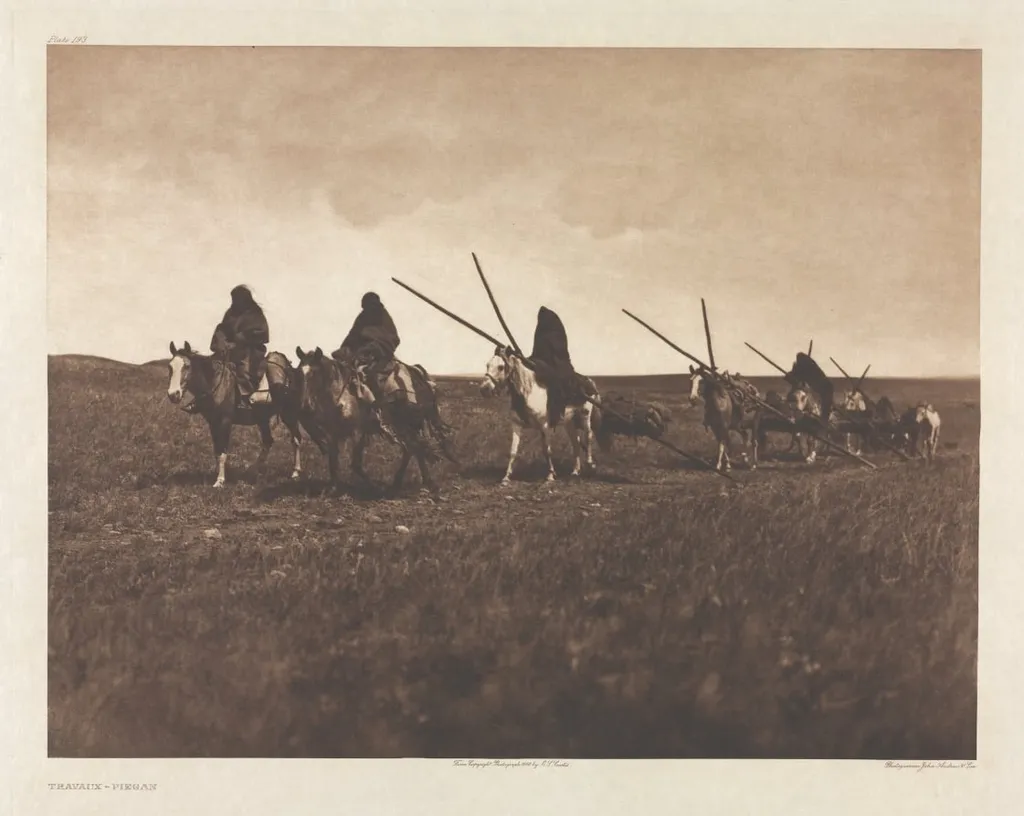
Portfolio VI, Plate 193: Travaux--Piegan is a work on paper by Edward S. Curtis. It dates from 1900 and is held in the collection of the Cleveland Museum of Art.
About this work
The overall atmosphere of the image is one of movement and activity, with the horses and riders seemingly in motion.
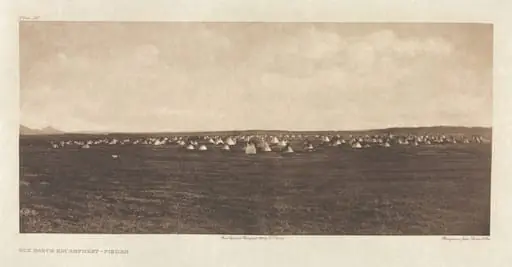
This image depicts a group of people on horseback, with a line of horses stretching across the landscape. The riders are dressed in dark clothing, and some of them are holding long poles or spears. The horses are walking through a field of tall grass, with a few hills visible in the background.
The overall atmosphere of the image is one of movement and activity, with the horses and riders seemingly in motion. The use of dark colors and the muted tones of the landscape add to the sense of drama and energy.
The image is a striking example of the work of Edward S. Curtis, an American photographer known for his portraits of Native American tribes. To learn more about Curtis's work, explore the artist: Edward S. Curtis (American, 1868–1952).
Overview
Portfolio VI, Plate 193: Travaux--Piegan is a photographic work by Edward S. Curtis, created in 1900, and is part of The Cleveland Museum of Art's collection.
Subject & Meaning
The image shows a group of Piegan people on horseback, traversing a grassy landscape with hills in the background. The riders, dressed in dark attire, are engaged in an activity, possibly hunting or herding, as some hold long poles or spears.
Technique & Style
The photograph conveys a sense of movement and energy through its depiction of horses and riders in action. The use of dark colors and muted tones enhances the dramatic effect, characteristic of Curtis's documentary style.
Artist & collection

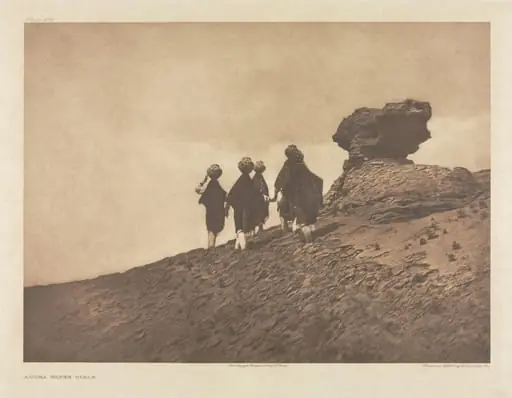 Portfolio XVI, Plate 573: Acoma Water Girls
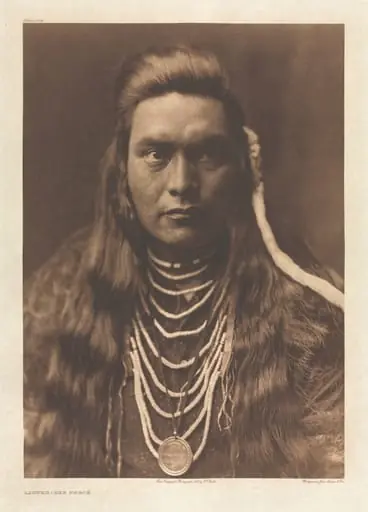 Portfolio VIII, Plate 264: Lawyer - Nez Percé
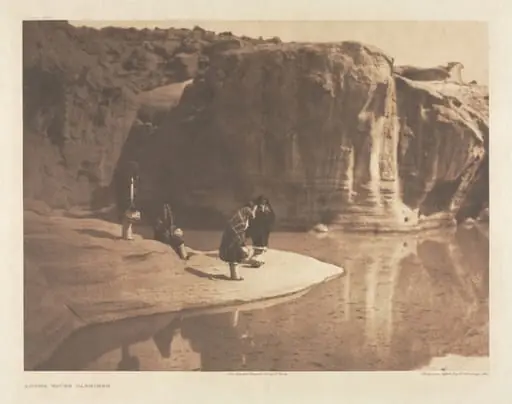 Portfolio XVI, Plate 568: Acoma Water Carriers
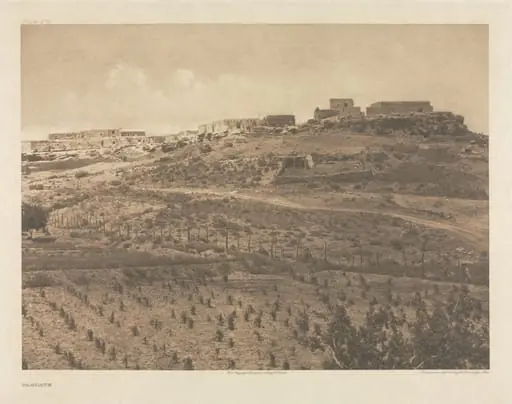 Portfolio XVI, Plate 574: Paguate
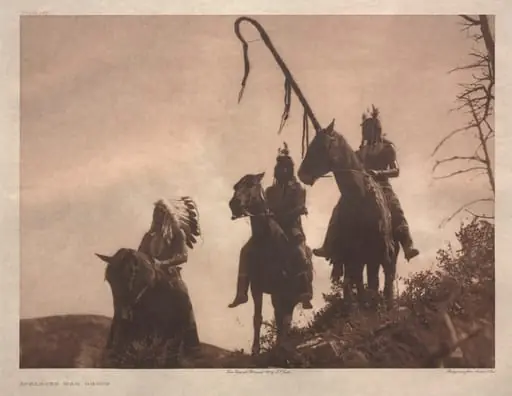 Portfolio IV, Plate 147: Apsaroke War Group
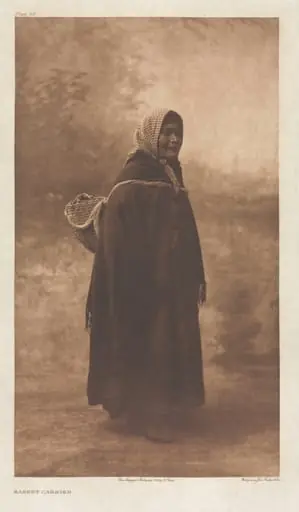 Portfolio IX, Plate 311: Basket Carrier
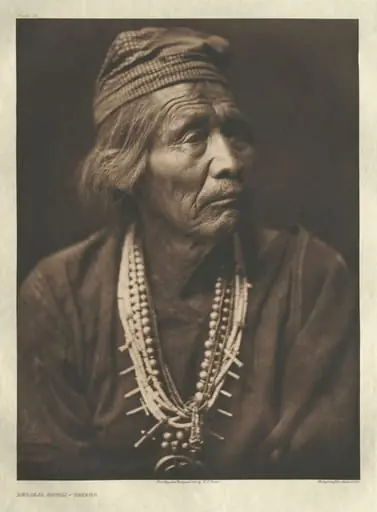 Portfolio I, Plate 31: Nesjája Hatáli-Navaho
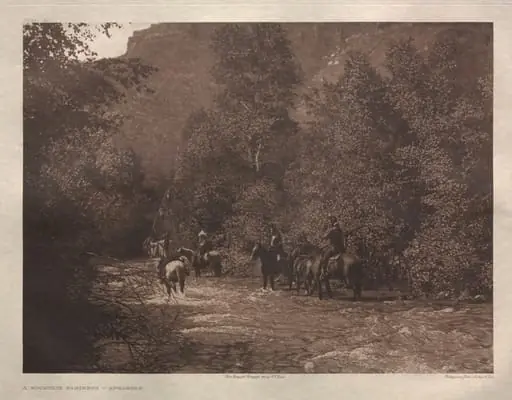 Portfolio IV, Plate 140: A Mountain Fastness--Apsaroke
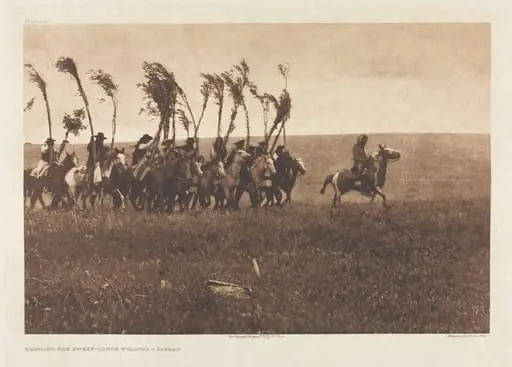 Portfolio VI, Plate 205: Bringing the Sweat-Lodge Willows - Piegan
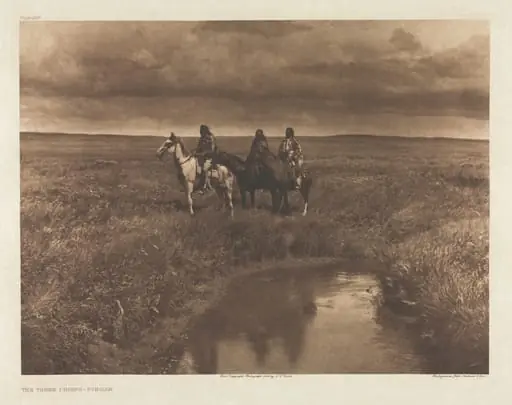 Portfolio VI, Plate 209: The Three Chiefs - Piegan
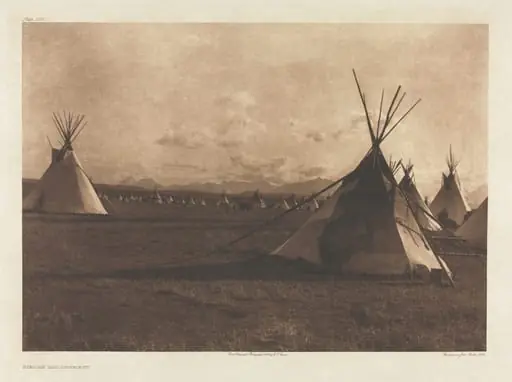 Portfolio VI, Plate 207: Piegan Encampment
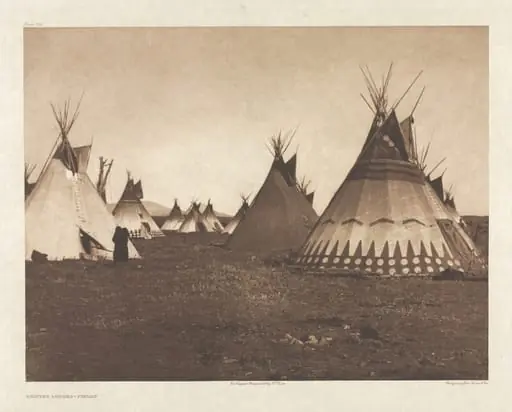 Portfolio VI, Plate 186: Painted Lodges--Piegan
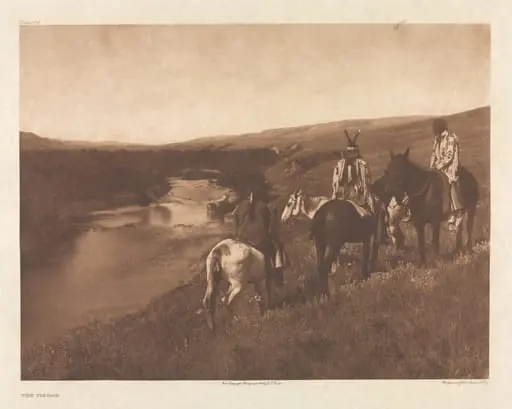 Portfolio VI, Plates 184- 219
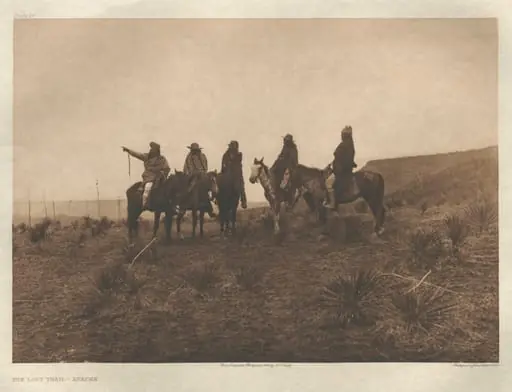 Portfolio I, Plate 19: The Lost Trail-Apache
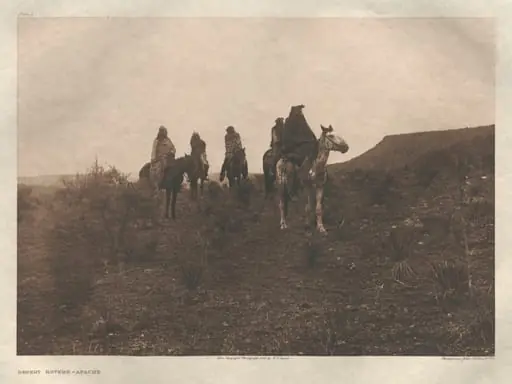 Portfolio I, Plate 3: Desert Rovers-Apache
 Portfolio VI, Plate 192: Sun Dance Encampment--Piegan