Artwork
Untitled
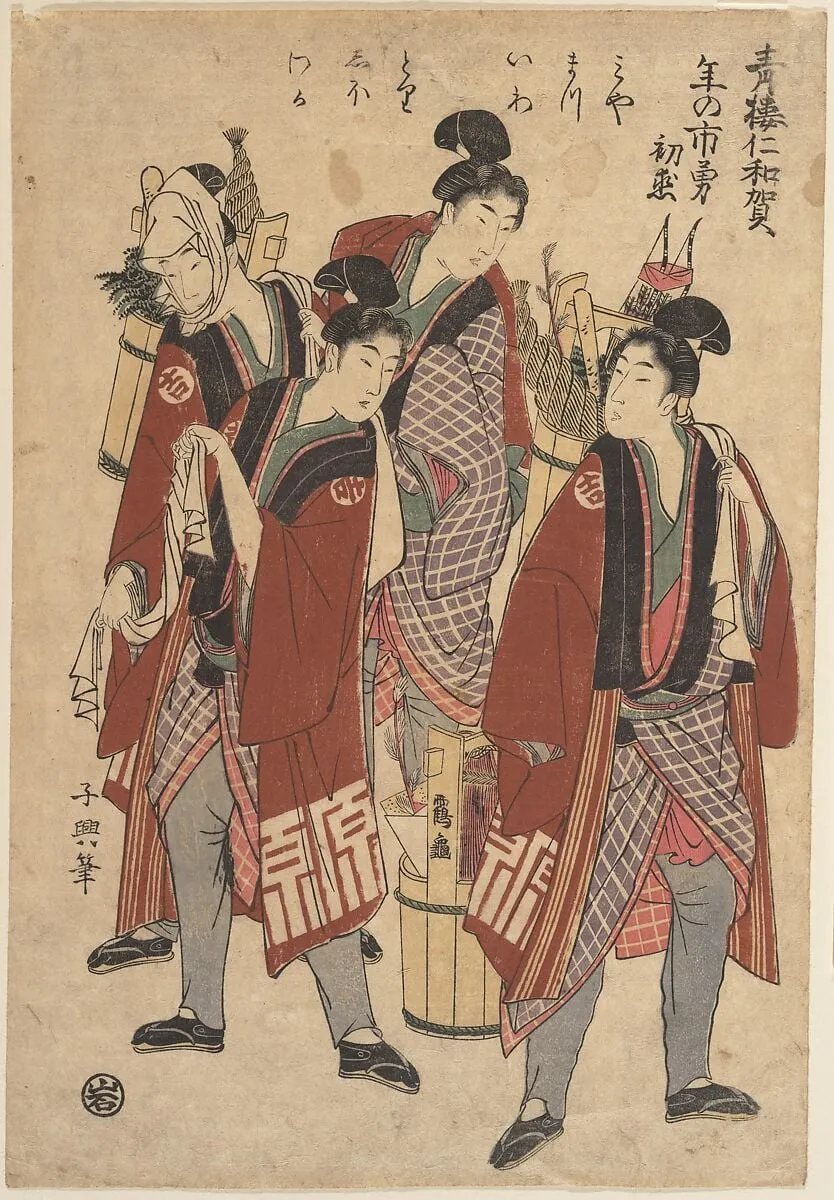
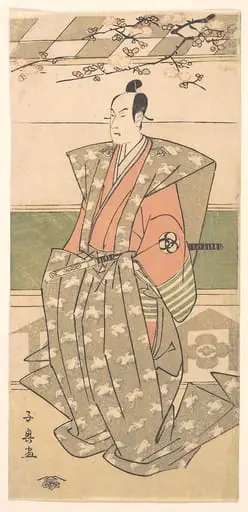
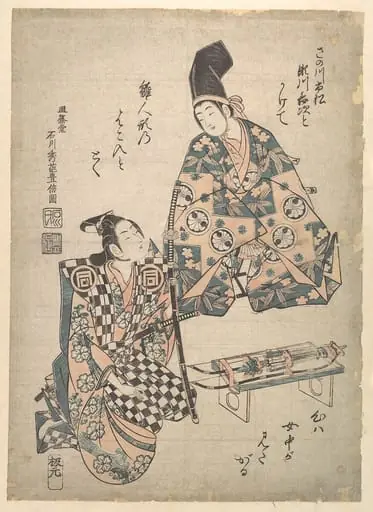
Untitled is an ink print by the Baroque artist Eishōsai Chōki. It dates from 1742 and is held in the collection of the Metropolitan Museum of Art.
About this work
Overview
This woodblock print, dated 1742, is attributed to Eishōsai Chōki and resides in The Metropolitan Museum of Art’s collection.
This woodblock print, dated 1742, is attributed to Eishōsai Chōki and resides in The Metropolitan Museum of Art’s collection. Executed in ink and color on paper, it belongs to the ukiyo-e tradition of Japanese printmaking. The composition depicts four figures in motion, their forms rendered with defined outlines and flat planes of pigment, characteristic of the genre’s emphasis on everyday scenes.
Subject & Meaning
The figures, dressed in dark and crimson robes with head coverings, carry baskets and bundles as they walk in single file. Their posture and grouping suggest a journey or errand, possibly linked to seasonal labor or pilgrimage. The absence of specific landmarks or narrative cues leaves the scene open to interpretation, reflecting ukiyo-e’s tendency to capture ordinary moments rather than grand events.
Technique & Style
The print employs bold, clean lines and restrained color palettes typical of mid-18th-century woodblock production. Subtle textural effects, such as stippling and light cross-hatching, suggest fabric folds and basket weave without overt modeling. The warm, earth-toned background enhances the grounded, unadorned quality of the scene, avoiding decorative excess in favor of quiet realism.
History & Provenance
The work entered The Metropolitan Museum of Art’s collection as part of its broader acquisition of Edo-period prints. While precise provenance prior to museum ownership is undocumented, its condition and stylistic alignment with Chōki’s known output support its attribution. It remains one of fewer surviving prints from this early phase of his career.
Context
Created during the Kyōhō era, the print reflects a period when ukiyo-e was expanding beyond courtesans and actors to include commoners and daily life. Chōki, though less documented than contemporaries like Utamaro, contributed to this shift, capturing pedestrian scenes with a restrained elegance that appealed to urban audiences seeking relatable imagery.
Legacy
This print exemplifies the quiet observational mode that enriched ukiyo-e’s thematic range. While not widely reproduced or celebrated in its time, it contributes to scholarly understanding of lesser-known artists who helped normalize depictions of ordinary people. Its preservation allows continued study of Edo-period visual culture beyond its most famous subjects.
Artist & collection

Artist
Eishōsai Chōki made delicate woodblock prints of women in the late 1700s Edo period.

 Untitled
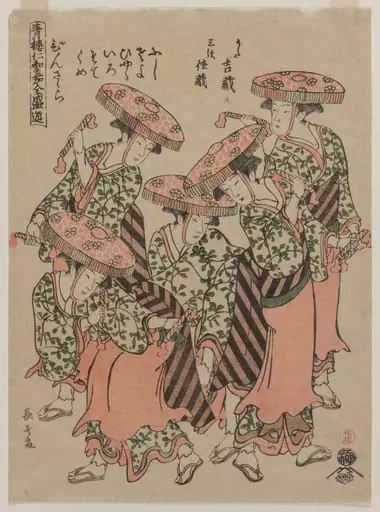 Binzasara, A Dance with Clappers (From the series Entertainments at the Height of the Niwaka Festival in the Pleasure Quarters)
 Untitled
 Untitled
 Untitled
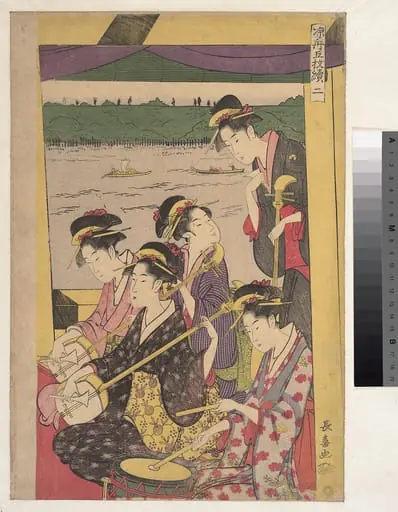 Suzumibune gomai-e; Ni|A Party of Geisha in a Suzumi-bune, i.e. "cooling-off boat." (Second Scene of a Boating Party)
 Untitled
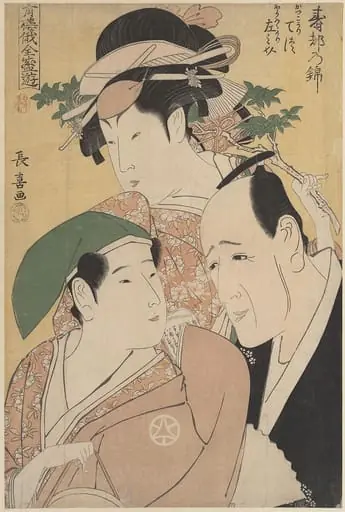 青楼俄全盛遊|The New Year Niwaka Festival in the Pleasure Quarters
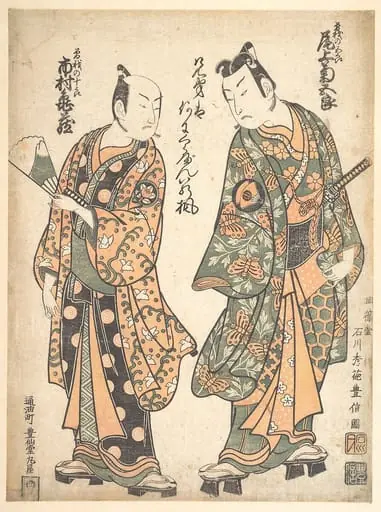 Untitled
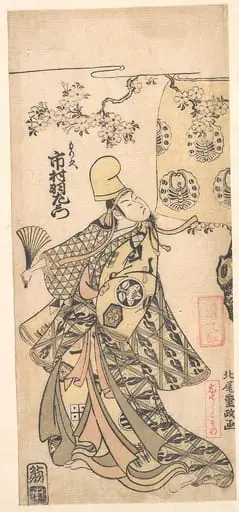 Untitled
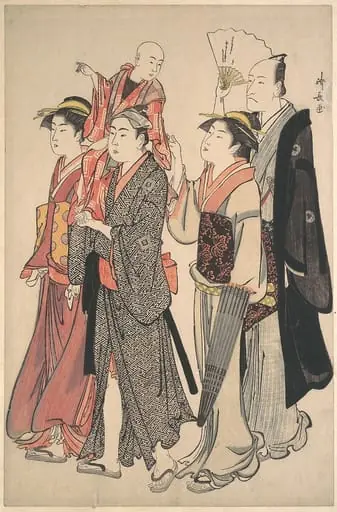 Untitled
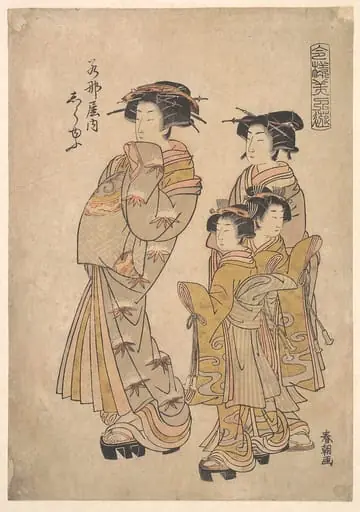 Untitled
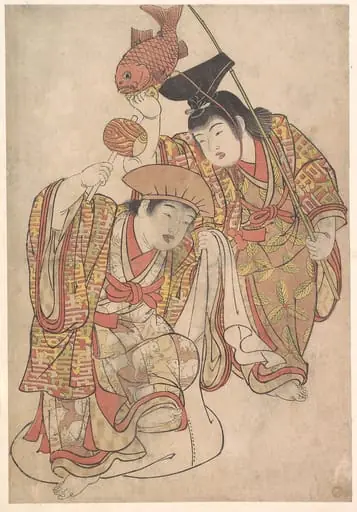 Untitled
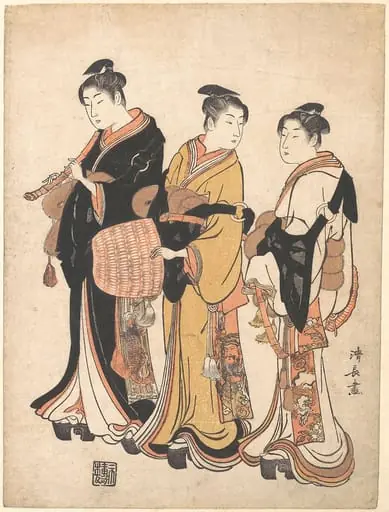 Untitled
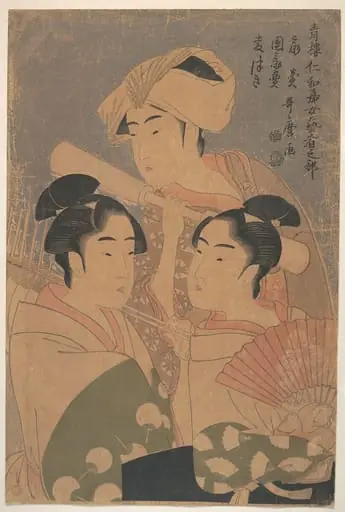 青楼仁和嘉女芸者之部 扇売 団扇売 麦つき|The Niwaka Performers
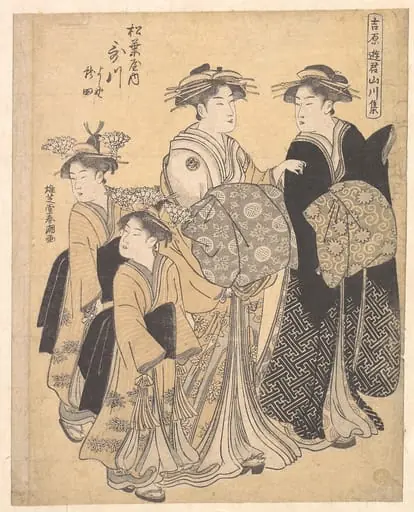 Untitled
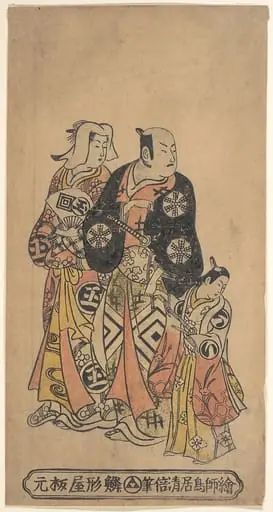 Untitled
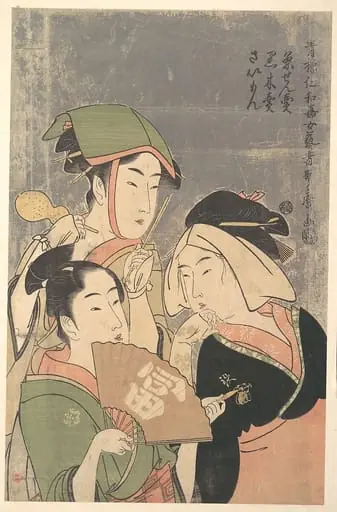 喜多川歌麿画 「青楼仁和嘉女芸者 茶せん売 黒木売 さいもん」|Three Niwaka Performers, Chasenuri, Kurokiri, and Saimon (Tea-whisk Seller, Firewood Seller, Shrine Festival Perfomer), from the “Geisha of the Yoshiwara Niwaka Festival” (Seiro Niwaka Onna Geisha)
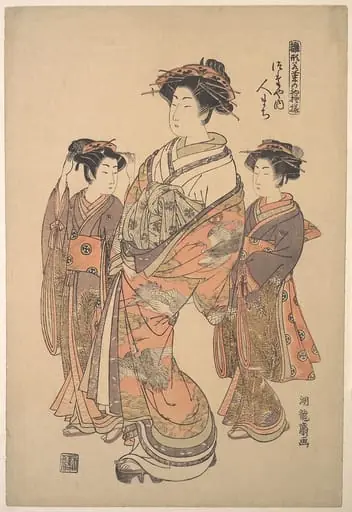 『雛形若菜の初模様 つたや内 人まち』|The Courtesan Hitomachi of the Tsutaya Brothel, from the series “A Pat-tern Book of the Year’s First Designs, Fresh as Spring Herbs” (“Hinagata wakana no hatsu moyō”)
 Untitled