Artwork
Untitled
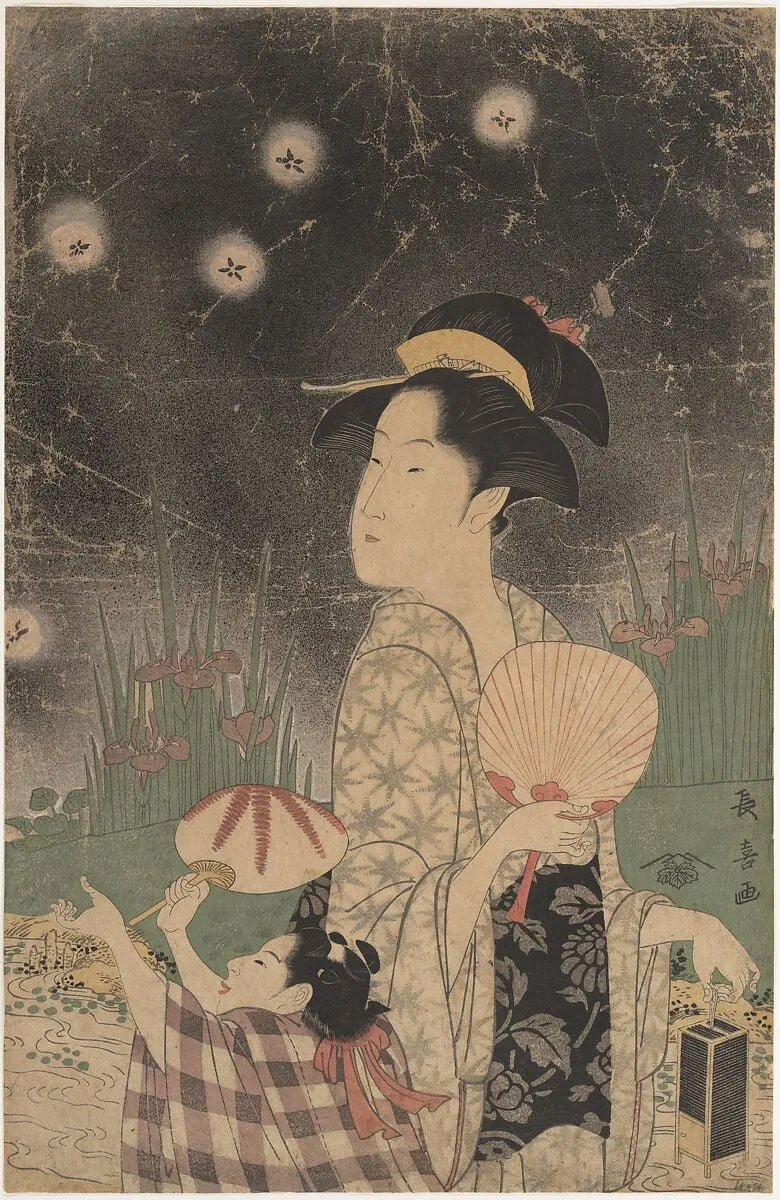
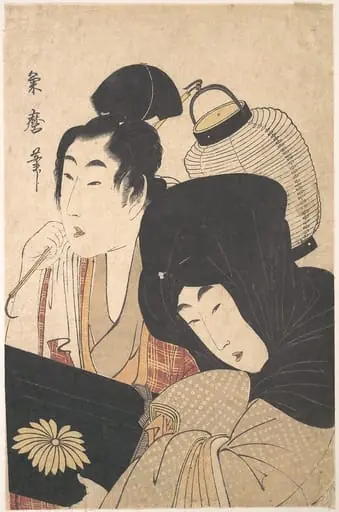
Untitled is an ink print by the Romanticist artist Eishōsai Chōki. It dates from 1793 and is held in the collection of the Metropolitan Museum of Art.
About this work
Overview
This unsigned woodblock print, attributed to Eishōsai Chōki and dated approximately 1793, is part of The Metropolitan Museum of Art’s collection. Executed in ink and color on paper, the work depicts a nocturnal garden scene featuring two figures—a woman and a child—amidst faintly rendered flora and floating fireflies.
Subject & Meaning
The composition centers on a woman standing in a dimly lit garden, her gaze directed upward, while a child behind her mirrors her posture, holding a fan and looking toward her. Fireflies hover near the woman’s head, adding a fleeting luminosity to the tranquil setting. The scene evokes quiet intimacy, suggesting themes of transience, nature’s ephemeral beauty, or the bond between generations.
Technique & Style
Chōki employs the ukiyo-e woodblock method, layering ink and pigment to achieve subtle tonal contrasts. The dark background recedes, allowing the figures and delicate botanical details to emerge with soft definition. Linear precision in the kimono patterns and fans contrasts with the atmospheric blur of fireflies, demonstrating the artist’s balance between structure and suggestion.
History & Provenance
Produced during Japan’s Edo period, this print reflects the era’s flourishing print culture, where images of daily life and private moments gained popularity. Its exact early ownership remains unrecorded, but it entered The Metropolitan Museum of Art’s holdings as part of its broader collection of Japanese graphic arts, preserving its condition and context.
Context
Woodblock prints of the late 18th century often depicted urban leisure, courtesans, or poetic landscapes, yet this work diverges by focusing on an understated domestic scene. The inclusion of fireflies—symbols of impermanence—aligns with broader Edo-period aesthetics that valued fleeting beauty, though the print resists overt narrative, inviting interpretation through mood rather than explicit storytelling.
Artist & collection

Artist
Eishōsai Chōki made delicate woodblock prints of women in the late 1700s Edo period.

 Untitled
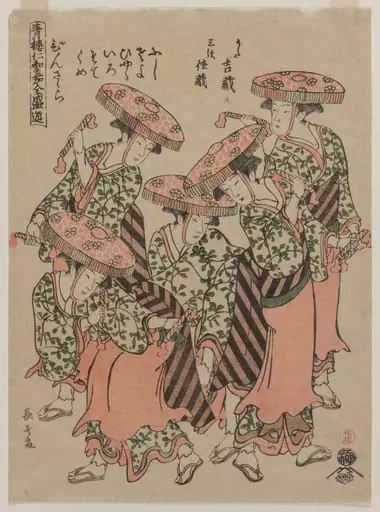 Binzasara, A Dance with Clappers (From the series Entertainments at the Height of the Niwaka Festival in the Pleasure Quarters)
 Untitled
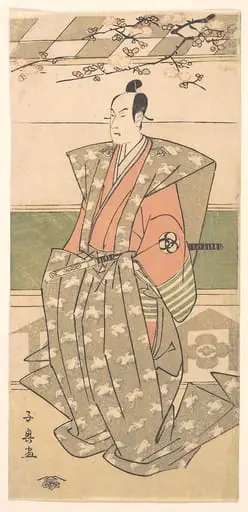 Untitled
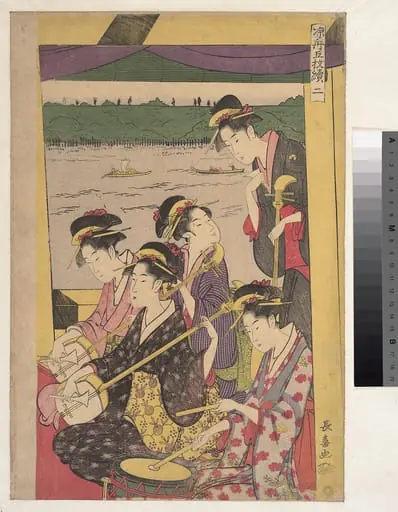 Suzumibune gomai-e; Ni|A Party of Geisha in a Suzumi-bune, i.e. "cooling-off boat." (Second Scene of a Boating Party)
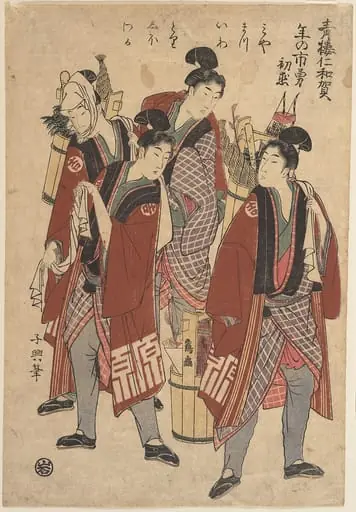 Untitled
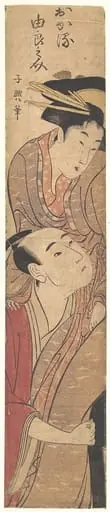 Untitled
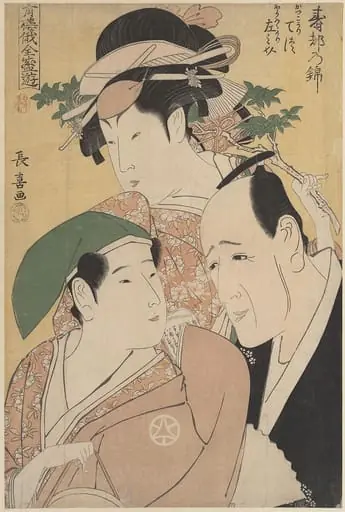 青楼俄全盛遊|The New Year Niwaka Festival in the Pleasure Quarters
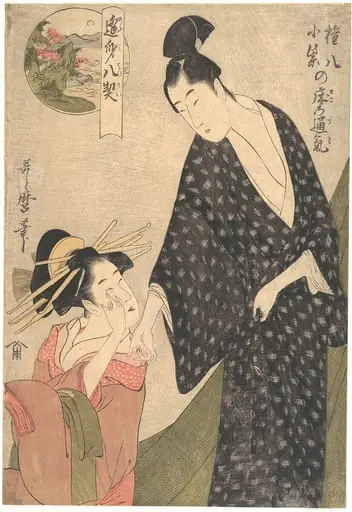 Gompachi Komurasaki no Toko no Tsuki|逢身八契 権八小紫の床の通気|Shared Feelings in the Bedchamber of Komurasaki and Gompachi
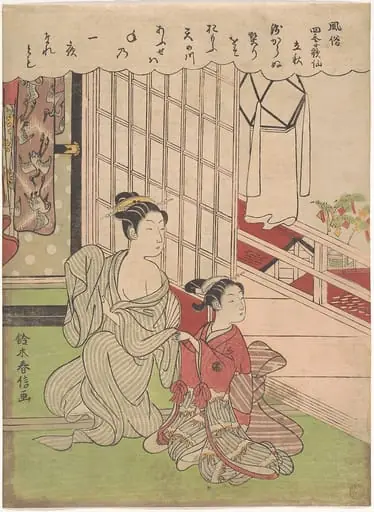 Aki|風俗四季歌仙 立秋|First Day of Autumn (Risshu)
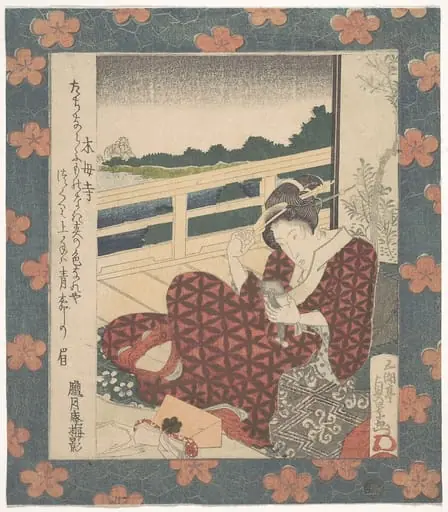 Untitled
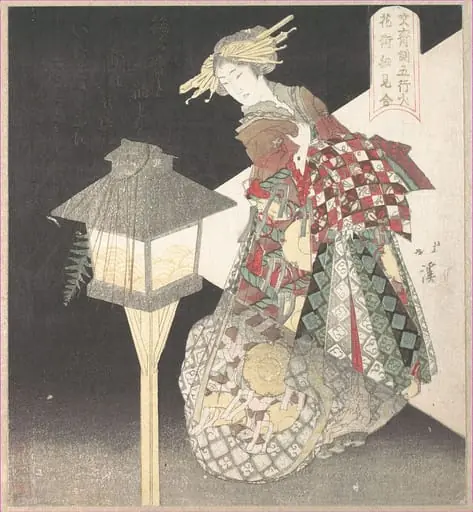 「文齊側五行火 花街細見合」|Courtesan by a Lantern, “Fire,” from the series Five Elements for the Bunsai Poetry Group, a Guide to the Yoshiwara Pleasure Quarters
 Untitled
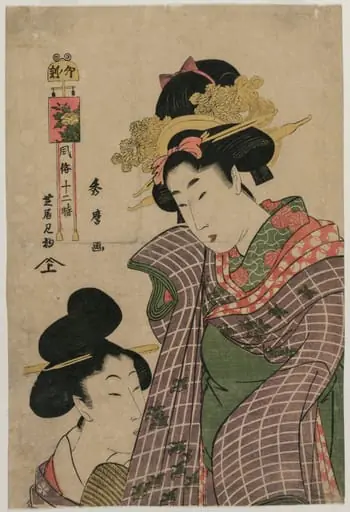 Going to the Kabuki Theater in the Hour of the Hare (From the Series The Twelve Hours with Daily Events)
 Untitled
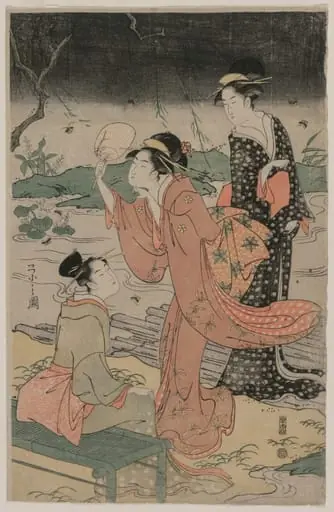 Women Beside a Stream Chasing Fireflies
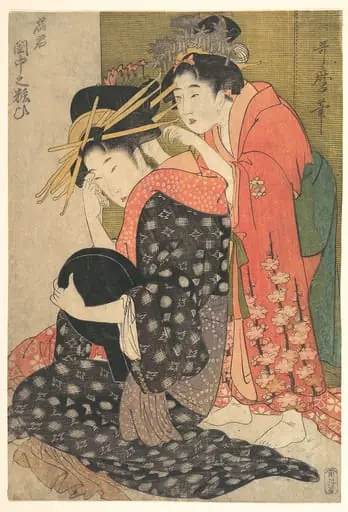 名君 閨中の粧ひ|The Oiran Yoso-oi Seated at Her Toilet
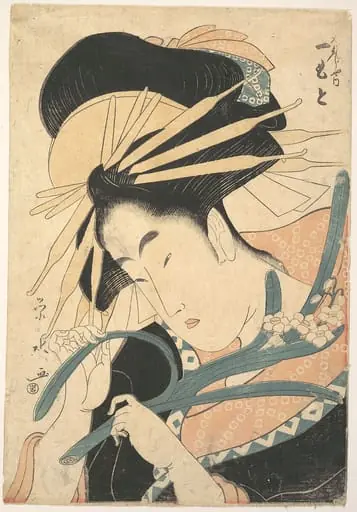 Untitled
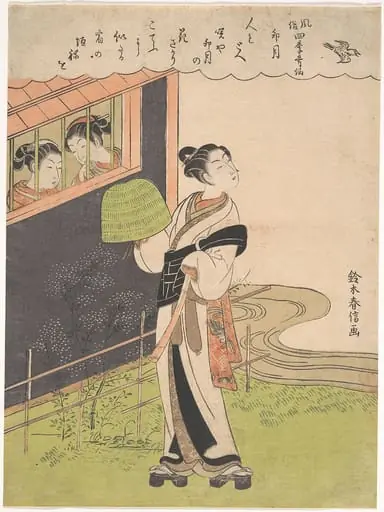 鈴木春信画 虚無僧・「風俗四季歌仙 卯月」|A Flute-Playing Monk (Komusō); The Fourth Month (Uzuki), from the series Fashionable Poetic Immortals of the Four Seasons (Fūzoku shiki kasen)
 Untitled