Artwork
Suzumibune gomai-e; Ni|A Party of Geisha in a Suzumi-bune, i.e. "cooling-off boat." (Second Scene of a Boating Party)
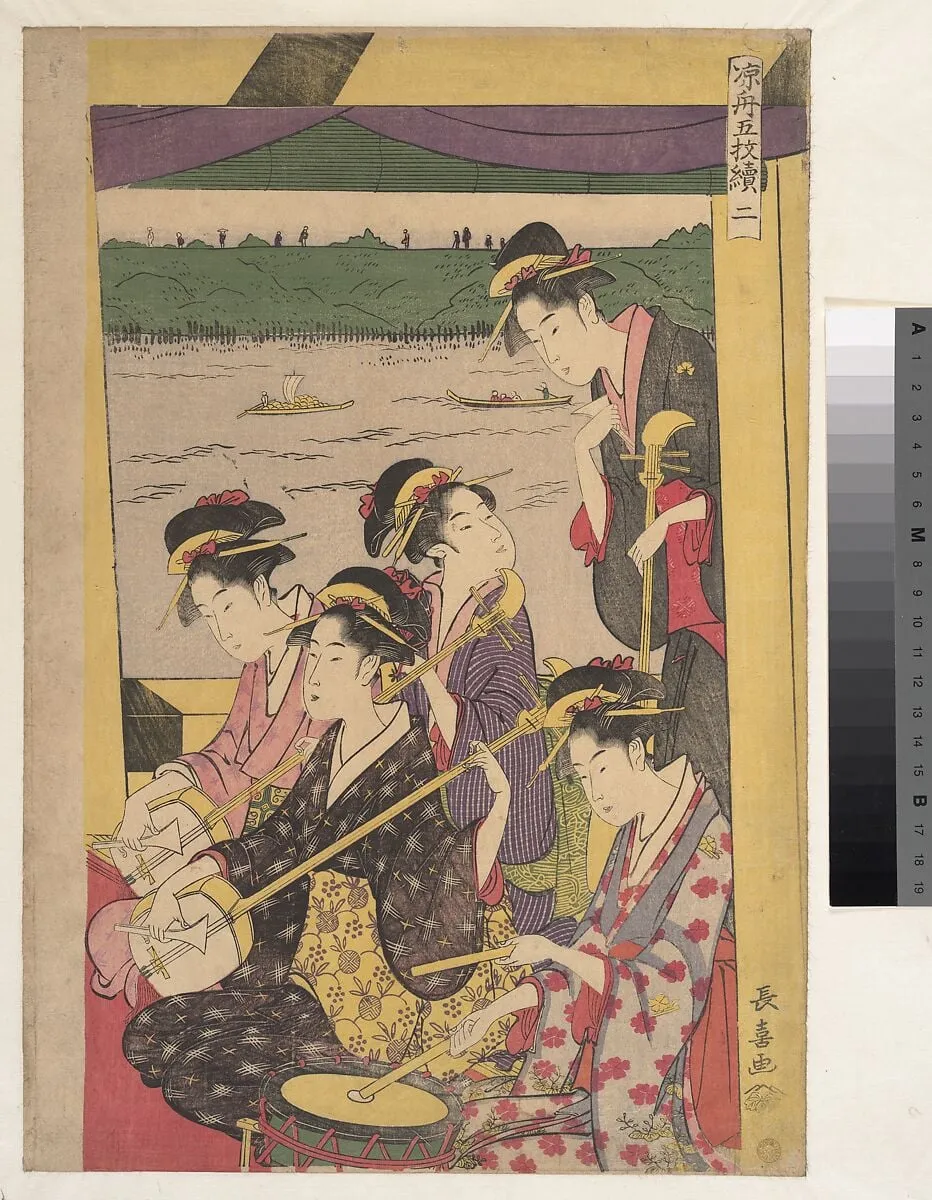
Suzumibune gomai-e; Ni|A Party of Geisha in a Suzumi-bune, i.e. "cooling-off boat." (Second Scene of a Boating Party) is an ink print by the Romanticist artist Eishōsai Chōki. It is held in the collection of the Metropolitan Museum of Art.
About this work
Overview
Suzumibune gomai-e; Ni, or A Party of Geisha in a Suzumi-bune, is a woodblock print from circa 1796, part of a five-panel series depicting a boating party. It is the second scene in this series.
Subject & Meaning
The print showcases a leisurely gathering of geishas on a 'cooling-off boat' (suzumi-bune). Activities include music-making with a shamisen and drum, and relaxation with a fan, set against a serene backdrop of water, boats, and a populated hillside.
Technique & Style
Executed in ink and color on paper, the work features vibrant hues such as pink, purple, yellow, and green. The geishas wear intricately designed, traditionally patterned kimonos, highlighting the artist's attention to detail in capturing contemporary Japanese attire.
History & Provenance
Created by Eishōsai Chōki around 1796, the print is now part of The Metropolitan Museum of Art's collection.
Context
As part of a broader series on a boating party, this piece reflects the ukiyo-e genre's fascination with leisure activities and the lives of geishas, popular subjects in late 18th-century Japanese art.
Legacy
While specific impact details are not provided, as a work of the ukiyo-e tradition, it contributes to the enduring global interest in Japanese woodblock prints and the cultural insights they offer into late Edo period leisure and entertainment.
Artist & collection

Artist
Eishōsai Chōki made delicate woodblock prints of women in the late 1700s Edo period.

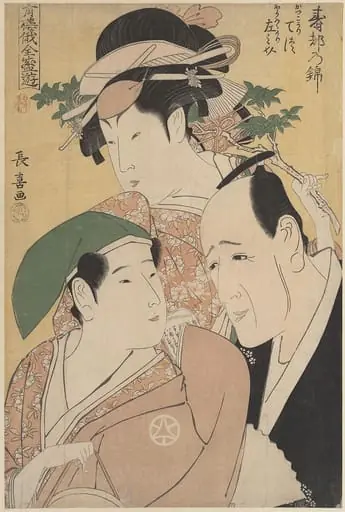
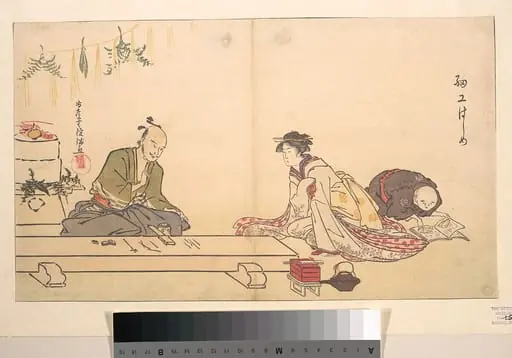 Untitled
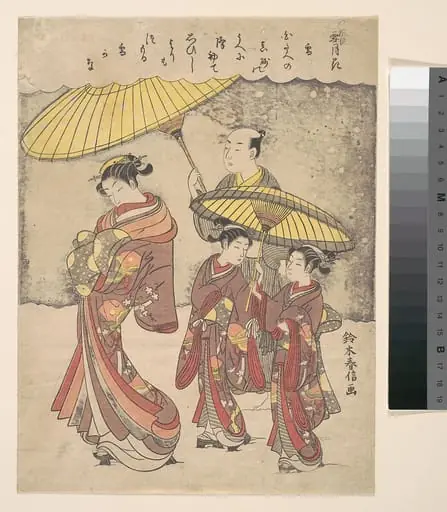 Yuki|雪月花 雪|Snow
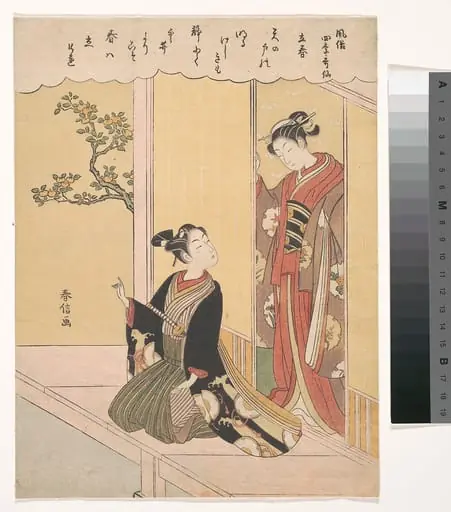 鈴木春信画「風俗四季歌仙 立春」|The First Day of Spring (Risshun), from the series Fashionable Poetic Immortals of the Four Seasons (Fūzoku shiki Kasen)
 Untitled
 扇屋内春日野|The Oiran Kasugano of Ogiya on Parade under Blossoming Cherry Trees
 百人一首 天智天皇|Sympathy
 Untitled
 Untitled
 Untitled
 名取酒六家選 大もんぢや内浅じふ 木綿屋七ッ梅|A Courtesan