Artwork
Binzasara, A Dance with Clappers (From the series Entertainments at the Height of the Niwaka Festival in the Pleasure Quarters)
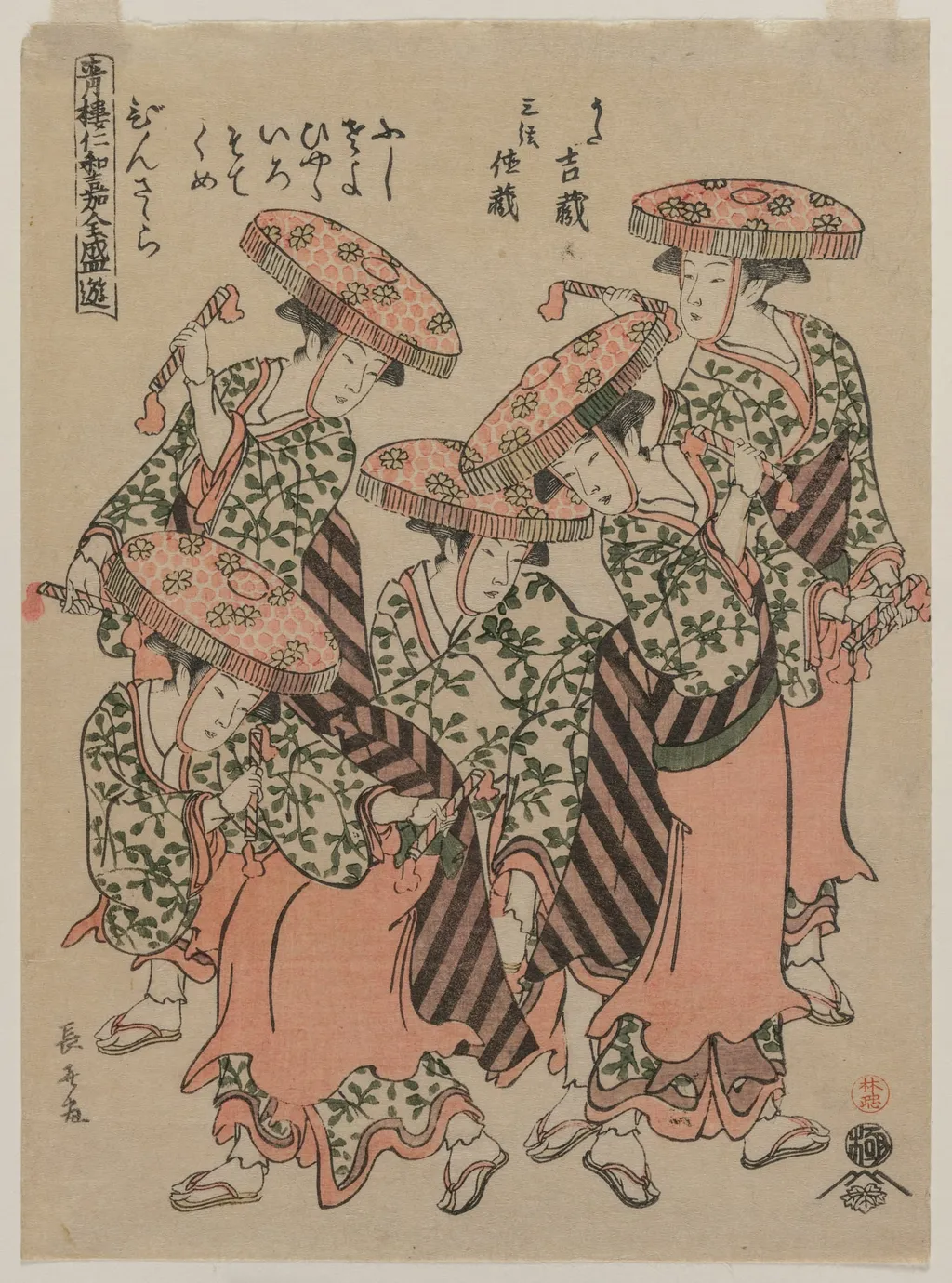
Binzasara, A Dance with Clappers (From the series Entertainments at the Height of the Niwaka Festival in the Pleasure Quarters) is a print by the Romanticist artist Eishōsai Chōki. It dates from 1794 and is held in the collection of the Cleveland Museum of Art. This print depicts a dancer performing the Binzasara dance, characterized by the use of binzasara clappers and a flowered hat.
About this work
This print was probably sold as a souvenir during the Niwaka Festival, when geisha performed for crowds.
You see a woman in a bright kimono, mid-dance, holding two long wooden clappers called binzasara. Her sleeves and sash flutter as she moves, and a flowered hat sits on her head.
This print was probably sold as a souvenir during the Niwaka Festival, when geisha performed for crowds. The dance itself is old—farmers once used it to ask for good harvests. The artist shows just one moment, but you can almost hear the clappers clicking.
Look up more prints from japan, edo period (1615–1868) to see how artists turned daily life into art.
Overview
This print depicts a dancer performing the Binzasara dance, characterized by the use of binzasara clappers and a flowered hat. The work is part of a series documenting entertainments during the Niwaka Festival in the pleasure quarters.
Subject & Meaning
The Binzasara dance is an agricultural ritual associated with fertility, originally performed in May. The dancer's attire and props invoke agricultural deities, highlighting the dance's origins in rural traditions.
Technique & Style
The print captures a dynamic moment in the dance, conveying movement through the fluttering sleeves and sash of the dancer's bright kimono. The artist's focus on a single instant suggests a snapshot of a lively performance.
History & Provenance
The print was likely produced as a souvenir for the Niwaka Festival, which took place in the eighth lunar month and featured geisha performances. The festival was a significant event in the pleasure quarters, and such prints may have served as mementos.
Own this work as a print
Artist & collection

Artist
Eishōsai Chōki made delicate woodblock prints of women in the late 1700s Edo period.

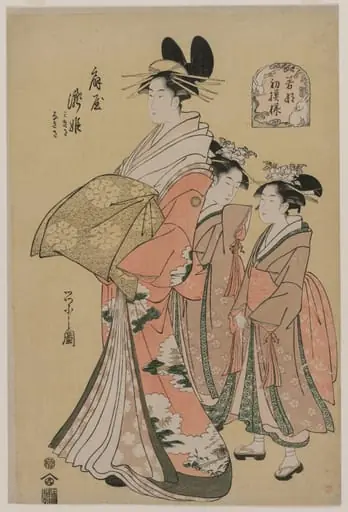 The Courtesan Takihime and Attendants (from the series New Patterns of Young Greens)
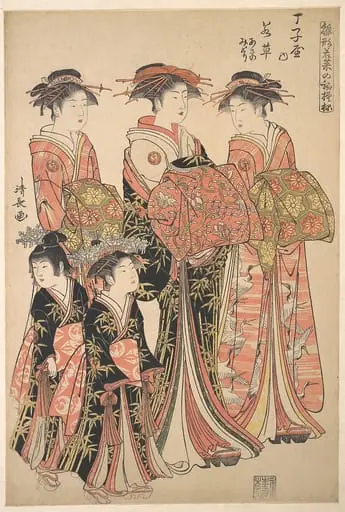 鳥居清長画 「雛形若菜の初模様 丁子屋の若草・ あさの・みどり」|The Courtesan Wakakusa of the Chōjiya Brothel, and Attendants Asano and Midori, from the series “A Pattern Book of the Year’s First Designs, Fresh as Spring Herbs” (Hinagata wakana no hatsumoyō)
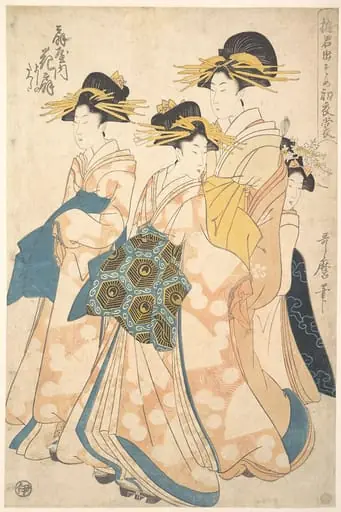 遊君出そめ初衣裳 扇屋内花扇|The Oiran Hanaogi of Ogiya attended by Two Shinzo and Her Kamuro Yoshino
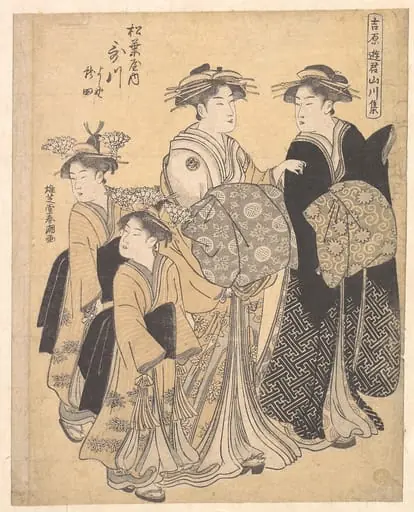 Untitled
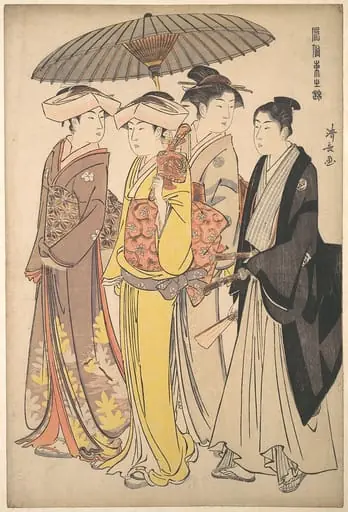 「風俗東之錦」 武家の息女と侍女と若党 |A Lady from a Samurai Household with Three Attendants, from the series A Brocade of Eastern Manners (Fūzoku Azuma no nishiki)
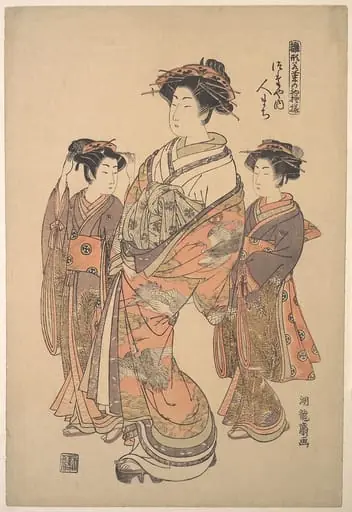 『雛形若菜の初模様 つたや内 人まち』|The Courtesan Hitomachi of the Tsutaya Brothel, from the series “A Pat-tern Book of the Year’s First Designs, Fresh as Spring Herbs” (“Hinagata wakana no hatsu moyō”)
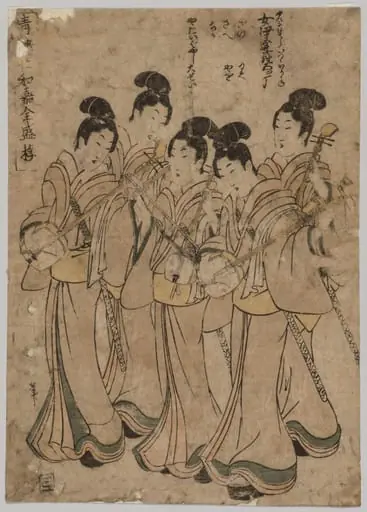 Young Women with Musical Instruments
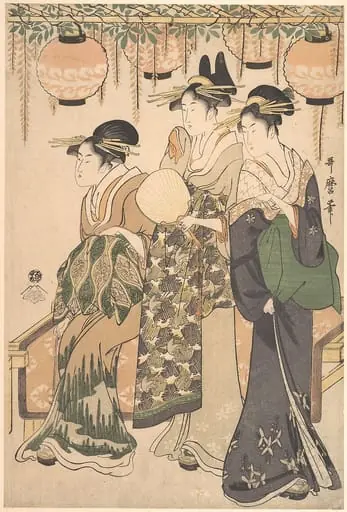 藤棚下の遊女たち|Courtesans Beneath a Wisteria Arbor (Fuji dana shita no yūjo tachi)
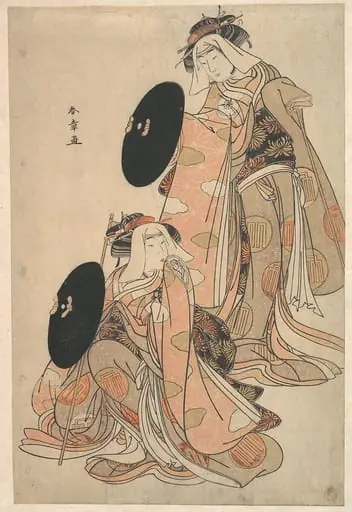 Untitled
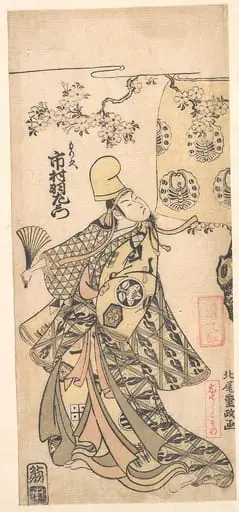 Untitled
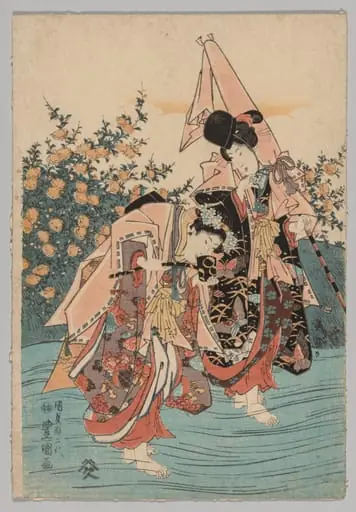 Actors
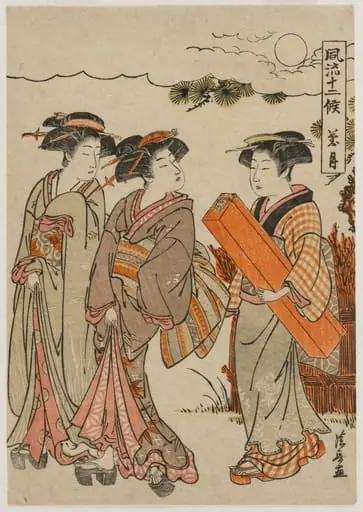 The Eighth Month (from the series Fashionable Presentations of the Twelve Months)