Artwork
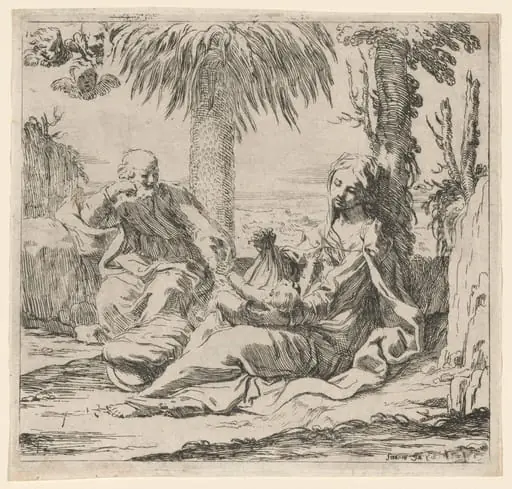
Rest on the Flight into Egypt
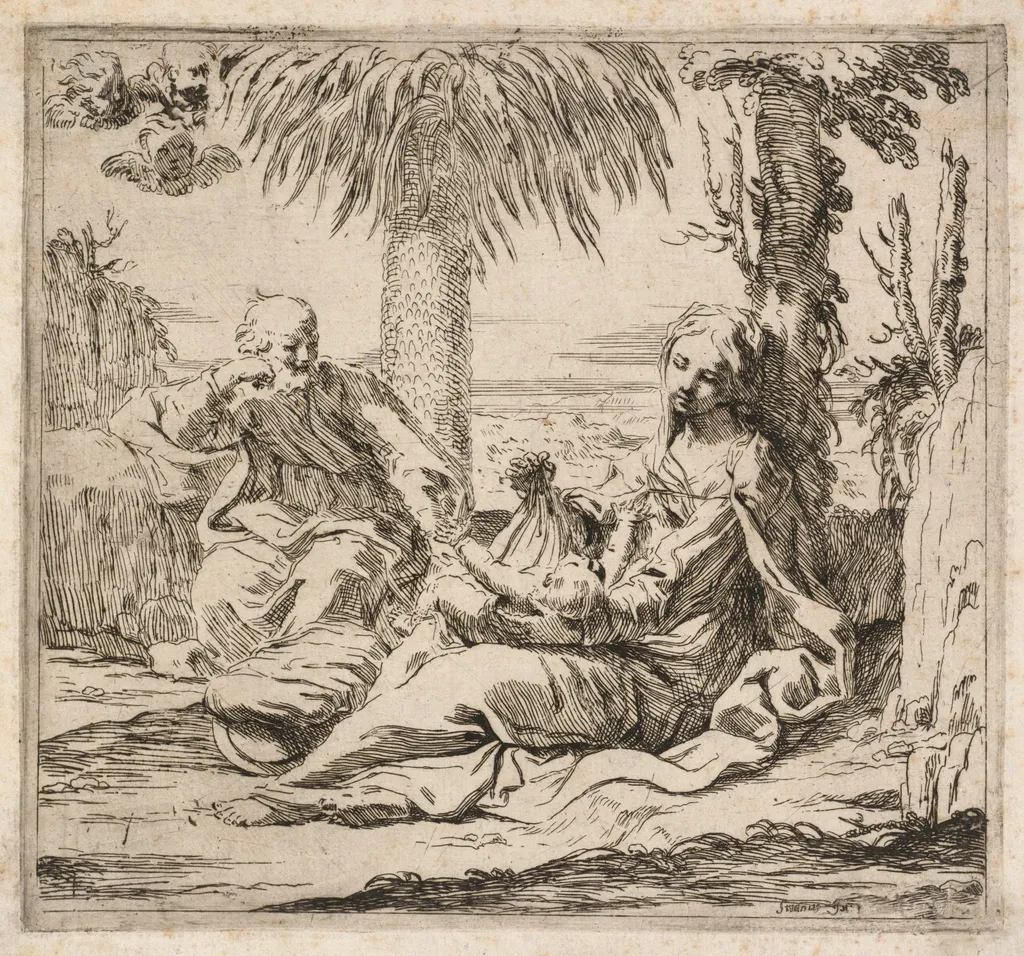
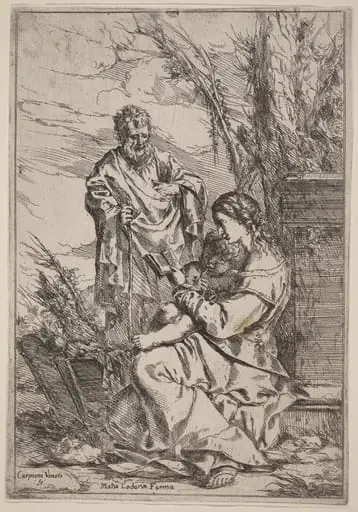
Rest on the Flight into Egypt is a print by the Baroque artist Elisabetta Sirani. It dates from 1660 and is held in the collection of the Cleveland Museum of Art.
About this work
Overview
Despite her brief life—she died at 27—she gained recognition for her technical precision and emotional restraint.
Elisabetta Sirani, a Bolognese artist active in the mid-17th century, produced this print around 1660 as part of her prolific output in both painting and printmaking. Despite her brief life—she died at 27—she gained recognition for her technical precision and emotional restraint. This work belongs to a series of devotional images intended for private contemplation, reflecting the spiritual culture of her time and her role as a rare female professional artist in early modern Italy.
Subject & Meaning
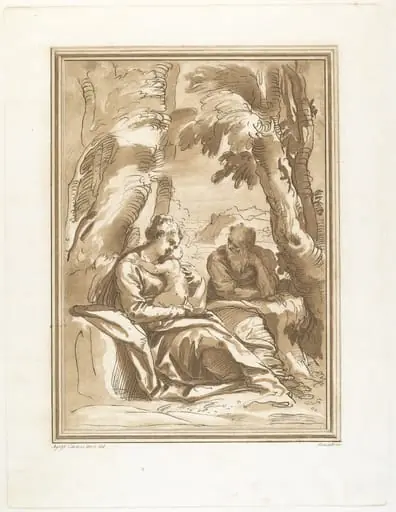
The scene illustrates the Holy Family’s pause during their flight into Egypt, a moment of quiet respite from biblical persecution. Mary, seated on the earth, cradles the infant Jesus, while Joseph, nearby, gazes downward in watchful stillness. The composition emphasizes tenderness and vulnerability, transforming a moment of refuge into a meditation on maternal care and divine protection. The absence of dramatic action invites introspection rather than narrative urgency.
Technique & Style
Sirani employed chiaroscuro to model forms with subtle gradations of light and shadow, enhancing the three-dimensionality of the figures against a muted landscape. The soft transitions between tones create a hushed, atmospheric depth, guiding the viewer’s focus to the central group. Lines are controlled and precise, characteristic of her training in Bologna’s academic tradition, where draftsmanship was prioritized over expressive brushwork.
History & Provenance
Created shortly before Sirani’s sudden death in 1665, the work likely originated as a private commission or studio piece for devotional use. Its survival suggests it was valued within her circle or among patrons who collected works by Bolognese women artists. Though few of her prints survive in large numbers, this example reflects the circulation of religious imagery through domestic and ecclesiastical networks in northern Italy.
Context
In 17th-century Bologna, women artists were uncommon but not unprecedented; Sirani operated within a family workshop and trained under her father. Her success challenged gender norms, yet her subjects remained firmly within accepted religious themes. The Flight into Egypt was a popular motif for its emotional accessibility, allowing artists to explore intimacy and stillness without violating contemporary conventions of sacred imagery.
Legacy
Sirani’s legacy lies in her role as a pioneering female artist whose work was respected in her lifetime and preserved in collections afterward. Though her career was cut short, her prints and paintings influenced later generations of women in the arts. This particular work exemplifies how quiet, domestic moments in sacred narratives could be rendered with technical mastery and emotional nuance, expanding the scope of Baroque devotional art.
Artist & collection
Artist
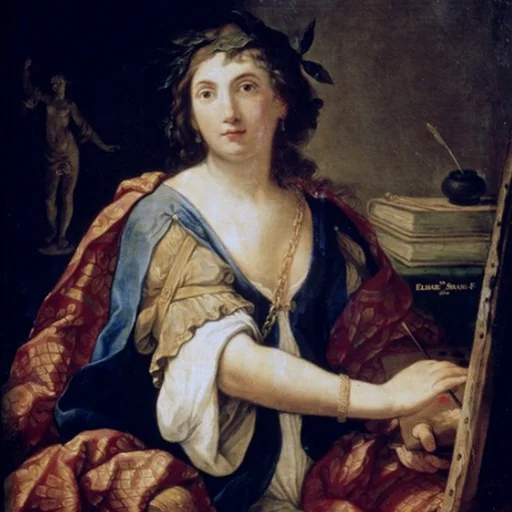
Elisabetta Sirani (8 January 1638 – 28 August 1665) was an Italian Baroque painter and printmaker who died in unexplained circumstances at the age of 27.

 Rest on the Flight into Egypt
 Rest on the Flight into Egypt
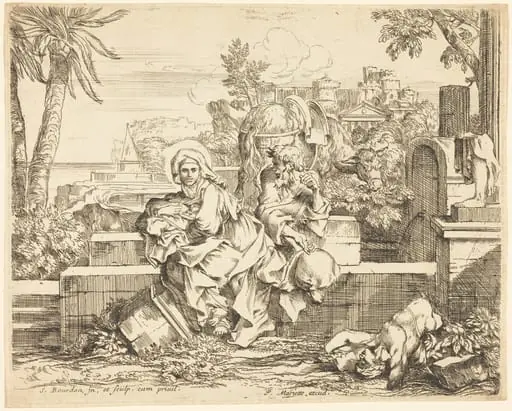 Rest on the Flight into Egypt
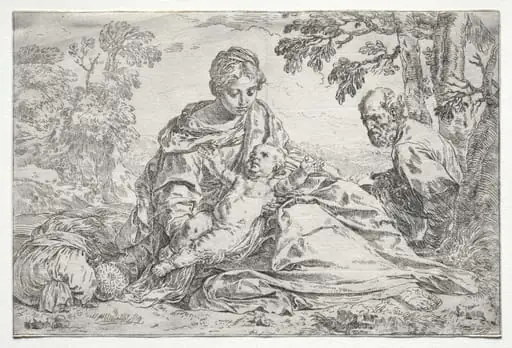 Rest on the Flight into Egypt
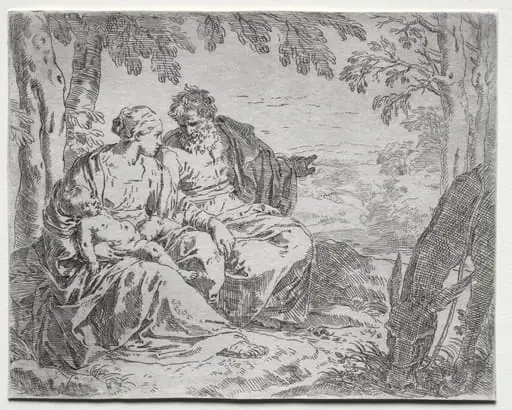 Rest on the Flight in to Egypt
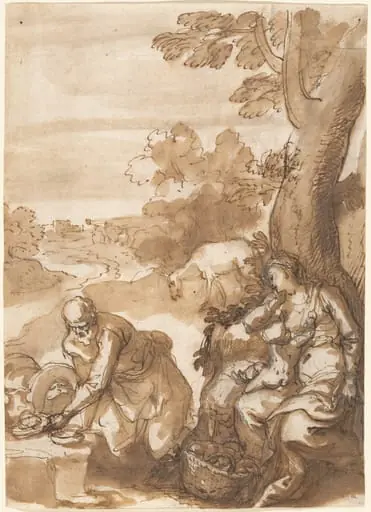 Rest on the Flight into Egypt
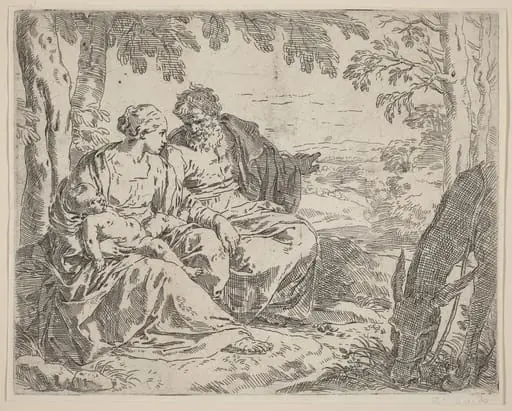 The Rest on the Flight into Egypt
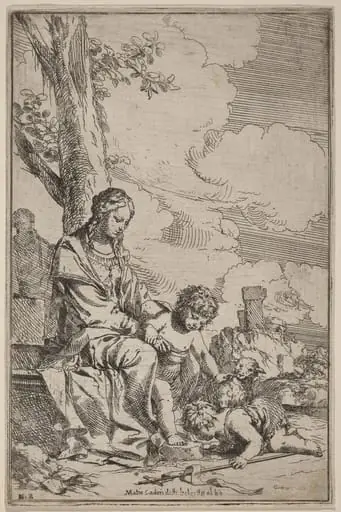 The Virgin and Child with Saint John the Baptist
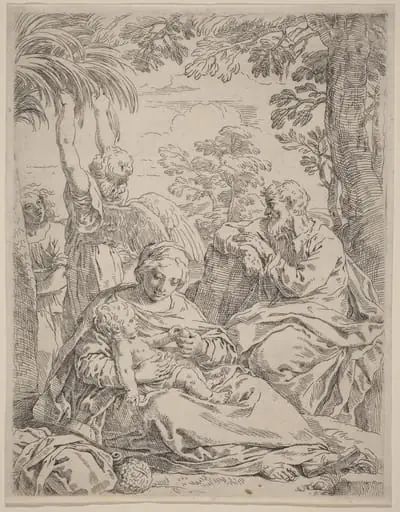 The Rest on the Flight into Egypt
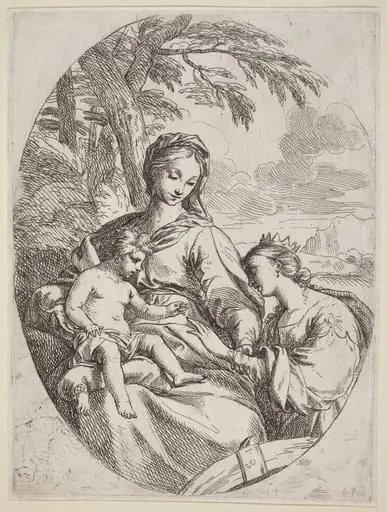 The Mystic Marriage of Saint Catherine
 Holy Family with the Virgin Reading