Artwork
William I of England
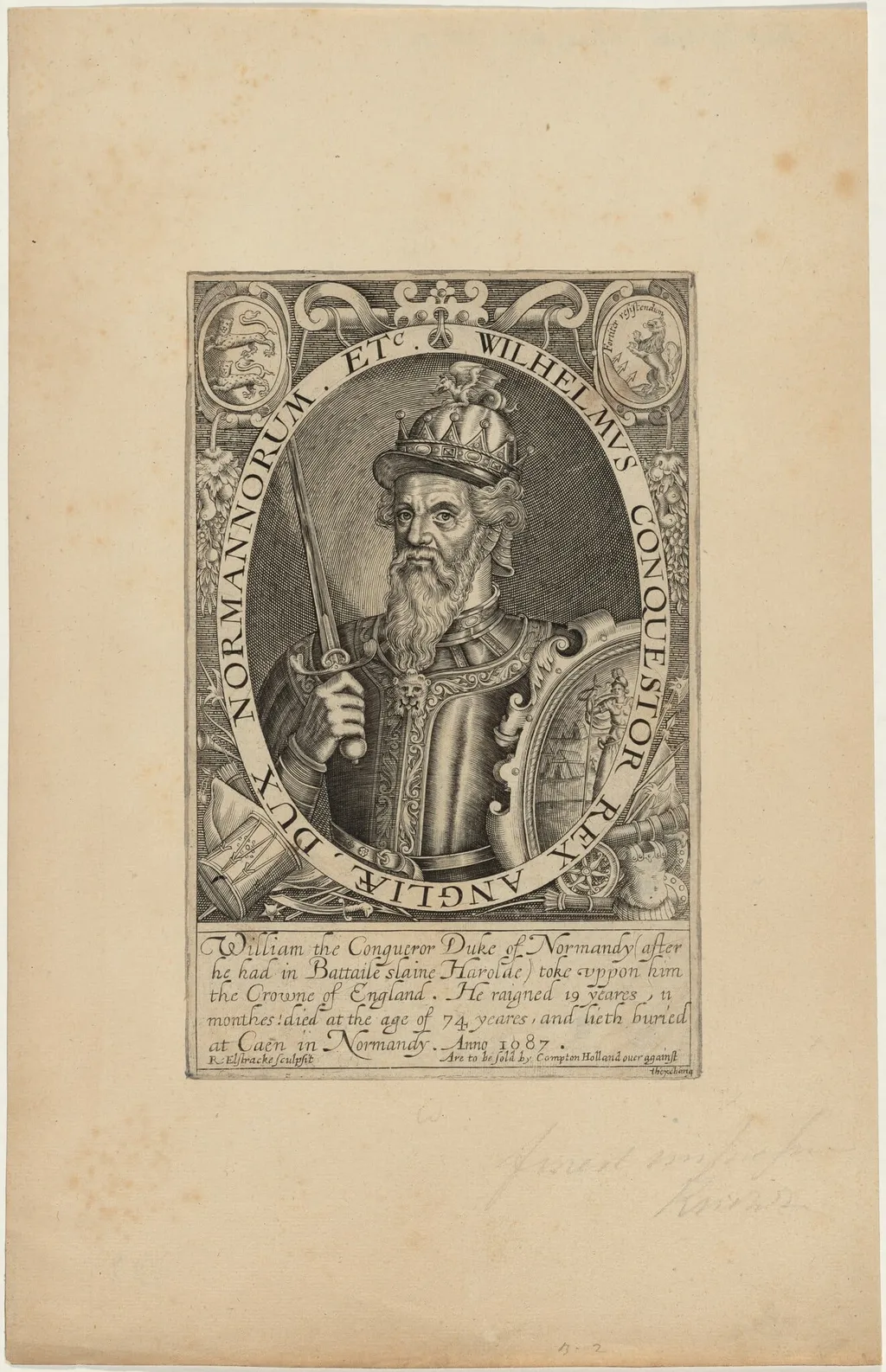
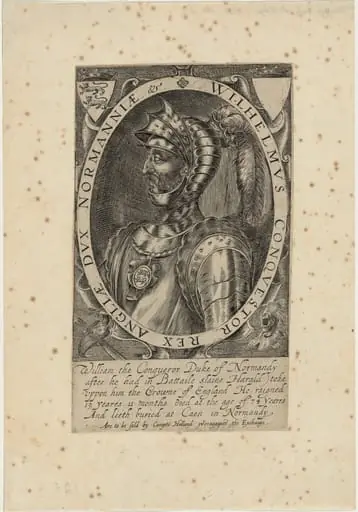
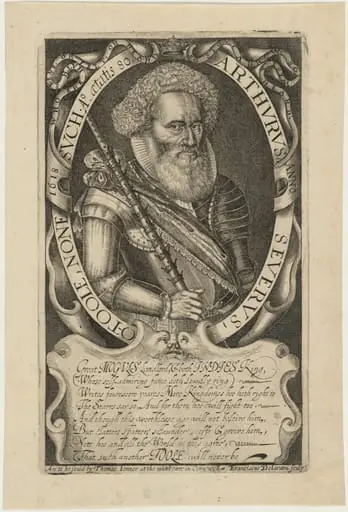
William I of England is an ink print by the Renaissance artist Renold Elstrack. It dates from 1598 and is held in the collection of the National Gallery of Art.
About this work
Overview
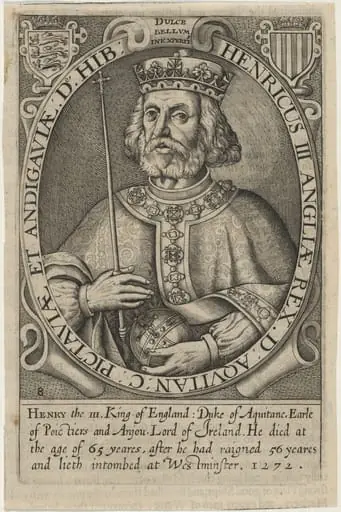
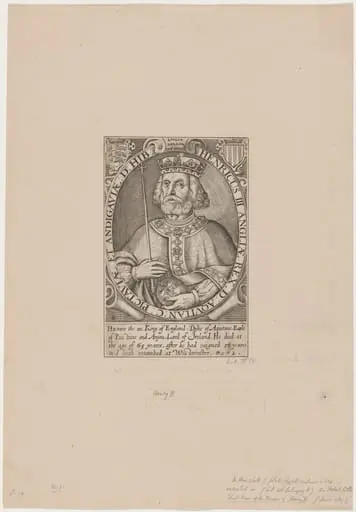
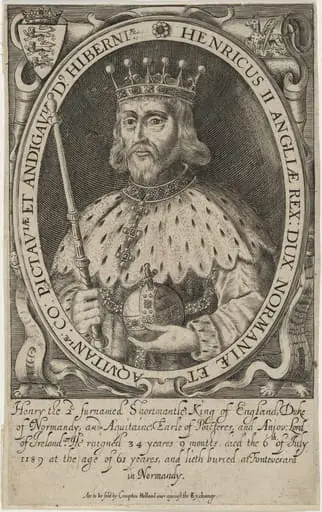
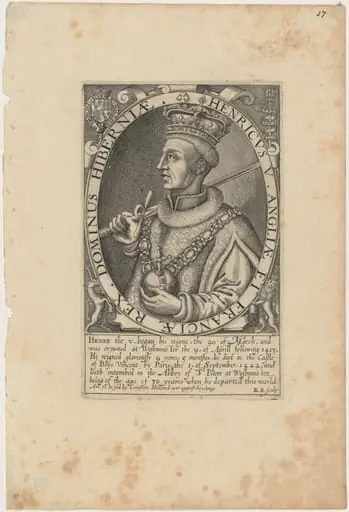
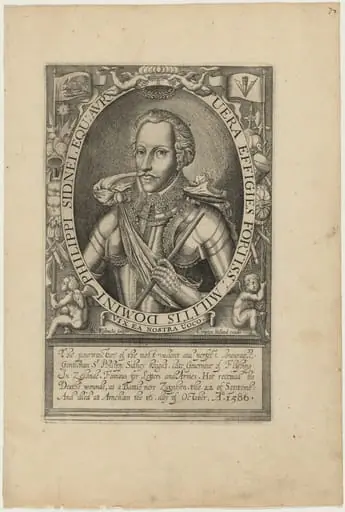
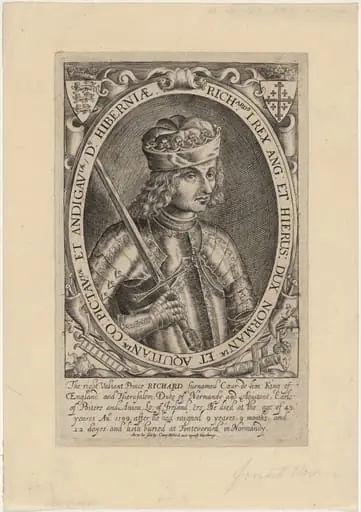
Renold Elstracke’s 1598 engraving presents William I, commonly known as William the Conqueror, in full regalia. The portrait depicts the monarch with a beard, crowned head, and elaborate armor, grasping a sword in one hand and a shield in the other, set against a decorative backdrop that includes ornamental carvings and a circular inscription.
Subject & Meaning
The image identifies William as the Norman ruler who secured the English throne following the decisive Battle of Hastings. The surrounding legend, featuring the Latin terms *Normannorum* and *Conquestor Vitæ*, underscores his role as the conqueror of the English people and highlights his dynastic legitimacy.
Technique & Style
Executed as a copperplate engraving, the work demonstrates the fine line work characteristic of late‑16th‑century printmaking. Elstracke’s handling of hatching and cross‑hatching renders the texture of armor, fabric, and facial features, while the ornamental border and circular text illustrate the period’s penchant for integrating typographic elements into portraiture.
History & Provenance
Created in 1598, the print reflects the continued interest in William’s legacy during the Elizabethan era, a time when English monarchs often invoked the Norman conquest to legitimize their own rule. The artist’s signature, R. Elstracke, appears modestly at the bottom, confirming authorship.
Context
The engraving belongs to a broader tradition of commemorative portrait prints that circulated among the educated elite. Such images served both as historical reminders and as decorative objects, reinforcing national narratives about the origins of English sovereignty.
Artist & collection