Artwork
Les Pommiers
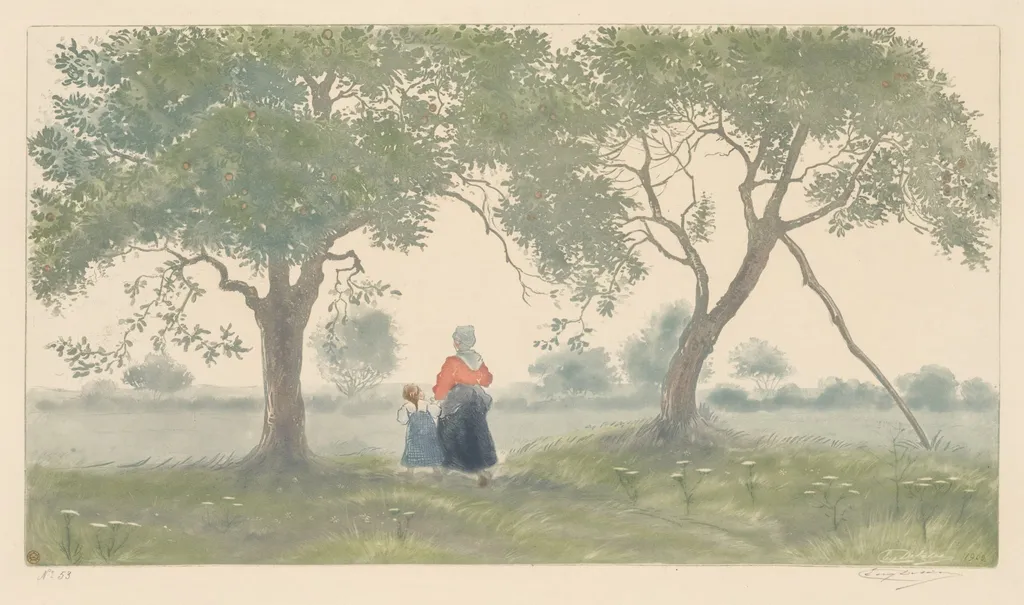
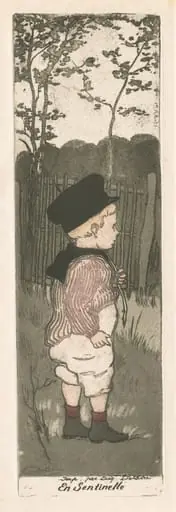
Les Pommiers is a print by Eugène Delâtre. It dates from 1902 and is held in the collection of the Cleveland Museum of Art.
About this work
Overview
The work captures a quiet rural moment, rendered in delicate tonal contrasts rather than bold brushwork.
Les Pommiers is a print made in 1902 by French artist Eugène Delâtre. It is part of the collection at The Cleveland Museum of Art. The work captures a quiet rural moment, rendered in delicate tonal contrasts rather than bold brushwork. Though often mistaken for a painting, it is a printed image, likely an etching or aquatint, reflecting the artist’s engagement with printmaking traditions of the late 19th and early 20th centuries.
Subject & Meaning
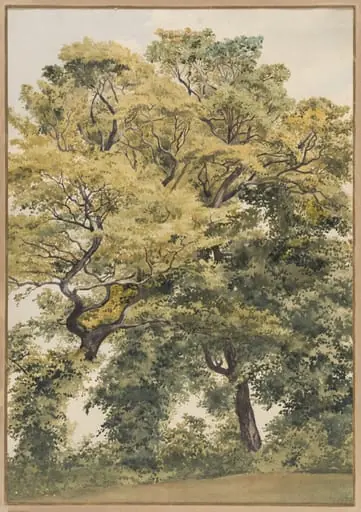
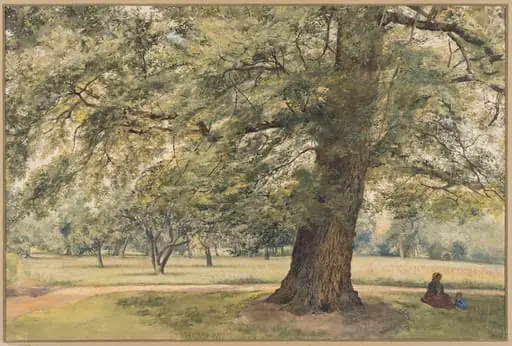
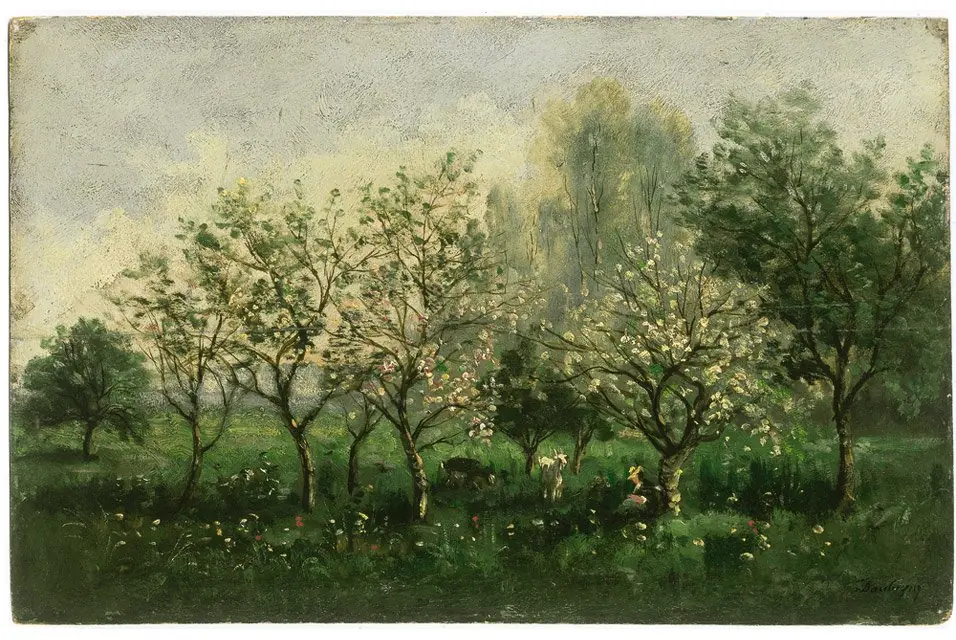
The scene portrays a woman and a child strolling through a meadow beneath two large apple trees. Their simple attire and unhurried movement suggest a moment of domestic calm. The trees, heavy with foliage, imply abundance and shelter, while the softness of the landscape evokes a sense of timelessness. There is no narrative drama—only the quiet rhythm of daily life, framed by nature’s enduring presence.
Technique & Style
Delâtre employed fine linear detail and subtle gradations of tone to suggest texture and depth. The foliage is rendered with delicate hatching, while the grass and sky are softened through muted washes. The composition uses the arcing branches to enclose the figures, guiding the viewer’s gaze inward. The palette is restrained—greens, pale yellows, and earth tones—enhancing the scene’s serenity without relying on vivid color.
History & Provenance
Created in 1902, the print entered The Cleveland Museum of Art’s collection through documented acquisition, though its earlier ownership history is not widely recorded. Delâtre, known for his prints of rural life and landscapes, was active in French artistic circles during the fin de siècle. This work aligns with his broader interest in capturing everyday scenes with quiet precision, rather than grand historical or mythological themes.
Context
In early 20th-century France, many artists turned to intimate, non-urban subjects as a counterpoint to industrialization. Delâtre’s focus on a pastoral moment reflects this trend, resonating with contemporaries like Jules Breton and Jean-François Millet. Printmaking offered a democratic medium for such imagery, allowing wider circulation among middle-class collectors who valued emotional restraint and naturalism over spectacle.
Legacy
Les Pommiers remains a quiet example of late 19th-century French printmaking, valued for its compositional harmony and emotional subtlety. While not widely reproduced or studied, it contributes to the understanding of artists who prioritized tranquility and observation over dramatic expression. The work endures as a testament to the enduring appeal of domestic nature in modern visual culture.
Own this work as a print
Artist & collection