Artwork
The Solferino Bridge: Nocturnal Effect
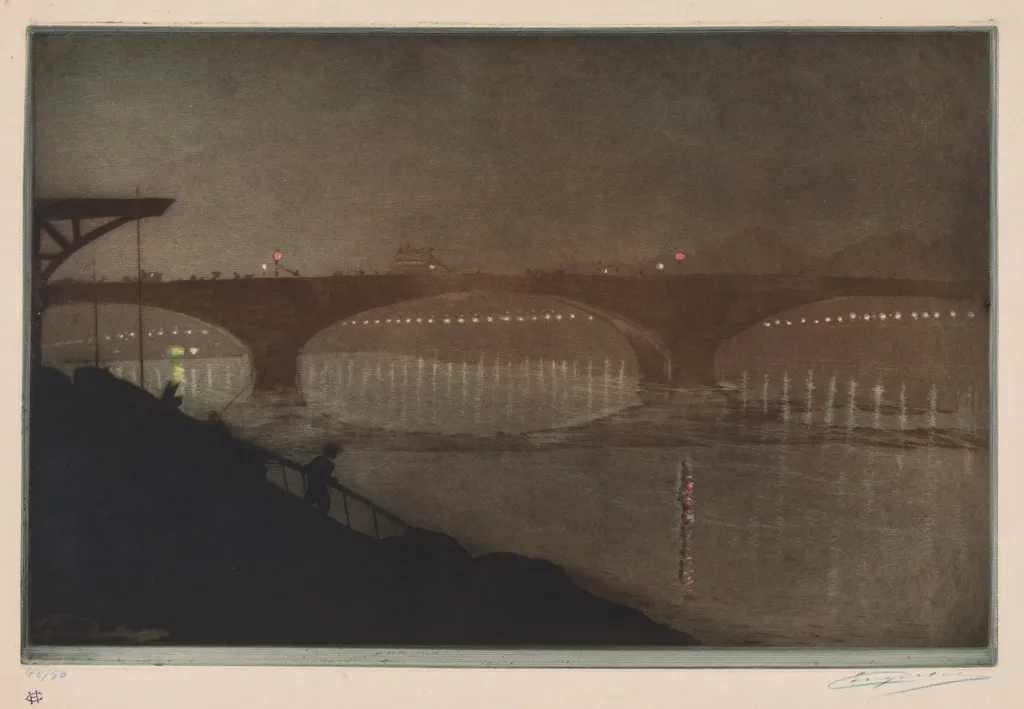
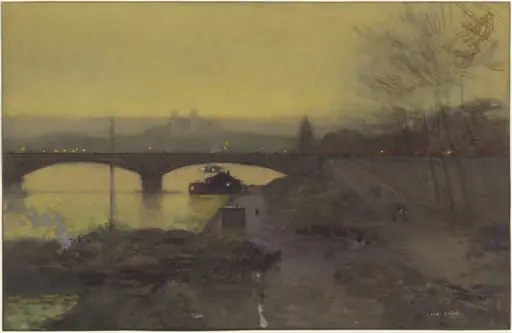
The Solferino Bridge: Nocturnal Effect is a print by the Impressionist artist Eugène Delâtre. It dates from 1898 and is held in the collection of the Cleveland Museum of Art.
About this work
Overview
Eugène Delâtre’s print The Solferino Bridge: Nocturnal Effect, executed around 1898, is part of the Cleveland Museum of Art’s collection. The image presents a night scene in which a darkened bridge spans a river, its structure faintly illuminated by a few scattered lights. A solitary figure stands on the bank, silhouetted against the water, lending a quiet, contemplative tone to the composition.
Subject & Meaning
The work captures a moment of stillness after dusk, focusing on the interplay between architecture and the natural landscape. The lone figure, reduced to a dark outline, suggests a personal encounter with the night, inviting viewers to consider themes of solitude, observation, and the subtle presence of human activity within a broader, muted environment.
Technique & Style
Delâtre employs a restrained palette and strong contrasts to achieve a chiaroscuro effect, emphasizing the illuminated sections of the bridge against the surrounding darkness. The print’s tonal gradations create depth, while the minimal use of light sources highlights the structural lines of the bridge and the reflective surface of the river, reinforcing the nocturnal atmosphere.
History & Provenance
Created at the close of the 19th century, The Solferino Bridge: Nocturnal Effect entered the Cleveland Museum of Art’s holdings through acquisition (specific details of its purchase are not recorded in the available sources). Its presence in the museum’s print collection reflects the institution’s interest in late‑19th‑century French graphic works.
Artist & collection

 The Pont d'Alma at Twilight
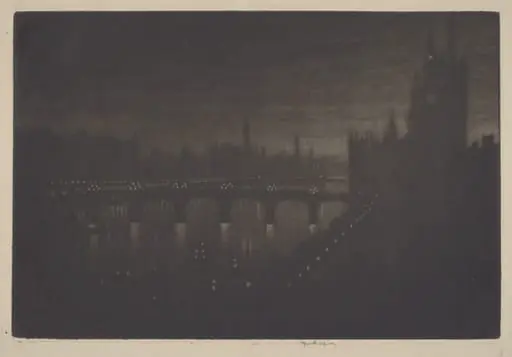 Westminster, Evening
 Stopham Bridge
 London Bridges
 Runcorn Bridge
 Effect of Moon at Dieppe
 Evening, Little Waterloo Bridge
 Evening on the Chikugo River
 Cologne
 Thirty-Six Views of the Eiffel Tower: From the Grenelle Bridge
 Twelve Scenes of Tokyo: Kagurazaka Street after a Night Rain
 Kagurazaka Street after a Night Rain