Artwork
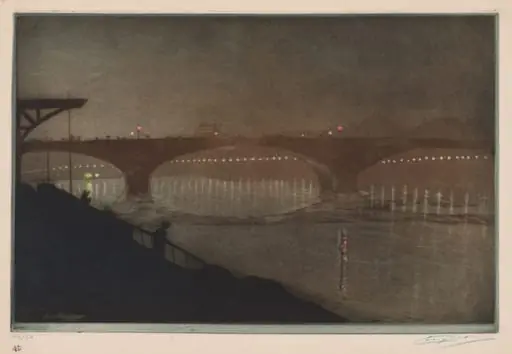
Thirty-Six Views of the Eiffel Tower: From the Grenelle Bridge
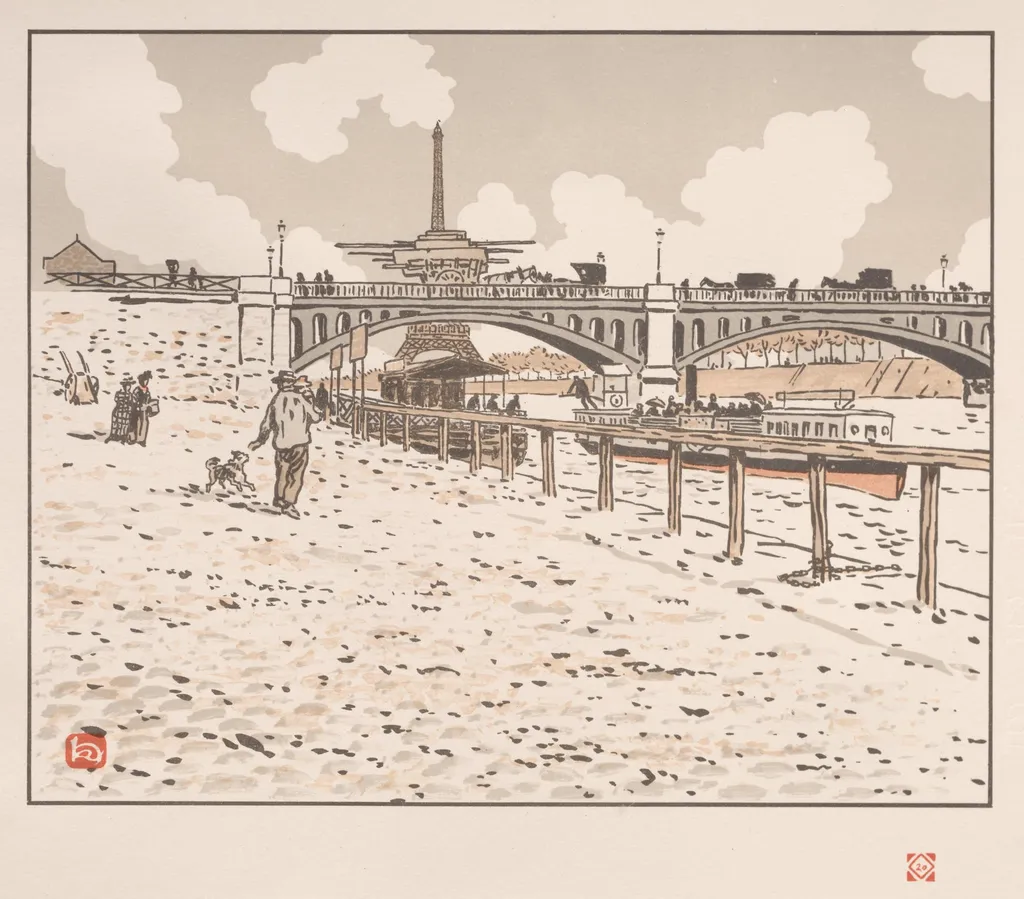
Thirty-Six Views of the Eiffel Tower: From the Grenelle Bridge is a print by Henri Rivière. It dates from 1902 and is held in the collection of the Cleveland Museum of Art.
About this work
Overview
This print is one of thirty-six views of the Eiffel Tower created by artist Rivière, each capturing the structure from a distinct vantage point.
This print is one of thirty-six views of the Eiffel Tower created by artist Rivière, each capturing the structure from a distinct vantage point. This particular scene is framed from the Grenelle Bridge, where the tower emerges amid the industrial outskirts of late 19th-century Paris. Rather than presenting the tower as a solitary monument, Rivière situates it within a working landscape, blending architecture with the surrounding factories and river traffic.
Subject & Meaning
The Eiffel Tower is depicted not as a symbol of national pride but as an industrial object, its form echoing the smokestacks of nearby metalworks. A wispy cloud at its summit mimics factory emissions, merging the landmark with the machinery of urban expansion. This visual equation reflects the shifting identity of Paris, where modernity and industry redefined the city’s edges, and even its most celebrated structures became part of the working environment.
Technique & Style
Rivière employs a restrained palette and precise linework to convey both clarity and atmosphere. The smoky sky, rendered with soft, diffused tones, contrasts with the sharp outlines of the bridge and riverboats. The tower’s iron lattice is rendered with mechanical precision, reinforcing its industrial character. The composition avoids romanticism, favoring a documentary tone that emphasizes spatial relationships over idealized beauty.
History & Provenance
Created in the 1890s, this print belongs to a series produced as Paris underwent rapid urban reorganization. As industry was displaced from the city center, Grenelle became a hub for metal fabrication, and the Eiffel Tower—built for the 1889 Exposition—was increasingly viewed through the lens of its functional surroundings. The series was likely intended for a local audience familiar with these changing neighborhoods, not as souvenirs but as observations of everyday transformation.
Context
During this period, Paris’s expansion pushed manufacturing to its periphery, and residential populations followed. The Grenelle district, once rural, now hosted workshops and foundries. The Eiffel Tower, though initially controversial, had become a fixture of the skyline. Rivière’s view captures the quiet normalization of industrialization—where a global icon is inseparable from the smoke, waterways, and labor that defined its new environment.
Legacy
Rivière’s series offers a counter-narrative to the romanticized imagery of Paris that dominated postcards and paintings. By integrating the tower into its industrial context, he documented a more complex reality of urban life. These prints remain valuable for their unembellished portrayal of modernization, revealing how infrastructure and identity evolved together in the late 19th century.
Artist & collection
Artist
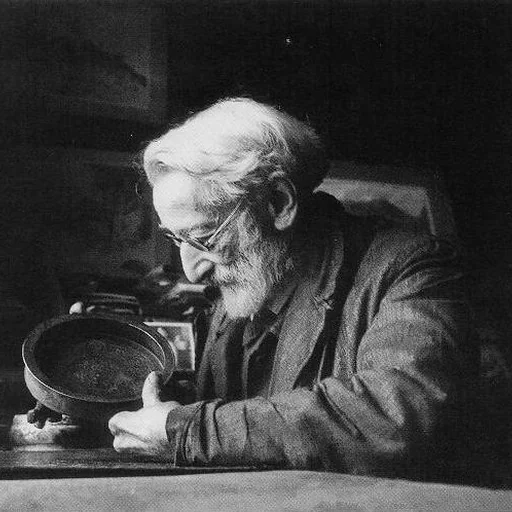
Henri Rivière (March 11, 1864 – August 24, 1951) was a French artist and designer best known for his creation of a form of shadow play at the Chat Noir cabaret, and for his post-Impressionist illustrations of Breton landscapes and the…

 Aspects of Nature: The Island
 Parisian Landscapes: The Fortifications
 Parisian Landscapes: Paris seen from Montmartre
 Thirty-Six Views of the Eiffel Tower: From Lamarck Street
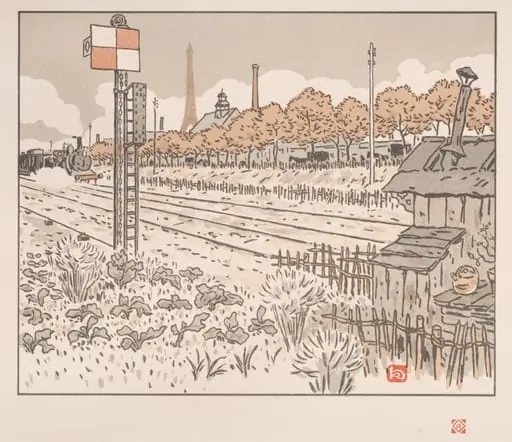 Thirty-Six Views of the Eiffel Tower: From the Quai de Javel (Switchman's Shanty)
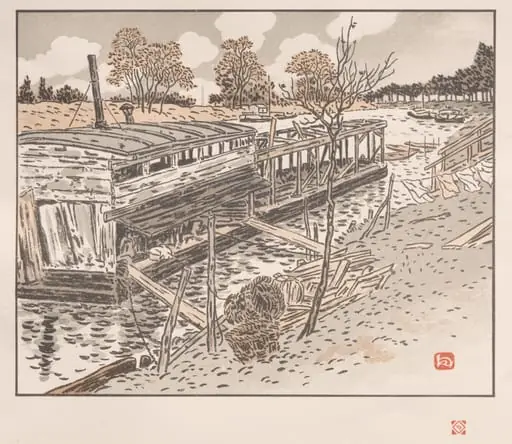 From Bas-Meudon, Old Lavoir
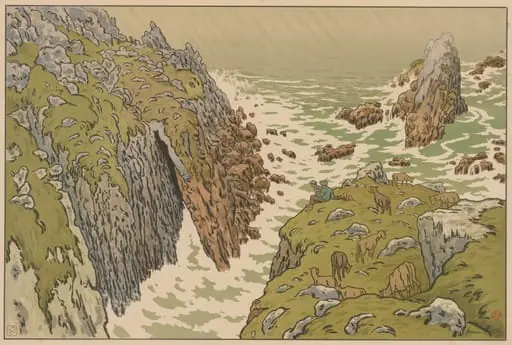 Aspects of Nature: The Cliff
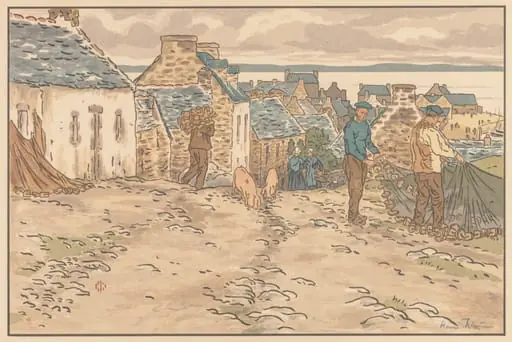 The Beautiful Countryside in Brittany: Street in Tréboul
![[Large Steamer Ship at Dock, Paris], by Auguste Lepère](https://artifactworldgallery.com/img/auguste-lepere--large-steamer-ship-at-dock-paris--ed31099e42153820-w320.webp)