Artwork
Philip Mercier
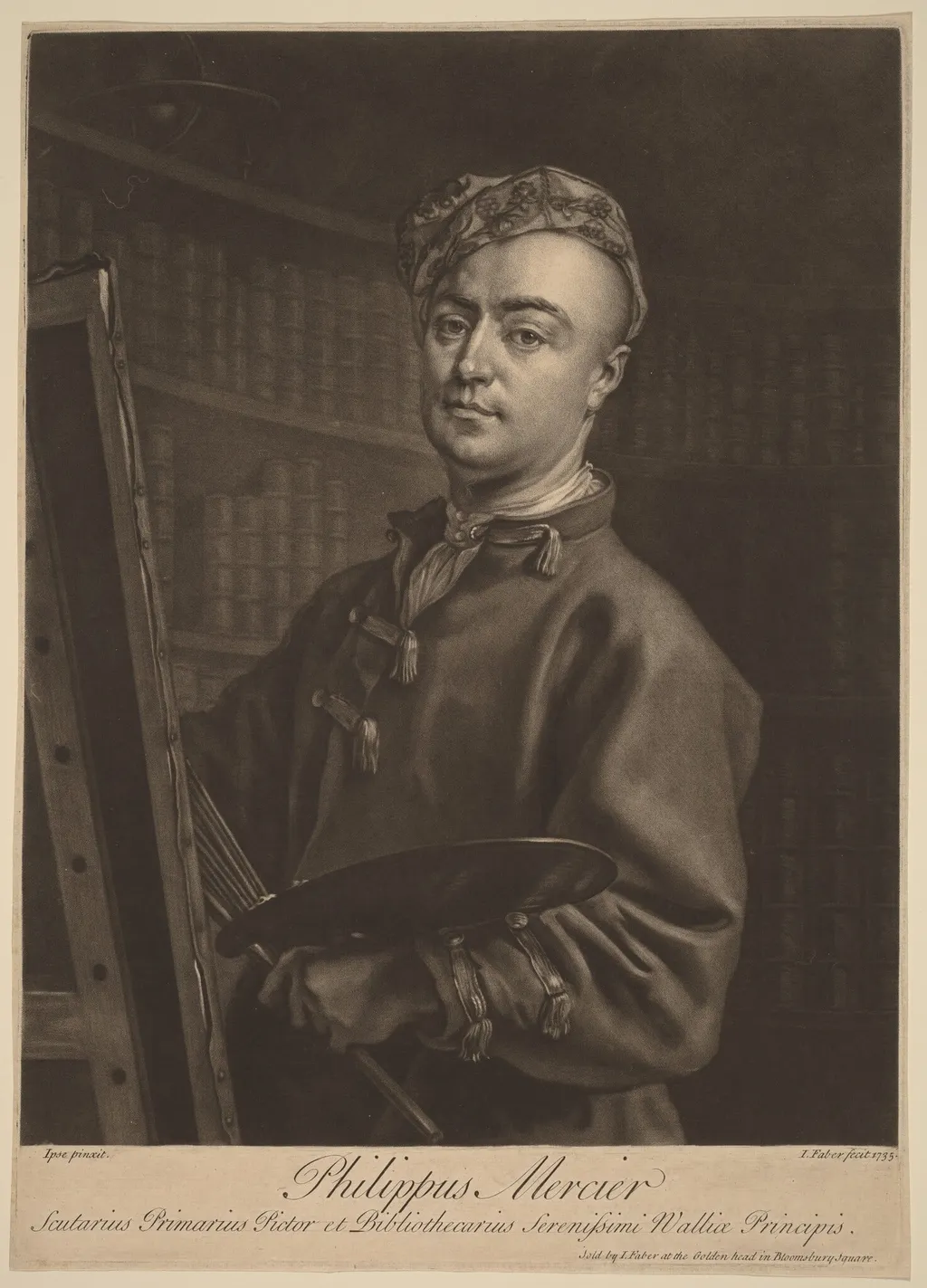
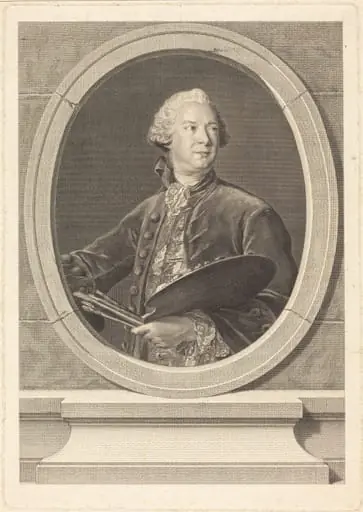
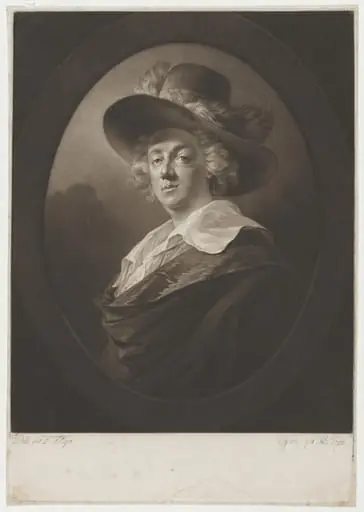
Philip Mercier is an ink print by the Baroque artist John Faber II. It dates from 1735 and is held in the collection of the National Gallery of Art.
About this work
He’s holding a small round object—maybe a coin or a palette—in one hand, and his other hand rests on a tall, narrow stand, like an easel.
This is a black-and-white portrait of a man in old-fashioned clothes. He’s holding a small round object—maybe a coin or a palette—in one hand, and his other hand rests on a tall, narrow stand, like an easel. His coat has big buttons and a fancy collar, and he’s wearing a hat with a pattern on it. The background looks like a plain wall with a dark frame around the whole scene.
The name at the bottom reads *Philip Mercier*, with a long title under it. That suggests he was someone important, maybe a painter or a librarian. The artist’s name, *J. Faber fecit 1735*, is stamped in the corner, telling us when it was made.
If you like old portraits like this, look up Baroque.
Overview
This mezzotint print, dated 1735, depicts a portrait of Philip Mercier in formal, antiquated attire, set against a simple background with a dark frame. The subject holds an unidentified small object and rests a hand on a tall stand, possibly an easel.
Subject & Meaning
Philip Mercier, the subject, is suggested to be a figure of significance, potentially an artist or professional, given the title's prominence. His attire, including a hat with a pattern, coat with large buttons, and fancy collar, reinforces his importance.
Technique & Style
Executed by John Faber II, the print showcases mezzotint's characteristic tonal depth in black and white. The style aligns with Baroque influences, evident in the composition and detailing of the subject's attire and accessories.
History & Provenance
Created in 1735 by John Faber II, as indicated by the stamp 'J. Faber fecit 1735', the print's provenance is not detailed here, though its creation date and artist are clearly documented.
Context
The work can be contextualized within the Baroque period's artistic traditions, characterized by detailed, often formal portraits. The medium of mezzotint was popular during this time for its ability to capture nuanced shading.
Artist & collection