Artwork
Charles II
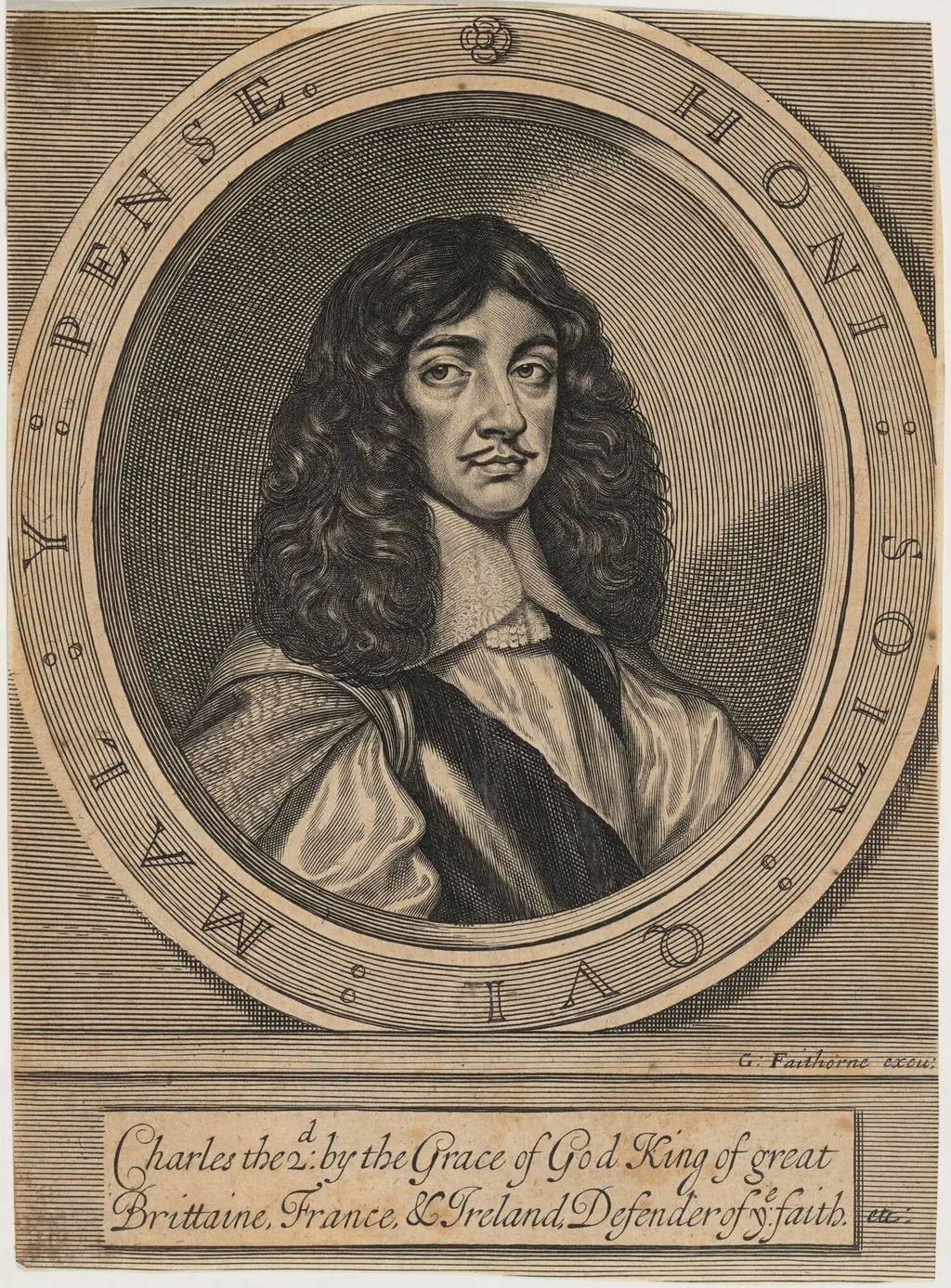
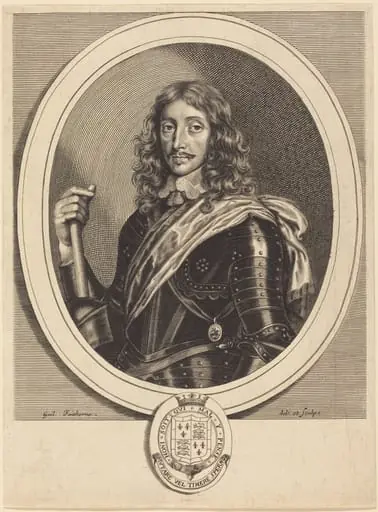
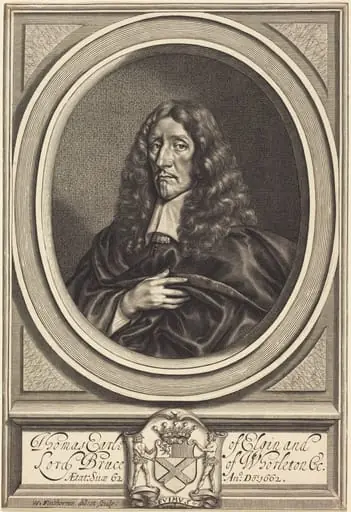
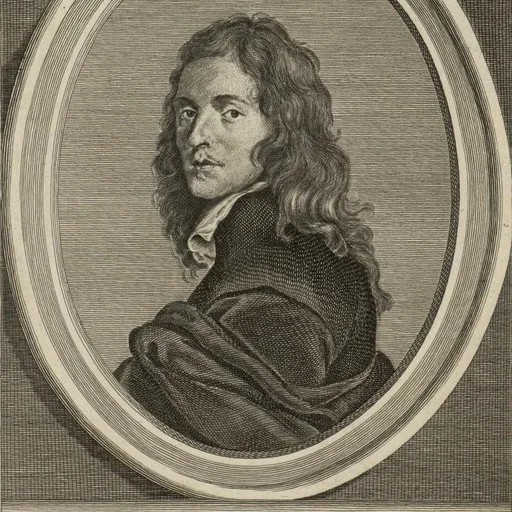
Charles II is an ink print by the Baroque artist William Faithorne. It dates from 1654 and is held in the collection of the National Gallery of Art.
About this work
Overview
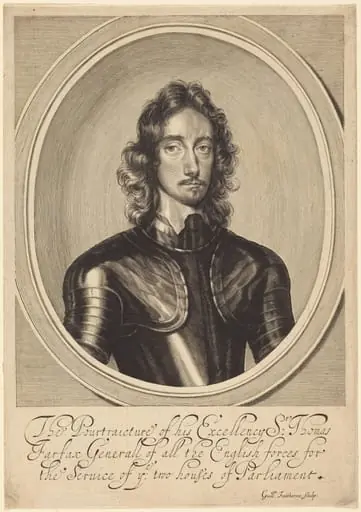
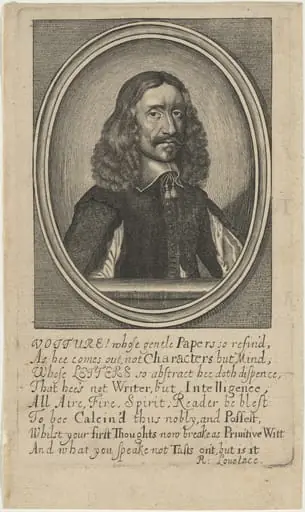
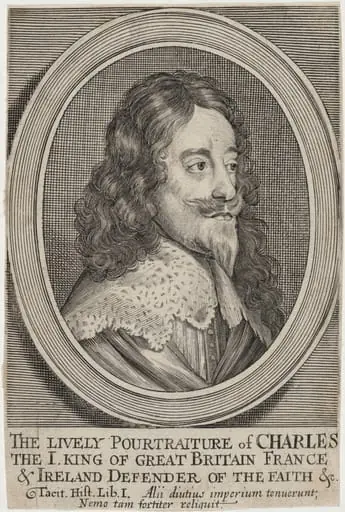
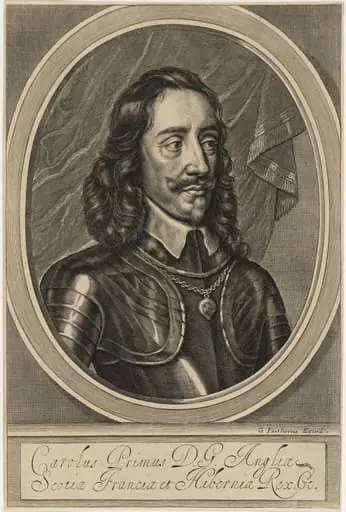
William Faithorne’s 1654 engraving presents a portrait of Charles II. Rendered in black ink on paper, the image centers the monarch’s face, framed by his curly hair, moustache, and a prominent lace collar. The figure is set against a dark oval backdrop, encircled by a decorative border that contains formal cursive lettering.
Subject & Meaning
The work depicts Charles II, later restored to the English throne, emphasizing his regal bearing through the careful rendering of facial features and attire. The inclusion of the ornate collar and vest signals his status, while the surrounding inscription likely identifies the sitter, reinforcing the portrait’s function as a commemorative image.
Technique & Style
Faithorne employed fine line engraving to achieve intricate detail, particularly in the texture of hair, fabric folds, and the delicate lace collar. The chiaroscuro effect created by the dark oval background and the crisp delineation of facial features reflects Baroque sensibilities, emphasizing contrast and dramatic presentation.
History & Provenance
Created in 1654, during the period of the English Commonwealth, the engraving predates Charles II’s restoration in 1660. Faithorne, a noted English printmaker, produced the image likely for distribution among royal supporters. Surviving copies are held in several museum collections, documenting its circulation as a political and commemorative artifact.
Artist & collection
Artist
William Faithorne (1616–1691) was a British artist, born in Greater London.