Artwork
John Milton
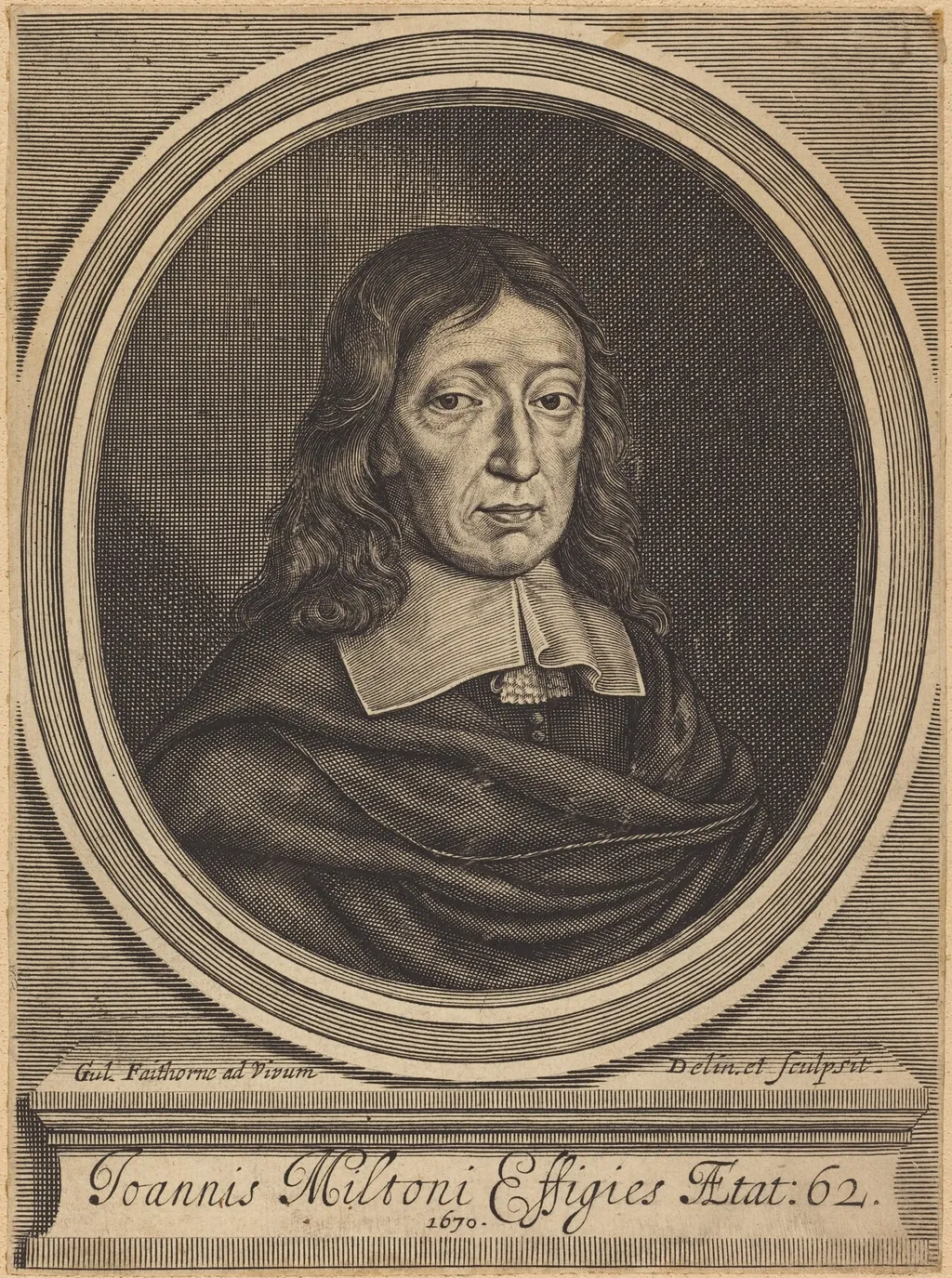
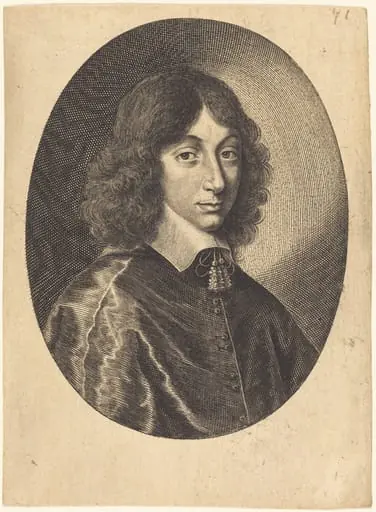
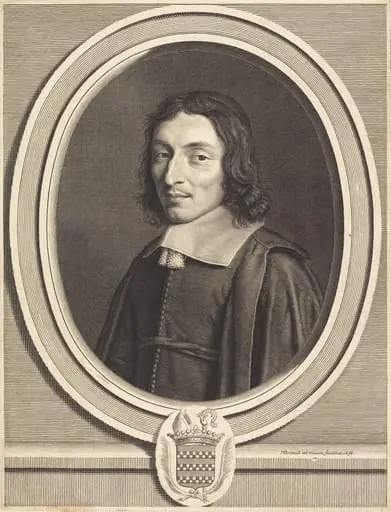
John Milton is an ink print by the Baroque artist William Faithorne. It dates from 1670 and is held in the collection of the National Gallery of Art.
About this work
Overview
William Faithorne’s 1670 engraving presents the poet John Milton in a solemn pose. The sitter’s long hair frames a contemplative face, while a dark coat with a prominent collar and a decorative brooch anchors the composition. The background is rendered in muted tones, providing a subtle texture that keeps the focus on the figure.
Subject & Meaning
The portrait captures Milton during the later years of his life, a period marked by his continued literary output despite declining eyesight. The serious expression and restrained attire reflect the poet’s intellectual gravitas and the introspective nature of his work, suggesting a connection between his personal demeanor and his enduring contributions to English literature.
Technique & Style
Faithorne employs fine cross‑hatching to model the contours of Milton’s face and clothing, achieving a nuanced sense of volume and light. The engraving’s delicate line work and careful modulation of tone are characteristic of late‑Baroque printmaking, where emphasis on texture and depth enhances the realism of portraiture.
History & Provenance
Created in 1670, the print was likely produced shortly after Milton’s death in 1674, serving as a commemorative image for contemporary audiences. Faithorne, a noted English engraver, distributed the work through print dealers in London, where it circulated among literary circles and collectors of portrait prints.
Context
The engraving belongs to a broader tradition of 17th‑century English portrait prints that sought to memorialize prominent cultural figures. Its stylistic choices align with the Baroque emphasis on dramatic chiaroscuro and detailed rendering, situating the work within the visual language of its era.
Artist & collection
Artist
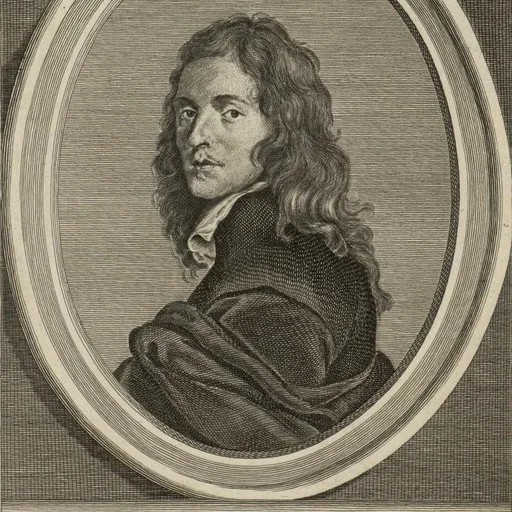
William Faithorne (1616–1691) was a British artist, born in Greater London.