Artwork
Akbar Receiving the Drums and Standards Captured from Abdullah Khan Uzbeg, Governor of Malwa, in 1564
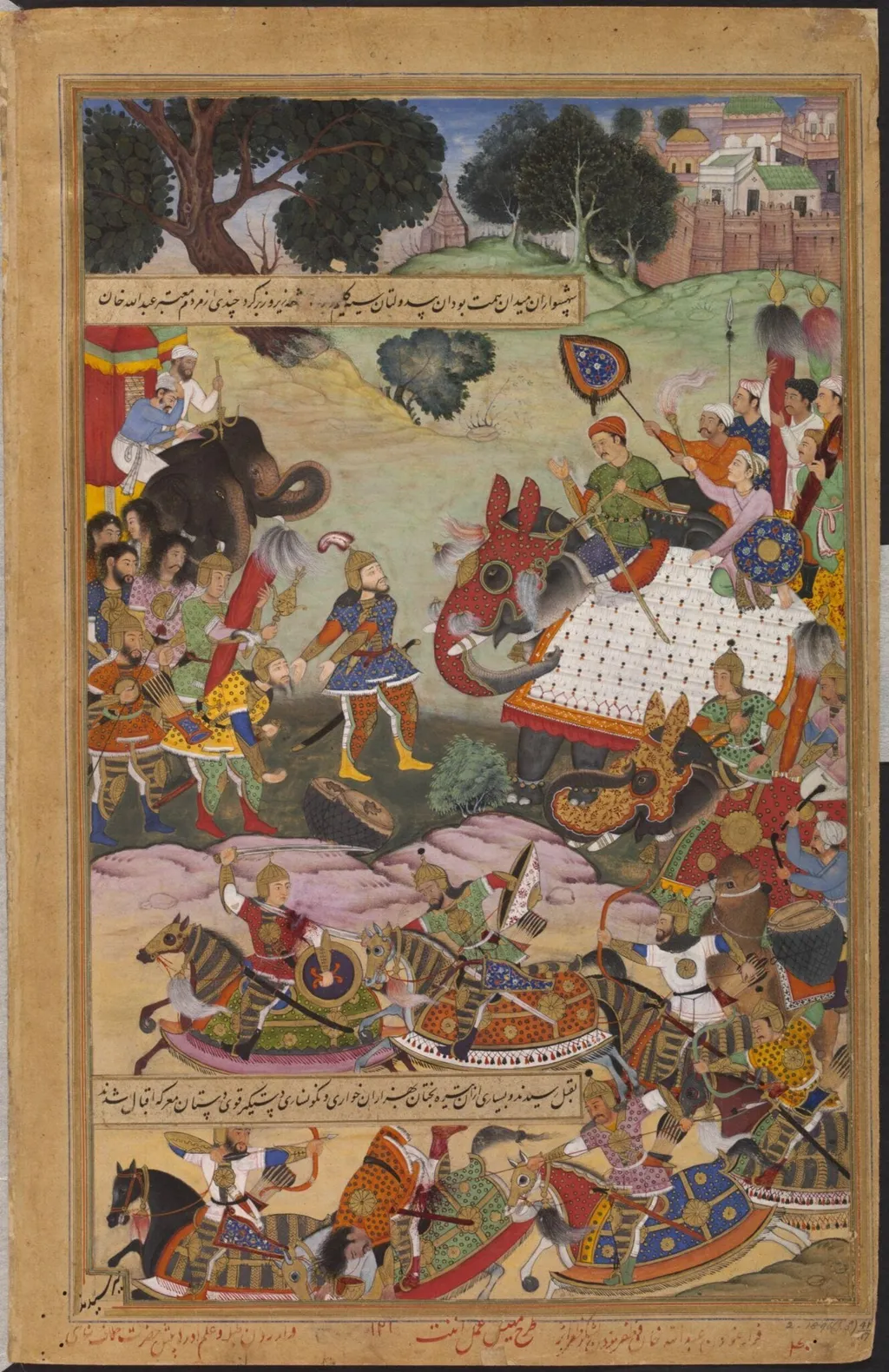
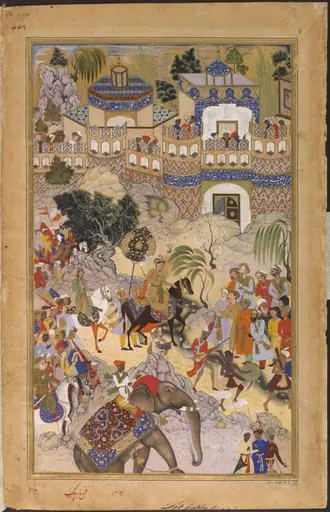
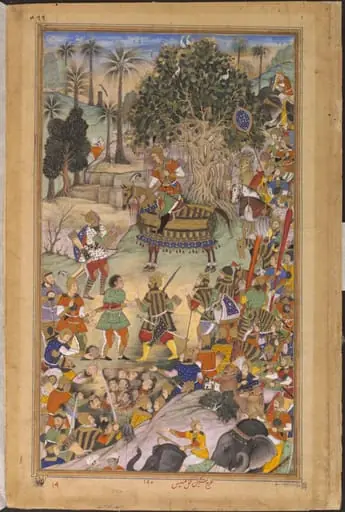
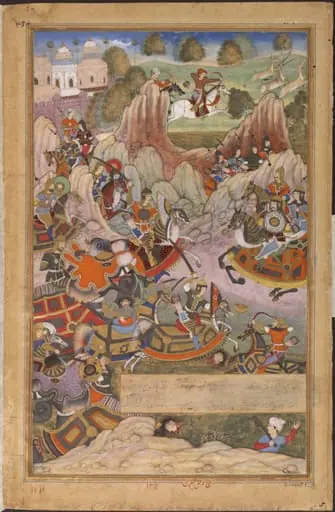
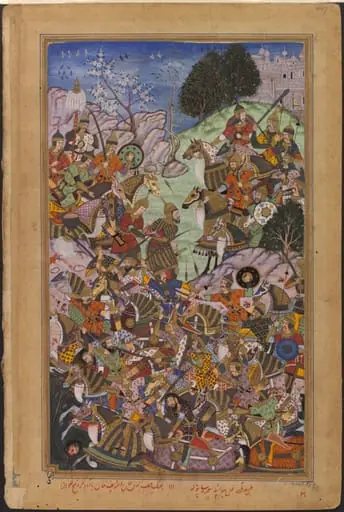
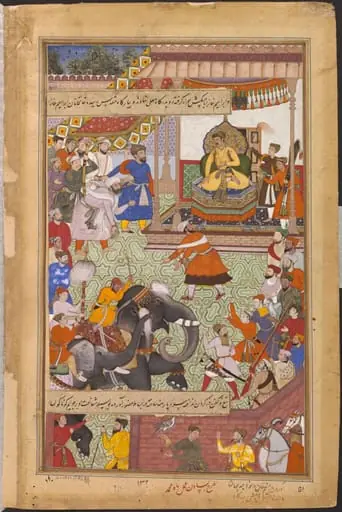
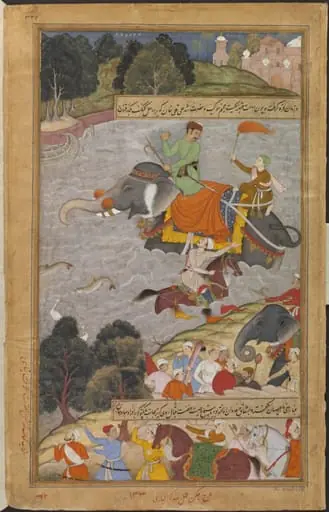
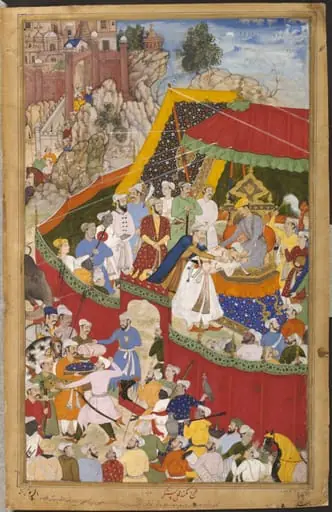
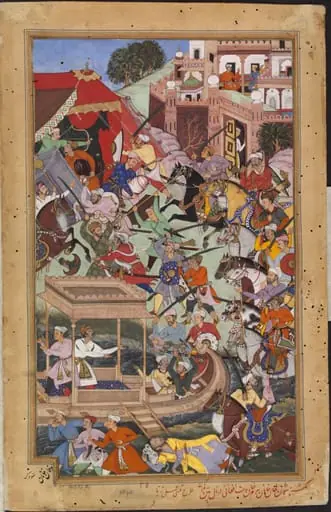
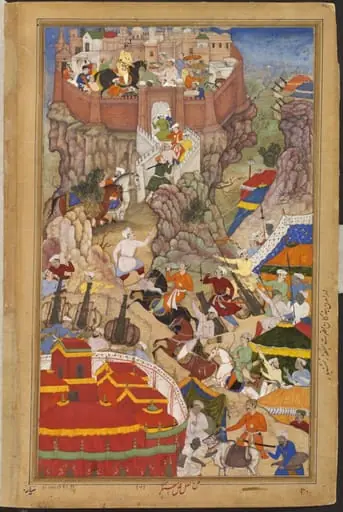
Akbar Receiving the Drums and Standards Captured from Abdullah Khan Uzbeg, Governor of Malwa, in 1564 is a paint painting by the Mughal Painting artist Mohesh. It dates from 1592 and is held in the collection of the Victoria and Albert Museum. The miniature illustrates a scene from the Akbarnama, the official chronicle of Emperor Akbar’s reign.
About this work
Overview
The miniature illustrates a scene from the Akbarnama, the official chronicle of Emperor Akbar’s reign. In the image, Akbar sits astride an elephant while envoys present captured drums and standards, trophies taken from the rebellious governor Abdullah Khan Uzbek of Malwa. The composition reflects a moment of imperial authority following the suppression of a provincial uprising.
Subject & Meaning
The work records the surrender of military symbols after Abdullah Khan’s revolt, emphasizing the emperor’s control and the restoration of order. By depicting Akbar calmly receiving the spoils, the painting conveys the legitimacy of his rule and the subjugation of dissent within the Mughal empire.
Technique & Style
The piece was executed by two court artists: Mohesh supplied the drawing, while Anant applied the pigments over the outline. Executed in the refined Mughal miniature tradition, the scene combines precise line work with rich, flat colour and delicate detailing of costume and regalia, characteristic of late‑16th‑century imperial workshops.
History & Provenance
The miniature belongs to a partial copy of the Akbarnama produced for Akbar between 1592 and 1595, the earliest illustrated version of the text.
The miniature belongs to a partial copy of the Akbarnama produced for Akbar between 1592 and 1595, the earliest illustrated version of the text. After Akbar’s death the manuscript passed to his son Jahangir and later to Shah Jahan. In the 19th century it entered the collection of Major General John Clarke in India, and was acquired by the Victoria and Albert Museum in 1896 from his widow, Frances Clarke.
Context
The Akbarnama, written in Persian by court historian Abu’l Fazl between 1590 and 1596, served as a political and cultural record of Akbar’s reign. The illustrated manuscript showcases the collaborative work of the empire’s leading artists, many of whom are named in Abu’l Fazl’s A’in‑i Akbari, underscoring the royal patronage of visual arts during this period.
Artist & collection
Artist
This Mughal painter captured royal parades and battles in vivid detail. Look at *Akbar Receiving the Drums and Standards Captured from Abdullah Khan Uzbeg, Governor of Malwa, in 1564*—a battle scene turned into a…