Artwork
Untitled
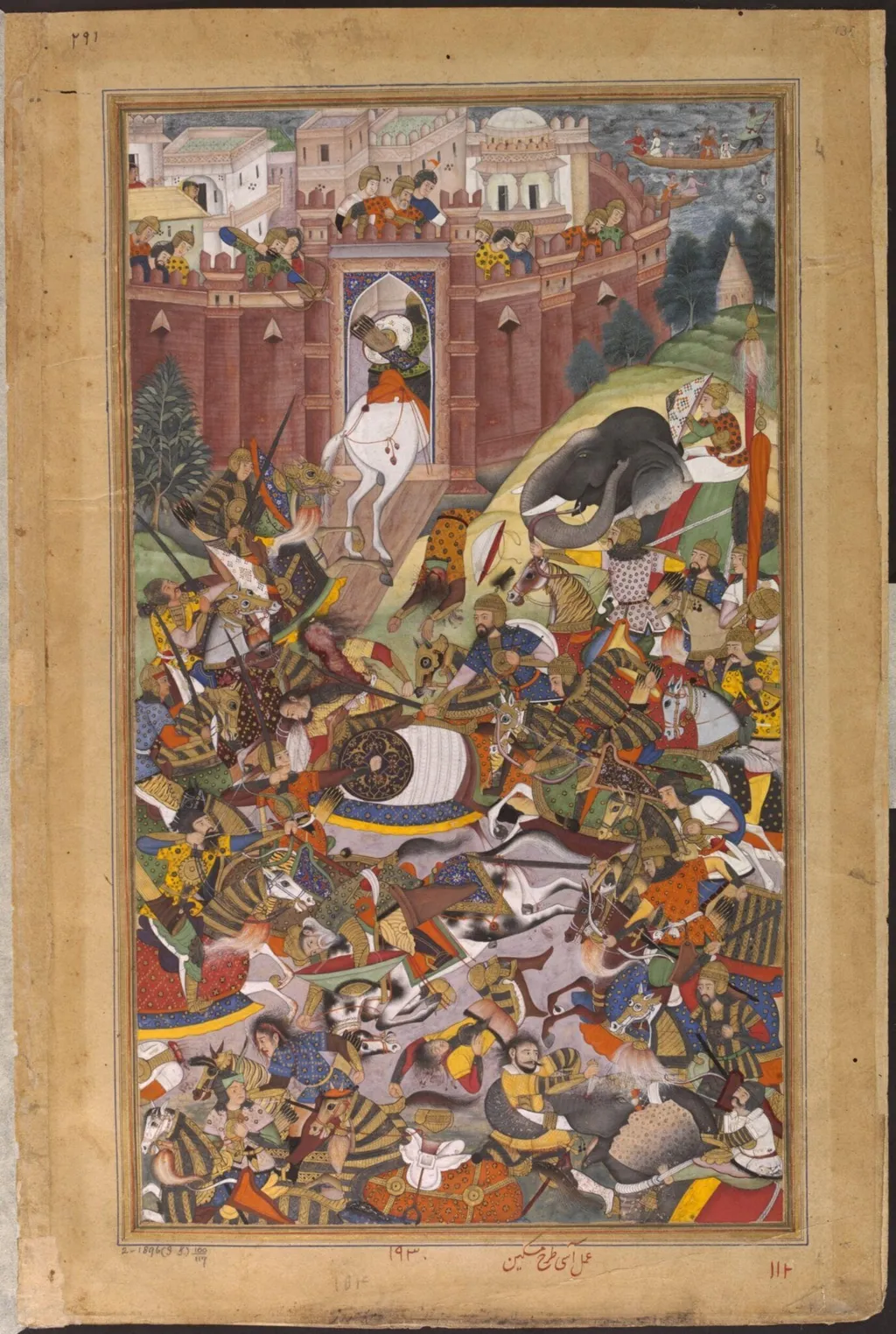
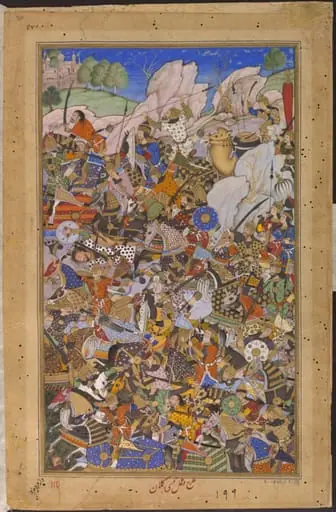
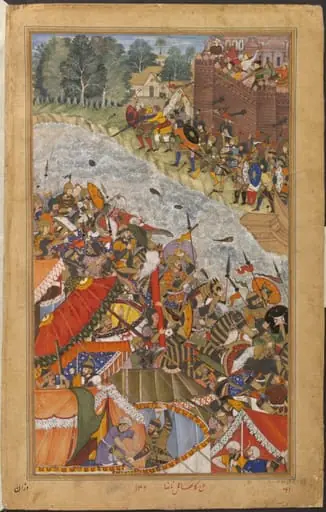
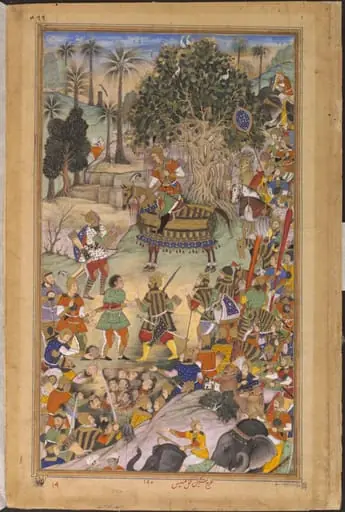
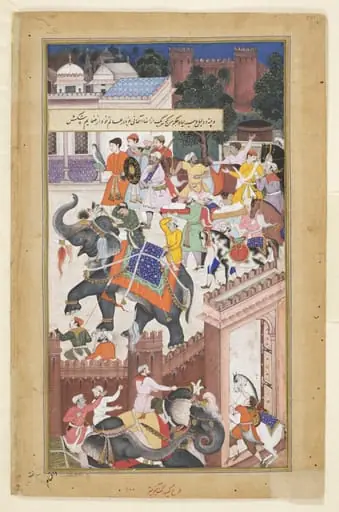
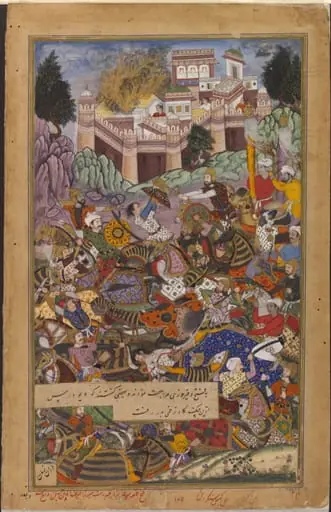
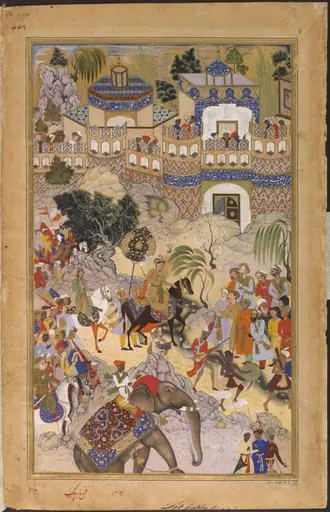
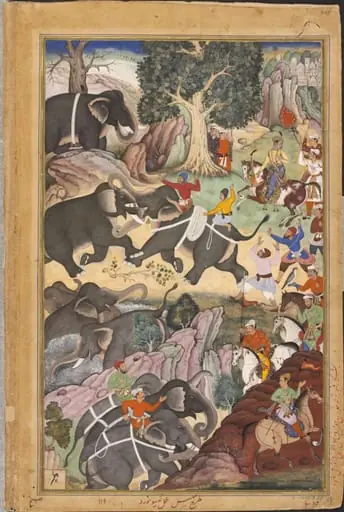
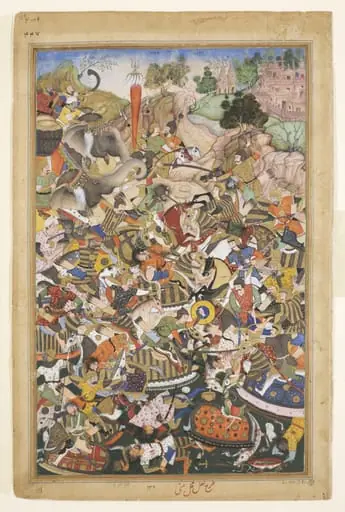
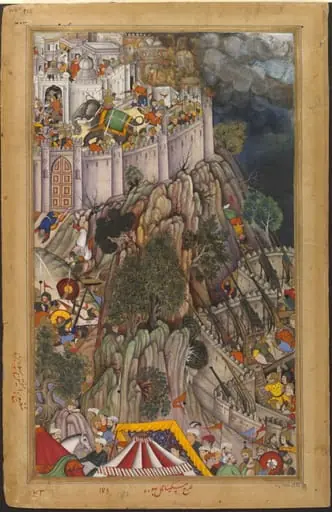
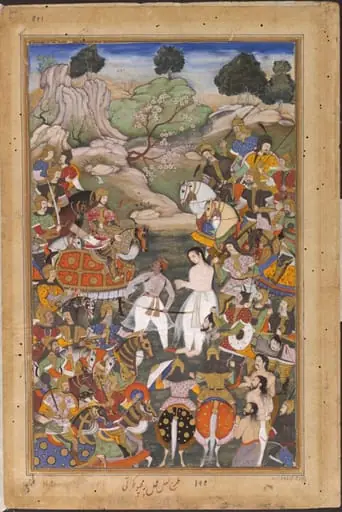
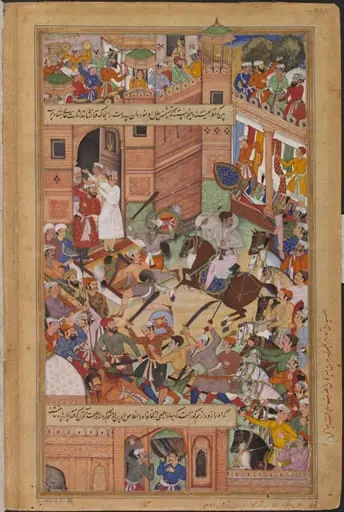
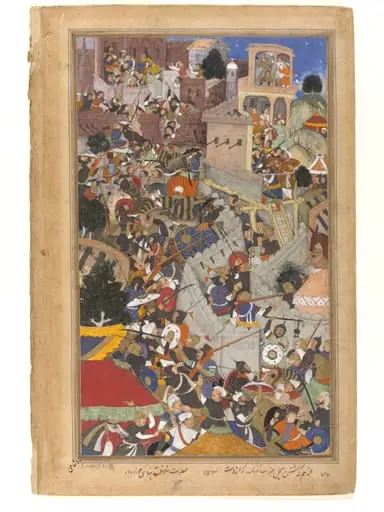
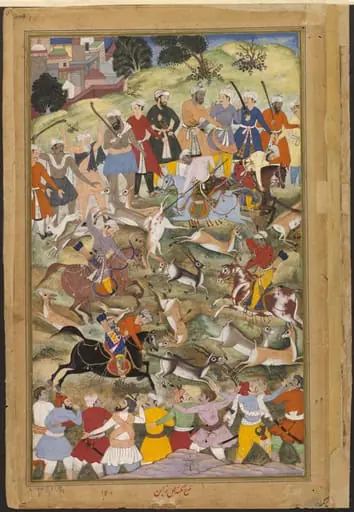
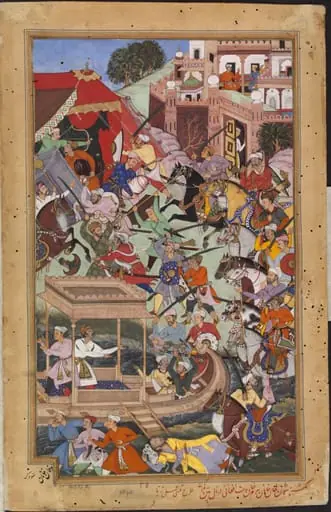
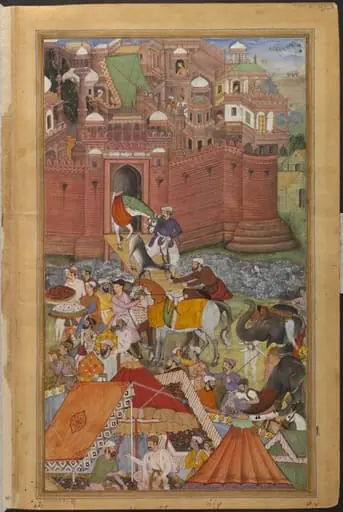
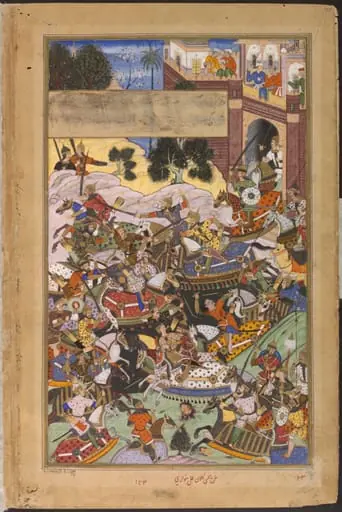
Untitled is a paint painting by the Mughal Painting artist Asi. It dates from 1592 and is held in the collection of the Victoria and Albert Museum. This painting is one of many illustrations created for the Akbarnama, the official chronicle of Emperor Akbar’s reign.
About this work
Overview
The work bears the names of its creators in red ink, confirming its royal origin and the collaborative nature of its production.
This painting is one of many illustrations created for the Akbarnama, the official chronicle of Emperor Akbar’s reign. Commissioned in the 1590s, the manuscript was produced by a team of artists at the Mughal court. The V&A’s version, dated between 1592 and 1595, represents an early stage in the manuscript’s illustration. The work bears the names of its creators in red ink, confirming its royal origin and the collaborative nature of its production.
Subject & Meaning
The scene depicts a battle on an open plain, likely drawn from Akbar’s military campaigns, though the specific event remains unidentified. A rider in red armor charges forward, sword raised, while others flee in disarray. The composition emphasizes order and control, reflecting the imperial narrative of Mughal dominance. Rather than chaotic violence, the image conveys disciplined power, aligning with the Akbarnama’s purpose as a legitimizing historical record.
Technique & Style
The painting reflects the Mughal atelier’s collaborative method: one artist, Miskin, drafted the composition, while Asi refined the finer details. Colors are vivid but restrained, applied with precision. Figures are rendered with delicate lines and flattened perspective, typical of Indo-Persian miniature traditions. The scene’s stillness, despite its action, suggests a staged ideal rather than a documentary record, emphasizing symbolic clarity over realism.
History & Provenance
The manuscript remained in imperial hands after Akbar’s death, passing to his son Jahangir and later Shah Jahan. It left the royal collection centuries later, entering private ownership in India during British colonial rule. Major General John Clarke acquired it while serving as Commissioner of Oudh. After his death, his widow, Frances Clarke, sold the manuscript to the V&A in 1896, where it has since been preserved as part of the museum’s South Asian holdings.
Context
The Akbarnama was part of Akbar’s broader effort to document and legitimize his rule through art and literature. Commissioned alongside administrative texts like the A’in-i Akbari, the illustrated manuscript fused Persian literary traditions with Indian visual styles. Artists were carefully selected and credited, a rare practice that underscores the project’s prestige. This work exemplifies the court’s investment in visual propaganda as a tool of imperial identity.
Legacy
The Akbarnama’s illustrations set a standard for Mughal manuscript painting, influencing later imperial projects. The practice of naming individual artists on the pages marked a shift toward recognizing artistic contribution within courtly production. Surviving fragments like this one offer insight into the mechanics of Mughal visual culture and the role of art in constructing historical memory under imperial patronage.
Artist & collection