Artwork
Dedication. John XI, 25
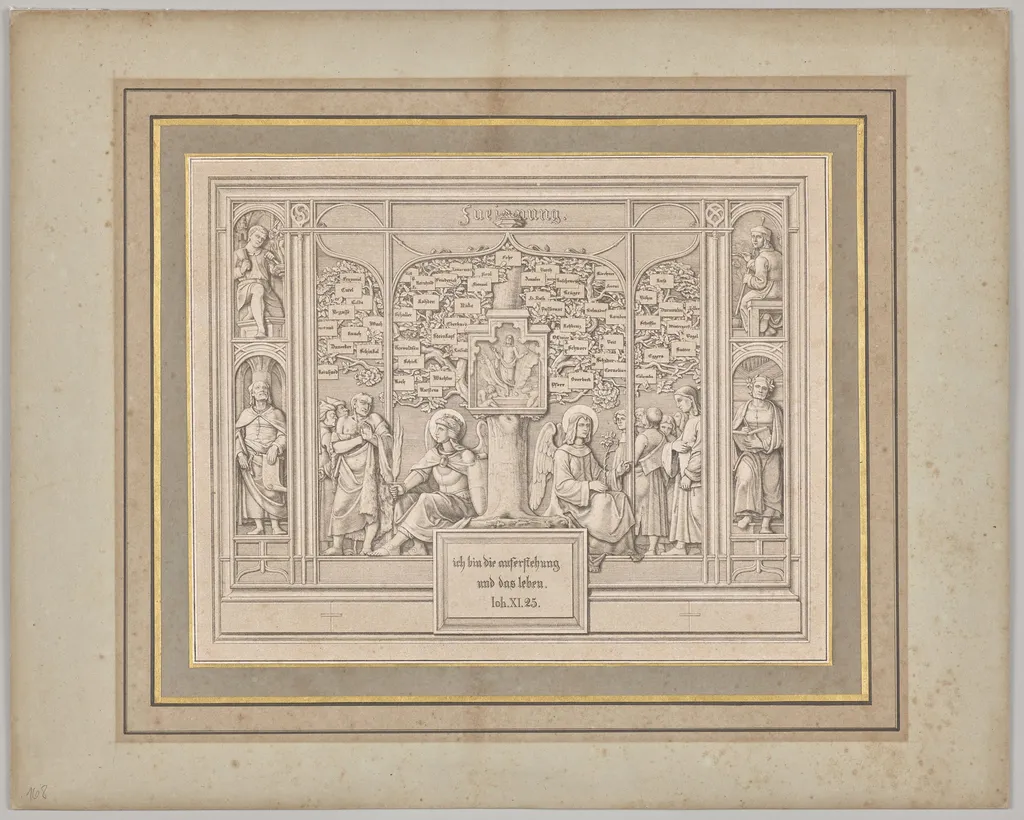
Dedication. John XI, 25 is a print by the Romanticist artist Ferdinand Olivier. It dates from 1820 and is held in the collection of the Cleveland Museum of Art.
About this work
Overview
The composition is vertically oriented, resembling the structure of a devotional altar, with layered imagery that blends sacred symbolism with domestic objects.
Created in 1820 by Ferdinand Olivier, this print is a detailed religious scene rendered in fine line work. It is part of the collection at The Cleveland Museum of Art. The composition is vertically oriented, resembling the structure of a devotional altar, with layered imagery that blends sacred symbolism with domestic objects. The work reflects early 19th-century German artistic interests in spiritual introspection and visual narrative.
Subject & Meaning
Two women kneel before a small crucifix, their postures conveying quiet reverence. One holds a book, suggesting study or scripture, while the other cradles a lily, a traditional emblem of purity. Surrounding them are niche figures—saints, scholars, and musicians—each possibly representing virtues or aspects of divine wisdom. The German banner and biblical inscription anchor the scene in textual devotion, merging visual and verbal piety.
Technique & Style
Olivier employed precise engraving to achieve fine detail and tonal contrast. The narrow format enhances the vertical emphasis, mimicking the proportions of ecclesiastical architecture. Delicate hatching defines textures in fabric and stone, while the arrangement of figures in shallow relief creates a sense of depth without perspective distortion. The style aligns with Romantic-era interest in emotional clarity through symbolic clarity.
History & Provenance
The print was produced during Olivier’s early career, a period when he was deeply engaged with religious and literary themes. It entered The Cleveland Museum of Art’s collection through documented acquisitions in the 20th century. No earlier ownership records are widely known, but its production coincides with a broader revival of devotional imagery in German-speaking regions following the Napoleonic Wars.
Context
This work emerged amid a cultural shift in Central Europe, where artists sought to revive spiritual themes through personal, intimate expressions rather than grand historical narratives. The inclusion of scholars and musicians among saintly figures reflects Romanticism’s blending of sacred and secular ideals. Such prints were often used in private devotion or as illustrations in religious publications.
Legacy
Though not widely reproduced, the print exemplifies how Romantic artists reimagined religious iconography through subtle symbolism and domesticated piety. Its quiet intensity influenced later German printmakers who favored intimate devotional scenes over theatrical compositions. The work remains a quiet testament to the period’s search for spiritual meaning in everyday forms.
Artist & collection

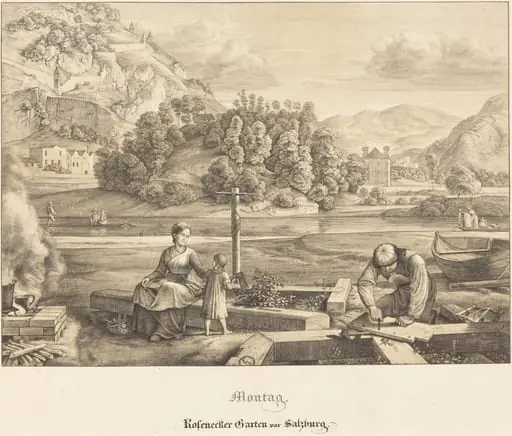 Montag - Rosenecker Garten vor Salzburg (Monday - Rosenecker Garden near Salzburg)
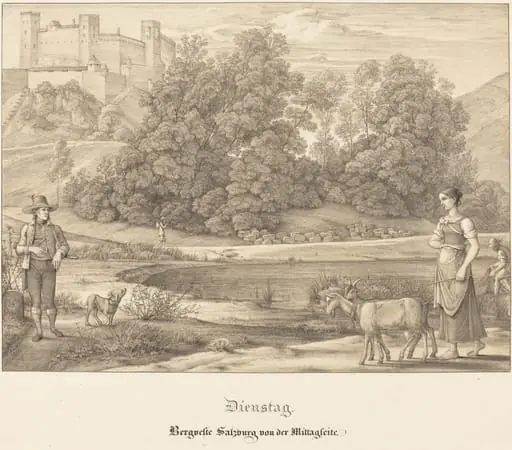 Dienstag - Bergveste Salzburg vor der Mittagseit (Tuesday - The Castle of Salzburg from the Noontime Side)
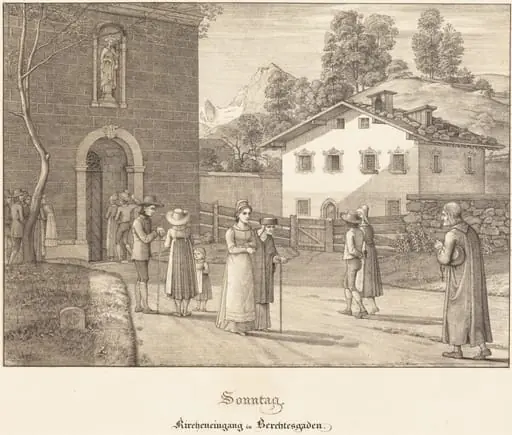 Sonntag - Kircheneingang in Berchtesgaden (Sunday - Going to Church near Berchtesgaden)
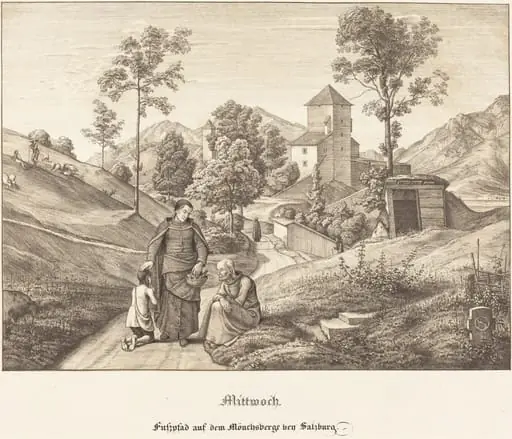 Mittwoch - Fusspfad auf dem Mönchsberge bey Salzburg (Wednesday - Footpath on the Mönchsberge near Salzburg)
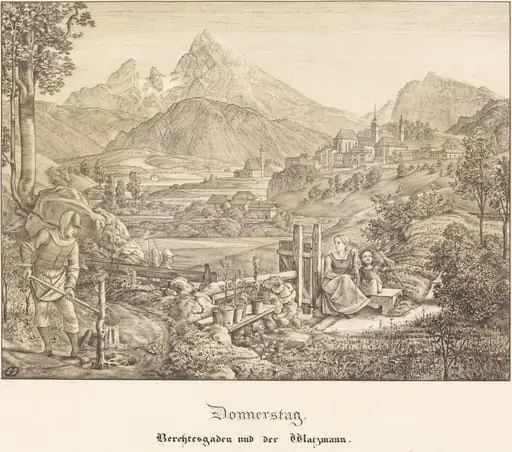 Donnerstag - Berchtesgaden und der Watzmann (Thursday - Berchtesgaden and the Watzmann Mountain)
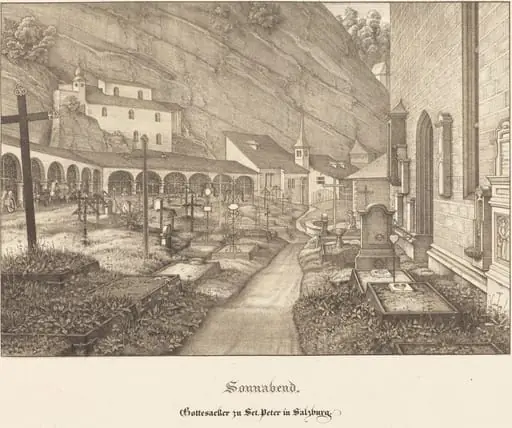 Sonnabend - Gottesacker zu St. Peter in Salzburg (Saturday - Graveyard of St. Peter's in Salzburg)
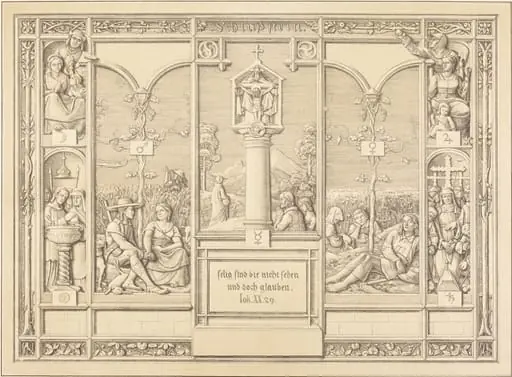 Tailpiece: Selig sind die nicht sehen und doch glauben (Blessed are those who do not
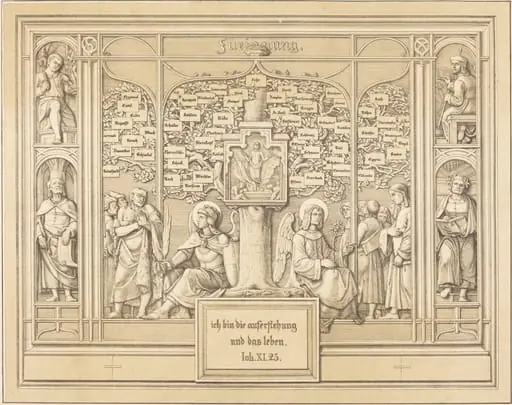 Dedication: Ich bin die Auferstehung und das Leben (I am the resurrection and the life)
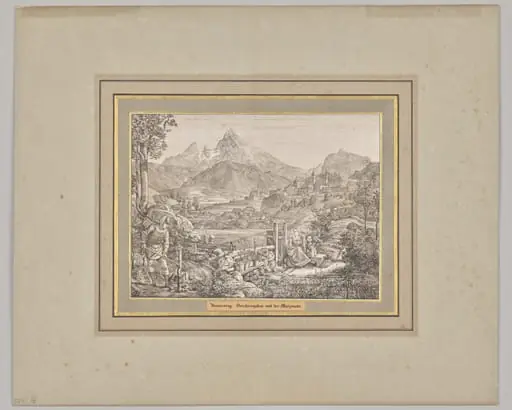 Thursday. Berchtesgaden and the Watzmann
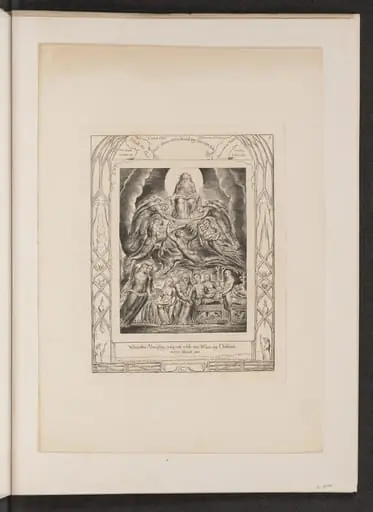 Satan Before the Throne of God
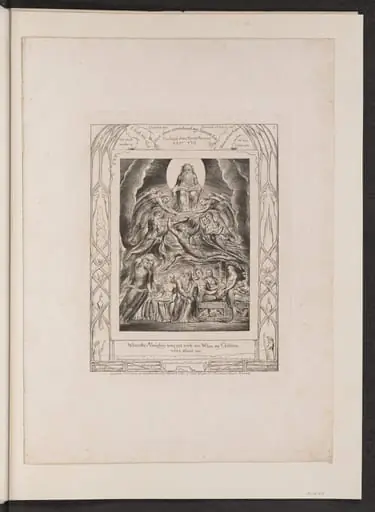 Satan Before the Throne of God
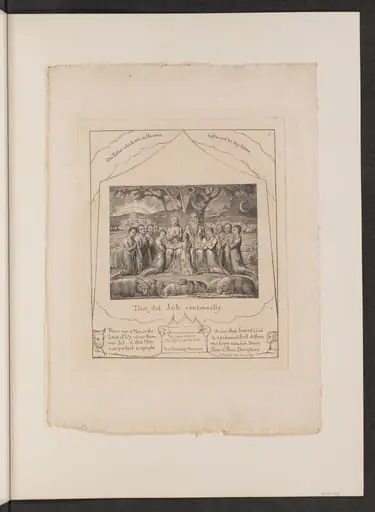 Job and His Family
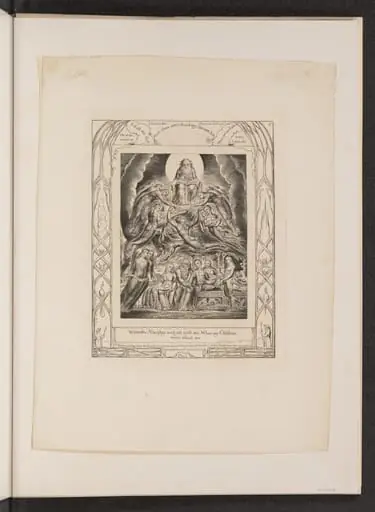 Satan Before the Throne of God
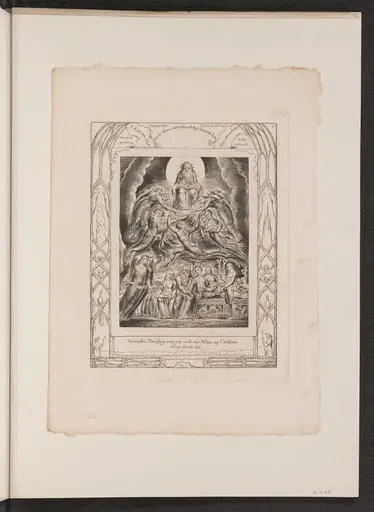 Satan Before the Throne of God
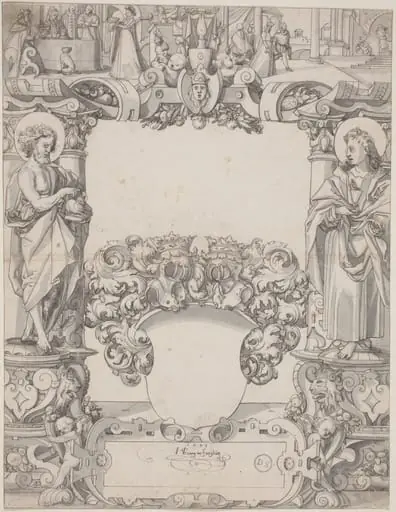 Glass Design with Saint John the Baptist and Saint John the Evangelist
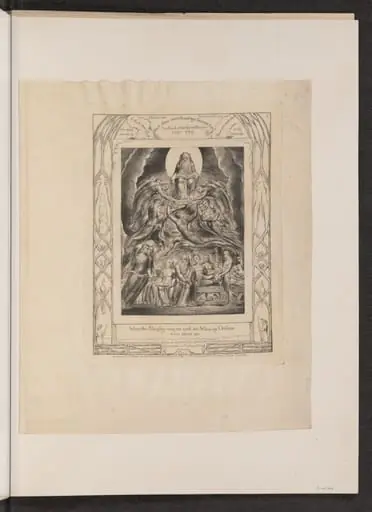 Satan Before the Throne of God
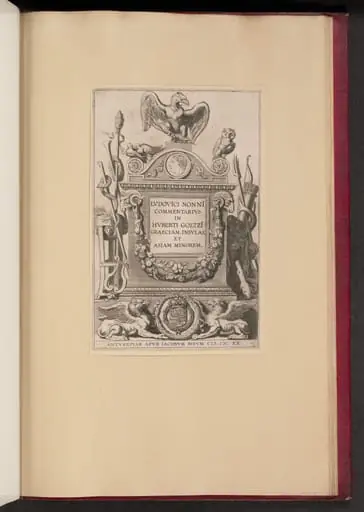 Title Page for Ludovicus Nonnius, Commentarius in Huberti Goltzi Graeciam, Insulas, et Asiam Minorem
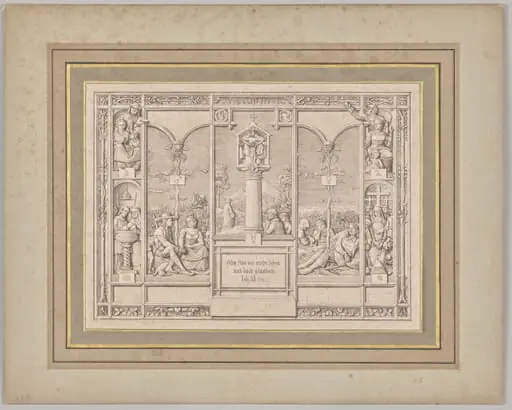 Capstone. John XX, 29