Artwork
Adoration of Camaldoli
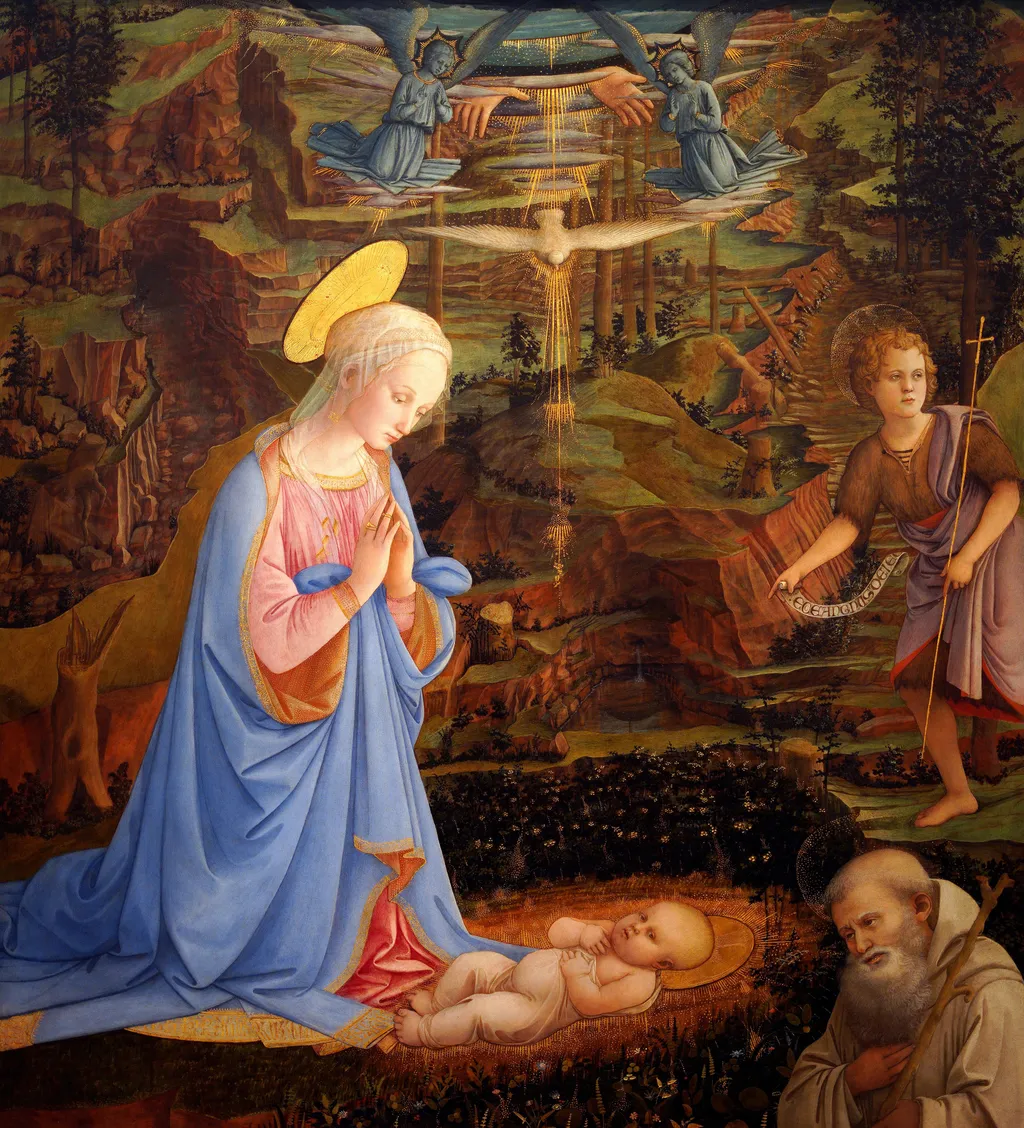
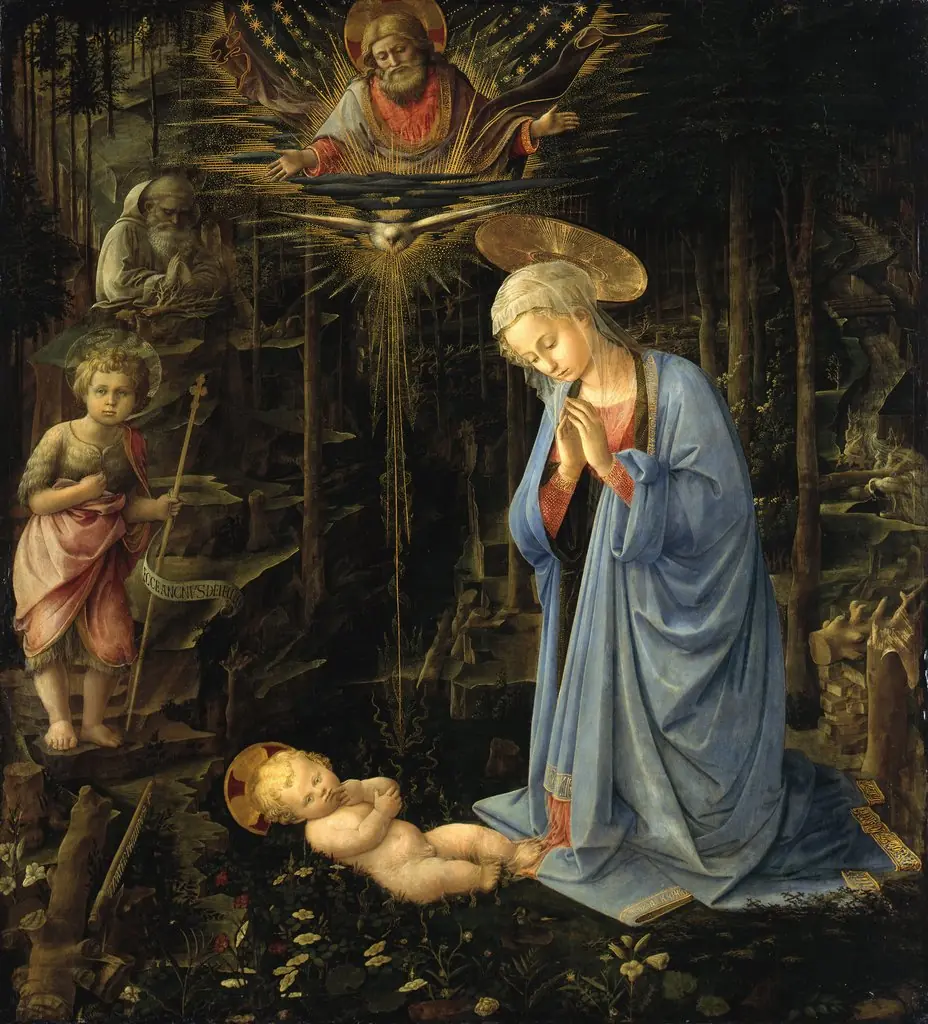
Adoration of Camaldoli is a tempera painting by the Early Renaissance artist Filippo Lippi. It dates from 1463 and is held in the collection of the Uffizi Gallery.
About this work
Overview
Filippo Lippi's 'Adoration of Camaldoli' is a tempera on panel painting created in 1463. It has been part of the Uffizi collection since 1919 and underwent restoration by Daniele Rossi in 2007.
Subject & Meaning
Two angels and a dove-shaped light above emphasize the divine nature of the scene, commissioned for a Camaldoli Monastery cell rebuilt in 1463.
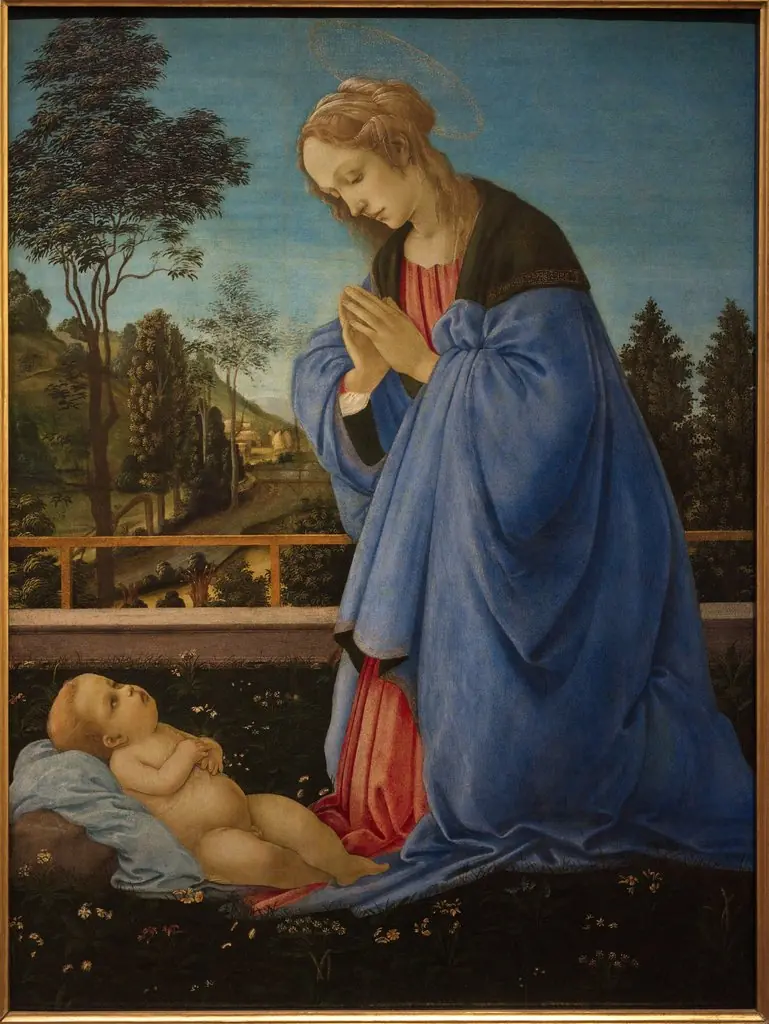
The painting depicts a serene scene of adoration of the Christ Child, set within a dreamy landscape. Key figures include a kneeling woman (likely the Virgin Mary) in blue, holding the infant Jesus wrapped in red, accompanied by an older bearded man (possibly Joseph), John the Baptist, and Romuald, founder of the Camaldoli Hermitage. Two angels and a dove-shaped light above emphasize the divine nature of the scene, commissioned for a Camaldoli Monastery cell rebuilt in 1463.
Technique & Style
Executed in tempera, a medium characterized by its durability and luminosity, the work showcases Lippi's skill in blending subtle coloration with expressive figures. The dreamy, soft landscape and the use of light, particularly the glowing dove, reflect artistic choices that have sparked debate over the work's place in Lippi's oeuvre regarding stylistic maturity.
History & Provenance
Originally commissioned by Lucrezia Tornabuoni for the Camaldoli Monastery, the painting's attribution to Lippi was first proposed by Pudelko, suggesting an early career work due to similarities with Beato Angelico's style. However, Bernard Berenson later countered that these influences indicate a more mature phase of Lippi's career.
Context
Created for a specific cell in the Camaldoli Monastery, the inclusion of Romuald, the monastery's founder, alongside John the Baptist, highlights the work's tailored commission to honor the site's heritage. The patronage by Lucrezia Tornabuoni, whose husband Piero il Gottoso oversaw the cell's rebuilding in 1463, further contextualizes the painting within the religious and familial patronage practices of the time.
Legacy
While specific details on the painting's broader influence are not detailed, its presence in the Uffizi since 1919 and the restoration in 2007 ensure its continued visibility and study within Filippo Lippi's corpus and early Renaissance art.
Own this work as a print
Artist & collection
Artist
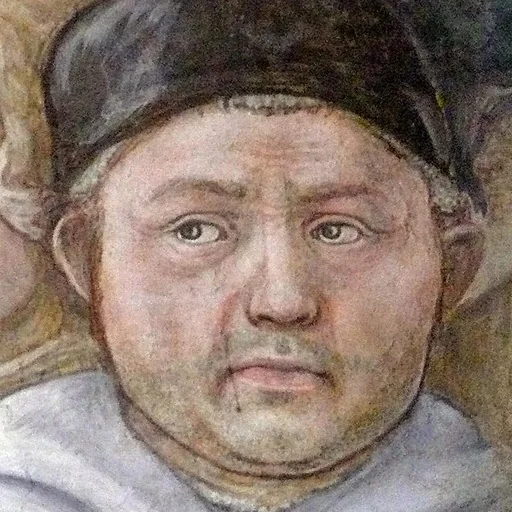
Filippo Lippi (c. 1406 – 8 October 1469), also known as Lippo Lippi, was an Italian Renaissance painter of the Quattrocento (fifteenth century) and a Carmelite priest. He was an early Renaissance master of a painting…

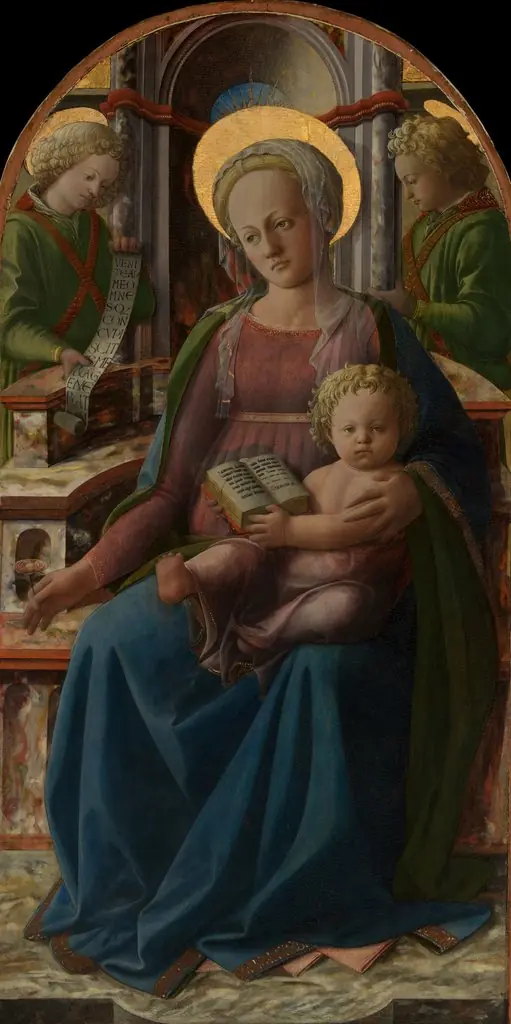 Madonna and Child Enthroned with Two Angels
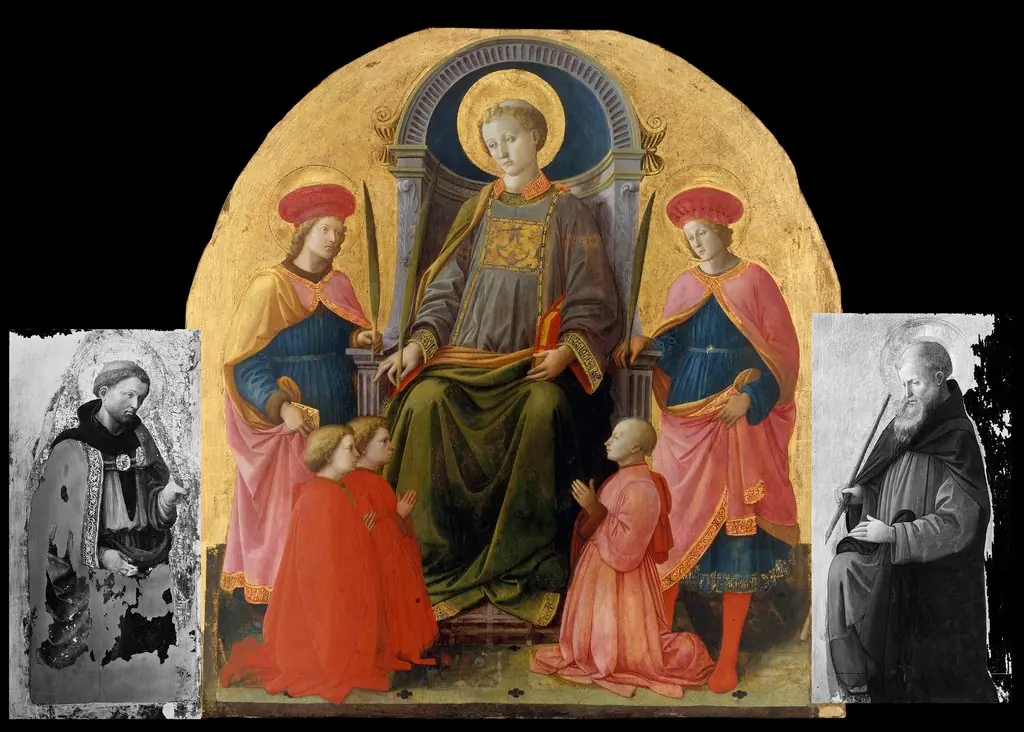 Saint Lawrence Enthroned with Saints and Donors
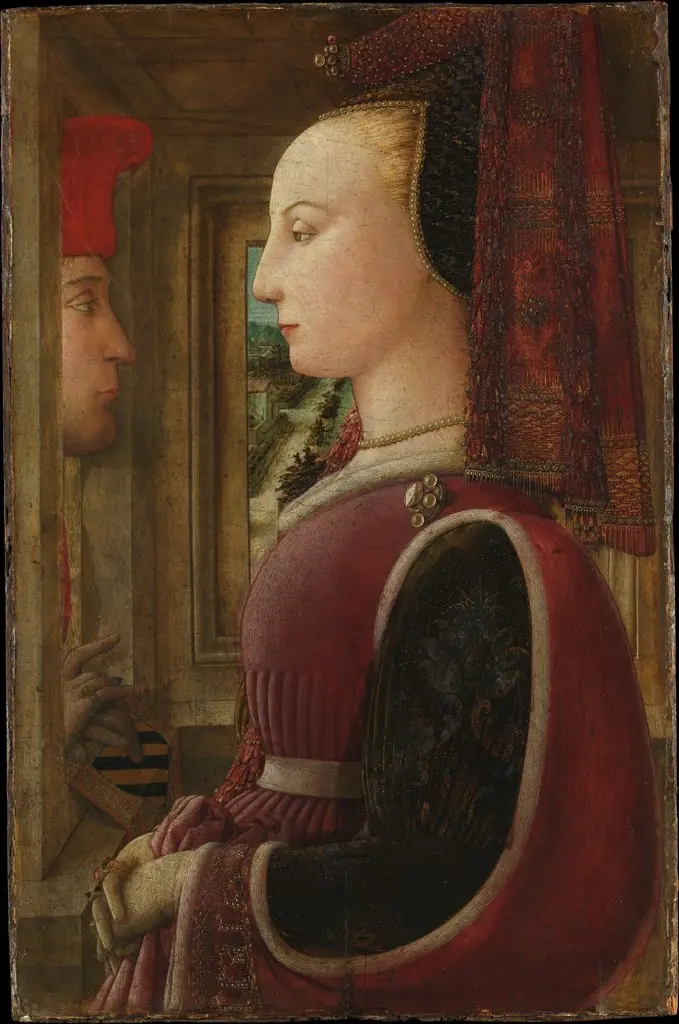 Portrait of a Woman with a Man at a Casement
 Saints Augustine and Francis, a Bishop Saint, and Saint Benedict
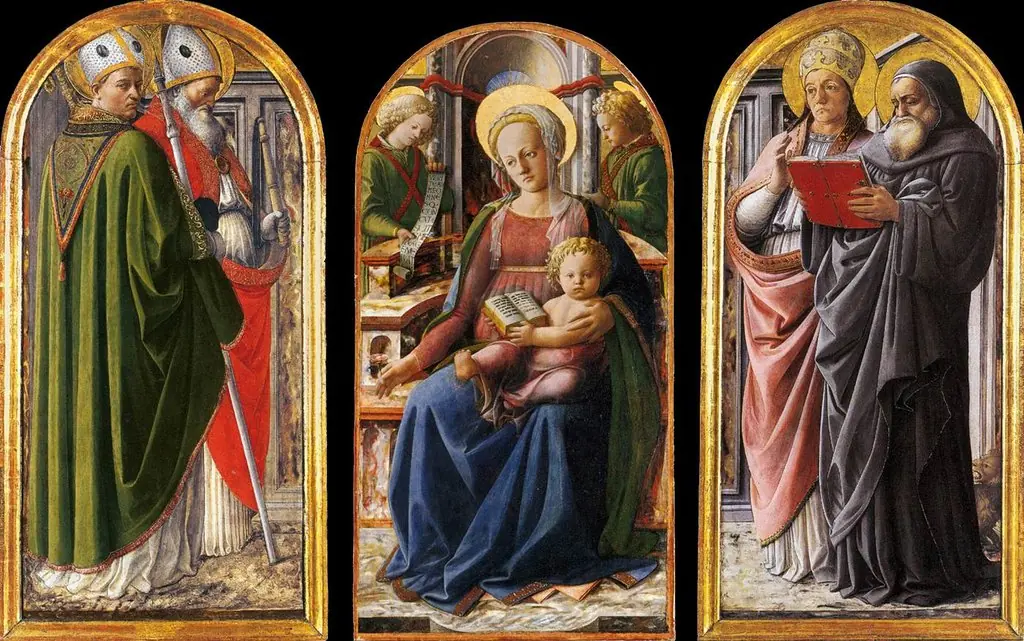 Madonna and Child with Angels and Saints
 Adoration in the Forest
 Madonna and Child
 Adoration of the Child with SS. Joseph, Jerome, Hilarion, Magdalena and angels