Artwork
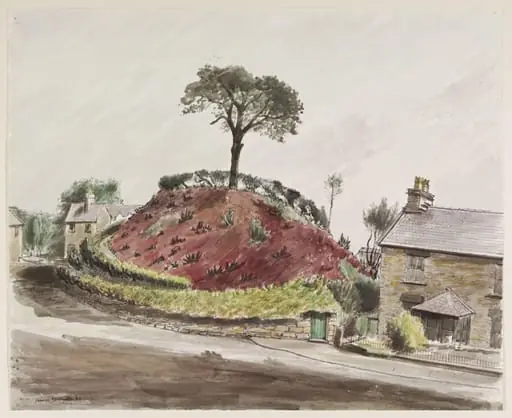
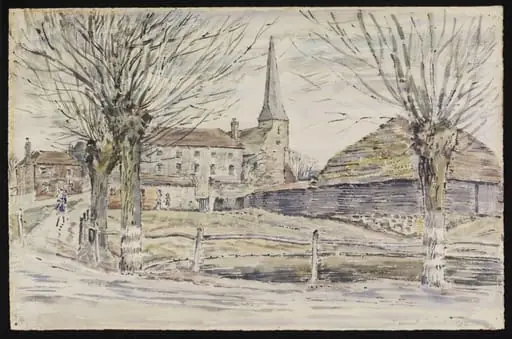
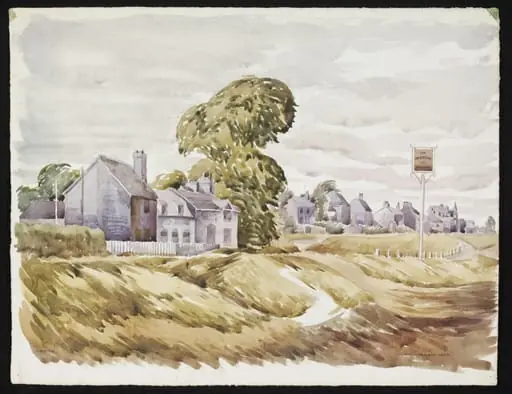
Askham Village, Westmorland
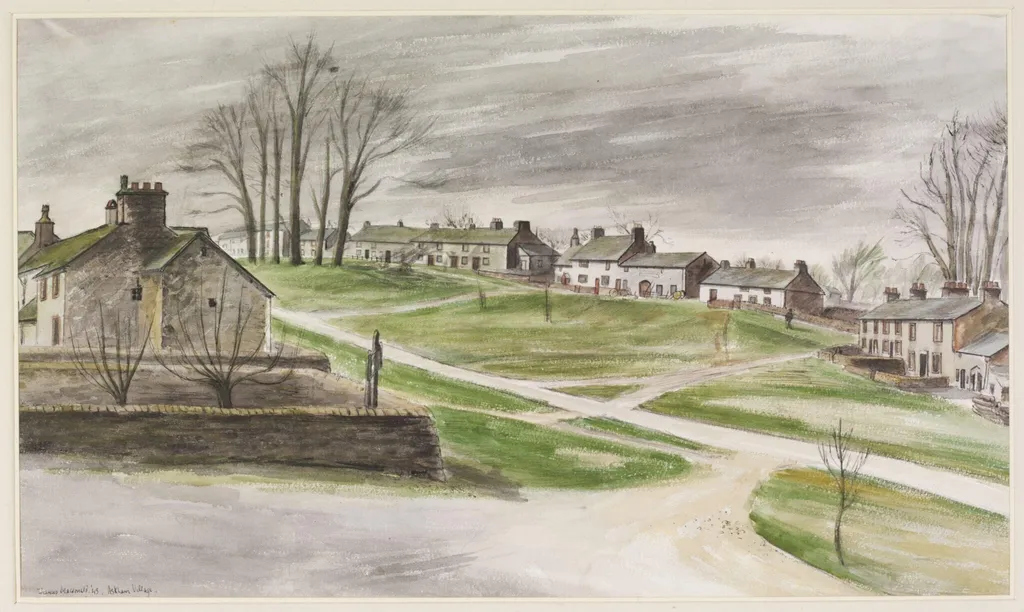
Askham Village, Westmorland is a watercolor work on paper by Frances Macdonald. It is held in the collection of the Victoria and Albert Museum.
About this work
Overview
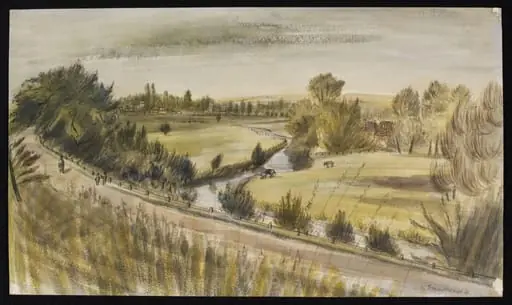
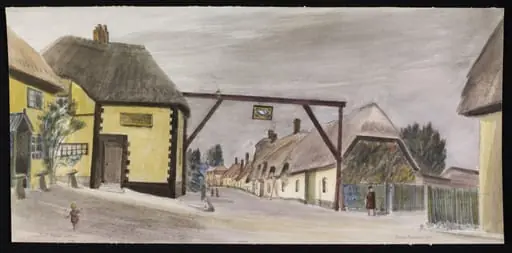
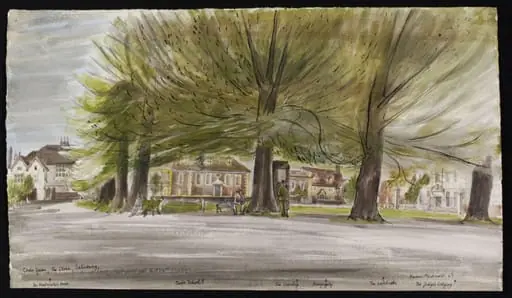
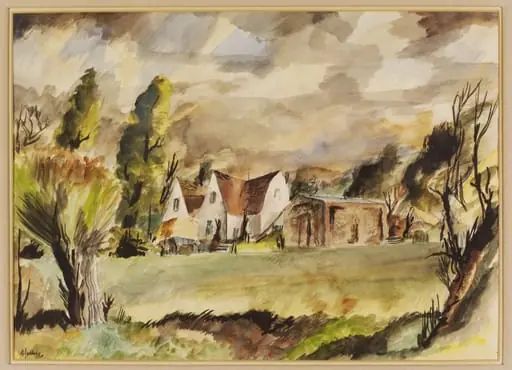
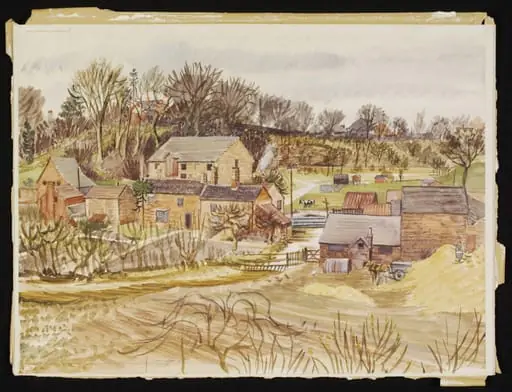
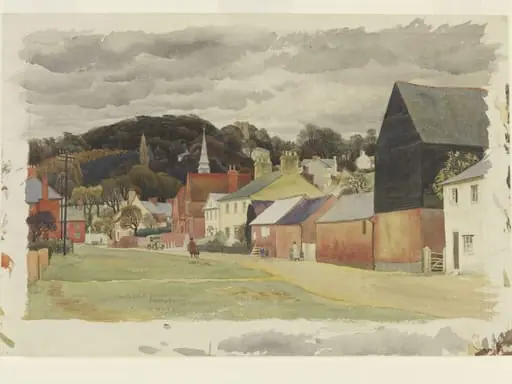
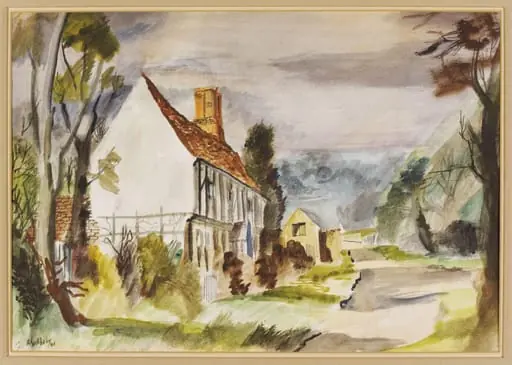
Frances Macdonald’s 1943 watercolour, *Askham Village, Westmorland*, records a cluster of stone cottages perched on a hill beside an open green in the Lake District. The composition captures a narrow lane winding through the settlement, with leaf‑less trees silhouetted against a brooding sky.
Subject & Meaning
The scene presents a tranquil, rural community, emphasizing the modest architecture and the relationship between built forms and the surrounding landscape. The muted palette and loose brushwork convey a subdued atmosphere, reflecting the quiet endurance of village life during wartime.
Technique & Style
Executed in watercolor, the work relies on soft greys, muted greens and earthy browns. Macdonald’s brushstrokes are deliberately sketchy, allowing forms to suggest rather than define, while the limited tonal range creates a calm yet slightly melancholic mood.
History & Provenance
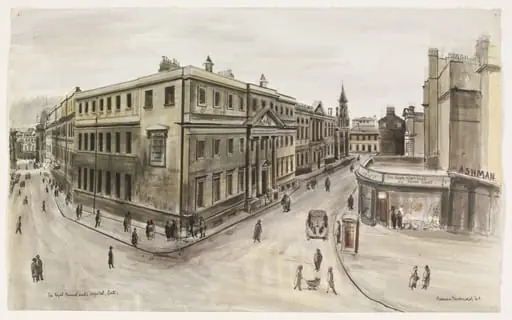
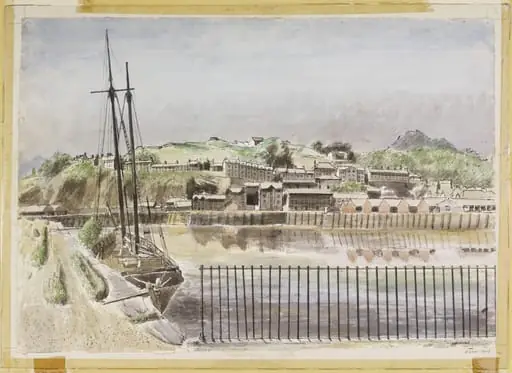
The painting was produced under the Recording Britain programme, a wartime initiative commissioned by the Committee for the Employment of Artists in Wartime. The project, overseen by Sir Kenneth Clark, aimed to document sites of national importance as Britain’s countryside faced the pressures of war and impending post‑war change.
Context
Created during the Second World War, the work forms part of a broader effort to preserve visual records of Britain’s rural and urban environments. It illustrates how artists were mobilised to capture the nation’s heritage at a moment when many landscapes were vulnerable to alteration or loss.
Own this work as a print
Artist & collection
Artist
Frances Macdonald MacNair (24 August 1873 – 12 December 1921) was a Scottish artist whose design work was a prominent feature of the Modern Style (British Art Nouveau style) during the 1890s.