Artwork
Man in Armor beside a Chariot
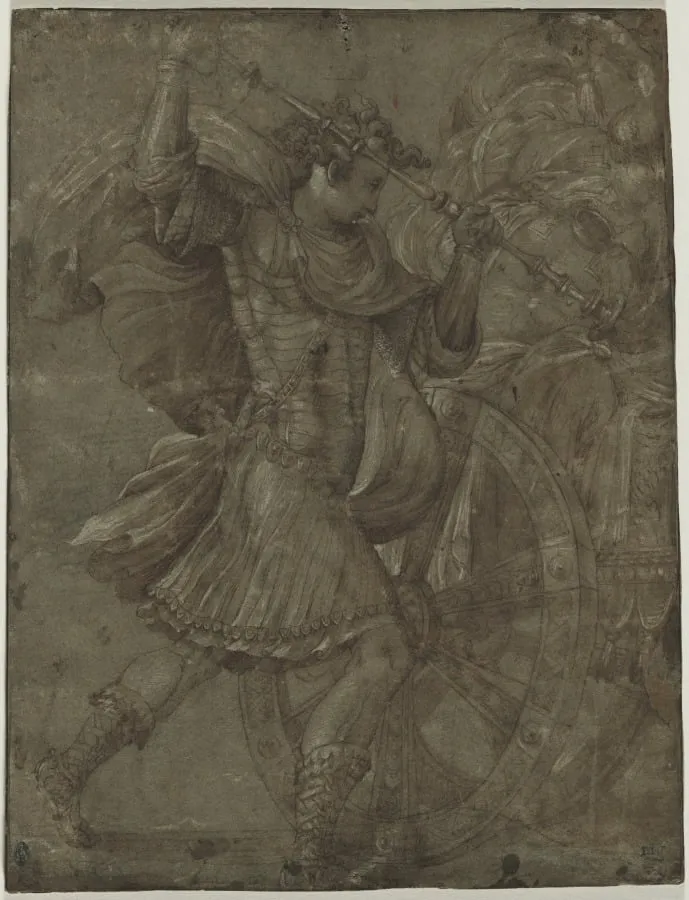
Man in Armor beside a Chariot is a drawing by the Renaissance artist Francesco Salviati. It dates from 1550 and is held in the collection of the Cleveland Museum of Art. This ink drawing depicts a young armored figure beside a chariot engulfed in flames.
About this work
This might show Alexander the Great burning his own loot so his army could move faster.
A young man in shiny armor stands next to a burning war chariot. Flames lick at the wheels while smoke curls into the sky.
This might show Alexander the Great burning his own loot so his army could move faster. Renaissance rulers loved his bold moves, so artists often drew scenes from his life. The quick, sketchy lines make the fire feel alive.
To see how other artists drew the same story, look up *Italy, 16th century*.
Overview
This ink drawing depicts a young armored figure beside a chariot engulfed in flames. The scene suggests a moment of decisive action, likely drawn from accounts of Alexander the Great’s campaign. The artist rendered the fire with rapid, fluid strokes, emphasizing movement and transience. The figure’s posture and the chariot’s destruction imply a strategic sacrifice, aligning with Renaissance interpretations of Alexander as a model of leadership.
Subject & Meaning
The image illustrates a lesser-known episode from Alexander’s campaign: the burning of his own baggage train to motivate his troops to press forward unburdened. Rather than depicting battle, it focuses on a symbolic act of discipline and resolve. Renaissance viewers interpreted this as an emblem of autocratic will and military efficiency, resonating with rulers who sought to emulate his authority and decisiveness.
Technique & Style
The artist employed swift, economical ink lines to convey both form and motion. The flames are suggested through loose, upward strokes, while the armor is defined with sharper contours, contrasting texture and energy. The lack of detailed background directs focus to the central action. This sketchlike quality reflects a study in dynamism rather than a finished composition, typical of preparatory drawings from the period.
History & Provenance
The drawing originates from a Renaissance context, likely Italy in the early 16th century, where interest in classical antiquity flourished. It may have been produced for a patron connected to the Habsburg court, where Emperor Maximilian I cultivated associations with Alexander as a symbolic ancestor. The work’s survival suggests it was valued as both artistic exercise and political allegory within humanist circles.
Context
During the Renaissance, Alexander the Great was frequently invoked as an ideal ruler—courageous, strategic, and unyielding. His life was documented in texts by Arrian and Plutarch, which circulated among educated elites. Artists and courtiers drew from these sources to create visual narratives that legitimized contemporary power structures, linking rulers to ancient models of greatness.
Legacy
This drawing contributes to a broader visual tradition that reimagined Alexander’s exploits as moral and political lessons. Though not widely known today, such works influenced later historical painting and emblematic art. Its emphasis on action over spectacle reflects a shift in Renaissance thought toward individual agency and calculated leadership as virtues worth depicting.
Artist & collection
Artist
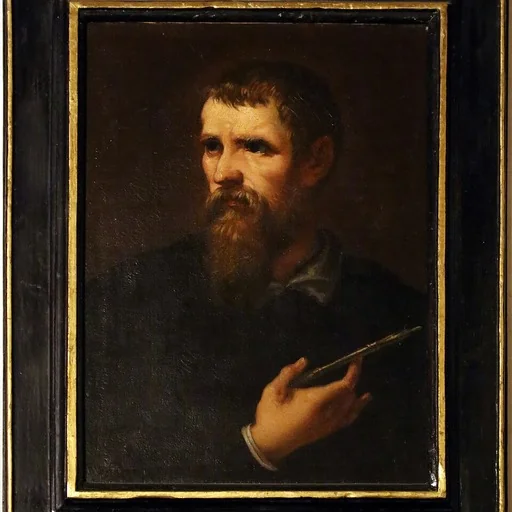
Francesco Salviati or Francesco de' Rossi (1510 – 11 November 1563) was an Italian Mannerist painter who lived and worked in Florence, with periods in Bologna and Venice, ending with a long period in Rome, where he died.

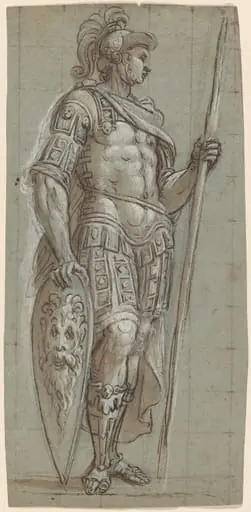 A Soldier in Ancient Roman Costume with Pike and Shield
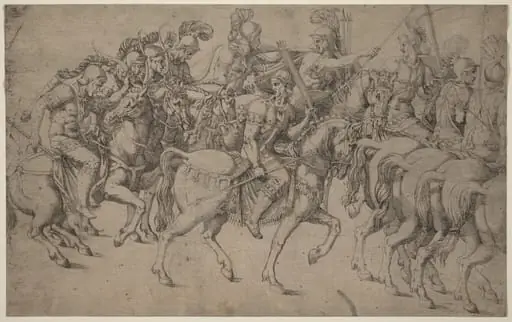 Riders Carrying Bows and Javelins
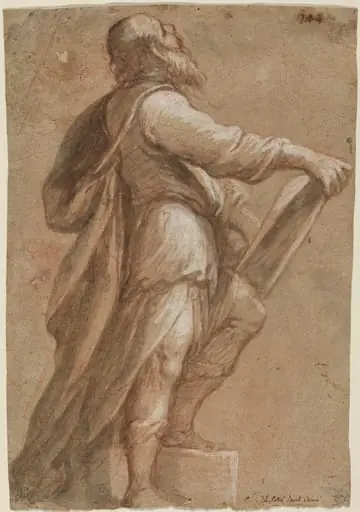 A Saint Holding a Book
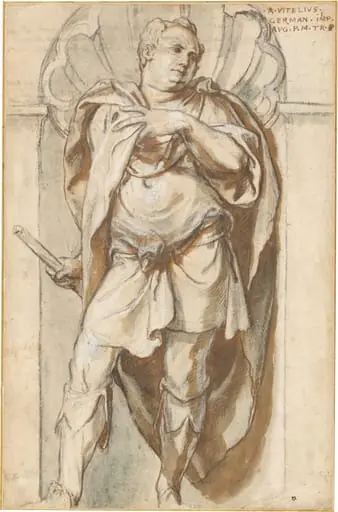 The Emperor Aulus Vitellius
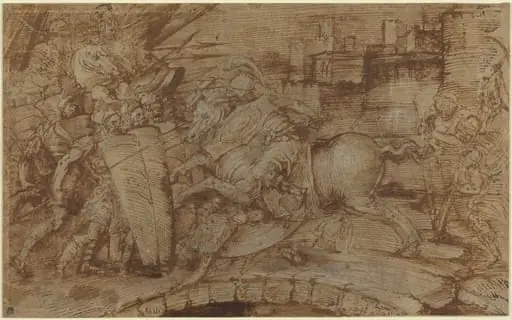 Horatius Cocles Defending Rome
![Figure of an Archer [recto], by Unknown](https://artifactworldgallery.com/img/unknown--figure-of-an-archer-recto--8de8b4fd79de4a46-w320.webp) Figure of an Archer [recto]
Figure of an Archer [recto]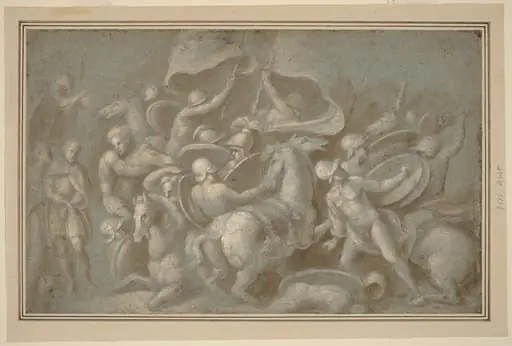 Battle Scene
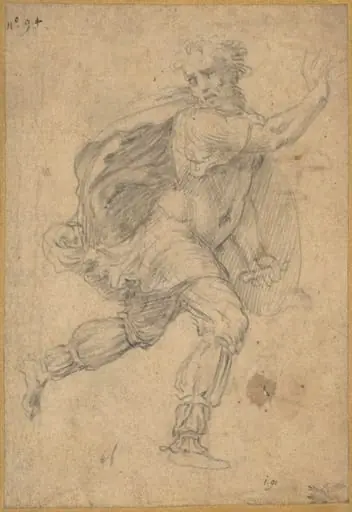 Fleeing Barbarian
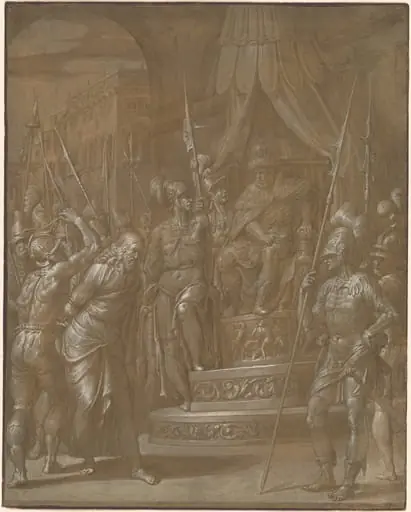 Christ before Herod
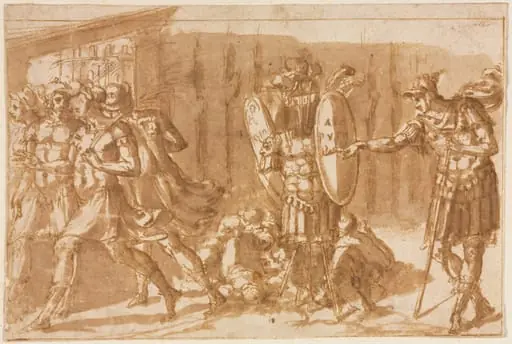 Victorious Soldiers with Trophy
![Mars and Diana [recto], by Zanguidi, called Bertoia, Jacopo](https://artifactworldgallery.com/img/zanguidi-called-bertoia-jacopo--mars-and-diana-recto--a528dea7036b44d0-w320.webp) Mars and Diana [recto]
Mars and Diana [recto]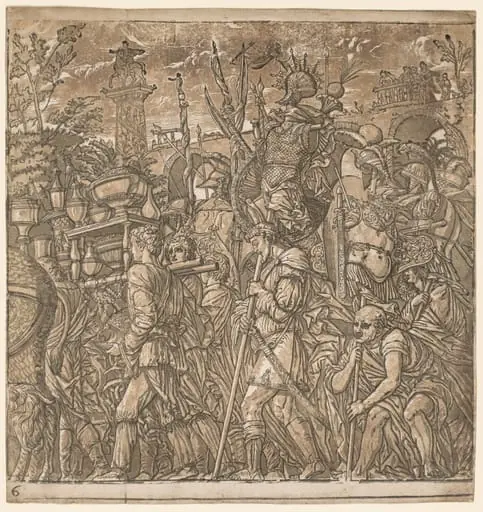 The Triumph of Julius Caesar: Soldiers Carrying Vases and Trophies of War