Artwork
Saint Andrew
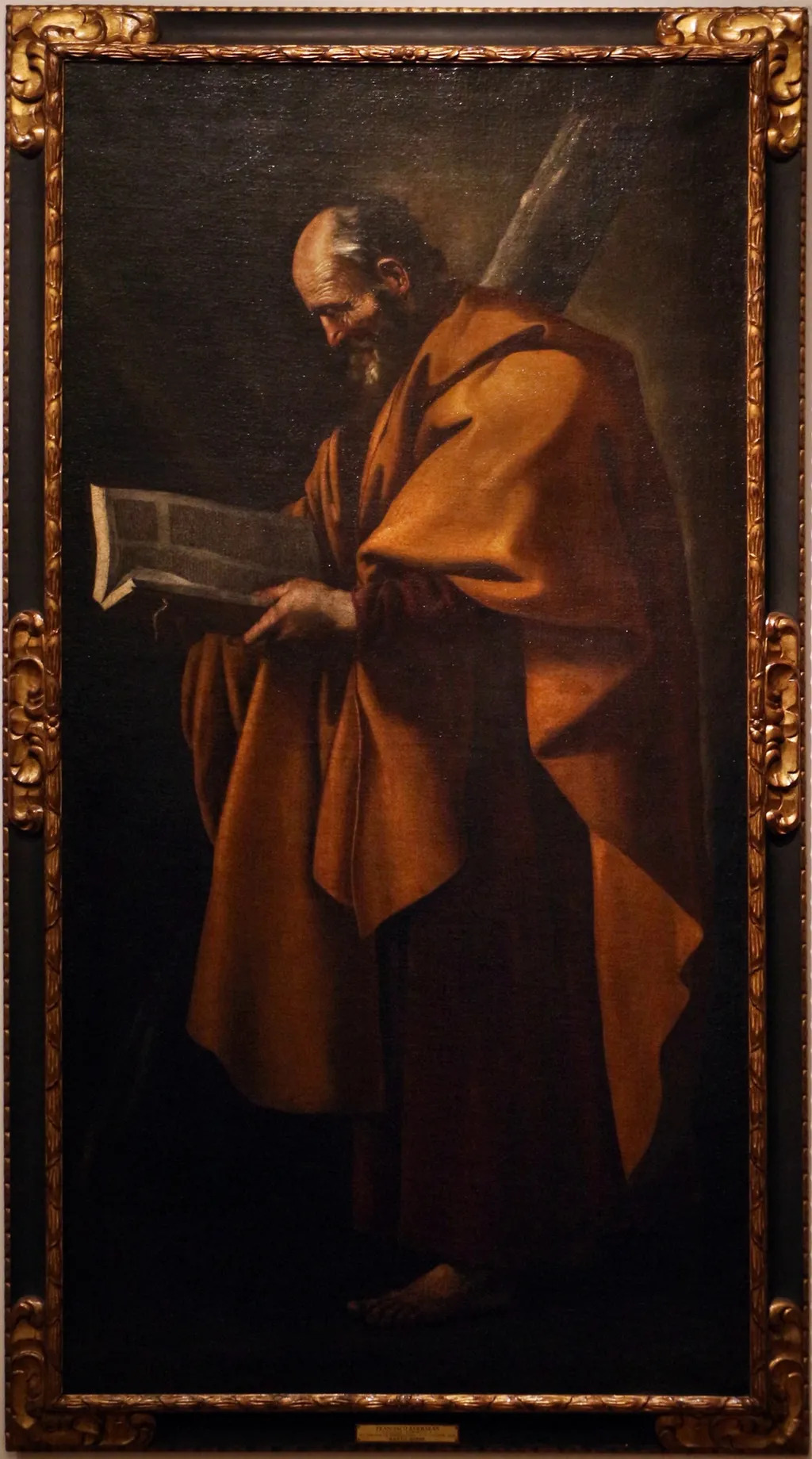
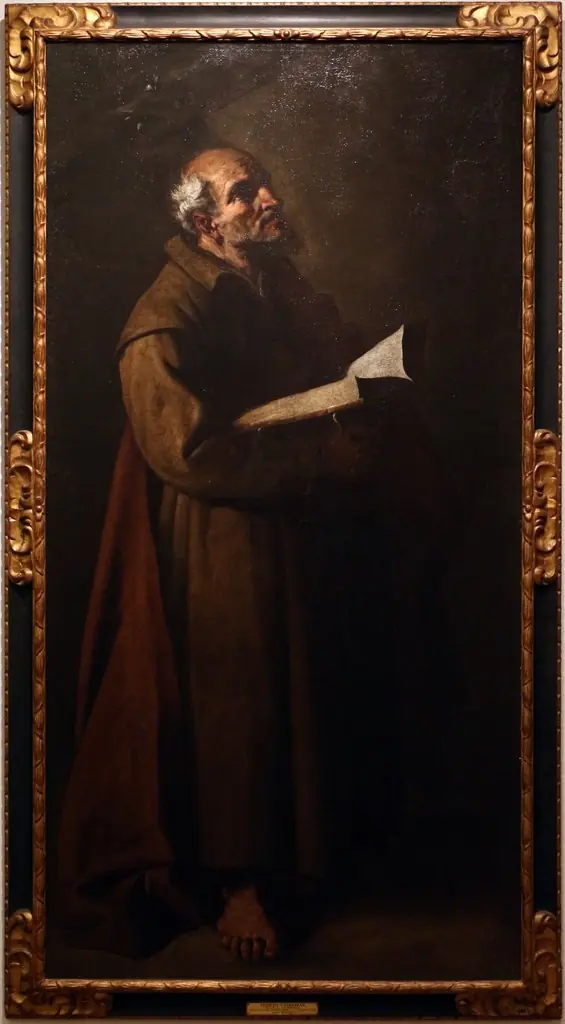
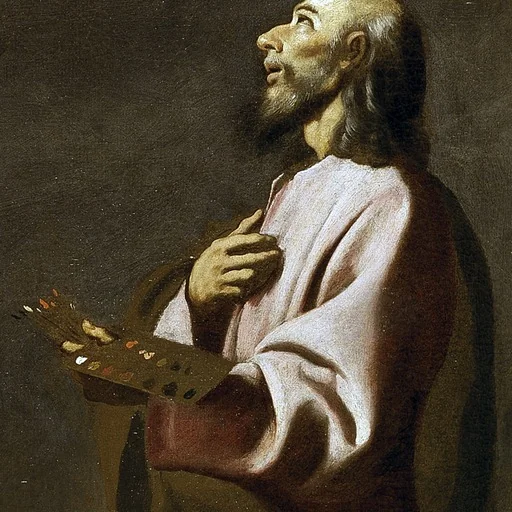
Saint Andrew is an oil painting by the Early Baroque Italian artist Francisco de Zurbarán. It dates from 1633 and is held in the collection of the National Museum of Ancient Art.
About this work
Overview
This oil painting, created by Francisco de Zurbarán in 1633, is a representation of Saint Andrew the Apostle. It is now held at the National Museum of Ancient Art.
Subject & Meaning
The painting depicts Andrew as a contemplative figure, dressed in a brown robe and yellowish-brown cloak, holding a book and lost in thought. His serious expression and introspective posture convey a sense of devotion and spirituality.
Technique & Style
The work is characterized by its realistic style, with detailed rendering of the subject's clothing and skin texture. Zurbarán's mastery of chiaroscuro is evident in the use of strong contrasts between light and dark, creating a sense of depth and volume.
Context
The dark background against which the figure is set serves to emphasize the subject's presence and create a sense of intimacy. The overall effect is one of quiet contemplation, inviting the viewer to reflect on the subject's spiritual significance.
Artist & collection
Artist
Francisco de Zurbarán was a Spanish Baroque painter. He is known primarily for his religious paintings depicting monks, nuns, and martyrs, and for his still-lifes. Zurbarán gained the nickname "Spanish Caravaggio",…