Artwork
Paris Gate
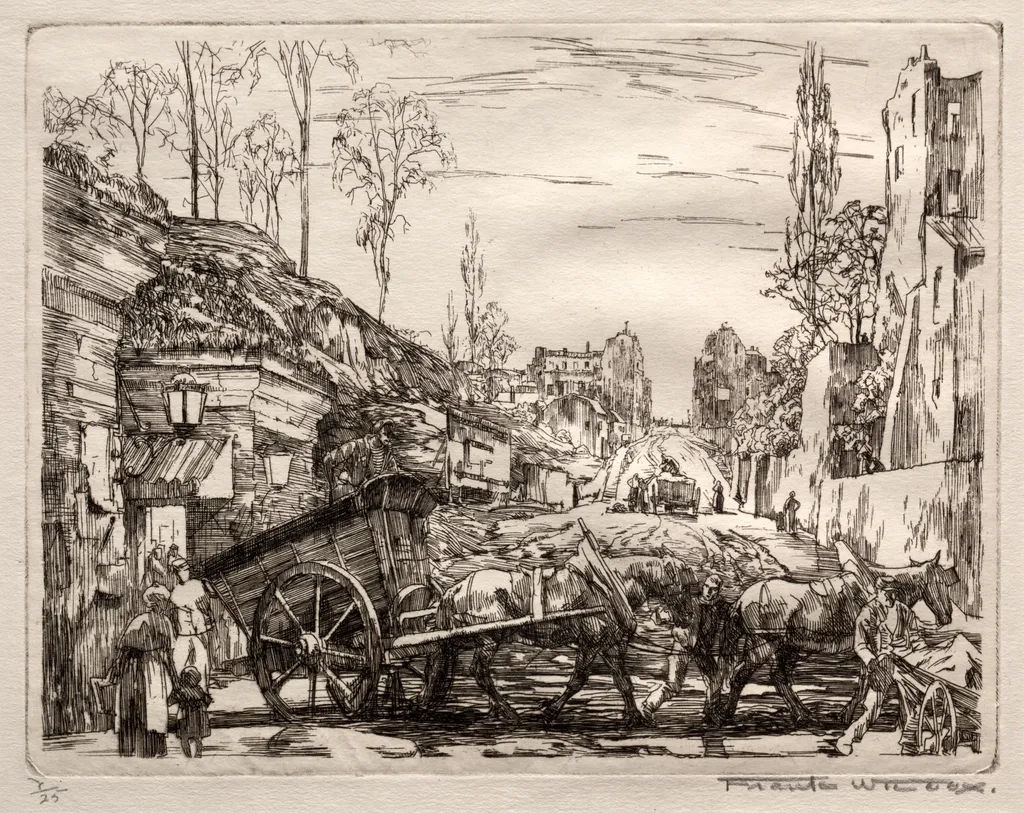
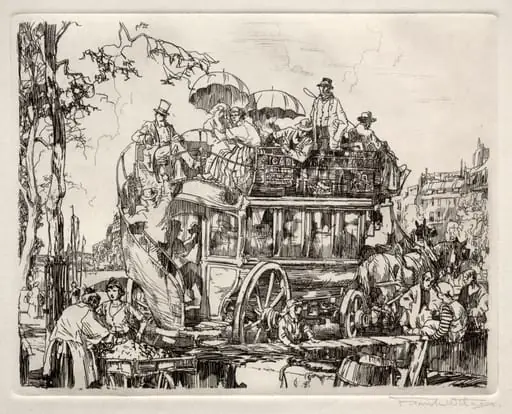
Paris Gate is a print by Frank Wilcox. It dates from 1935 and is held in the collection of the Cleveland Museum of Art.
About this work
The artist used heavy shading to make the scene feel textured, especially on the horses and buildings.
This etching shows a busy city street with a large wagon pulled by two horses. People walk nearby, and buildings with steep roofs line the road. Trees without leaves stand tall, and the sky looks stormy with quick, jagged lines.
The artist used heavy shading to make the scene feel textured, especially on the horses and buildings. The lines are thick and uneven, giving everything a rough, almost sketchy look.
Look up Frank Wilcox (American, 1887–1964) to see more of his work.
Overview
Paris Gate is an etching by American artist Frank Wilcox, dated around 1935. It depicts a narrow urban thoroughfare in Paris, rendered with expressive line work and dense tonal contrasts. The print is part of the collection at The Cleveland Museum of Art, where it represents Wilcox’s interest in capturing the atmosphere of European city life during the interwar period.
Subject & Meaning
The scene centers on a heavy wagon drawn by two horses, moving along a crowded street lined with tall, steep-roofed buildings. Pedestrians move in the background, their forms simplified yet suggestive of daily urban motion. The bare trees and overcast sky imply a chill, transitional season, reinforcing a mood of quiet industry and transient movement rather than grandeur or celebration.
Technique & Style
Wilcox employed a vigorous etching technique, using thick, irregular lines and heavy cross-hatching to build texture and depth. The shading is deliberately uneven, emphasizing the rough surfaces of stone facades and the muscular forms of the horses. The sky is suggested through rapid, jagged strokes, enhancing the sense of impending weather without detailing clouds or light sources.
History & Provenance
Created during Wilcox’s time in Europe, the print reflects his engagement with Parisian street life in the 1930s. It entered The Cleveland Museum of Art’s collection through its established print acquisition program, likely in the mid-20th century. The work remains a representative example of American printmakers’ interest in European urban subjects during the interwar years.
Context
In the 1930s, many American artists traveled to Europe to study and sketch, drawn by its historic architecture and vibrant street scenes. Wilcox was among them, producing numerous etchings that captured the rhythm of daily life. Paris Gate aligns with this trend, reflecting a broader interest in realism and atmospheric detail over idealized imagery.
Legacy
Though not widely exhibited today, Paris Gate endures as a quiet example of early 20th-century American printmaking. Wilcox’s focus on ordinary urban moments, rendered with tactile immediacy, contributes to a lesser-known but significant strand of American art that valued observation over spectacle.
Artist & collection

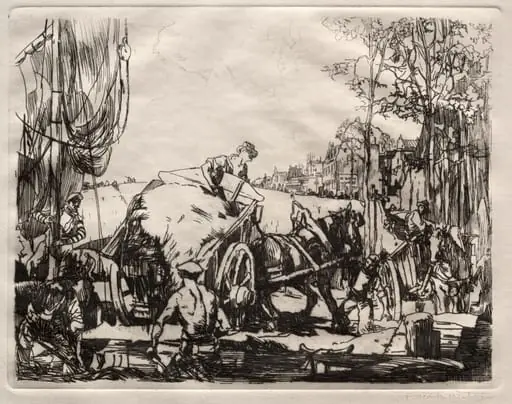 Port at Low Tide
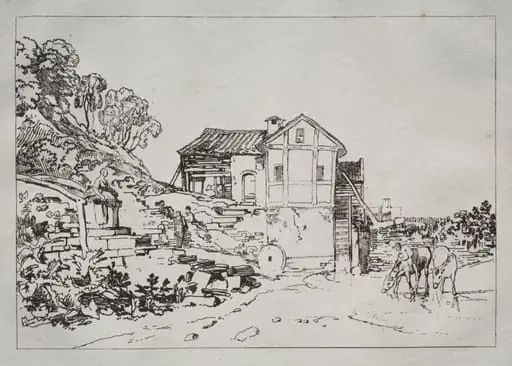 Liber Studiorum: Watermill
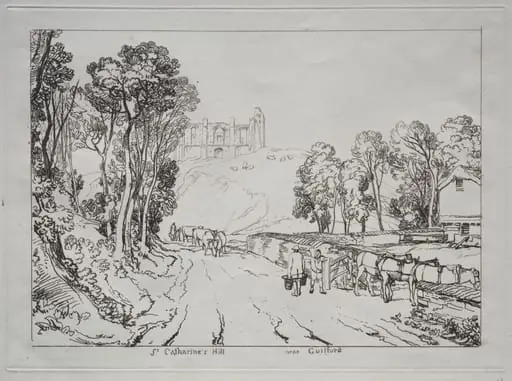 Liber Studiorum: St. Catherine's Hill, near Guilford
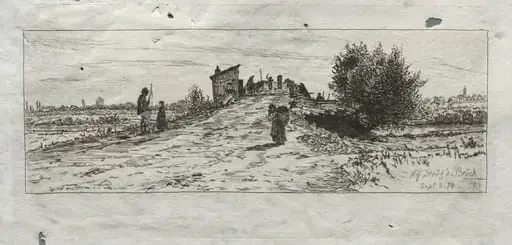 Auf Stauf a-Bruck
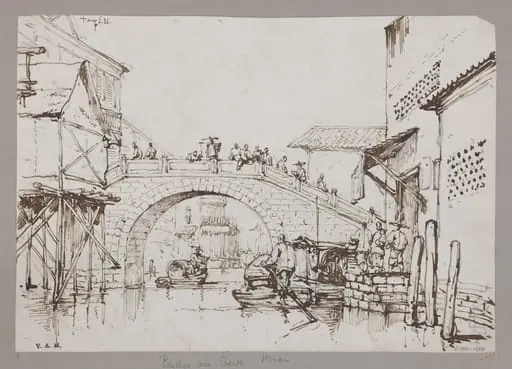 Bridge at Honan opposite to Canton
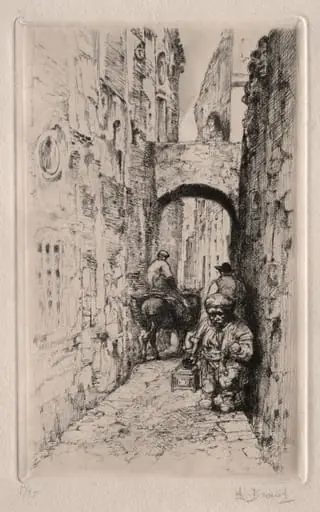 Dwarf in Narrow Street
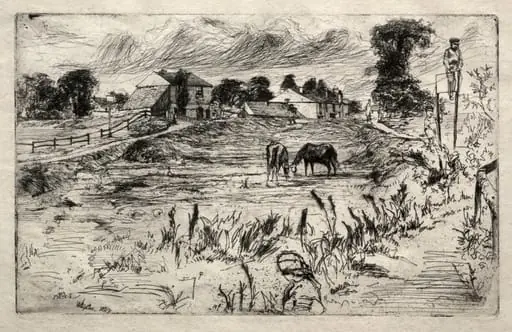 Landscape with the Horse
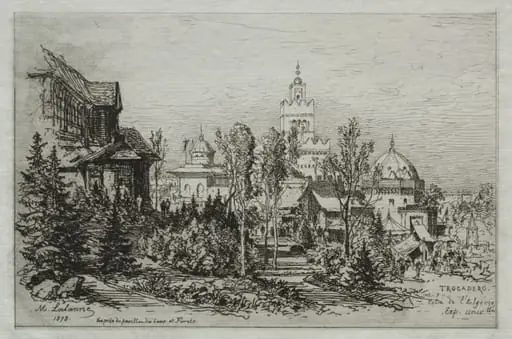 The Algerian Palace at the Trocadero
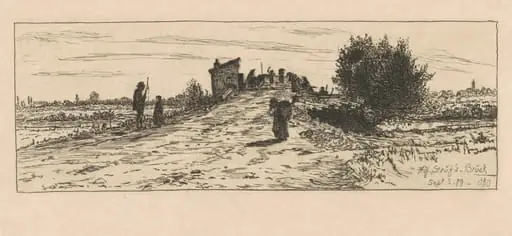 Aŭf Staŭfá Brŭck
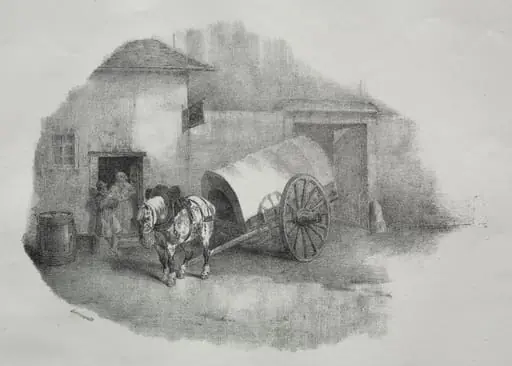 Cheval de charrette sorti des limons
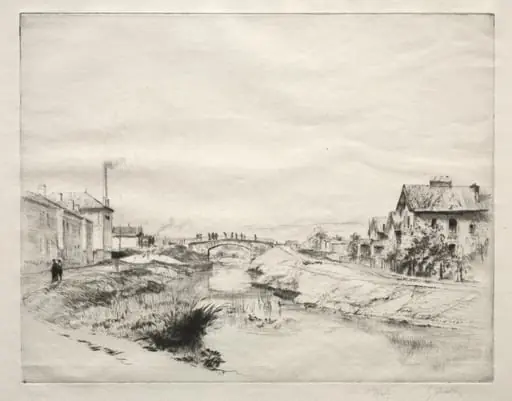 Workmen's House at Troyes, France