Artwork
Ruined Tombs Calpee
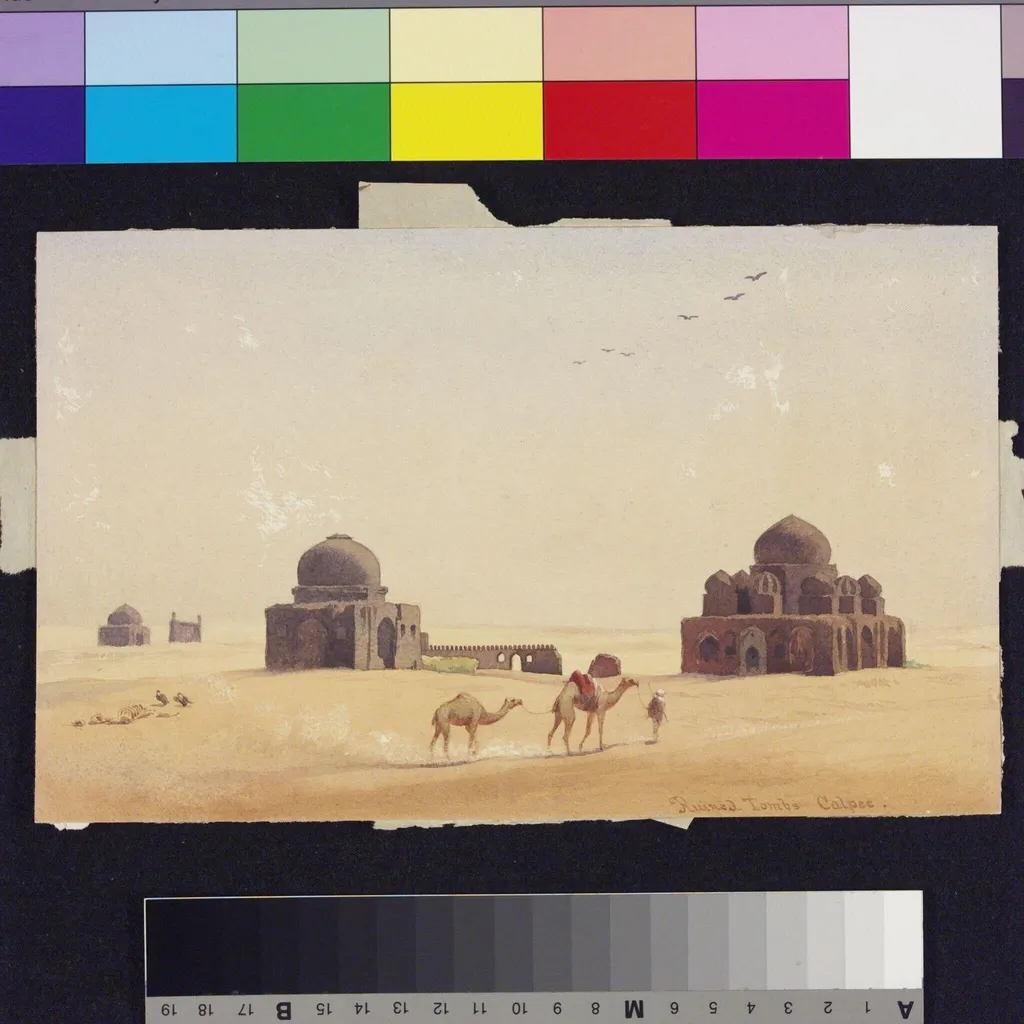
Ruined Tombs Calpee is a paint painting by the Impressionist artist Frederick William Alexander De Fabeck. It dates from 1860 and is held in the collection of the Victoria and Albert Museum.
About this work
Overview
Frederick William Alexander De Fabeck’s 1860 watercolor portrays a desolate scene in Bengal, where crumbling Muslim tombs stand amid a sandy expanse. A lone figure guides two camels across the foreground, anchoring the composition in a realistic observation of travel and decay.
Subject & Meaning
The work records the ruined Pathan burial monuments at Kalpi, reflecting the 19th‑century European fascination with exotic ruins and the impermanence of architecture in remote regions. The solitary traveler and his camels suggest a narrative of passage through a landscape marked by historical loss.
Technique & Style
Executed in watercolor on paper, the painting combines meticulous rendering of the figures’ garments and the granular texture of the sand with looser washes that convey the weathered surfaces of the tombs. De Fabeck’s handling balances precise detail and atmospheric tone.
History & Provenance
The piece entered the Victoria and Albert Museum through the 1913 donation of Mrs Laura de Fabeck, who transferred it from Villa Bellosguardo in Alassio, Liguria, Italy. The acquisition records note the work as part of a broader collection of De Fabeck’s drawings and paintings.
Context
Created during a period when British artists frequently documented colonial territories, the watercolor reflects contemporary interests in documenting architectural decay and the everyday life of travelers in the Indian subcontinent.
Artist & collection
Artist
Frederick William Alexander De Fabeck
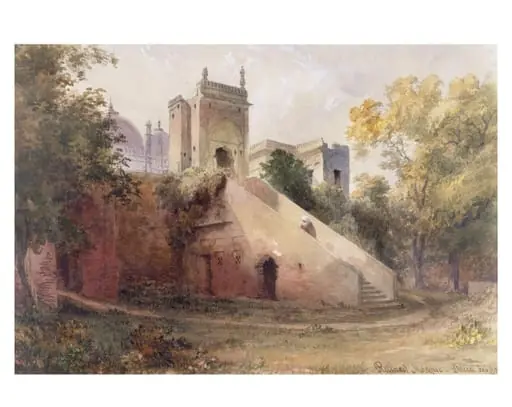
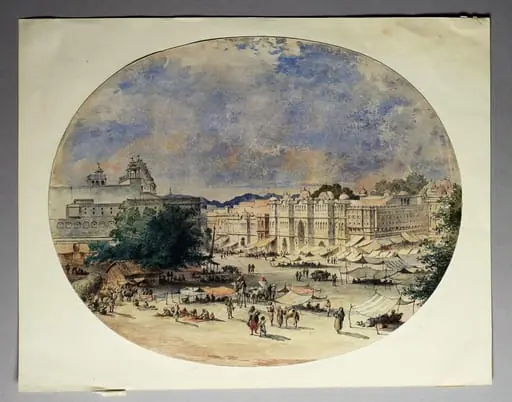
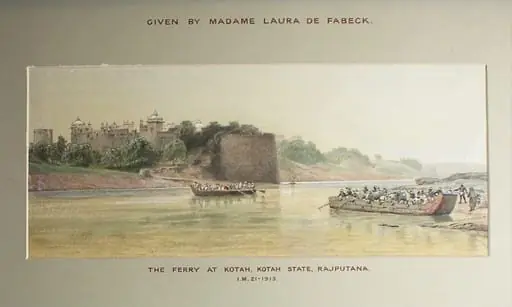
Frederick William Alexander De Fabeck painted scenes of crumbling buildings and busy river crossings in India.

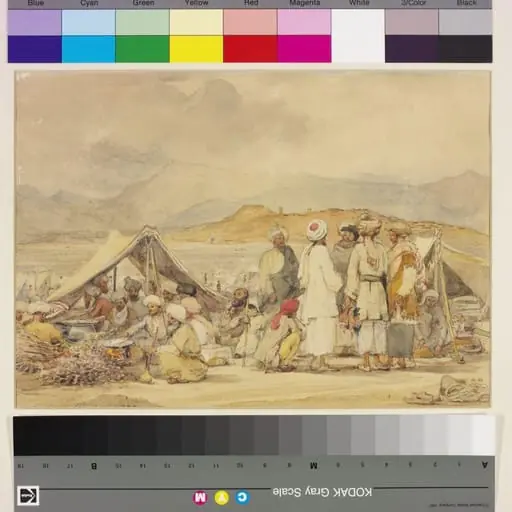 Camp bazaar near Kaie, Miranzai
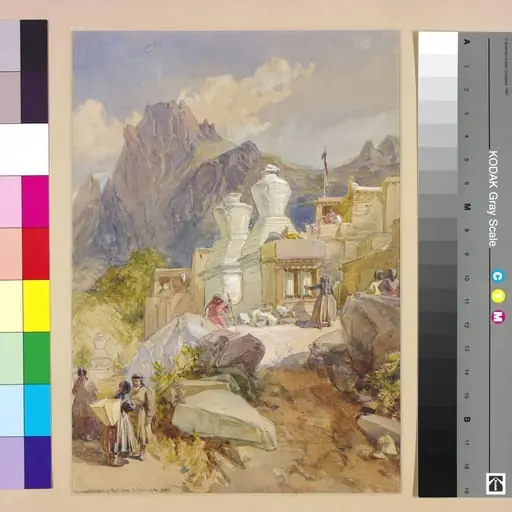 Praying cylinders in the village of Kulsi on the Indus
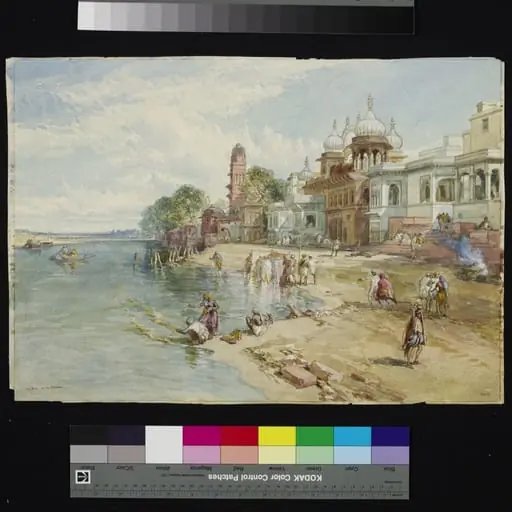 Ghats on the banks of the river Jumna, Mathura
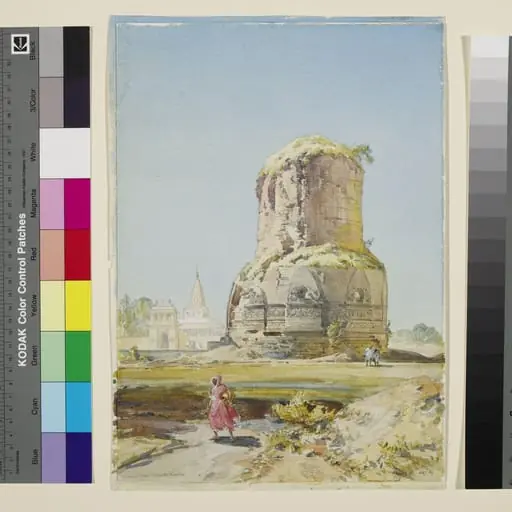 Buddhist stupa at Sarnath, Benaras
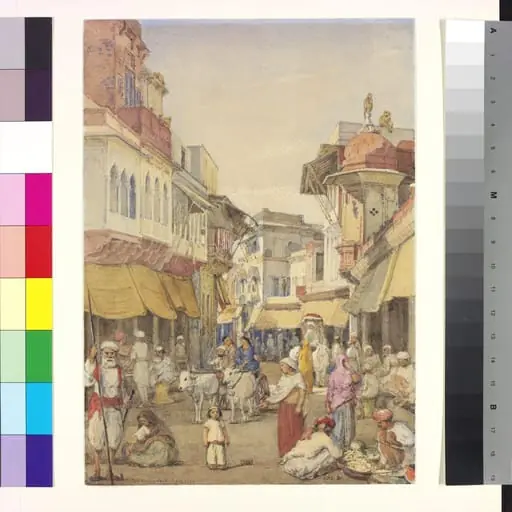 Untitled
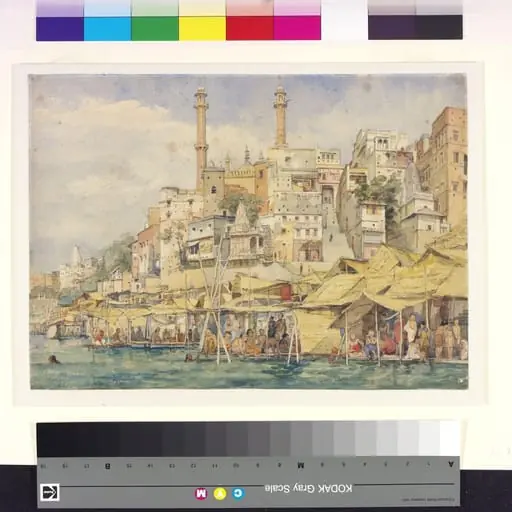 Benares (varanasi)
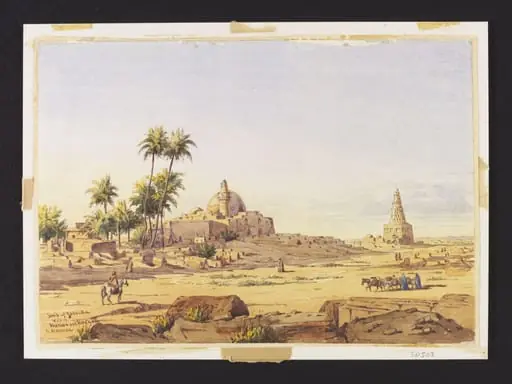 Tomb of Zobeida wife of Haroon ool Rashid in distance
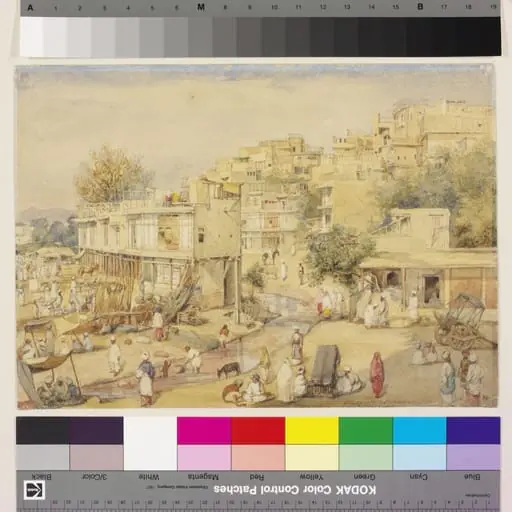 View of houses adjoining a stream, Peshawar
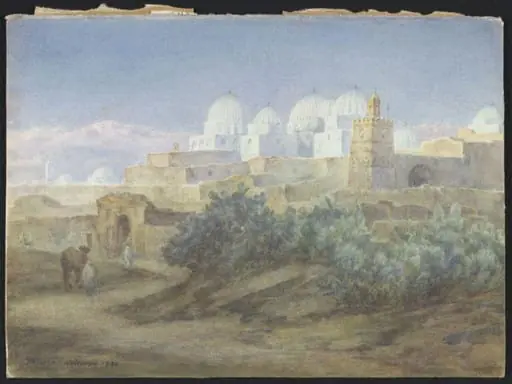 Kairouan
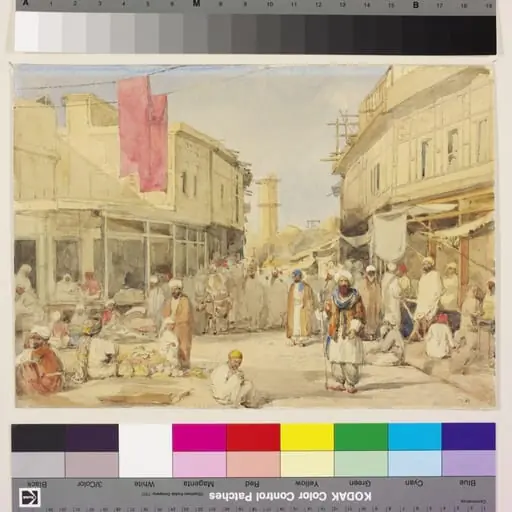 Street scene in Peshawar