Artwork
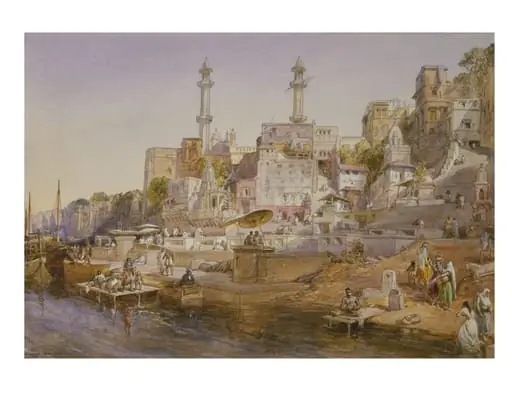
Ghats on the banks of the river Jumna, Mathura
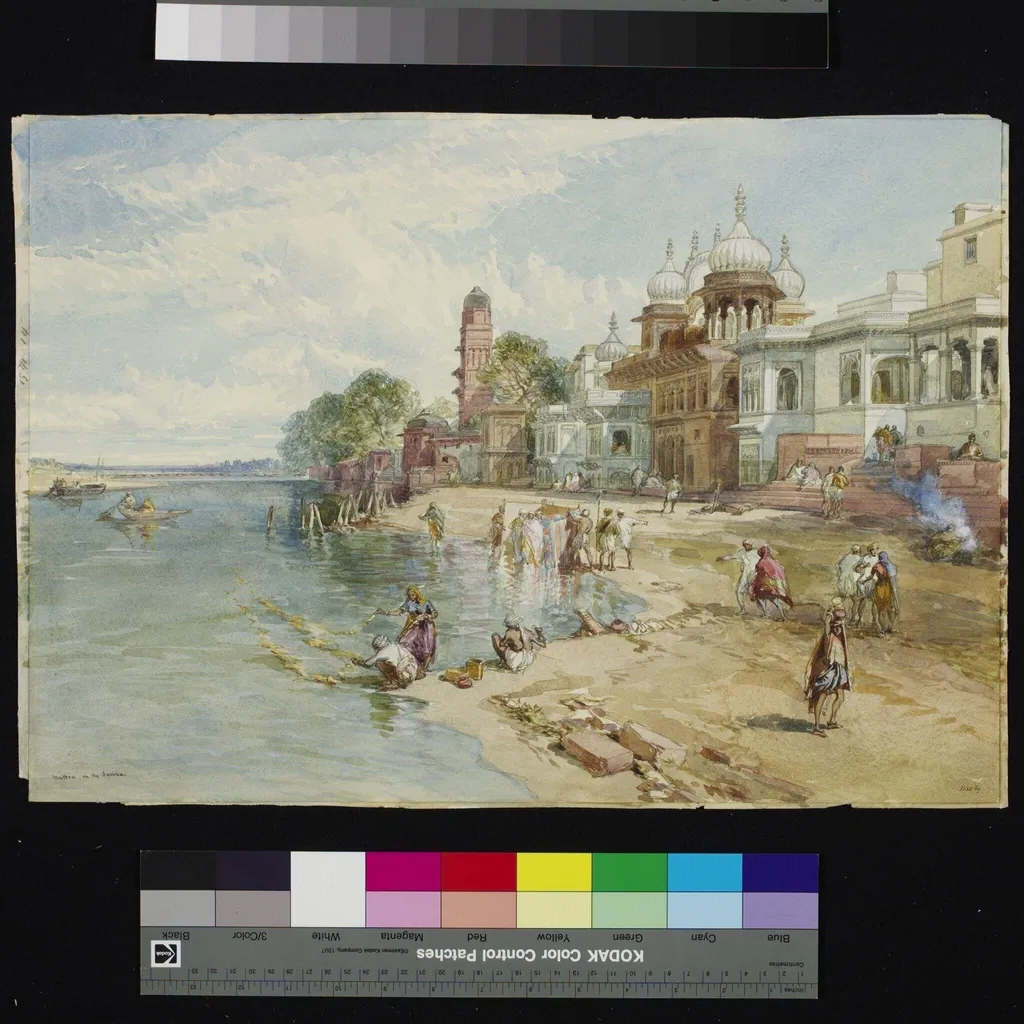
Ghats on the banks of the river Jumna, Mathura is a paint painting by the Impressionist artist William Simpson. It dates from 1865 and is held in the collection of the Victoria and Albert Museum.
About this work
He finished the watercolours back in London, adding bright colours and romantic details.
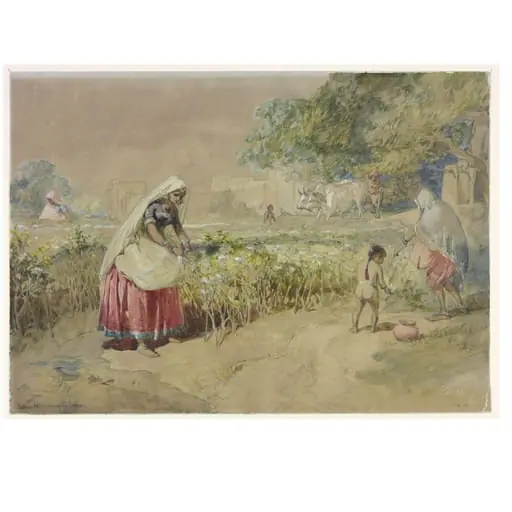
William Simpson painted "Ghats on the banks of the river Jumna, Mathura" in 1865. It’s a watercolour showing the river ghats. The scene comes from sketches he made while traveling India after the 1857 Revolt.
Simpson started with quick pencil drawings on site. He finished the watercolours back in London, adding bright colours and romantic details. His journal and sketches later turned into these vivid scenes.
The work sits in the Victoria and Albert Museum.
Overview
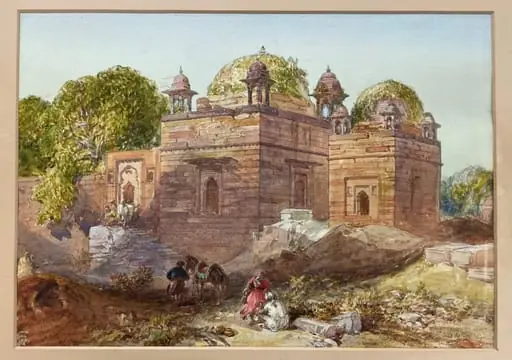
The watercolour titled *Ghats on the banks of the river Jumna, Mathura* depicts a stretch of the Yamuna River flanked by stone steps and the distinctive San Burj tower. Rendered in bright pigments, the scene captures the river’s calm surface and the architectural forms that line its edge, offering a panoramic view of a historic Indian riverside setting.
Subject & Meaning
The composition centers on the river ghats of Mathura, a city sacred to Hindu tradition, and includes the 16th‑century San Burj, a quadrangular tower erected in memory of a royal woman who performed sati. By presenting these elements together, the work conveys both the everyday activity of riverine life and the layered memorial architecture that marks the locale.
Technique & Style
The artist first produced rapid pencil sketches during his Indian travels, which served as the structural basis for the final piece. Completed later in London, the watercolour employs vivid washes and fine detailing to enhance atmospheric effects, reflecting a Romantic sensibility that emphasizes colour, light, and an idealised view of the landscape.
History & Provenance
Created in 1865, the painting was finished after the artist’s return to England, where he transformed his field studies into a finished work. It entered the collection of the Victoria and Albert Museum, where it remains on display as part of the institution’s holdings of 19th‑century British watercolours.
Context
The image originates from a period of extensive British documentation of Indian sites following the 1857 uprising. Commissioned by a London lithography firm, the artist’s work contributed to contemporary visual records of the subcontinent, providing European audiences with detailed, colour‑rich impressions of Indian architecture and riverine environments.
Artist & collection