Artwork
The Ferry at Kotah
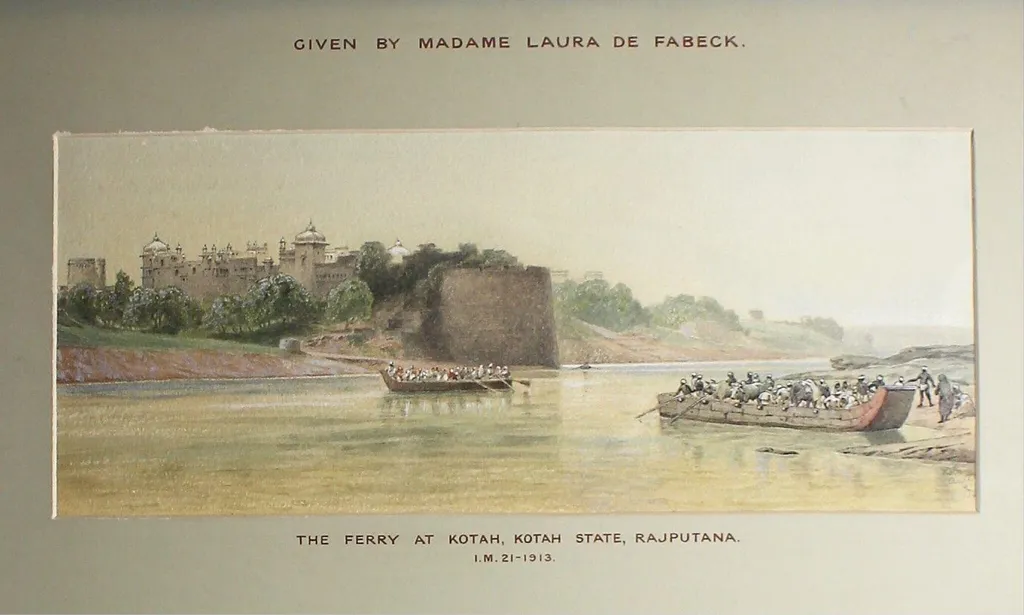
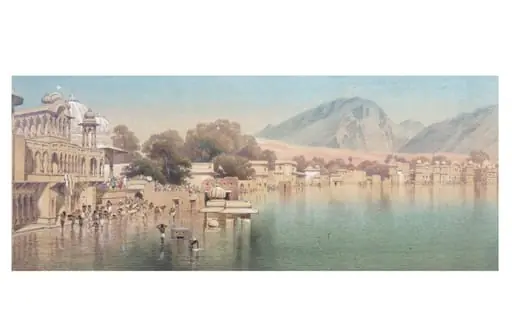
The Ferry at Kotah is a paint painting by the Impressionist artist Frederick William Alexander De Fabeck. It dates from 1874 and is held in the collection of the Victoria and Albert Museum.
About this work
Overview
It forms part of a cohesive group of works transferred to the museum under the same donation, numbered IM 19 to 143-1913.
Painted in 1874, this watercolor on paper by Frederick William Alexander De Fabeck captures a river crossing at Kota. The work is one of several pieces donated to the collection in 1913 by Mrs. Laura de Fabeck, who held the artwork in her residence at Campden Hill Square, Kensington. It forms part of a cohesive group of works transferred to the museum under the same donation, numbered IM 19 to 143-1913.
Subject & Meaning
The scene portrays a ferry mid-river, carrying passengers and livestock—likely cattle or goats—toward a fortified wall and distant structure resembling a castle. The figures, dressed in light garments and headwear, suggest local inhabitants engaged in daily transit. The composition conveys a quiet rhythm of routine movement, emphasizing the ferry as a vital link between communities rather than a dramatic event.
Technique & Style
De Fabeck employed fine brushwork and layered washes to render subtle textures: the ripple of water, the grain of wooden planks, and the foliage behind the wall. The hazy sky and soft color transitions reflect a restrained palette, avoiding bold contrasts. Attention to detail in clothing, animal forms, and architectural elements reveals a topographical interest, aligning with 19th-century observational traditions in watercolor.
History & Provenance
The painting remained in the possession of Mrs. Laura de Fabeck until its donation to the museum in 1913. Records confirm its presence at her home in Kensington, indicating personal curation rather than public exhibition prior to acquisition. Its inclusion in a larger group of works suggests a deliberate effort to preserve a collection tied to the artist’s family or travels.
Context
Created during British colonial presence in India, the painting reflects a European artist’s documentation of local life, without overt political framing. Kota, in Rajasthan, was known for its river crossings and fortified architecture. De Fabeck’s focus on ordinary transit and landscape aligns with contemporary travel sketches made by British residents, valuing observation over narrative.
Legacy
The work contributes to a modest but consistent body of watercolors by De Fabeck, offering insight into 19th-century visual records of Indian locales. Though not widely exhibited, its preservation within a museum collection ensures its role as a historical document of place and practice, representative of amateur and semi-professional artistic engagement during the colonial era.
Artist & collection
Artist
Frederick William Alexander De Fabeck
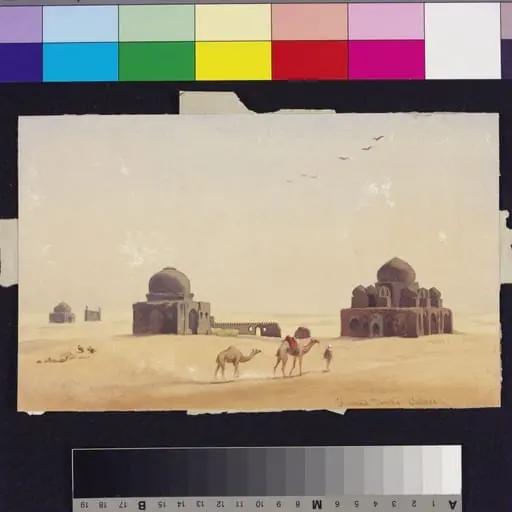
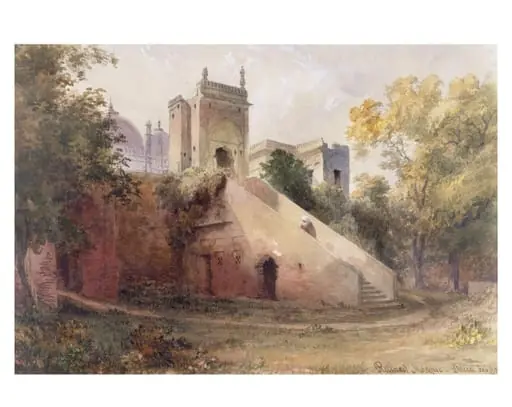
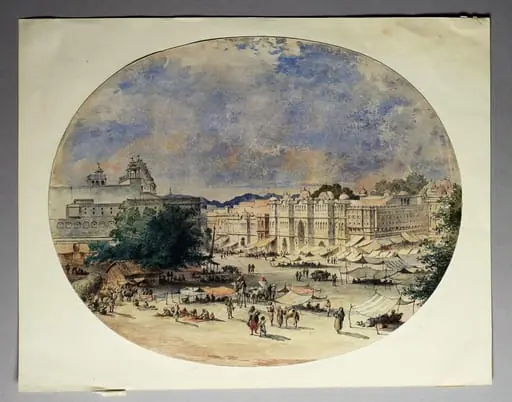
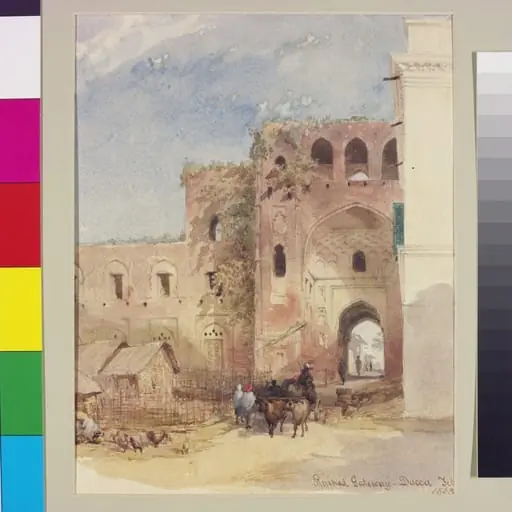
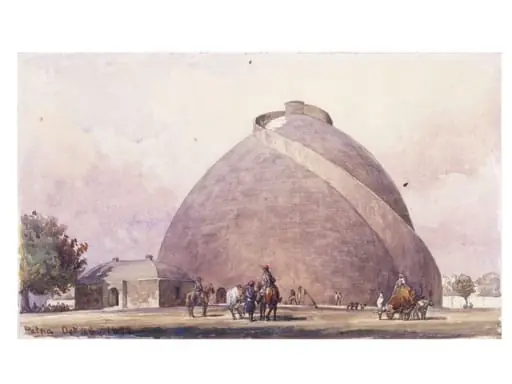
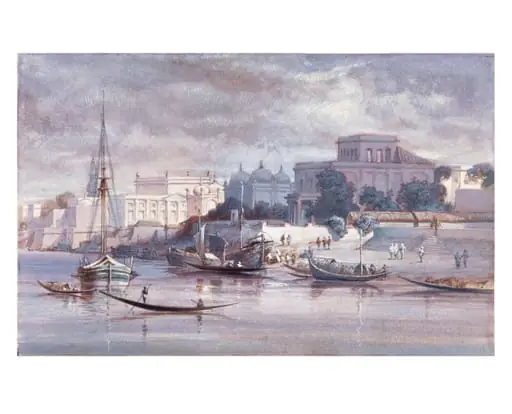
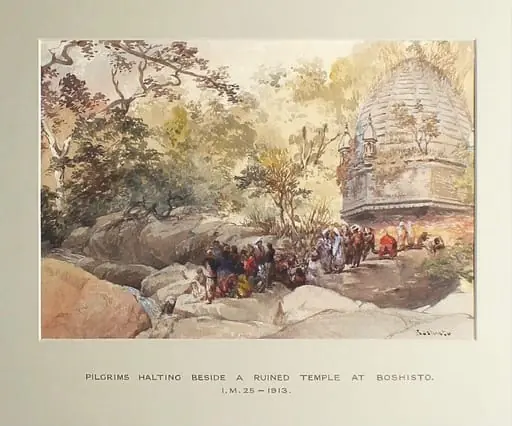
Frederick William Alexander De Fabeck painted scenes of crumbling buildings and busy river crossings in India.

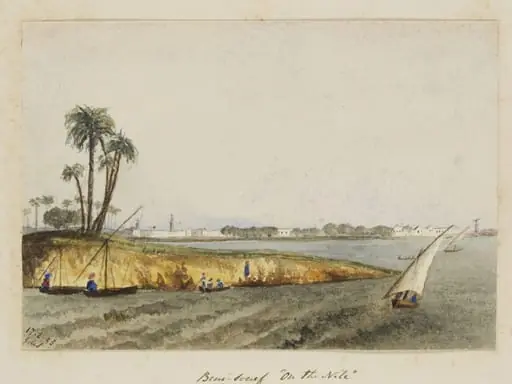 `Beni-Souef "On the Nile"
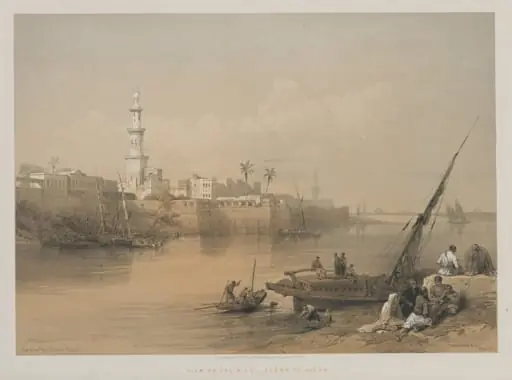 Egypt and Nubia, Volume III: View on the Nile, Ferry to Gizeh
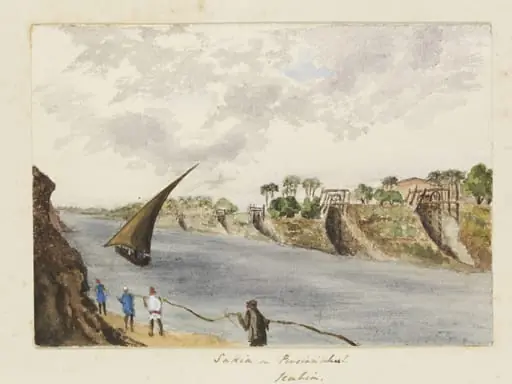 `Sakia or Persian wheel Nubia'
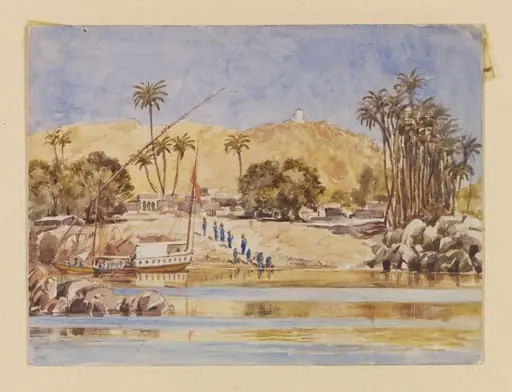 View on the Nile, opposite Aswan
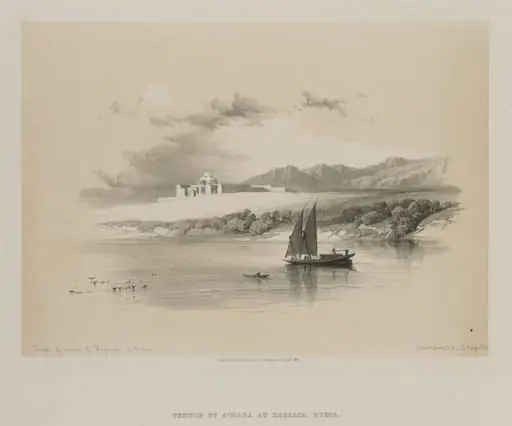 Egypt and Nubia, Volume II: Temple of Amdda, of Hassaya in Nubia
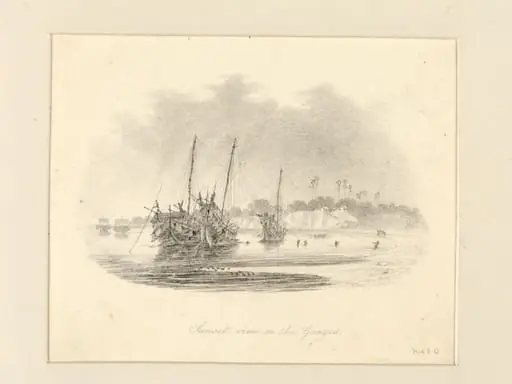 Sunset View on the Ganges
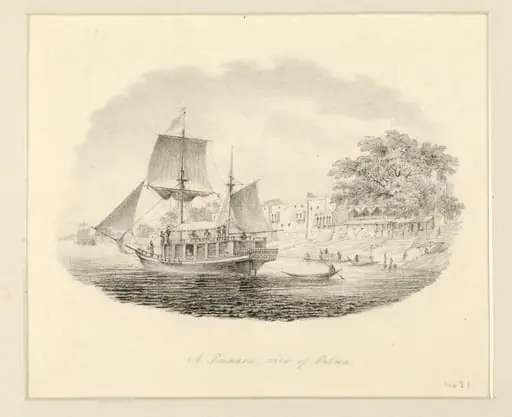 A Pinnace, view of Patna.
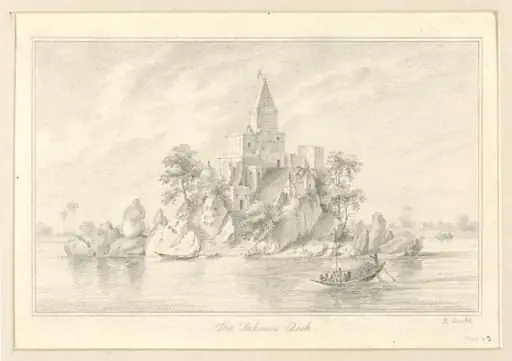 The Fakeers Rock
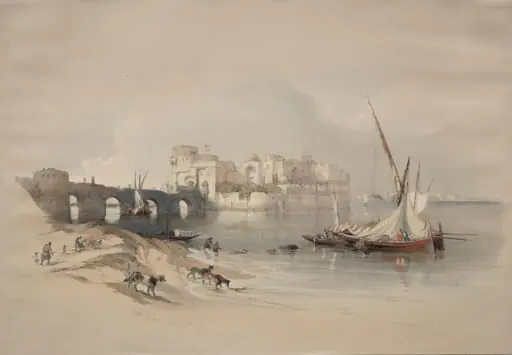 Citadel of Sidon
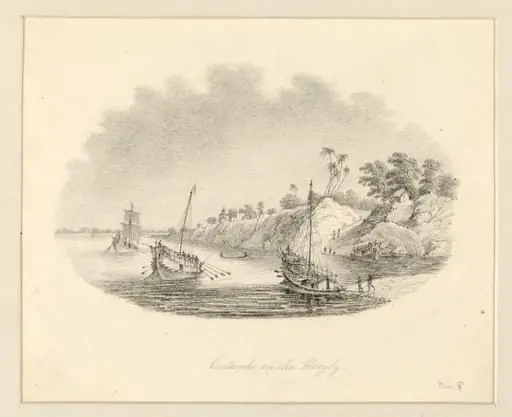 Cutwah on the Hoogly
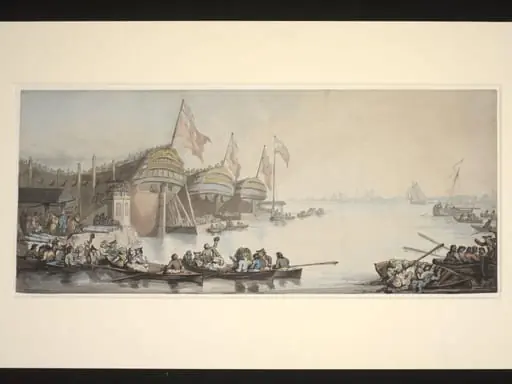 George III launching three frigates at Deptford
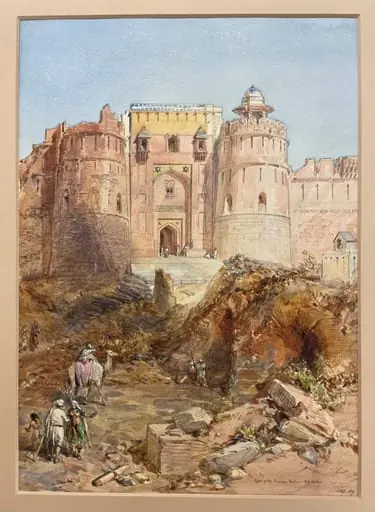 Gate of Purana Qila, Old Delhi