Artwork
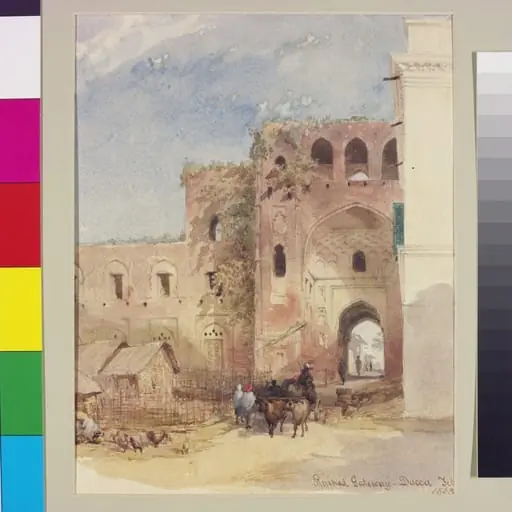
Gateway to the Nawab Baree - Dacca
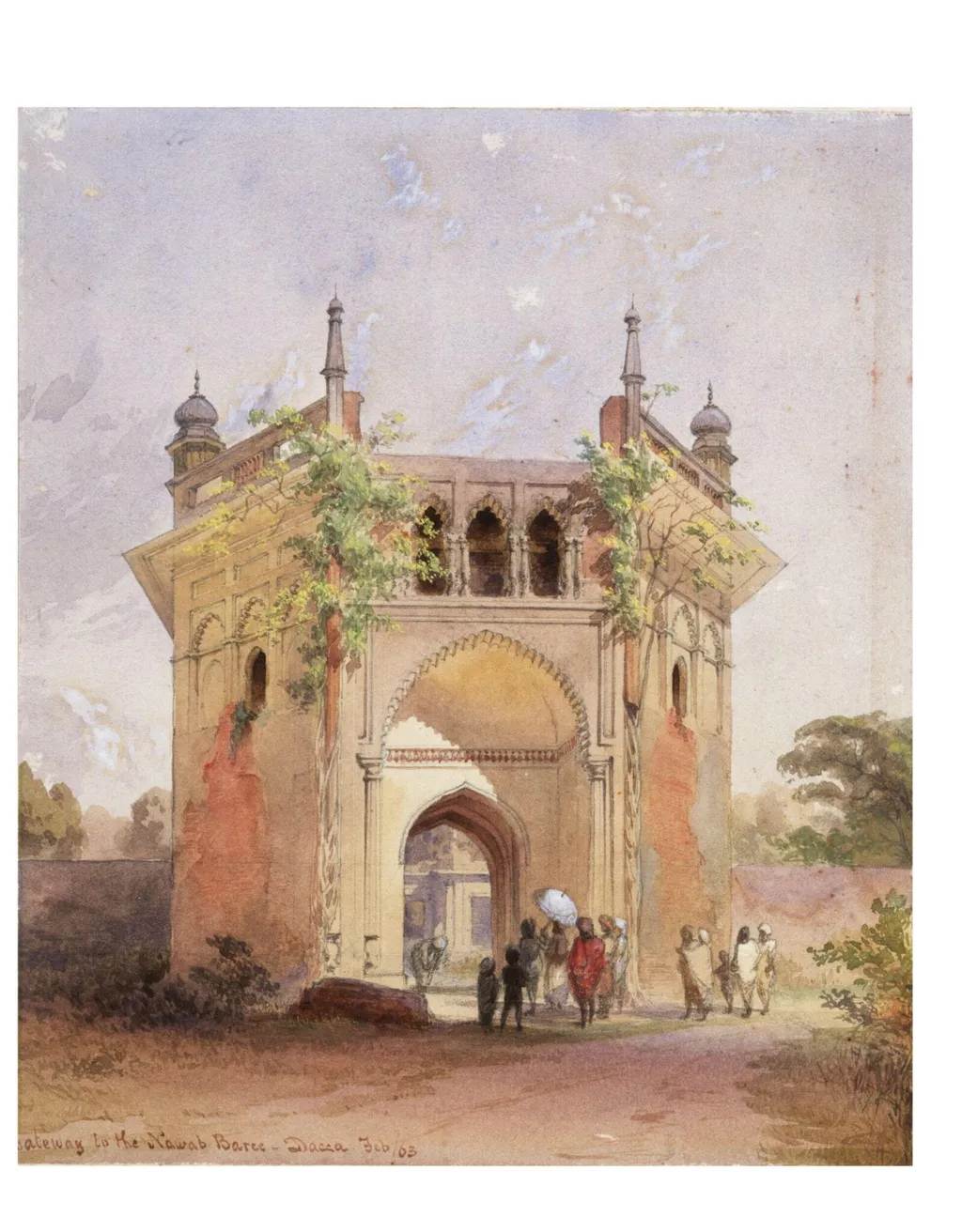
Gateway to the Nawab Baree - Dacca is a paint painting by the Impressionist artist Frederick William Alexander De Fabeck. It dates from 1863 and is held in the collection of the Victoria and Albert Museum.
About this work
This painting is called Gateway to the Nawab Baree - Dacca. It's a work by Frederick William Alexander De Fabeck.
The artist was born in 1830 and had a career in the Indian Medical Service. He also studied in Paris.
You can learn more about the style and techniques used in this painting by looking into the movement: Impressionism, Realism.
Overview
The painting reflects his dual roles as a medical professional and an amateur artist, capturing architectural subjects with observational precision.
This watercolor depicts an unidentified ruined gateway in Dacca, Bengal, attributed to Frederick William Alexander de Fabeck (1830–1912). Trained in Paris and later employed as a surgeon in the Indian Medical Service, de Fabeck produced the work during his tenure in colonial India. The painting reflects his dual roles as a medical professional and an amateur artist, capturing architectural subjects with observational precision.
Subject & Meaning
The composition centers on a crumbling Mughal-era gateway, likely part of a larger estate or palace complex once associated with the Nawabs of Dacca. Though the structure’s specific history remains undocumented, its dilapidated state suggests themes of decay and the passage of time. The absence of human figures directs attention to the architecture itself, emphasizing its ornamental details and structural fragility.
Technique & Style
Executed in watercolor, the painting balances meticulous draftsmanship with loose, expressive brushwork. The artist’s training in Paris may account for influences ranging from Realist precision to Impressionist handling of light and atmosphere. Subtle tonal variations convey the texture of weathered stone, while the play of shadows and highlights lends depth to the ruined form without idealizing its condition.
History & Provenance
Frederick William Alexander de Fabeck created the work during his service in Bengal, where he was stationed as an Assistant Surgeon from 1858 onward. The painting’s provenance prior to institutional acquisition is unrecorded, though it likely remained within private collections until entering a public repository. Its attribution to de Fabeck distinguishes it from the architectural sketches produced by his brother, William Frederick.
Context
Produced during the late 19th century, the painting emerges from a period of British colonial rule in India, when administrative and military personnel often documented local landscapes and monuments. Such works served both personal and official purposes, reflecting European interest in Mughal architecture while underscoring the colonial gaze. The gateway’s ruinous state may also allude to broader narratives of imperial decline and cultural transformation.
Own this work as a print
Artist & collection
Artist
Frederick William Alexander De Fabeck
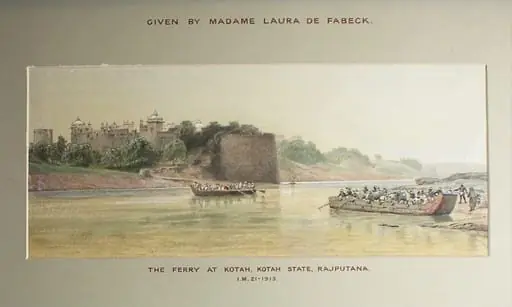
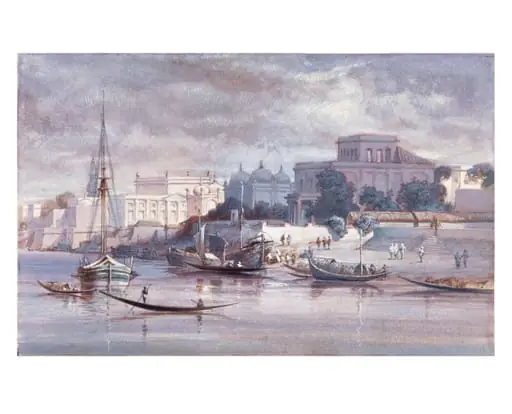
Frederick William Alexander De Fabeck painted scenes of crumbling buildings and busy river crossings in India.

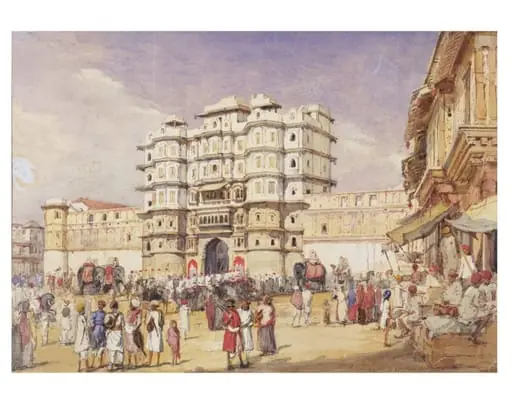 Gateway of the palace at Indore
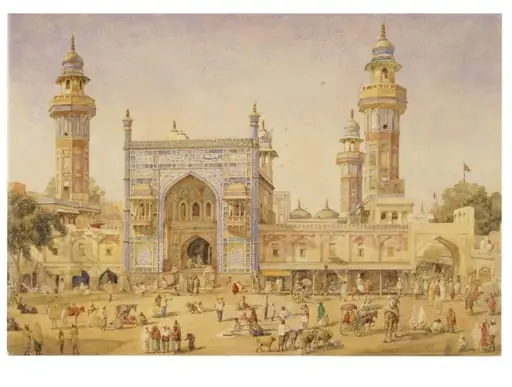 'The Musjid of Wazeer Ali Khan, Lahore, Panjab'
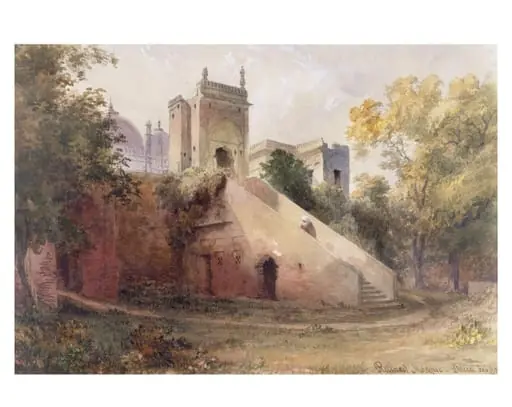
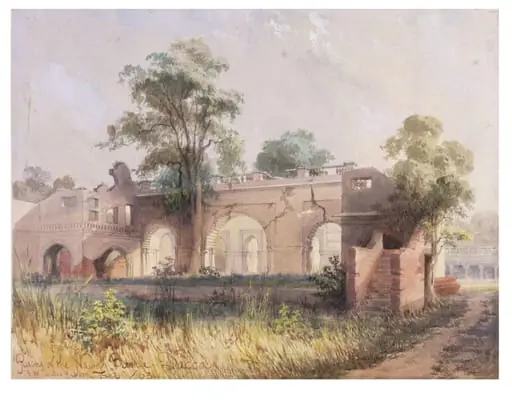 Ruins of the Nawab Baree - Dacca
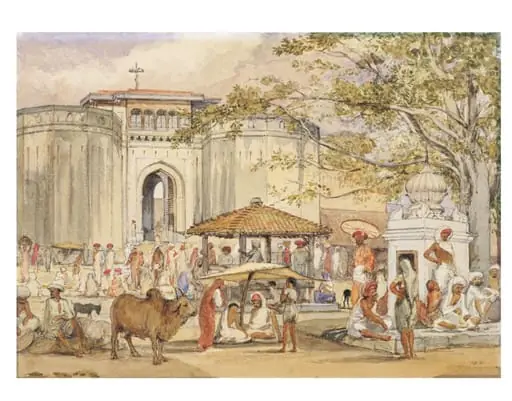 Gateway to the Shanwar Palace
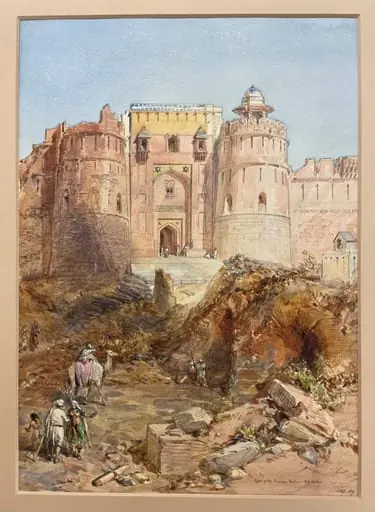 Gate of Purana Qila, Old Delhi
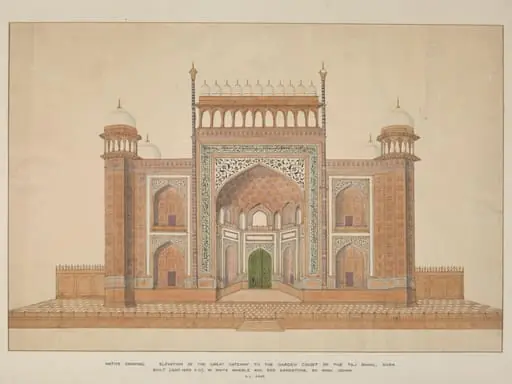 Gateway to the Taj Mahal
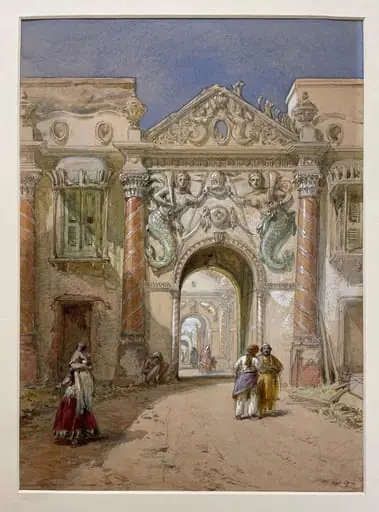 Mermaid gate, Kaiserbagh, Lucknow
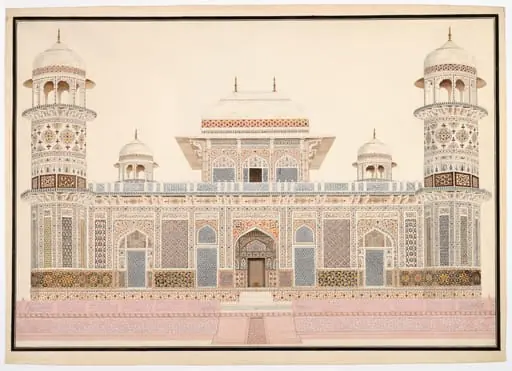 I'timad-ud-Daula's Tomb at Agra
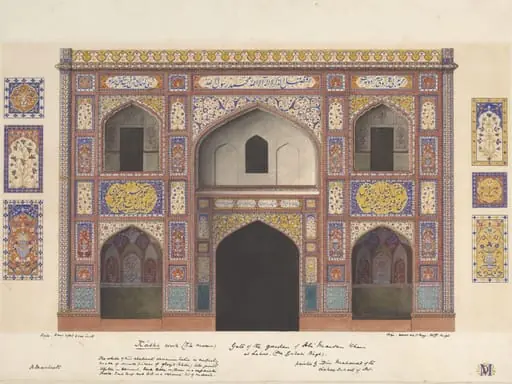 Gate of the garden of Ali Mardan Khan at Lahore
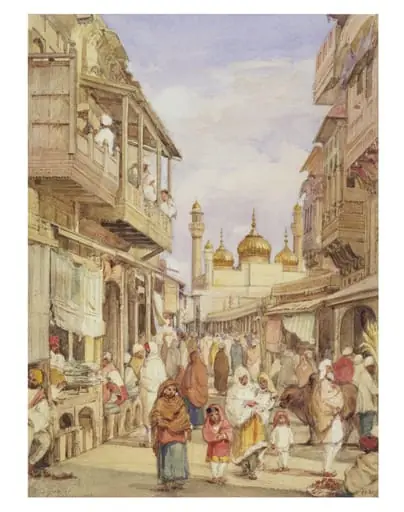 Street scene in Lahore
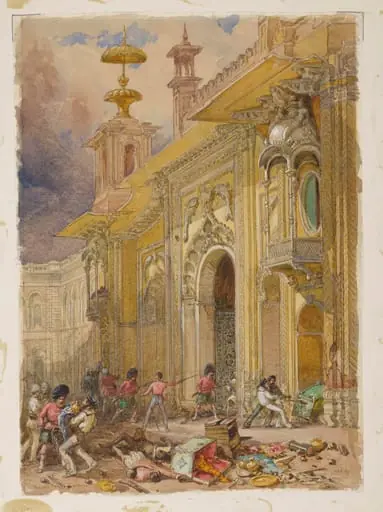 View of the Kaiser Bagh in Lucknow