Artwork
Santo António com o Menino Jesus
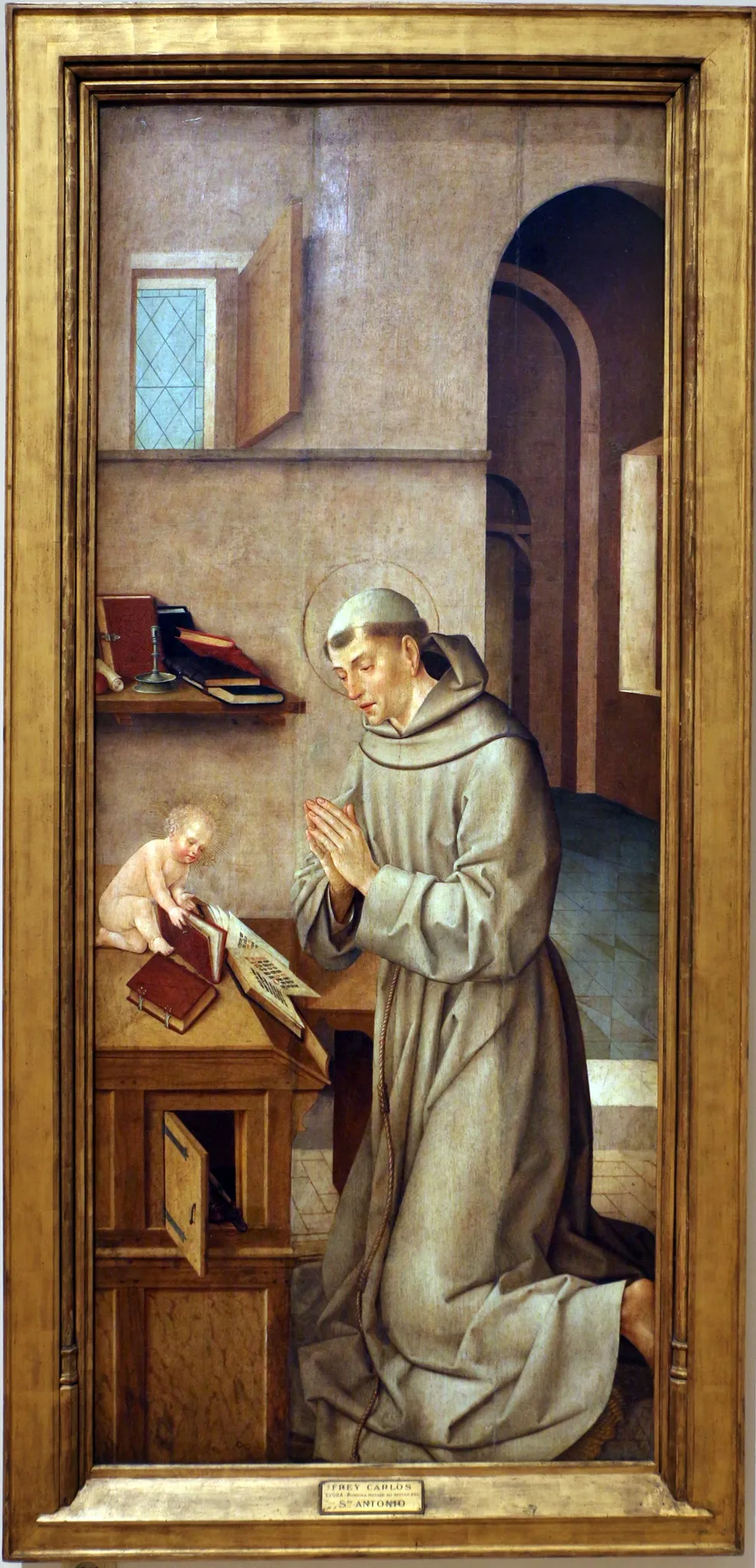
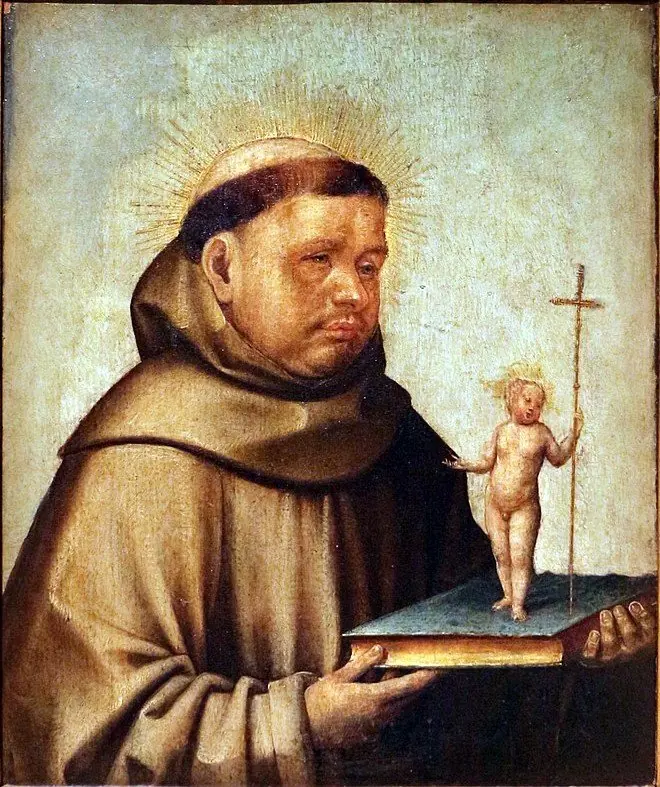
Santo António com o Menino Jesus is an unspecified painting by the Northern Renaissance artist Frei Carlos. It dates from 1520 and is held in the collection of the National Museum of Ancient Art.
About this work
Overview
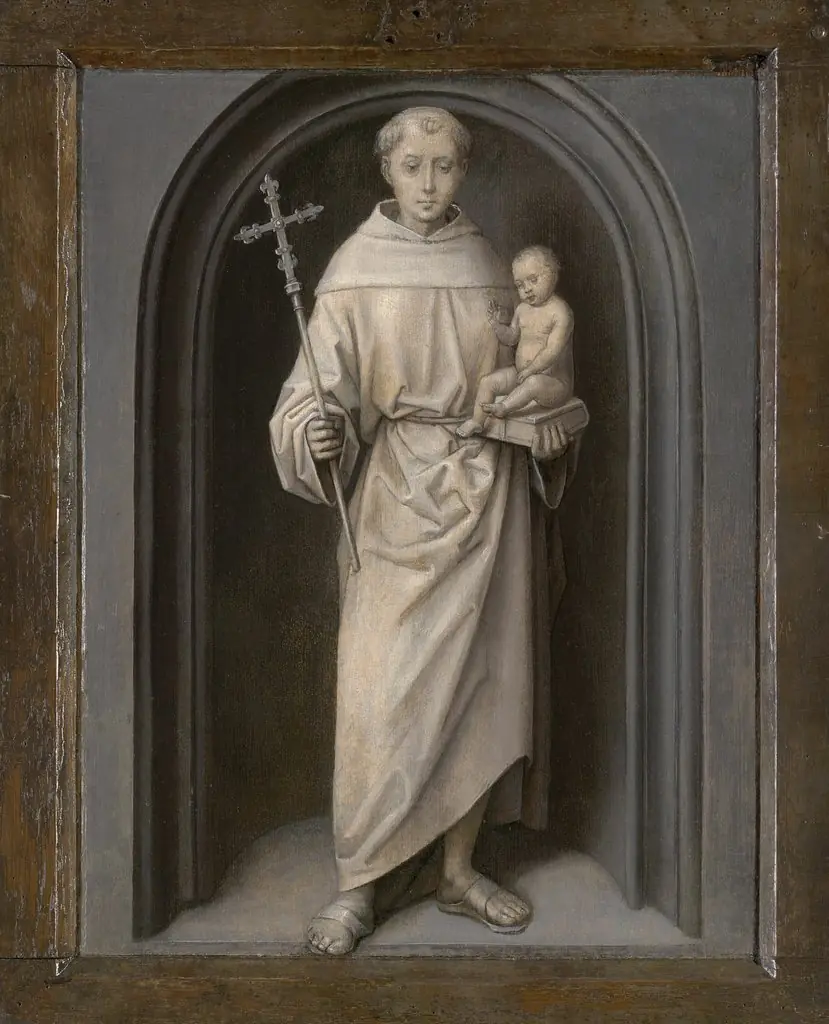
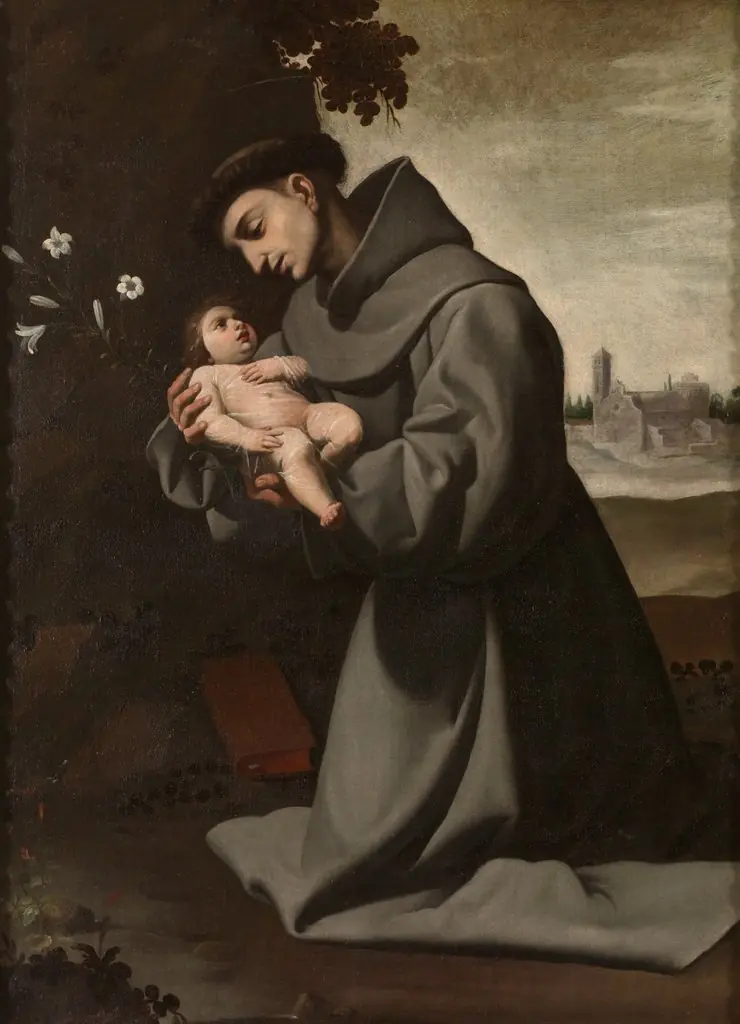
Painted around 1520 by Frei Carlos, this devotional work portrays Saint Anthony of Padua in prayer with the Christ Child. The composition centers on a quiet, intimate moment between the two figures, set within a modest interior. The painting is part of the collection at the National Museum of Ancient Art in Lisbon, where it remains a quiet example of early 16th-century Portuguese religious art.
Subject & Meaning
Saint Anthony, identified by his Franciscan habit and halo, kneels in reverence before the Christ Child, who sits calmly on a desk holding a book. The child’s presence symbolizes divine wisdom, while the book may reference Anthony’s scholarly reputation. The monk’s bowed posture and focused gaze suggest contemplation and spiritual submission, reinforcing the theme of humility before the sacred.
Technique & Style
Frei Carlos employs chiaroscuro to model forms with subtle gradations of light and shadow, giving volume to the figures and depth to the sparse interior.
Frei Carlos employs chiaroscuro to model forms with subtle gradations of light and shadow, giving volume to the figures and depth to the sparse interior. The muted palette of earth tones—soft browns, grays, and beige—enhances the painting’s solemn tone. Delicate handling of fabric folds and the soft rendering of skin and hair reflect a restrained, devotional style typical of monastic painting in Portugal at the time.
History & Provenance
The painting has remained in Portugal since its creation, likely produced for private devotion within a religious community. It entered the collection of the National Museum of Ancient Art in the 19th century, where it was cataloged among early Portuguese panel paintings. Its continuous presence in national collections suggests enduring recognition within Portugal’s artistic heritage.
Context
Created during the early Renaissance, the work reflects the influence of Northern European devotional models, adapted to Portuguese monastic sensibilities. While Italy embraced humanist ideals, Portuguese religious art retained a quiet, introspective character. Frei Carlos, as a friar-painter, would have produced images for contemplative use rather than public display, aligning with the spiritual priorities of his order.
Legacy
Though not widely known outside Portugal, the painting exemplifies the understated piety of its time. It preserves the visual language of monastic devotion, where simplicity and emotional restraint were valued over grandeur. Its preservation in a national museum underscores its role as a representative artifact of early Portuguese religious culture.
Artist & collection