Artwork
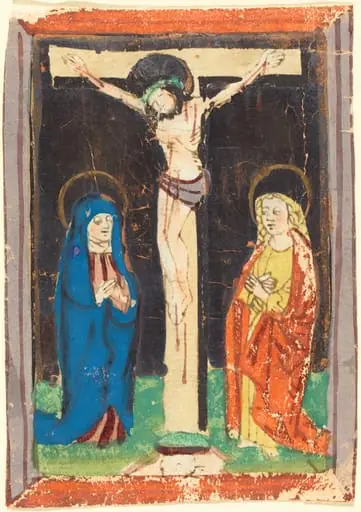
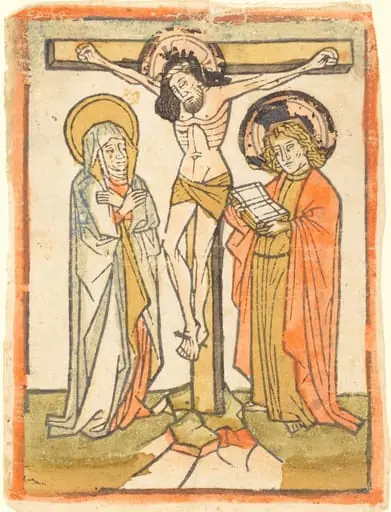
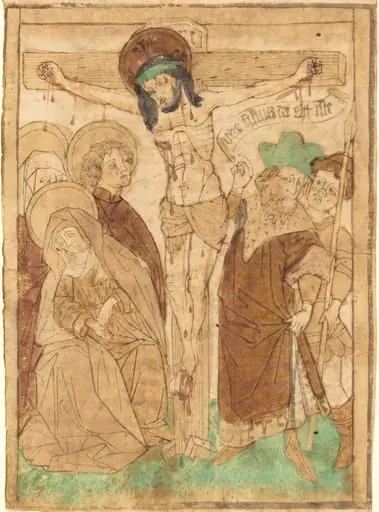
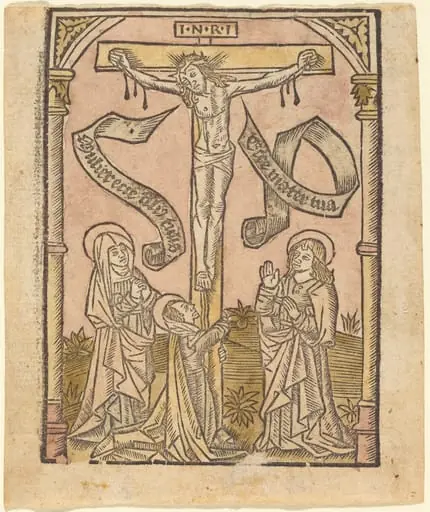
The Crucifixion
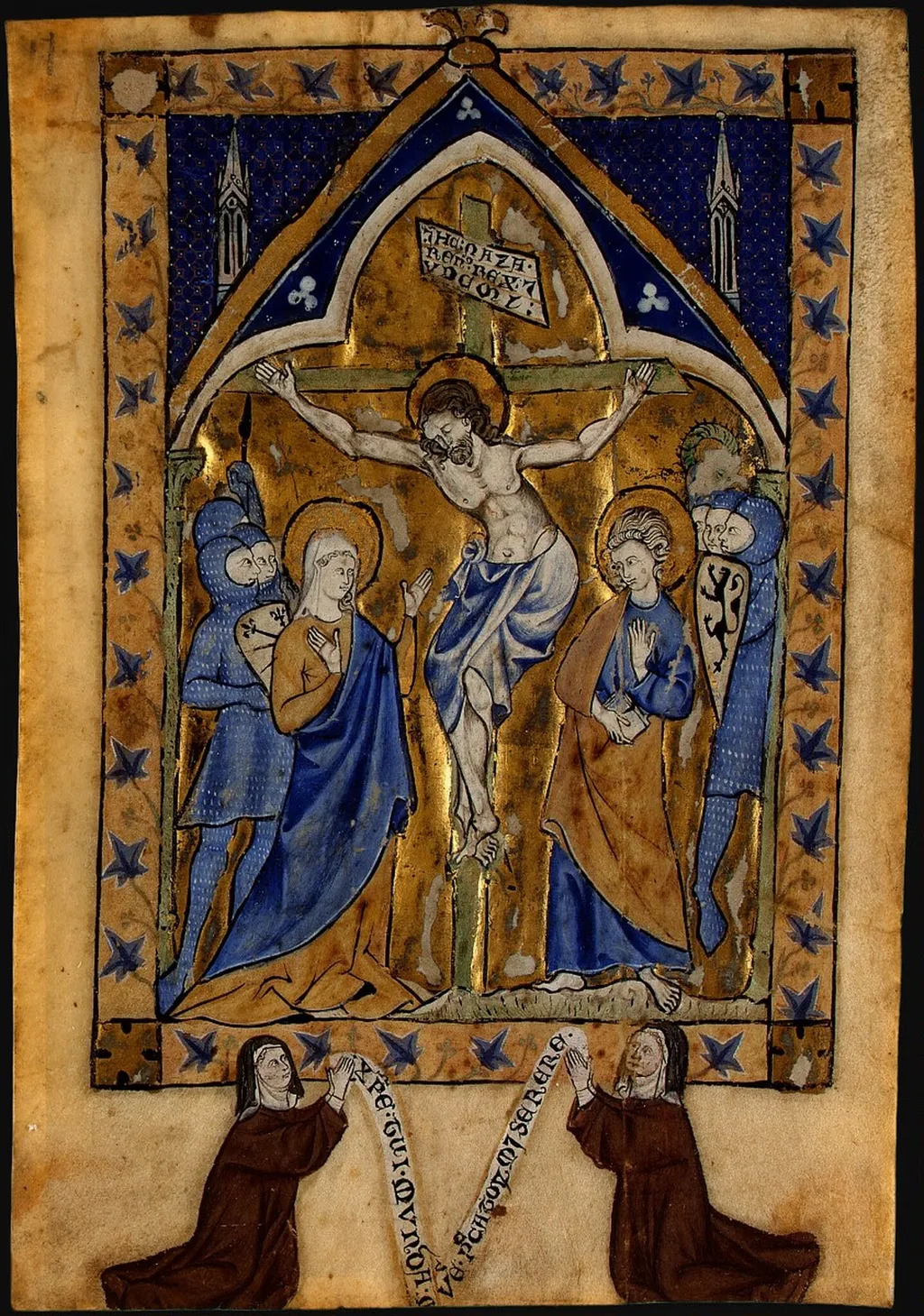
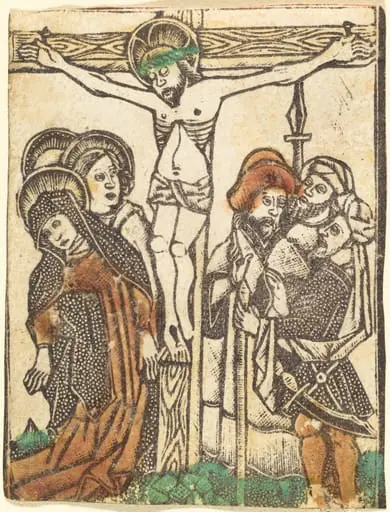
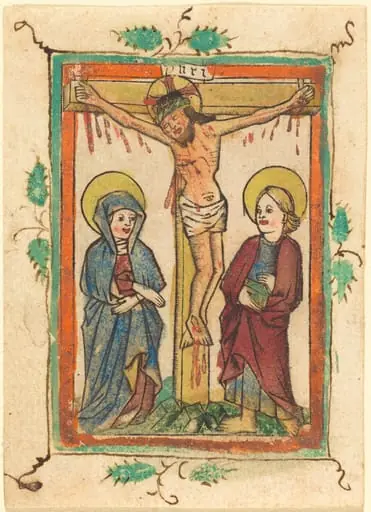
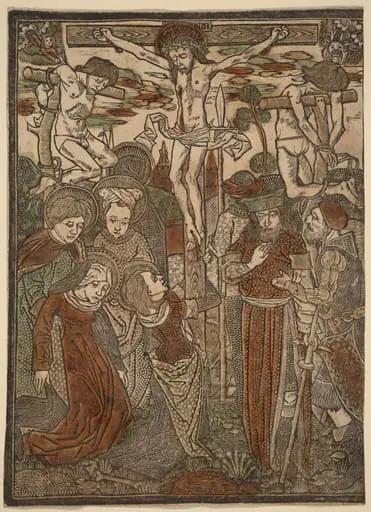
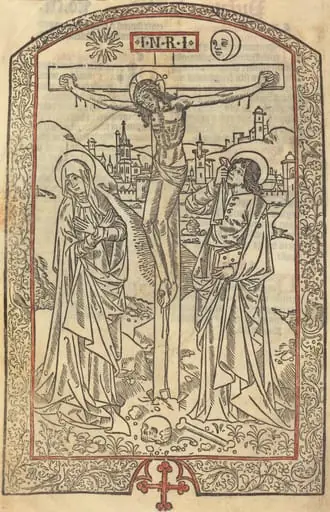
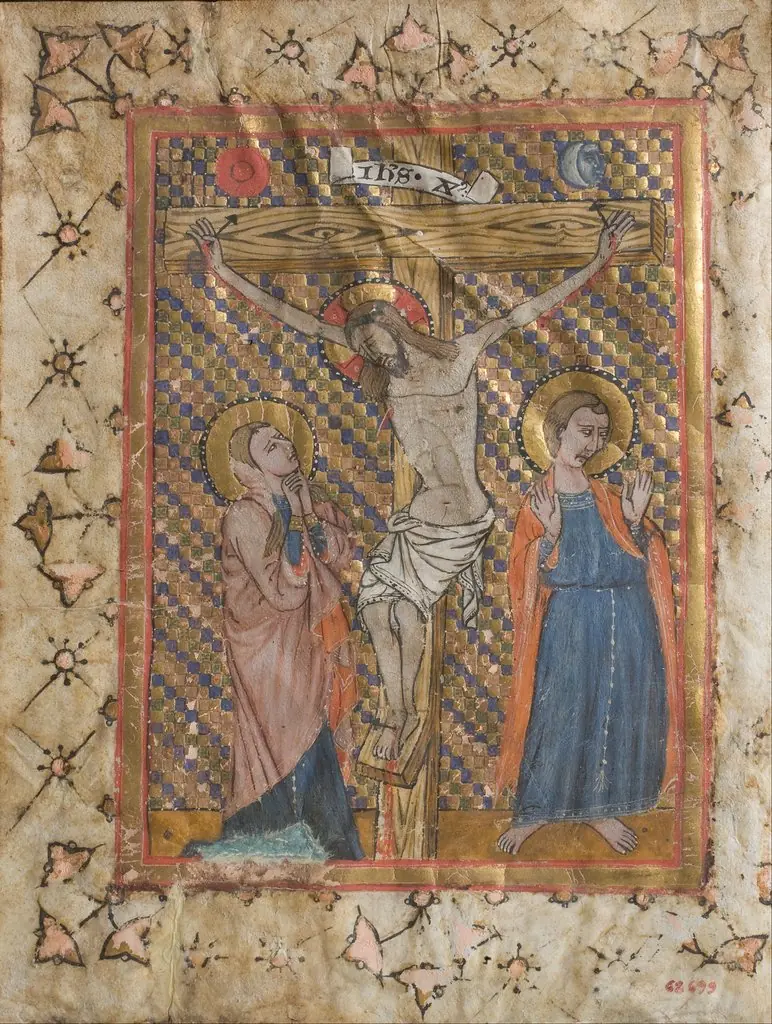
The Crucifixion is a drawing by French 13th Century. It dates from 1292 and is held in the collection of the National Gallery of Art.
About this work
Overview
The use of gold leaf and deep blue grounds signals its liturgical purpose and the value placed on such devotional objects.
This medieval miniature on vellum portrays the Crucifixion in a compact, devotional format. Executed with fine detail and rich pigments, it reflects the spiritual focus of illuminated manuscripts from the period. The scene is contained within a golden arch, enhancing its intimate, sacred character. The use of gold leaf and deep blue grounds signals its liturgical purpose and the value placed on such devotional objects.
Subject & Meaning
Christ is centered on the cross, flanked by two figures in contemplative poses, likely the Virgin Mary and John the Evangelist. Their gestures suggest mourning and prayer, reinforcing the scene’s emotional weight. The faint inscription above Christ’s head, though illegible, would have traditionally identified him as 'King of the Jews,' aligning with Gospel accounts. The composition invites quiet meditation rather than narrative drama.
Technique & Style
The figures are rendered in a flattened, non-naturalistic style typical of medieval illumination, with elongated forms and minimal modeling. Gold leaf outlines and highlights elevate the sacred figures, while vivid blues and earth tones create contrast without depth. The meticulous brushwork on vellum demonstrates the skill of a trained scribe-artist, where every stroke served both aesthetic and devotional ends.
History & Provenance
Though its exact origin is unrecorded, the style and materials suggest production in a European monastic scriptorium between the 13th and 15th centuries. Such miniatures were often part of prayer books or liturgical texts, owned by clergy or wealthy patrons. Its survival in good condition indicates careful handling and preservation, likely within a religious institution before entering a modern collection.
Context
This work belongs to a tradition of devotional art designed for private contemplation, where visual simplicity heightened spiritual focus. In an era of limited literacy, such images conveyed biblical narratives through symbolic form. The use of gold and blue pigments, costly and labor-intensive, reflected both theological significance and the patron’s piety, aligning with broader medieval practices of sacred art.
Legacy
As a surviving example of medieval illumination, this miniature contributes to understanding how religious imagery functioned in daily spiritual life. Its preservation in institutions like the National Gallery of Art allows modern viewers to encounter the quiet intensity of pre-Renaissance devotional art, offering insight into the visual language of faith before the rise of naturalism.
Artist & collection

Artist
This artist worked in the last decades of the 13th century, painting scenes from the Bible on vellum with gold leaf and bright colors.

![The Crucifixion [verso], by French 12th Century](https://artifactworldgallery.com/img/french-12th-century--the-crucifixion-verso--cef697082a2df4f0-w320.webp)