Artwork
Christ on the Cross
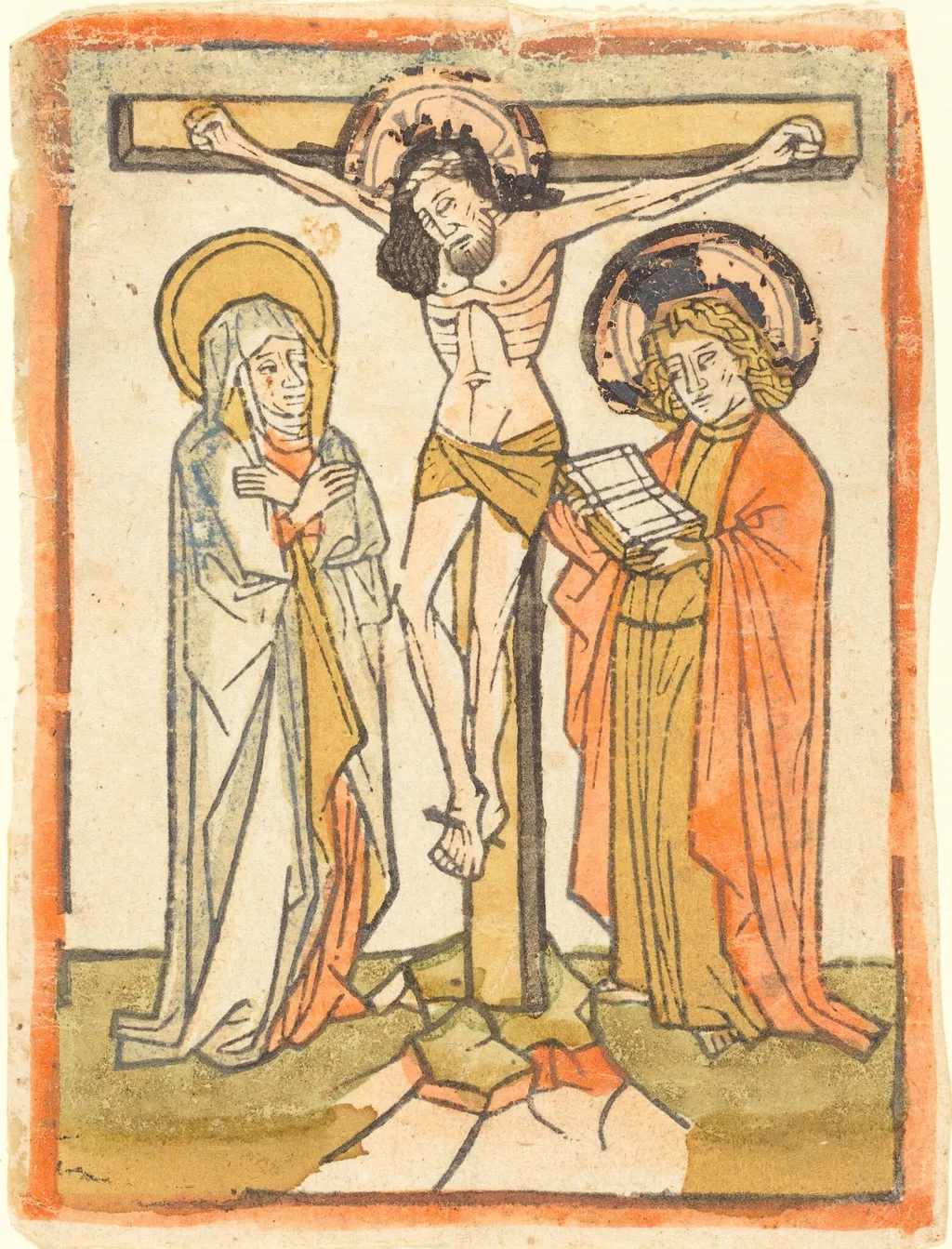
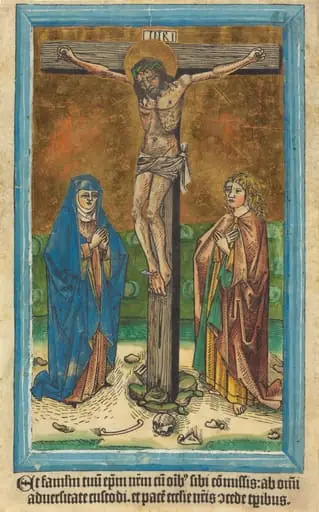
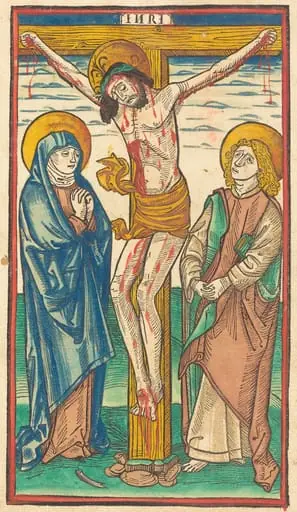
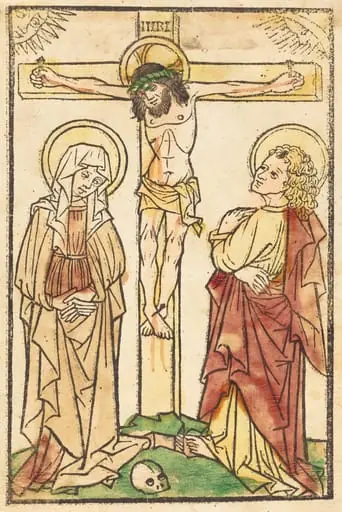
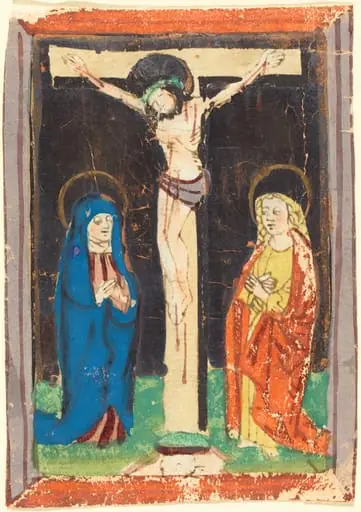
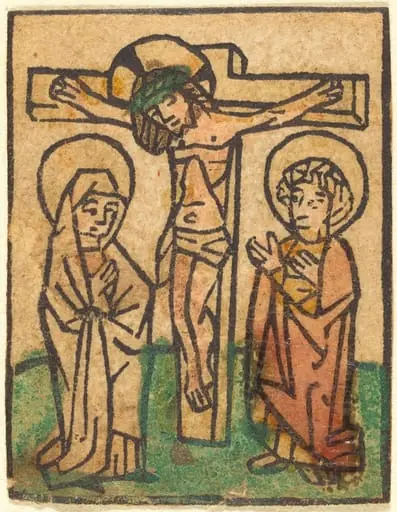
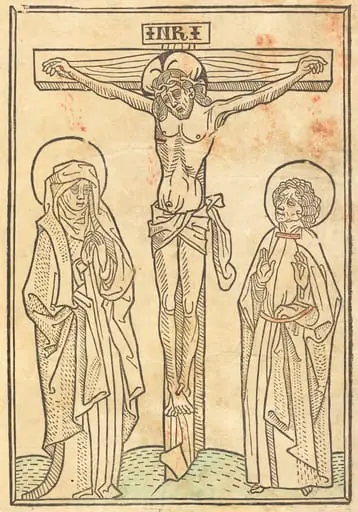
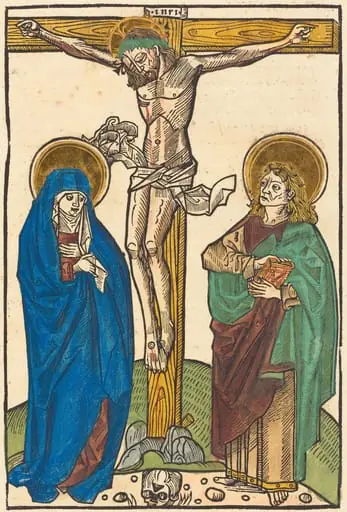
Christ on the Cross is an ink print by the Renaissance artist German 15th Century. It dates from 1460 and is held in the collection of the National Gallery of Art. This early woodcut presents a stark, two‑dimensional composition centered on a crucified figure.
About this work
Overview
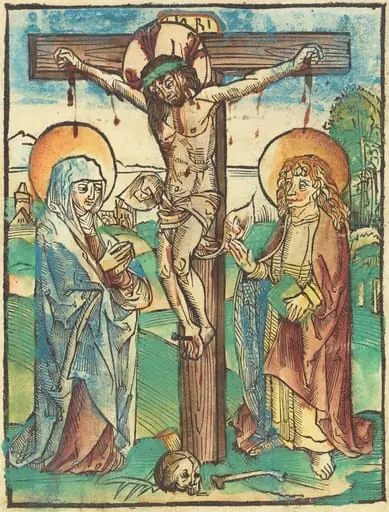
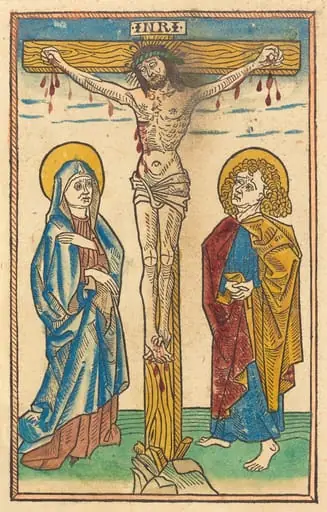
This early woodcut presents a stark, two‑dimensional composition centered on a crucified figure. The scene is rendered in bold outlines filled with a limited palette of orange, yellow, olive, blue and gold, the latter used for halos that identify the holy participants. The image’s simplicity and flatness reflect its purpose as an easily reproducible devotional print.
Subject & Meaning
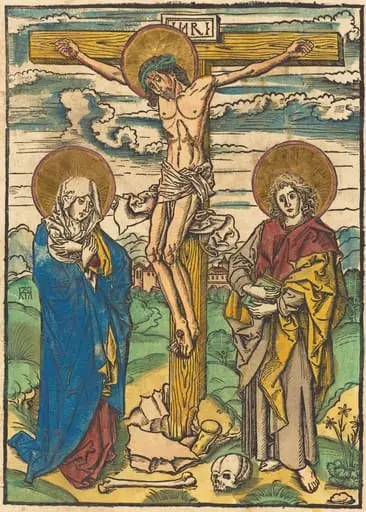
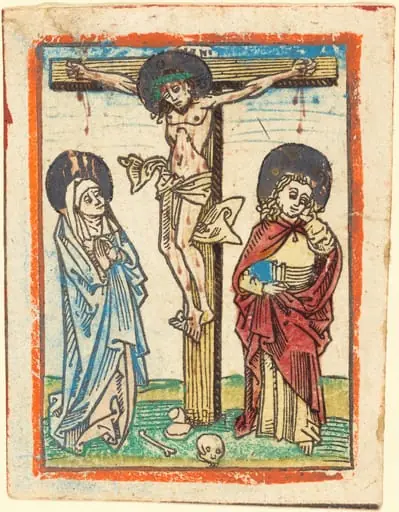
At the heart of the print stands the crucified man, his head bowed in suffering, flanked on the left by a robed woman with clasped hands—traditionally identified as the Virgin Mary—and on the right by another robed figure holding an open book, likely the apostle John. The halos and the open book underscore their sanctity and the theological significance of the Passion narrative.
Technique & Style
Executed as a woodcut, the image was carved in relief on a wooden block, allowing for mass production. After printing, the work was hand‑colored using pigments in orange, yellow, olive, blue and gold, a common practice to enhance visual impact. The figures are rendered with stiff, stylized forms and minimal modeling, characteristic of early printmaking aimed at clarity over naturalism.
History & Provenance
The print belongs to a period when religious imagery was disseminated widely through inexpensive, reproducible media. Its hand‑colored finish suggests it was intended for private devotion or small‑scale distribution rather than a liturgical setting. Specific details of its origin, date, or original owner are not recorded in the available data.
Context
Produced in an era when woodcut prints served as visual sermons for a largely illiterate audience, the work reflects the didactic function of art in the late medieval and early Renaissance periods. The use of gold halos and a limited color scheme aligns with contemporary conventions for indicating holiness and drawing the viewer’s focus to the central theological theme.
Legacy
While the print itself may not be widely known, it exemplifies the role of early print technology in spreading Christian iconography. Its straightforward composition and reproducible format contributed to the broader diffusion of devotional images that shaped popular religious practice.
Artist & collection

Artist
This 15th-century German artist carved vivid religious scenes into metal and wood, then hand-painted them in bright, symbolic colors.

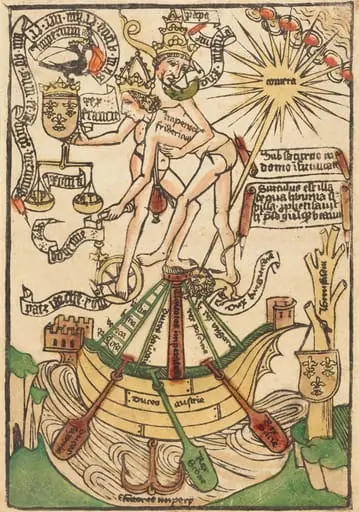 Allegory of the Meeting of Pope Paul II and Emperor Frederick III
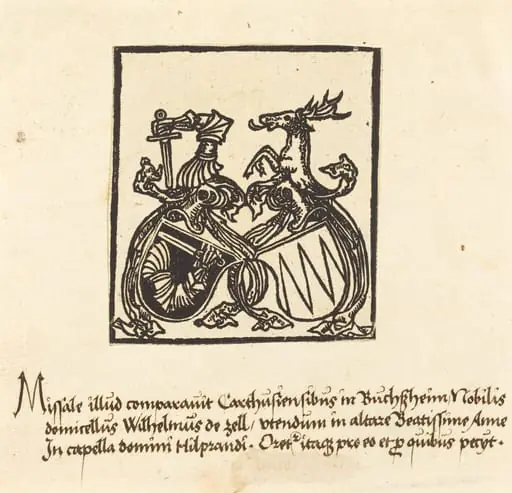 Bookplate of Wilhelm von Zell
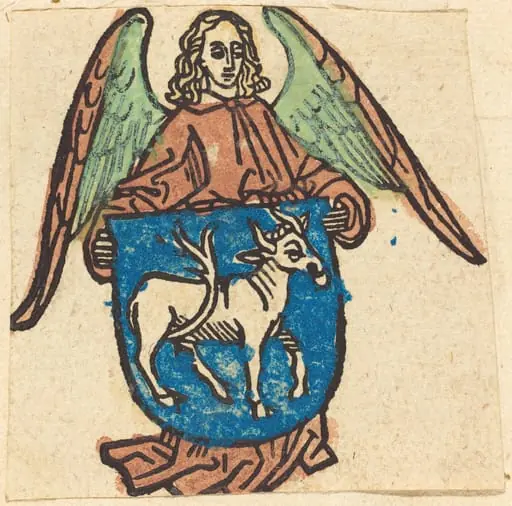 Bookplate of Hilprand Brandenburg of Bibrach
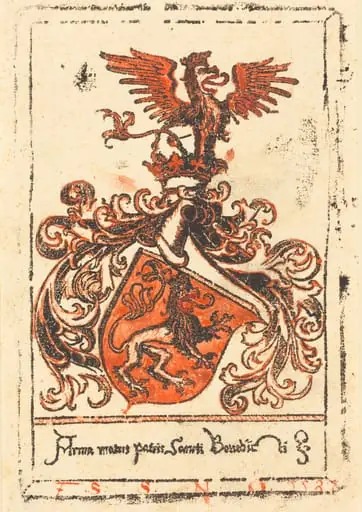 Bookplate of the Abbey of Ottobeuren
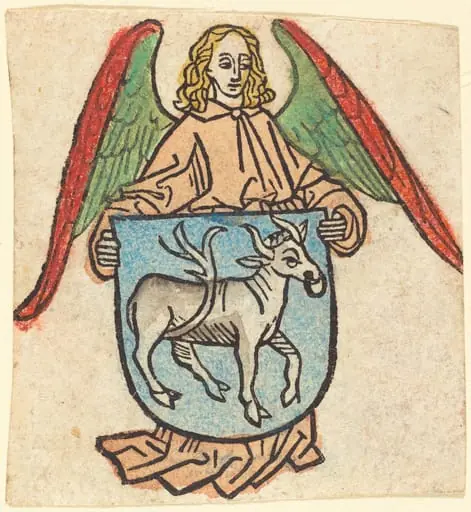 Bookplate of Hilprand Brandenburg of Bibrach
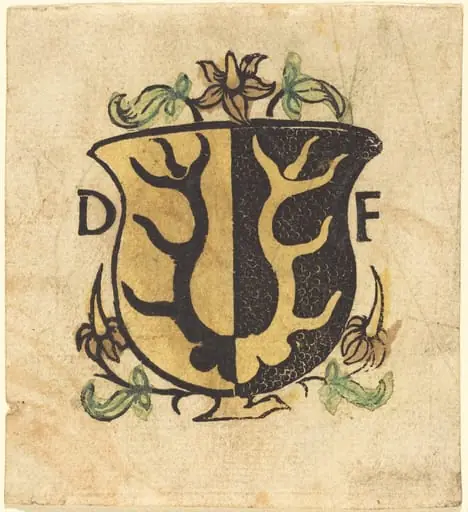 Bookplate of Dominicus Frauenfelder
![Studies for Six Figures (sheet from a model book) [recto], by German 15th Century](https://artifactworldgallery.com/img/german-15th-century--studies-for-six-figures-sheet-from-a-model-book-recto--4837429e0755bc3f-w320.webp) Studies for Six Figures (sheet from a model book) [recto]
Studies for Six Figures (sheet from a model book) [recto]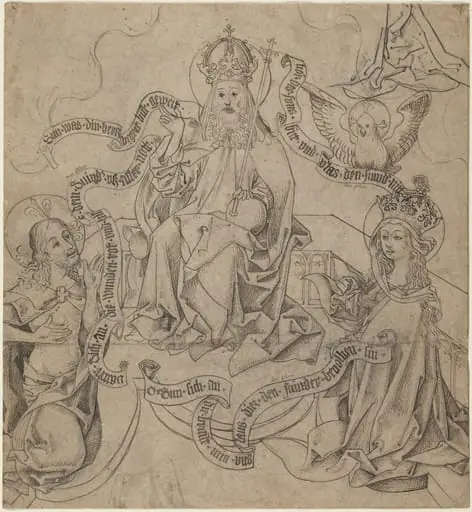 Christ and Mary Interceding with God the Father