Artwork
Christ on the Cross
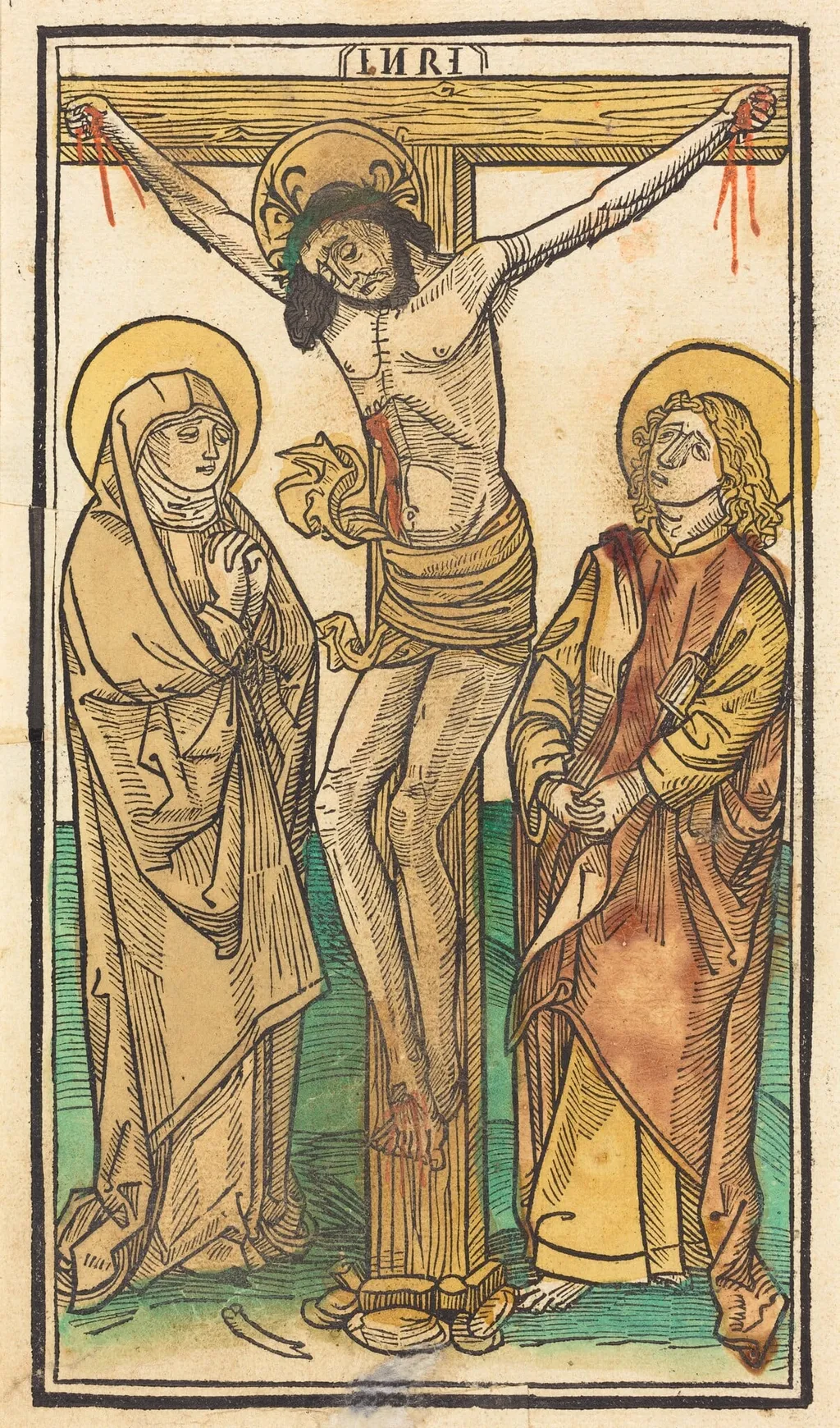
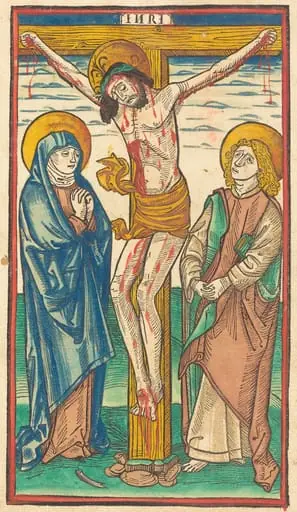
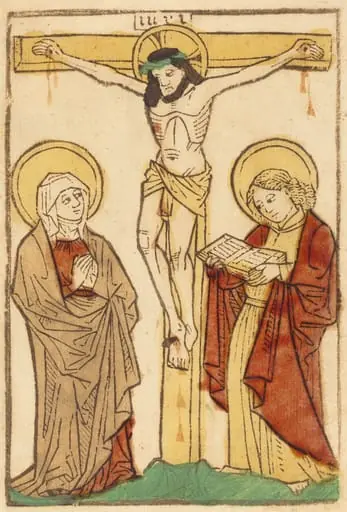
Christ on the Cross is an ink print by the Renaissance artist German 15th Century. It dates from 1485 and is held in the collection of the National Gallery of Art.
About this work
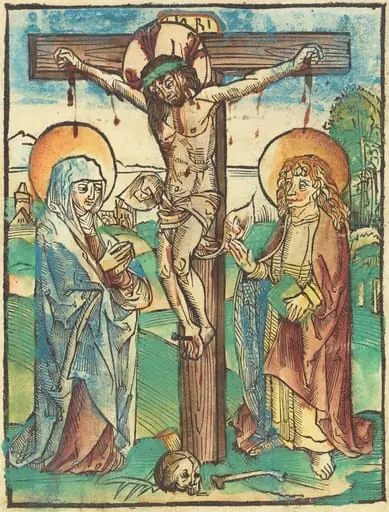
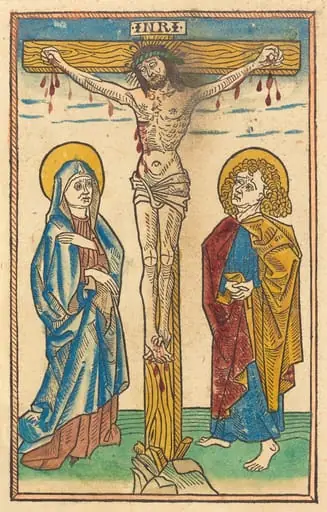
The man on the cross has a halo around his head, and his body is contorted in a way that suggests he is in pain.
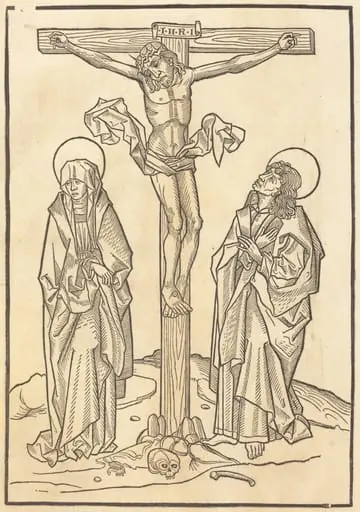
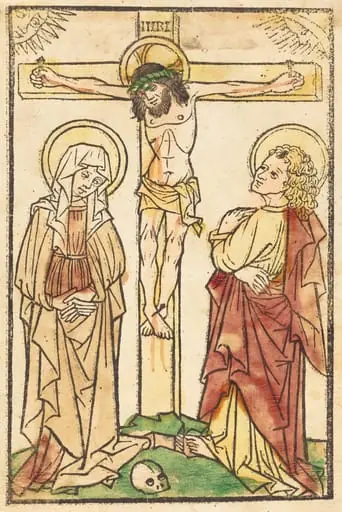
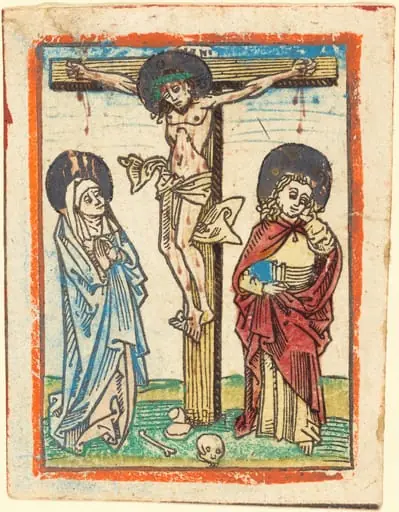
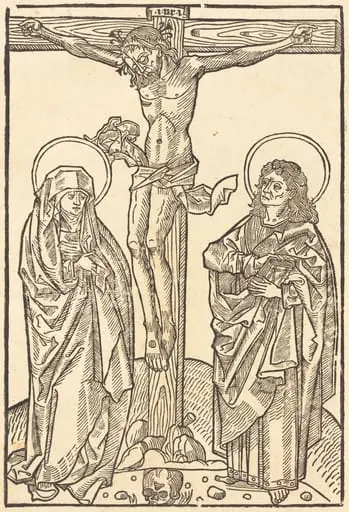
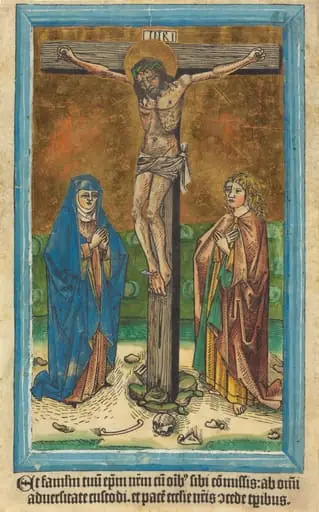
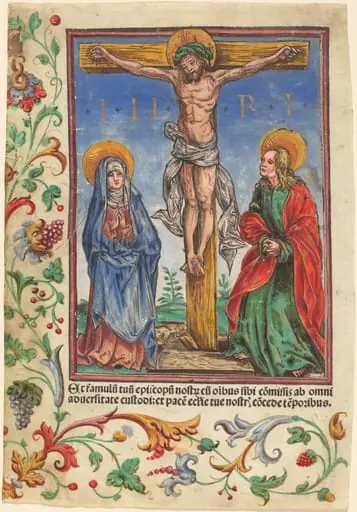
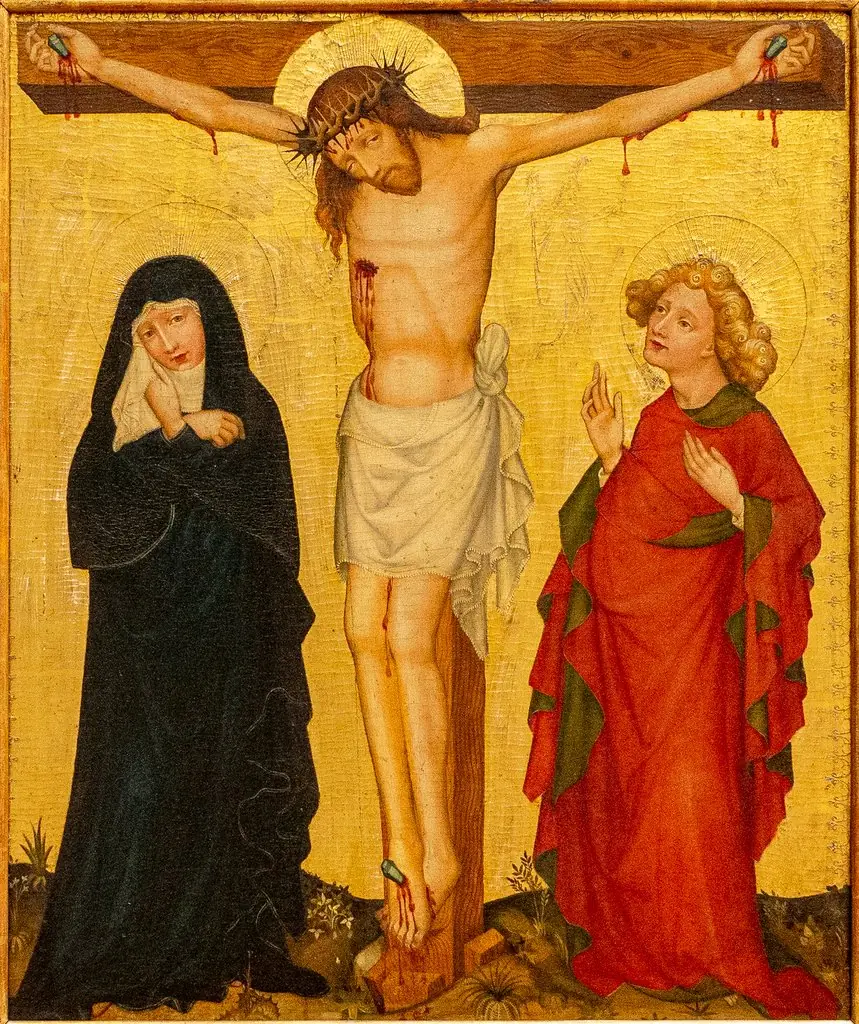
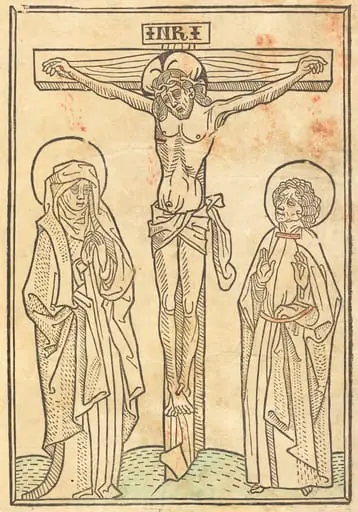
In this painting, a man is nailed to a cross, with blood dripping from his hands and feet. Two figures stand on either side of him, dressed in robes and looking up at him with concern. The man on the cross has a halo around his head, and his body is contorted in a way that suggests he is in pain.
The scene is depicted in muted colors, with the cross and the figures standing out against a plain background. The overall mood of the painting is one of solemnity and reverence.
This painting is an example of a woodcut, a technique that was popular during the Renaissance period. To learn more about this technique, you can explore the works of the artist German 15th Century.
Overview
This hand‑colored woodcut on laid paper portrays the crucifixion, showing a nailed figure on a cross with blood visible at his hands and feet. A halo crowns his head, and two robed figures stand on either side, gazing upward. The composition employs a restrained palette that emphasizes the central figure against an unadorned background, creating a tone of solemn reverence.
Subject & Meaning
The image presents the Christian narrative of Christ’s suffering and sacrifice. The halo signals divinity, while the contorted posture and dripping blood underscore the physical torment. The accompanying figures, likely representing mourners or disciples, convey human compassion and the theological emphasis on redemption through Christ’s death.
Technique & Style
Executed as a woodcut, the work reflects the Renaissance revival of printmaking, where images were carved in relief and printed from a single block. Hand‑coloring adds muted hues after printing, a common practice to enhance visual depth while retaining the crisp lines characteristic of the medium.
History & Provenance
The piece belongs to the tradition of German woodcut production in the fifteenth century, a period when artists such as Albrecht Dürer refined the technique. Although the specific creator is not identified, the work aligns with the devotional prints circulated among lay audiences during that era.
Context
During the Renaissance, woodcuts served both as artistic expressions and as vehicles for religious instruction. Their relatively low cost allowed widespread distribution, making images of the crucifixion accessible to a broad public and reinforcing doctrinal messages within churches and private devotion.
Legacy
Prints of this type contributed to the standardization of iconographic motifs surrounding the crucifixion, influencing later visual representations in both fine art and popular devotional objects. The hand‑colored approach anticipated later developments in color printing, bridging the gap between monochrome woodcuts and fully painted works.
Artist & collection

Artist
This 15th-century German artist carved vivid religious scenes into metal and wood, then hand-painted them in bright, symbolic colors.

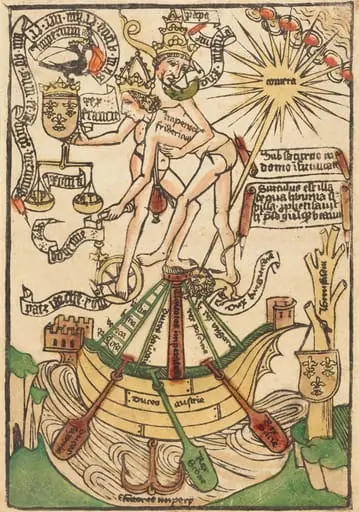 Allegory of the Meeting of Pope Paul II and Emperor Frederick III
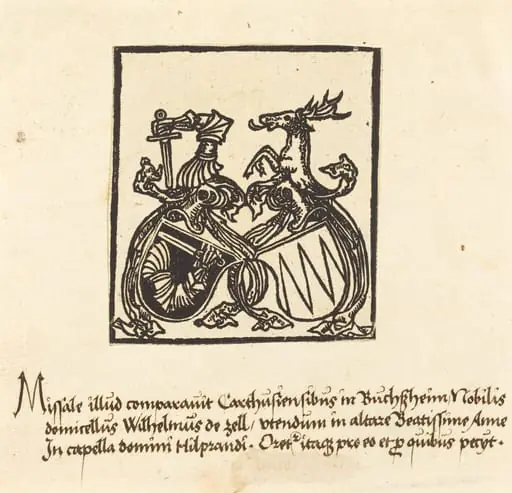 Bookplate of Wilhelm von Zell
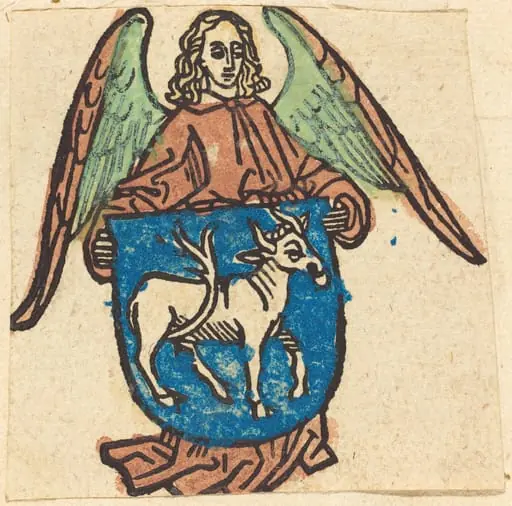 Bookplate of Hilprand Brandenburg of Bibrach
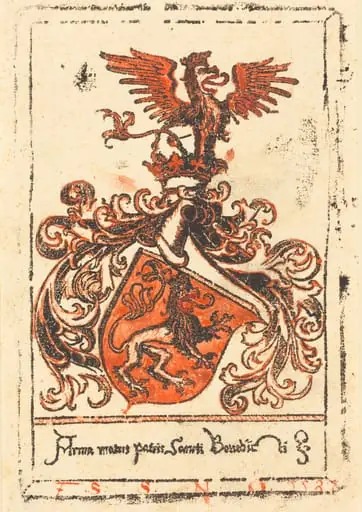 Bookplate of the Abbey of Ottobeuren
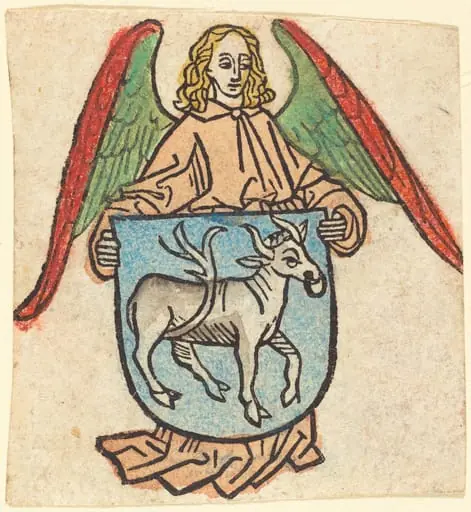 Bookplate of Hilprand Brandenburg of Bibrach
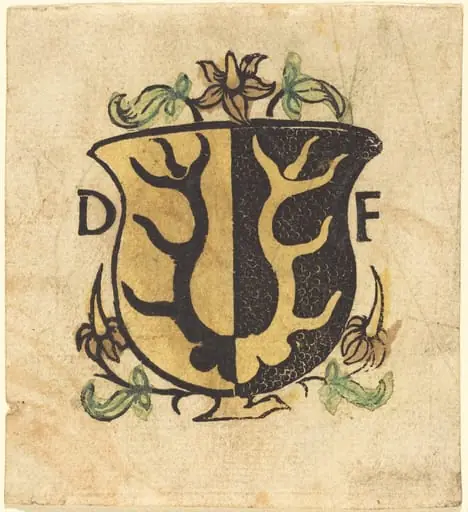 Bookplate of Dominicus Frauenfelder
![Studies for Six Figures (sheet from a model book) [recto], by German 15th Century](https://artifactworldgallery.com/img/german-15th-century--studies-for-six-figures-sheet-from-a-model-book-recto--4837429e0755bc3f-w320.webp) Studies for Six Figures (sheet from a model book) [recto]
Studies for Six Figures (sheet from a model book) [recto]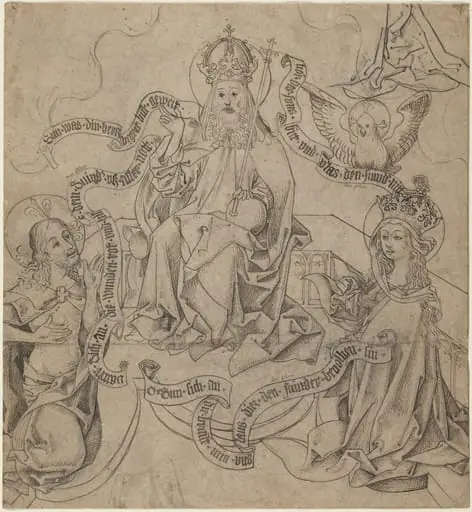 Christ and Mary Interceding with God the Father