Artwork
Parcul
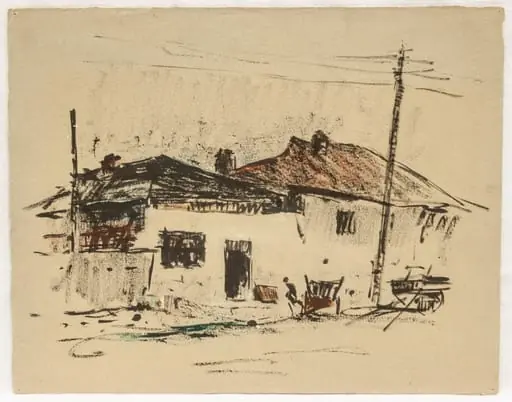
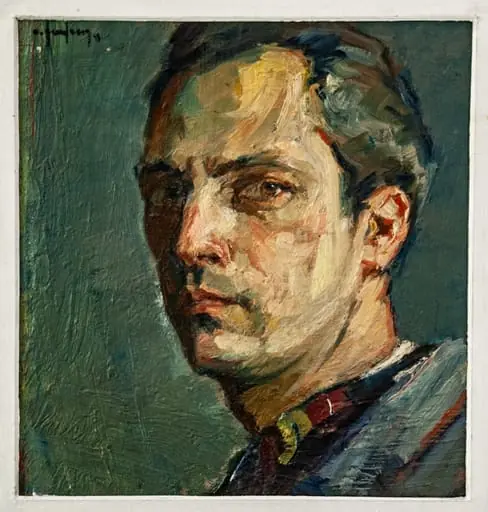
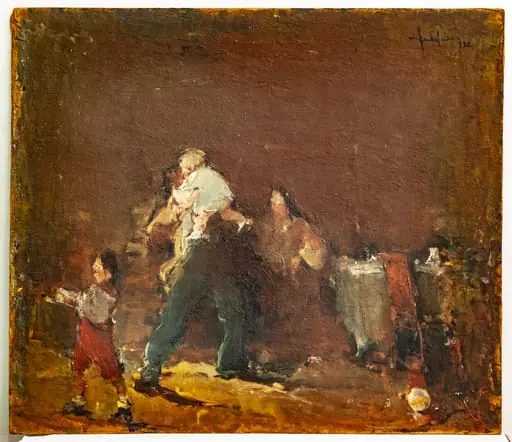
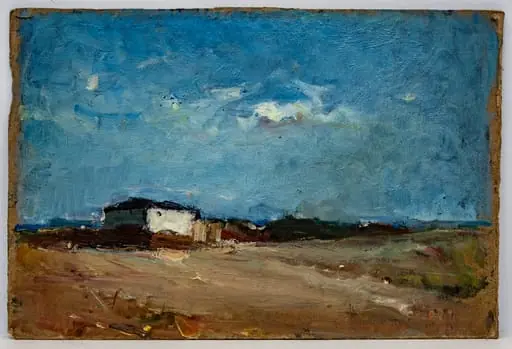
Parcul is a print by Nicolae Furduescu. It dates from 1950 and is held in the collection of the Gavrila Simion Eco-Museum Research Institute Tulcea.
About this work
Overview
The work lacks the polish of a completed piece, suggesting it may have served as a preparatory sketch or informal study rather than a final composition.
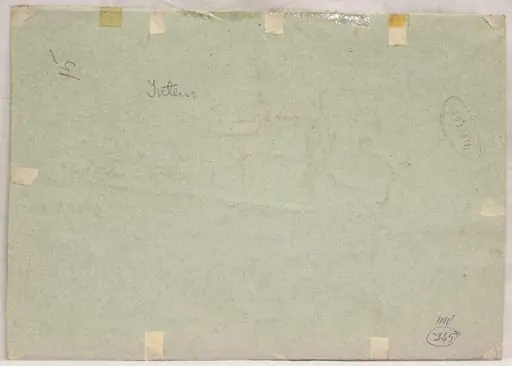
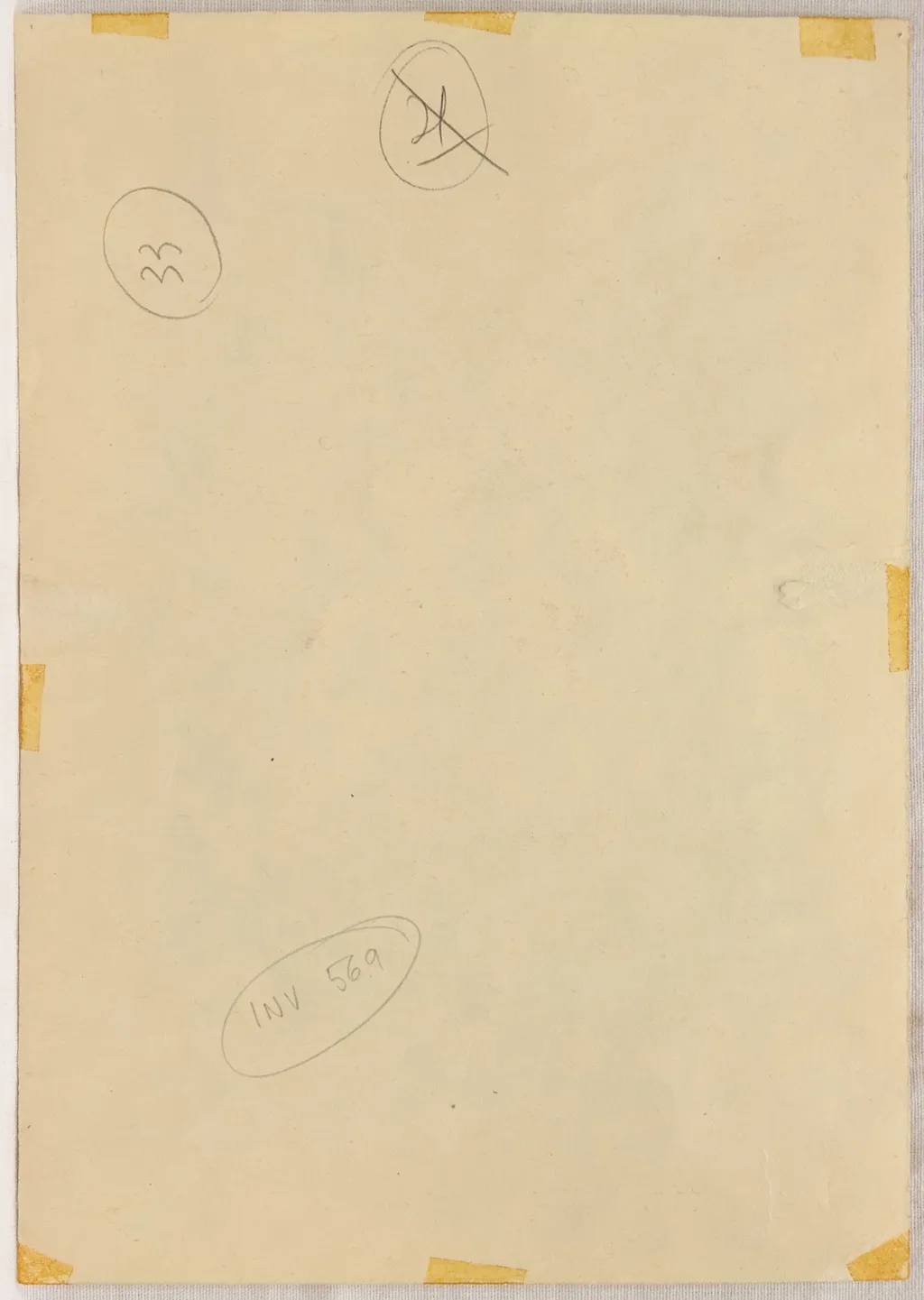
This unsigned sheet of pale yellow paper, dated around 1950, is attributed to Nicolae Furduescu and held in the Museum of Ethnography’s collection. It bears two faint pencil drawings and minimal markings, including an inventory number and remnants of adhesive tape. The work lacks the polish of a completed piece, suggesting it may have served as a preparatory sketch or informal study rather than a final composition.
Subject & Meaning
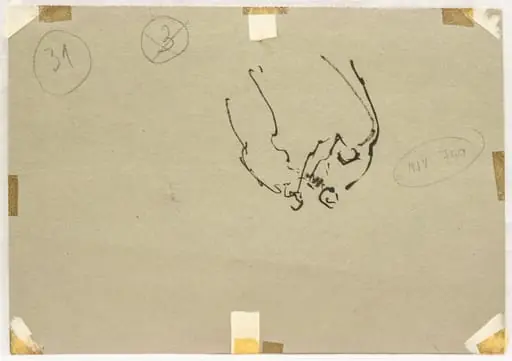
The two sketches depict abstracted forms: one is a simple oval containing the numeral 23, the other a looser oval with a small, indistinct figure and ambiguous lines that could suggest limbs or foliage. Neither image conveys a clear narrative. Their brevity and ambiguity imply they were personal notations—perhaps reminders, experiments, or fragments of an unrecorded idea—rather than intentional representations.
Technique & Style
Executed in light pencil strokes, the drawings are tentative and sparse, with minimal shading or detail. The lines are loose and unrefined, indicating rapid, unguarded mark-making. The paper’s surface shows no evidence of erasure or revision, reinforcing the sense of immediacy. The style aligns with informal sketching practices, prioritizing gesture over finish.
History & Provenance
The object entered the Museum of Ethnography’s collection with the inventory number INV 569, likely cataloged as part of Furduescu’s archival materials. Tape along the edges suggests it was once mounted or stored with other items. Its survival as a standalone fragment implies it was preserved not for its aesthetic value, but as part of the artist’s documentary residue.
Context
Created in the early 1950s in Romania, this sketch reflects a period when artists often worked under constrained conditions, producing studies on whatever materials were available. Furduescu, known for ethnographic documentation, may have used such sheets to record visual observations or ideas during fieldwork, making this a quiet artifact of daily creative practice.
Legacy
Though not a finished work, this fragment offers insight into Furduescu’s process—his habit of capturing fleeting visual thoughts on humble materials. It stands as a testament to the unseen labor behind artistic production, preserving the quiet, unpolished moments that precede more formal outcomes.
Artist & collection
Artist
Nicolae Furduescu carved and stitched scenes of everyday life along the Dâmbovița riverbank.
Museum
Gavrila Simion Eco-Museum Research Institute Tulcea
Continue through works from the same source collection.