Artwork
Title Page for Hubert Goltzius, Romanae et Graecae Antiqvitatis Monvmenta (Opera Omnia, I)
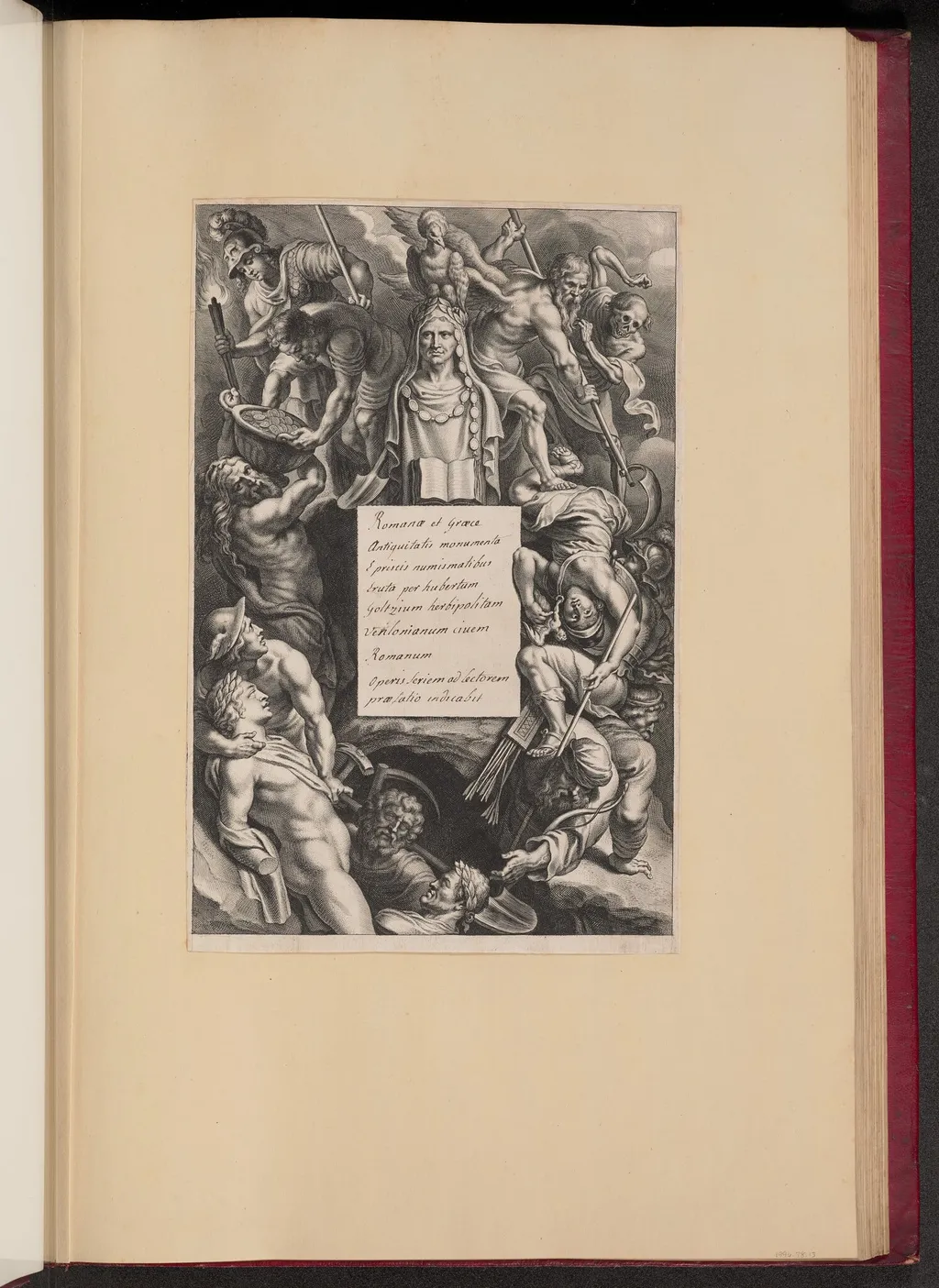
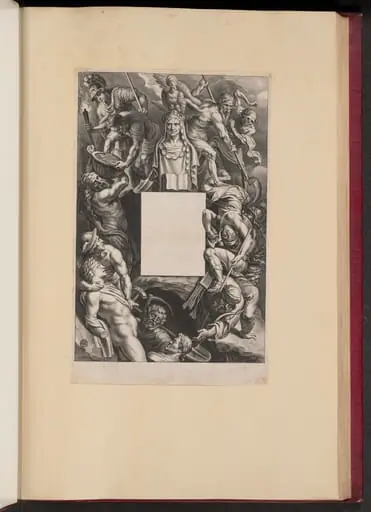
Title Page for Hubert Goltzius, Romanae et Graecae Antiqvitatis Monvmenta (Opera Omnia, I) is an ink print by the Baroque artist Cornelis Galle I. It dates from 1645 and is held in the collection of the National Gallery of Art.
About this work
Overview
This engraving on laid paper, executed by Cornelis Galle the Elder in 1645, serves as the title page for Hubert Goltzius’s publication *Romanae et Graecae Antiqvitatis Monvmenta (Opera Omnia, I)*. It is a proof state, distinguished by handwritten additions in pen and brown ink prior to the formal inclusion of lettering.
Subject & Meaning
The composition depicts a tumultuous scene centered around a armored woman holding a shield and a book, surrounded by men engaged in combat, grasping ruins, or fleeing with a child. The imagery suggests a narrative of conflict, destruction, and possibly the clash of civilizations, given the title's reference to Roman and Greek antiquities.
Technique & Style
The engraving showcases Galle's refined technique, honed during his time in Rome. The detailed, dramatic poses of the muscular figures and the integration of handwritten elements (in pen and brown ink) for the title demonstrate his mastery of both design and execution, characteristic of his training under Philip Galle and Theodoor Galle.
History & Provenance
Created in 1645 by Cornelis Galle the Elder, this engraving was part of Goltzius’s *Opera Omnia, I*. Galle, having refined his skills in Rome, returned to Antwerp to work as a printmaker and printseller, reflecting the professional practices of his time.
Context
The work is contextualized within the 17th-century European interest in classical antiquities. Galle’s training in Rome and his subsequent work in Antwerp position this engraving at the intersection of Italian and Flemish artistic influences.
Legacy
While specific lasting impacts of this title page are not detailed, it contributes to the broader legacy of 17th-century engraving techniques and the dissemination of classical themes in Early Modern Europe through printed works.
Artist & collection

Artist
Cornelis Galle the Elder (1576 – 29 March 1650), a younger son of Philip Galle, was born at Antwerp in 1576, and was taught engraving by his father.

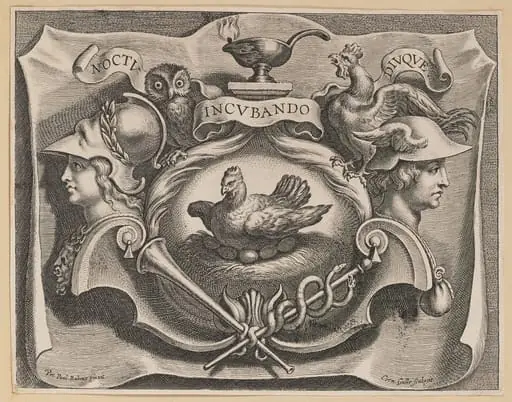 Vignette for the Title Page of Martinus Bonacina, Opera Omnia
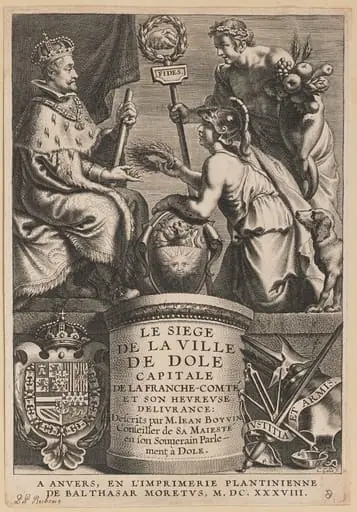 Title Page for Jean Boyvin, Le Siege de la Ville de Dole
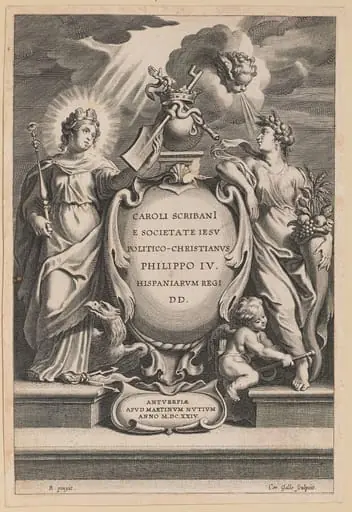 Title Page for Carolus Scribani, Politico-Christianus
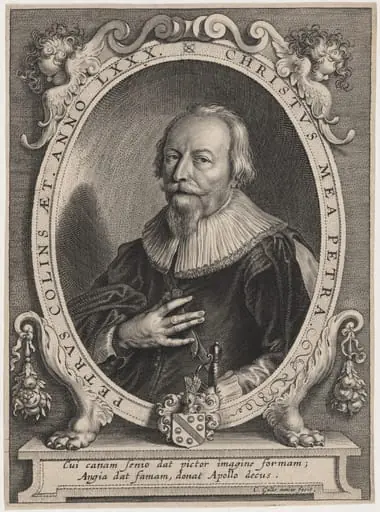 Petrus Collins
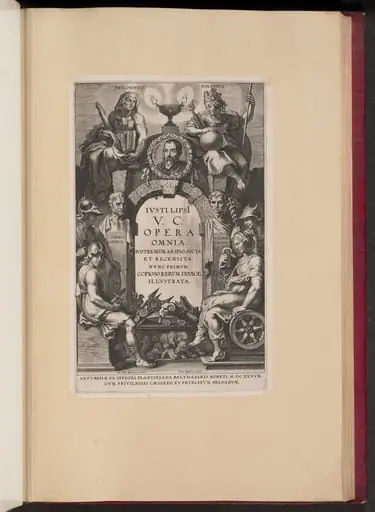 Title Page for Justus Lipsius, Opera Omnia, I
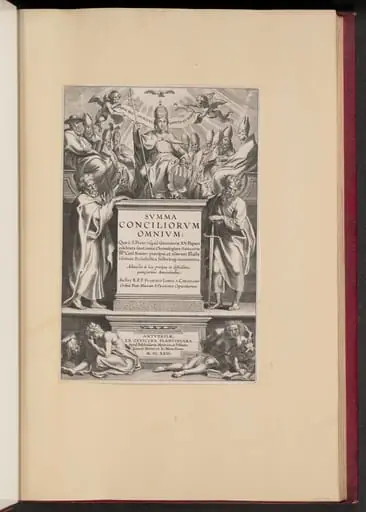 Title Page for F. Longo a Coriolano's "Svmma Conciliorvm Omnivm"
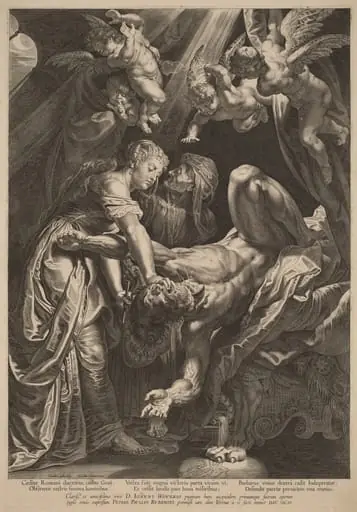 Judith Beheading Holofernes
 Title Page for Hubert Goltzius, Romanae et Graecae Antiqvitatis Monvmenta (Opera Omnia, I)
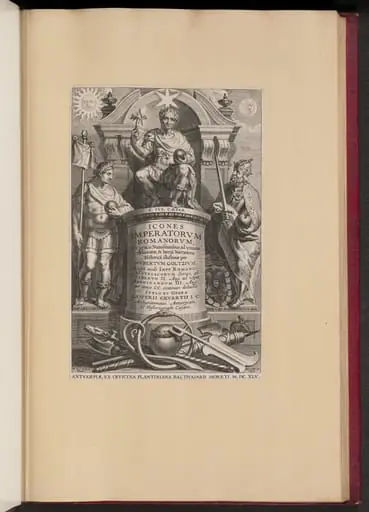 Title Page for Hubert Goltzius's Icones Imperatorvm Romanorvm (Opera Omnia, V)
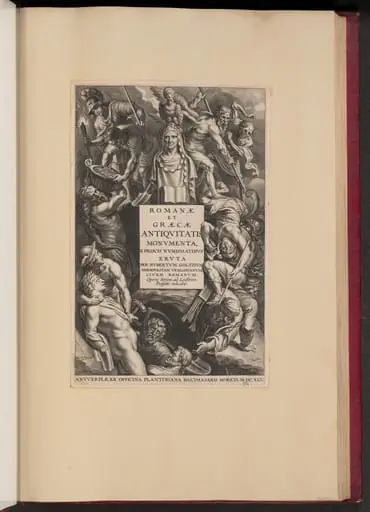 Title Page for Hubert Goltzius, Romanae et Graecae Antiqvitatis Monvmenta (Opera Omnia, I)
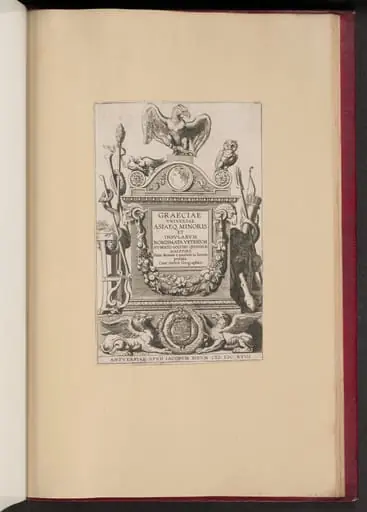 Title Page for Hubert Goltzius, Graeciae Vniversae Asiaeq. Minoris et Insularum Nomismata
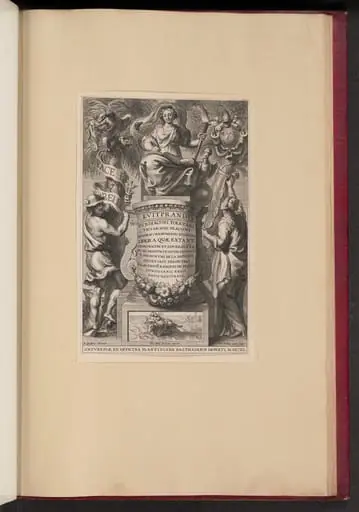 Title Page for Liutprand, Opera
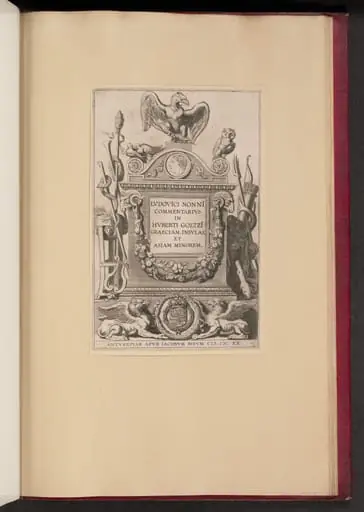 Title Page for Ludovicus Nonnius, Commentarius in Huberti Goltzi Graeciam, Insulas, et Asiam Minorem