Artwork
The Parable of the Good Shepherd
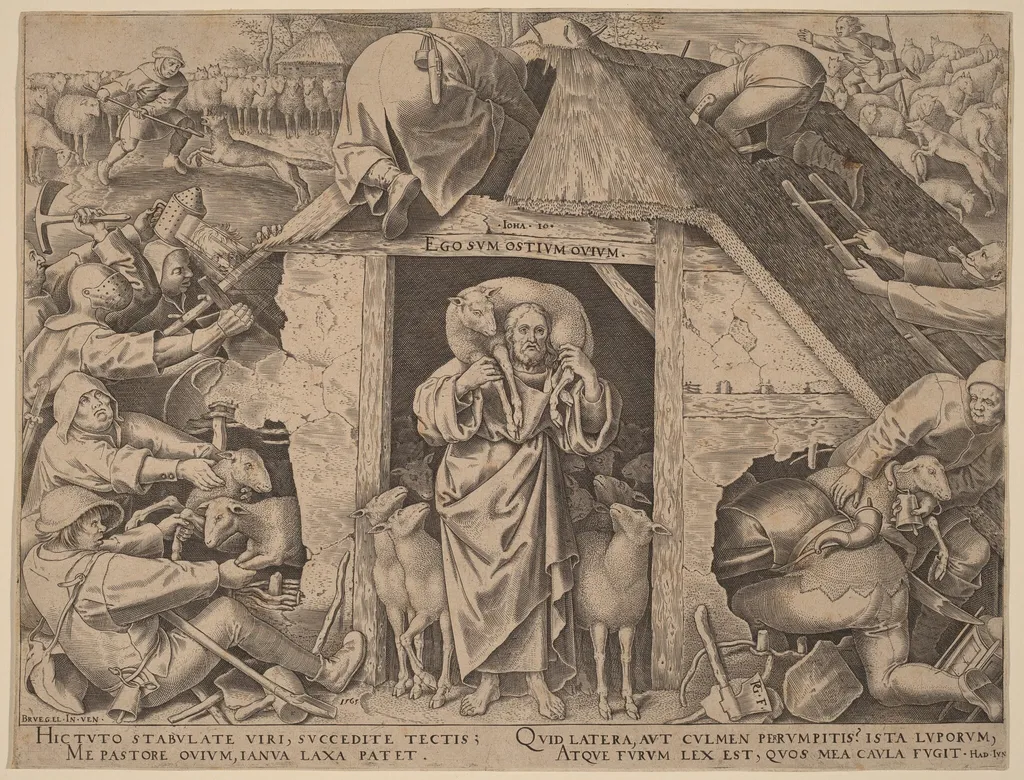
The Parable of the Good Shepherd is an ink print by the Renaissance artist Philip Galle. It dates from 1565 and is held in the collection of the National Gallery of Art.
About this work
This engraving, created by Philip Galle in 1565, showcases the artist's skill in capturing intricate details and textures.
The image depicts a scene with a central figure, likely a shepherd, surrounded by sheep and other characters. The shepherd is shown in a doorway, with a sheep on his shoulders and others around him. In the background, there are more sheep and people, as well as a landscape with buildings and trees.
The scene is rendered in a detailed and intricate style, with fine lines and textures. The use of shading and contrast creates a sense of depth and dimensionality. The overall mood of the image is one of serenity and tranquility, with the shepherd and his flock at peace.
This engraving, created by Philip Galle in 1565, showcases the artist's skill in capturing intricate details and textures. The use of cross-hatching and other techniques adds depth and visual interest to the image. For more information on this artist and his work, explore the Renaissance movement.
Overview
The Parable of the Good Shepherd is an engraving on laid paper created by Philip Galle in 1565. It is a print that reproduces a biblical scene, characteristic of Galle's work as a Dutch publisher and engraver who specialized in reproductive prints.
Subject & Meaning
The engraving depicts Christ as the Good Shepherd, guiding a flock of sheep. The scene is set in a landscape with a central figure carrying a sheep on his shoulders, surrounded by other sheep and people, conveying a sense of serenity and tranquility.
Technique & Style
The image is rendered in fine linework, with detailed textures and shading that create a sense of depth. The engraving showcases Galle's skill in capturing intricate details, typical of the Northern Renaissance tradition of printmaking.
History & Provenance
Created in 1565, the engraving is a product of the late sixteenth-century printmaking tradition. As a reproductive print, it circulated widely across Europe, reflecting Galle's role in disseminating the work of earlier masters.
Artist & collection
Artist
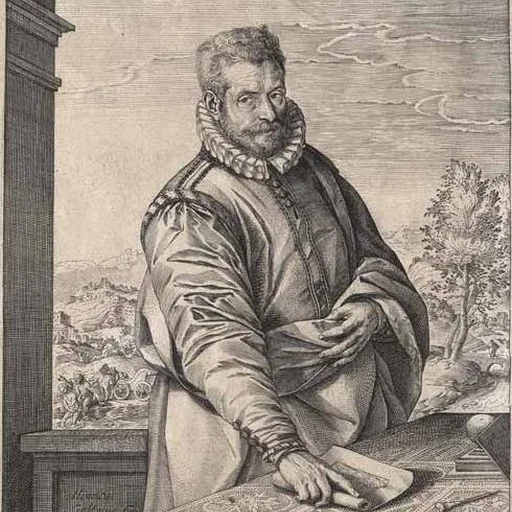
Philip (or Philips) Galle (1537 – March 1612) was a Dutch publisher, best known for publishing old master prints, which he also produced as designer and engraver. He is especially known for his reproductive engravings of paintings.

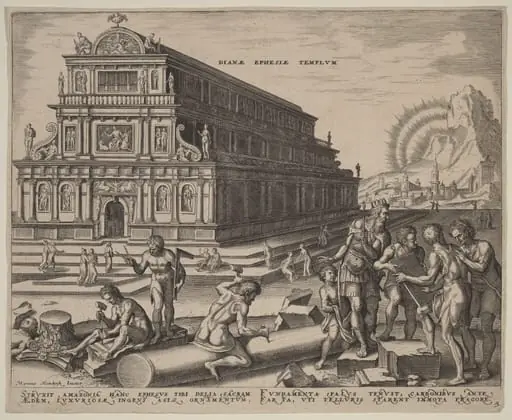 Dianae Ephesiae Templum (The Temple of Diana at Ephesus)
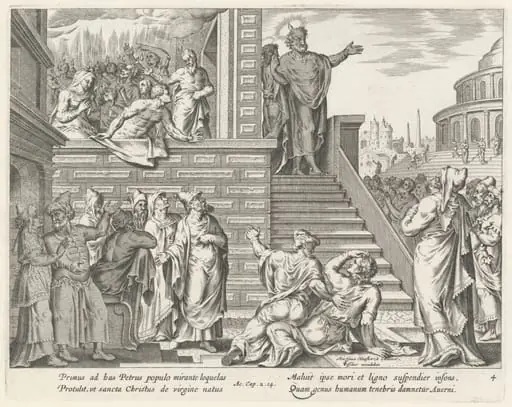 Saint Peter Speaks to the People about Christ
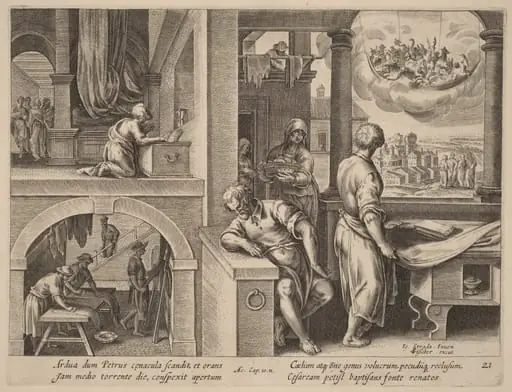 The Vision of Saint Peter
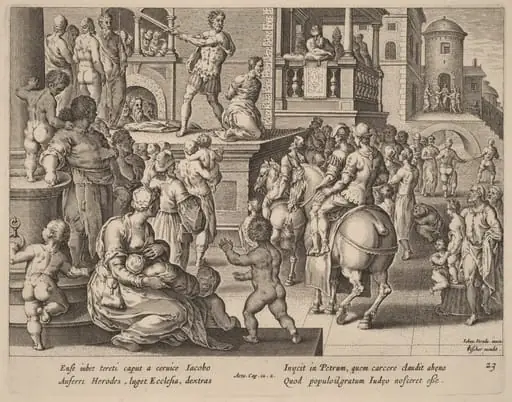 Beheading of Saint James
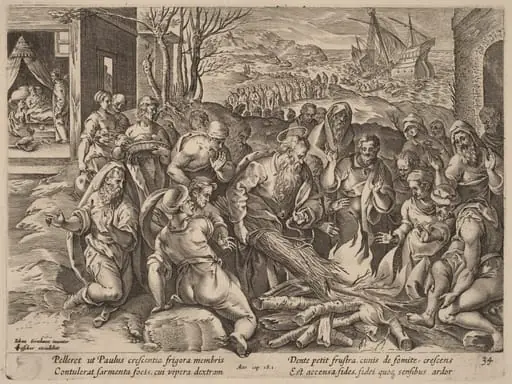 Saint Paul Shipwrecked on the Island of Melita
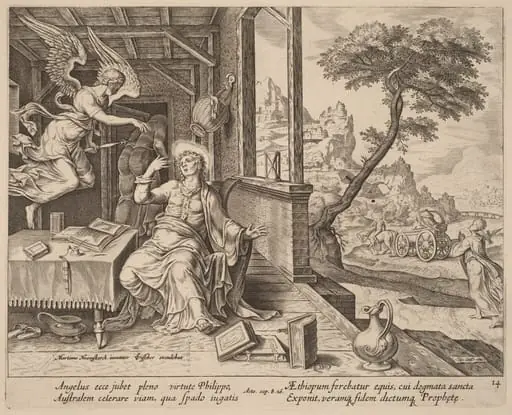 The Angel Orders Saint Philip to Accompany the Ethiopian Eunuch
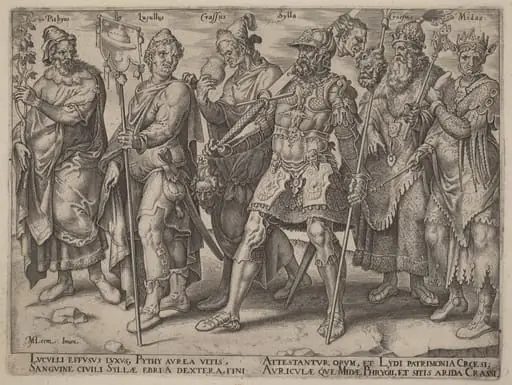 Notorious Examples of Wealth from Antiquity
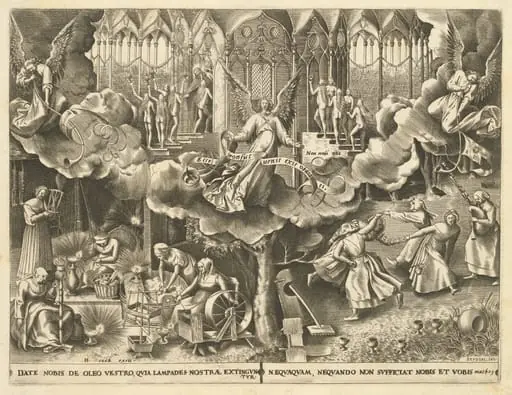 The Parable of the Wise and Foolish Virgins