Artwork
Beheading of Saint James
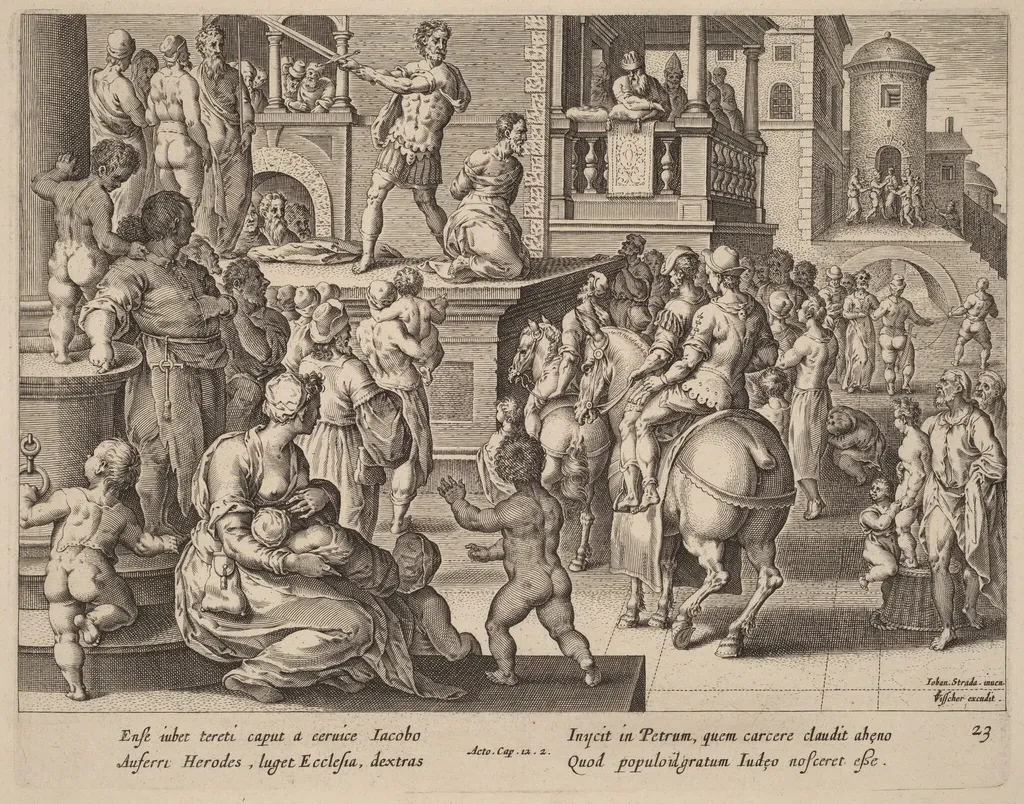
Beheading of Saint James is an ink print by the Renaissance artist Philip Galle. It dates from 1574 and is held in the collection of the National Gallery of Art.
About this work
Overview
This work exemplifies his role in making religious imagery accessible beyond original canvases, catering to devotional and scholarly audiences across Europe.
Philip Galle’s 1574 engraving captures the martyrdom of Saint James the Greater, executed in the reproductive print tradition common among Northern European publishers of the period. As a prolific engraver and publisher based in Haarlem, Galle translated painted compositions into detailed intaglio prints for wider dissemination. This work exemplifies his role in making religious imagery accessible beyond original canvases, catering to devotional and scholarly audiences across Europe.
Subject & Meaning
The scene portrays the violent execution of Saint James, a moment of martyrdom central to early Christian hagiography. Figures surround the fallen apostle, their gestures conveying shock, grief, and aggression. A soldier raises his sword above the scene, while a woman kneels beside the body, emphasizing the human cost of faith. The composition underscores the apostle’s sacrifice, reinforcing themes of steadfastness in the face of persecution, resonant in post-Reformation religious contexts.
Technique & Style
Galle employed fine, precise lines and controlled hatching to model form and depth within a tightly packed composition. The engraving’s sharp contrasts between light and shadow heighten the drama of the moment, while intricate architectural details in the background provide spatial context without distracting from the central action. The medium’s capacity for fine detail allowed for the rendering of textures—fabric, stone, and flesh—with remarkable clarity, characteristic of Netherlandish printmaking at its technical peak.
History & Provenance
Created in 1574, the engraving was part of a broader market for religious prints during a time of upheaval in the Low Countries. Galle’s workshop produced numerous such images, often based on designs by contemporary painters. This print likely circulated among private collectors, clergy, and educational institutions, serving both devotional and didactic purposes. Its survival in multiple institutional collections attests to its enduring presence in early modern print culture.
Context
In the decades following the Protestant Reformation, Catholic regions maintained a demand for images of saints and martyrdoms as expressions of faith and resistance. Galle’s work emerged within this climate, translating ecclesiastical narratives into reproducible formats. His prints bridged the gap between high art and popular piety, offering visually compelling religious stories to audiences who might never encounter the original paintings in churches or chapels.
Legacy
Galle’s engraving contributed to the standardization of saintly iconography in print form, influencing later generations of engravers and publishers. While not original in composition, its technical precision and emotional intensity ensured its replication and preservation. The work remains a reference point for understanding how religious narratives were visually codified and distributed across early modern Europe through the medium of print.
Artist & collection
Artist
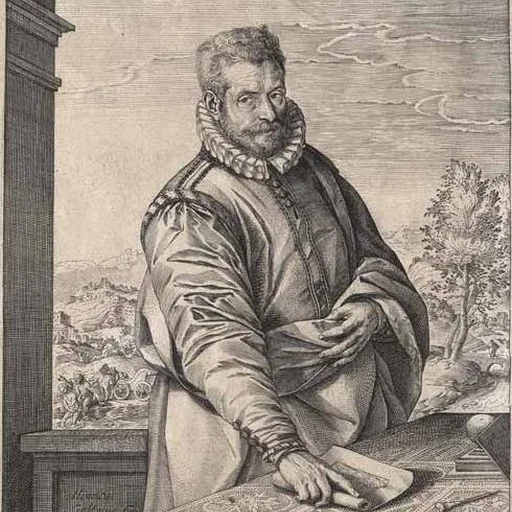
Philip (or Philips) Galle (1537 – March 1612) was a Dutch publisher, best known for publishing old master prints, which he also produced as designer and engraver. He is especially known for his reproductive engravings of paintings.

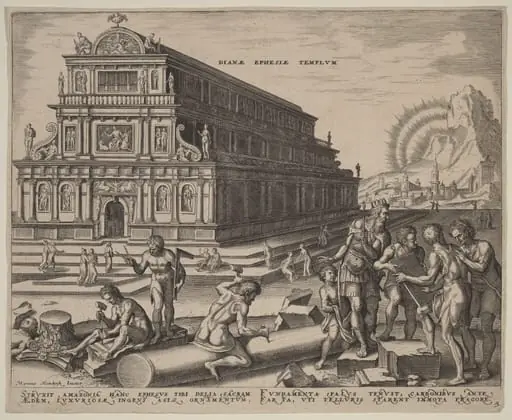 Dianae Ephesiae Templum (The Temple of Diana at Ephesus)
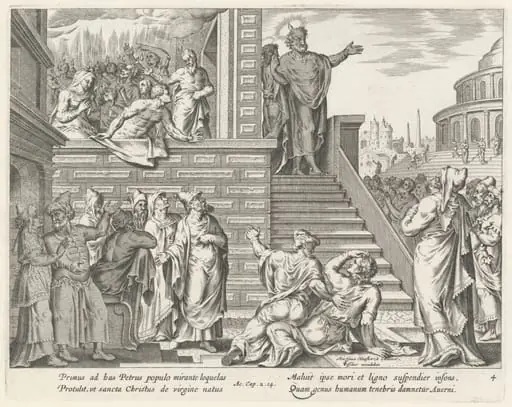 Saint Peter Speaks to the People about Christ
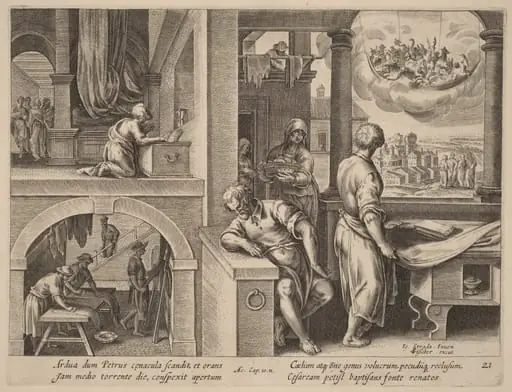 The Vision of Saint Peter
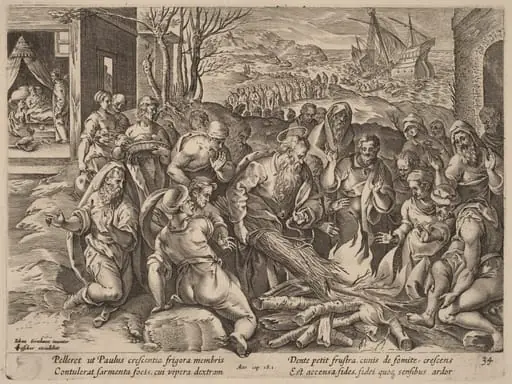 Saint Paul Shipwrecked on the Island of Melita
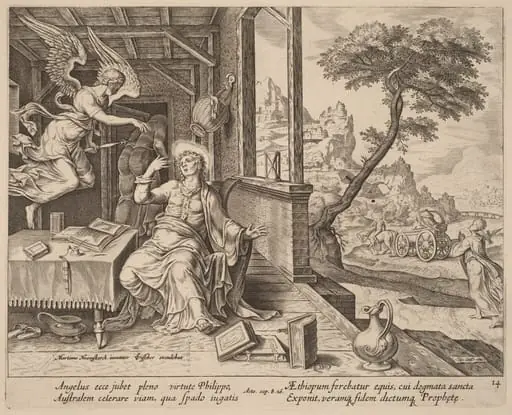 The Angel Orders Saint Philip to Accompany the Ethiopian Eunuch
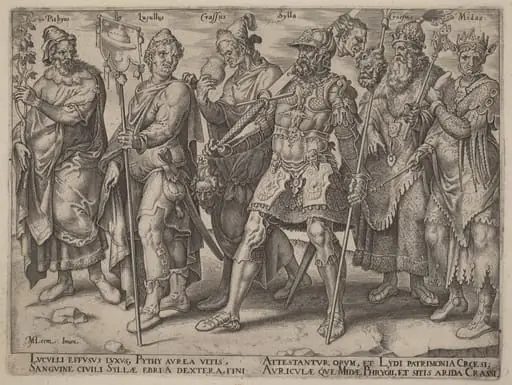 Notorious Examples of Wealth from Antiquity
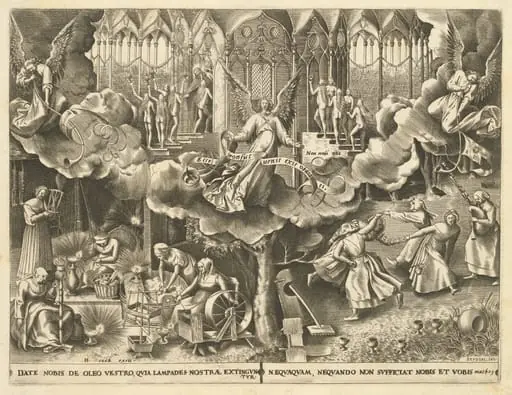 The Parable of the Wise and Foolish Virgins
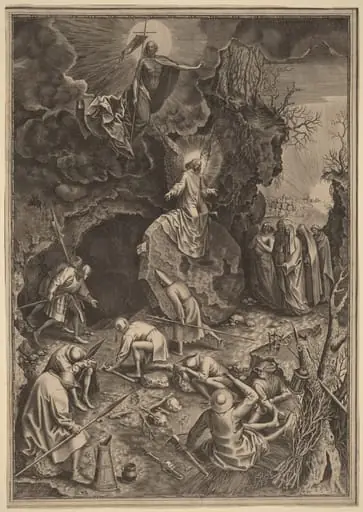 The Resurrection
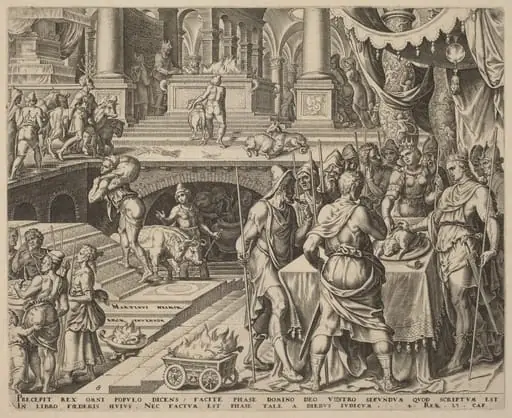 Josiah Celebrating Passover
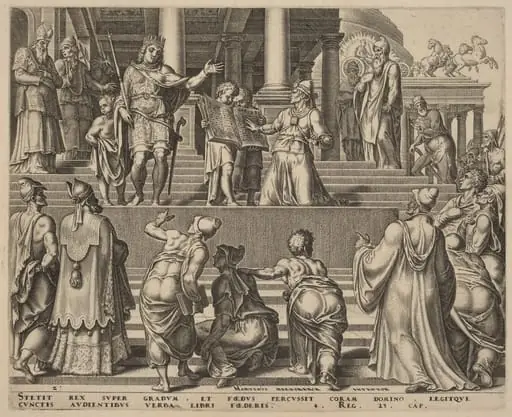 The Book of the Law Read before the People
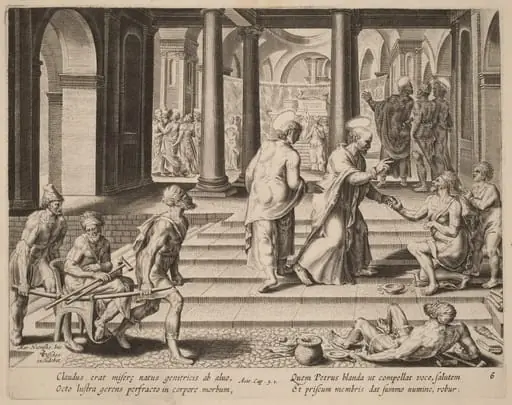 Saints Peter and John Heal a Cripple at the Gate of the Temple
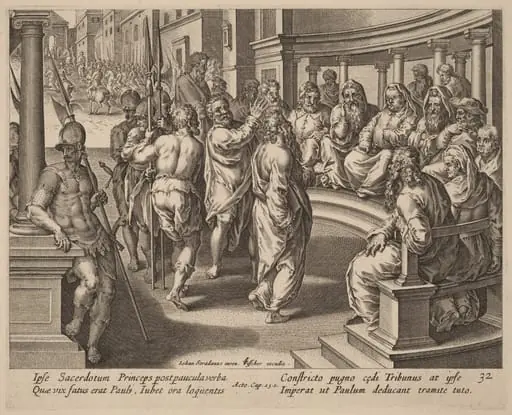 Saint Paul before the High Priest
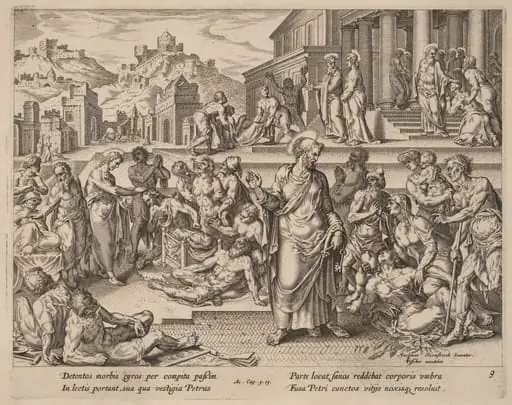 Saint Peter Healing the Sick with His Shadow
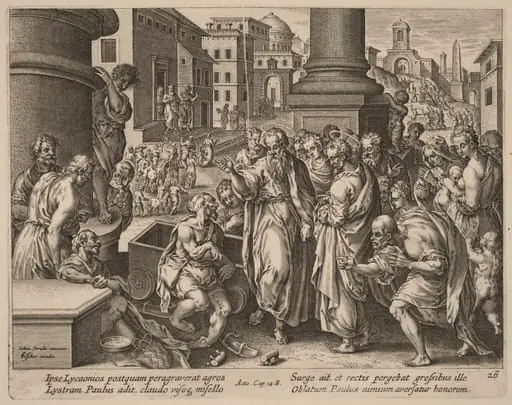 Saint Paul Heals the Lame Man at Lystra
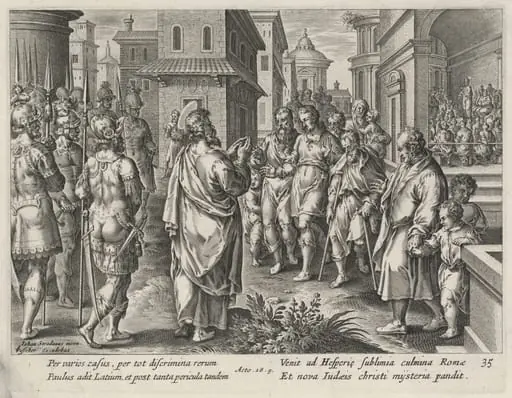 Saint Paul Preaching in Rome
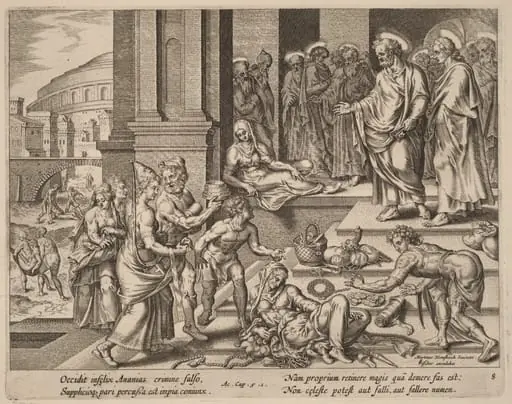 The Deaths of Ananias and Sapphira
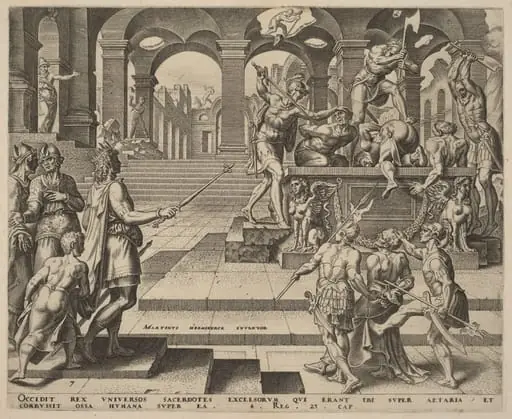 The Slaughter of the Priests of Samaria
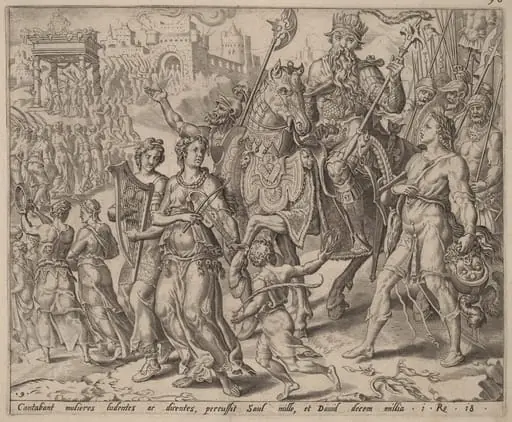 The Triumph of Saul and David